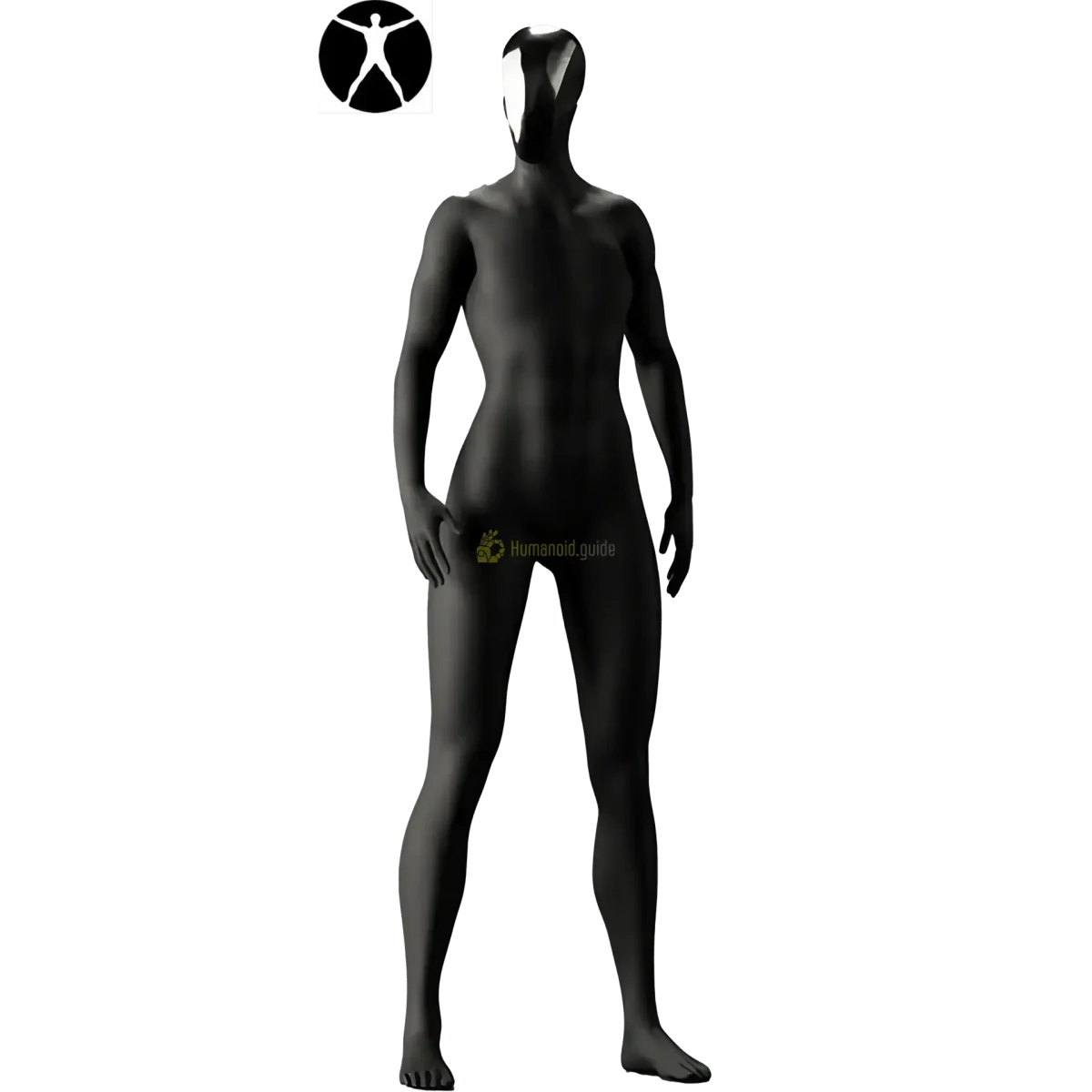
What is the Clone Robotics Alpha?
The Clone Alpha is a full-size humanoid robot developed by Clone Robotics, a Polish robotics company founded in 2021. It uses biomimetic pneumatic artificial muscles that replicate human musculoskeletal anatomy, giving it 164 degrees of freedom across its body — one of the highest counts among humanoids. The Alpha stands approximately 180 cm tall and weighs 60 kg, with a 20 kg payload capacity. It is designed as a general-purpose bipedal companion and research platform, capable of walking at up to 5 km/h and running for about 1.5 hours on a charge. Unlike electric actuator-based humanoids, Clone Alpha’s pneumatic muscle architecture promises smoother, more human-like motion but is still in the prototype stage, not yet commercially available.
Specifications
Here are the full technical specifications.
| Spec | Value |
|---|---|
| Height | 180 cm |
| Weight | 60 kg |
| Degrees of freedom | 164 |
| Battery life | 1.5 hours |
| Max speed | 5 km/h |
| Payload | 20 kg |
| Price (new) | $100,000 |
| Price (used range) | N/A |
Price & Value
New MSRP: $100,000
Used range: N/A (prototype, not yet shipping)
Clone Robotics lists the Alpha at a flat $100,000, positioning it as a premium research platform. This price is comparable to other advanced humanoid prototypes like the Tesla Optimus (expected around $20,000–$30,000) or Figure 01 (undisclosed), though Alpha’s pneumatic actuation may offer unique value for biomimetic research. Since no units have been delivered yet, depreciation is unpredictable, but early adopters should budget for custom integration and potential maintenance costs. Unlike electric humanoids with longer runtimes, Alpha’s 1.5-hour battery life may limit continuous operation, but its high DOF and muscle-based design could justify the investment for labs studying human-like motion. Total cost of ownership will depend heavily on spare muscle components and support, which Clone has not yet disclosed. As of 2026, this price is aspirational and subject to change once production begins.
Who Is It For?
Best for: - Biomimetic robotics researchers studying pneumatic actuation and human-like movement - Universities with humanoid locomotion labs needing a high-DOF platform - Companies exploring soft robotics for service applications where compliance is critical
Not for: - Industrial applications requiring heavy payloads (only 20 kg arm payload) - Customers needing a ready-to-use robot (prototype, no production timeline) - Budget-conscious buyers (priced at $100,000 with uncertain support costs)
Alternatives & Comparison
The Clone Alpha competes in the nascent full-size humanoid space, where electric actuator systems dominate. Its pneumatic muscle approach sets it apart, but buyers should compare it to other research-class humanoids.
| Model | Price | Available | Key Difference |
|---|---|---|---|
| Tesla Optimus | ~$20,000–$30,000 (est.) | preorder | Electric actuators, more advanced AI integration. |
| Boston Dynamics Atlas | Undisclosed | no | Hydraulic actuation, highly dynamic mobility. |
| Figure 01 | Undisclosed | preorder | Electric, focused on dexterous manipulation. |
Verdict: For researchers focused on biomimetic movement and pneumatic actuation, the Clone Alpha is currently unmatched. However, the Tesla Optimus offers a more practical, cost-effective general-purpose humanoid with broader community support, making it the safer bet for most labs. The Alpha remains a specialist's tool until it proves reliability and moves beyond prototype status.
Use Cases & Capabilities
Biomimetic Research and Education
The Clone Alpha provides an unparalleled platform for studying human-like motion with its 164 degrees of freedom and pneumatic artificial muscles. University labs can use it to investigate muscle-actuation dynamics, compliant motion control, and whole-body coordination. Its human-like anatomy allows direct comparison to biomechanics studies, and the 24-DOF hands enable dexterous manipulation research. However, as a prototype with limited battery life, extended experiments may require tethered power or frequent charging.
Service Robotics Prototyping
With a 20 kg payload and human-scale form, the Alpha can serve as a testbed for service tasks like light object transport, greeting guests, or assistive interactions. Its pneumatic muscles offer inherent compliance, making it safer for close human interaction than stiff electric actuators. The 5 km/h walking speed and 1.5-hour runtime suit indoor deployment scenarios. Early adopters should plan for custom software development since the operating system and AI stack are not publicly disclosed.
Entertainment and Performance
The Clone Alpha’s lifelike motion and human-like proportions make it a potential candidate for theme parks, stage shows, or brand activations. Its ability to produce smooth, organic gestures could enhance animatronic characters. Noise from the pneumatic system may need to be managed in sound-sensitive environments. Limited availability and lack of field-proven reliability mean it is suited only for high-budget, one-off installations at this stage.
History & Background
Clone Robotics was founded in 2021 in Poland with the mission to create androids with artificial muscles. In early 2024, the company unveiled the Clone Alpha, a full-body humanoid prototype featuring its proprietary McKibben-type pneumatic muscles. Prior to Alpha, Clone developed a dexterous hand with 24 DOF called the Clone Hand, which forms the Alpha’s end-effector. The Alpha is currently in active development, with select partners invited to collaborate on early testing. As of 2026, no production date has been announced, and the robot remains in the prototype phase, with limited public demonstrations. Clone Robotics also promotes a waitlist for the Alpha edition, indicating plans for limited initial runs.
Buying Used — What to Check
Verify pneumatic muscle condition Pneumatic muscles degrade over cycles; check for leaks, elasticity loss, and manufacturer service history.
Confirm battery pack health 1.5-hour runtime may degrade with aging cells; ask for charge cycle count.
Inspect DOF calibration 164 DOF require precise calibration; any misalignment can impact motion quality and safety.