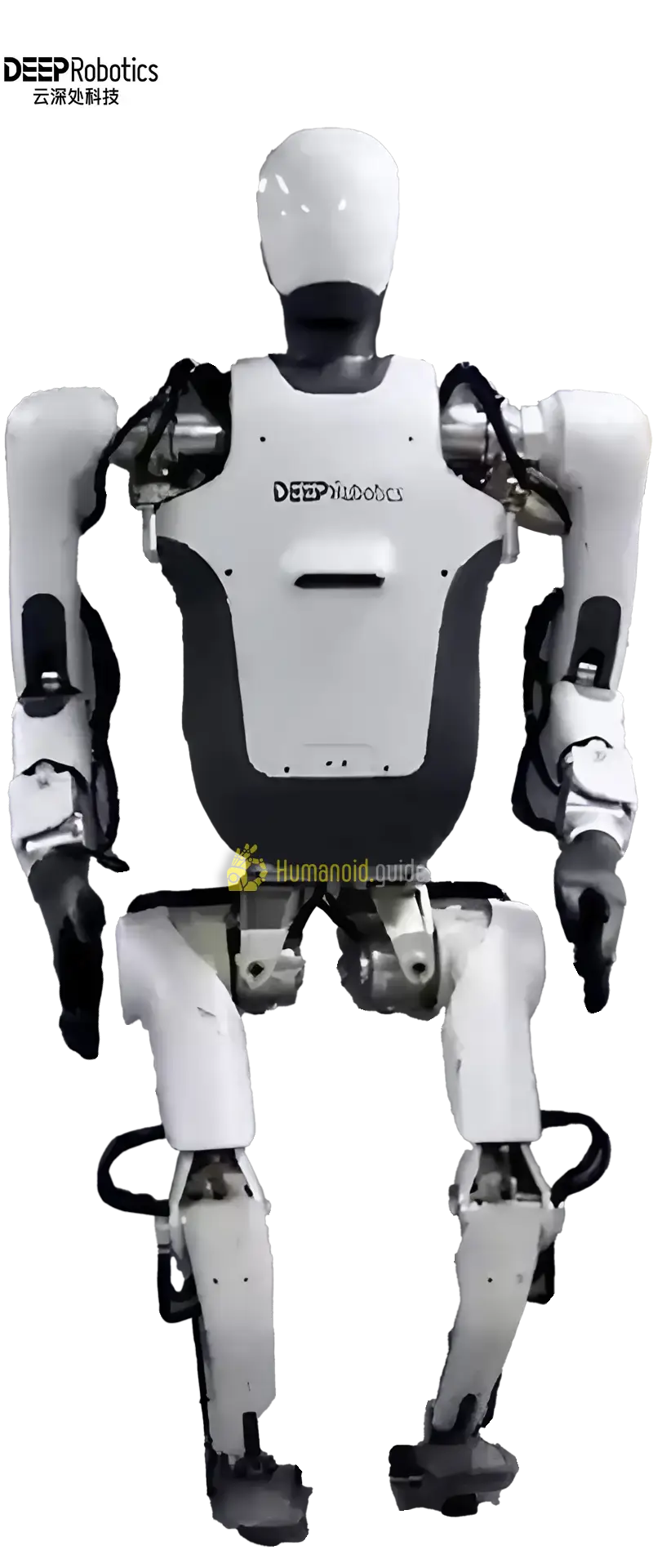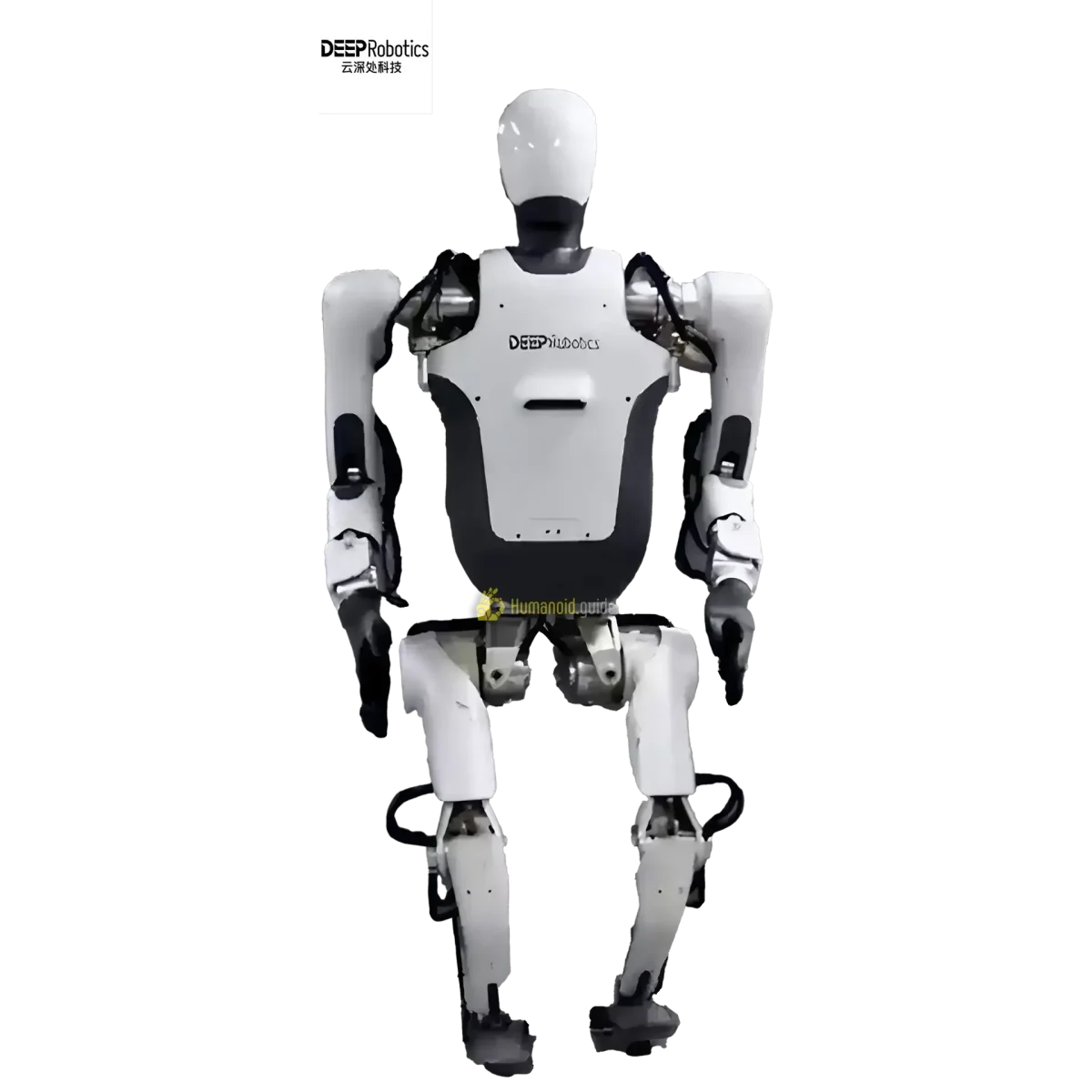
What is the Dr01?
The Deep Robotics DR01 is a quadruped robot from Deep Robotics, a Hangzhou-based company founded in 2017 best known for its Jueying series of legged robots. Unveiled in 2024, the DR01 is a prototype four-legged platform designed for industrial and research applications. Standing 175 cm tall and weighing 55 kg, it offers 12 degrees of freedom across its legs, enabling dynamic locomotion over rough terrain. With a maximum speed of 5.8 km/h and a standing payload of 15 kg, the DR01 targets tasks like inspection, logistics, and surveillance. Its 2-hour battery runtime and lightweight build differentiate it from heavier industrial quadrupeds like Boston Dynamics Spot.
Specifications
Here are the full technical specifications.
| Spec | Value |
|---|---|
| Height | 175 cm |
| Weight | 55 kg |
| Degrees of freedom | 12 |
| Battery life | 2 hours |
| Max speed | 5.8 km/h |
| Payload | 15 kg (standing) |
| Price (new) | Undisclosed |
| Price (used range) | N/A (pre-order) |
Price & Value
New MSRP: Undisclosed (contact manufacturer)
Used range: N/A
Pricing for the DR01 has not been publicly disclosed by Deep Robotics. As a pre-order prototype, interested buyers must contact the manufacturer directly for a quote. Compared to competitors like the Boston Dynamics Spot ($74,500) and Unitree Go1 ($2,700), the DR01 likely carries a premium for its larger size and higher payload capacity, but exact figures remain unconfirmed. Until pricing is transparent, it is impossible to assess value or total cost of ownership. Given Deep Robotics' history with more affordable quadrupeds, the DR01 could undercut Spot's pricing while offering comparable performance, but this is speculative. Early adopters should clarify warranty, spare parts, and ongoing software support before committing.
Who Is It For?
Best for: - Industrial inspection teams needing a large, fast quadruped for outdoor sites (175 cm height, 5.8 km/h) - University research labs focused on legged locomotion and payload integration - Logistics companies exploring legged delivery for last-mile applications
Not for: - Indoor environments with tight spaces (no IP rating, large footprint) - Budget-constrained projects (pricing undisclosed, likely enterprise-scale) - Users requiring advanced manipulation (no arm/end-effector, only legged mobility)
Alternatives & Comparison
The Deep Robotics DR01 enters a competitive quadruped market dominated by Boston Dynamics Spot and Unitree Go1, but its larger size and higher payload suggest a different niche.
| Model | Price | Available | Key Difference |
|---|---|---|---|
| Boston Dynamics Spot | $74,500 | yes | Industrial-grade durability and API; DR01 is larger but less proven. |
| Unitree Go1 | $2,700 | yes | Lightweight consumer quadruped; DR01 targets heavier payload and outdoor use. |
Verdict: For industrial users needing a proven, rugged platform with extensive accessories, Spot remains the safer bet. The DR01, if priced competitively, could appeal to researchers wanting a larger, faster quadruped with higher payload, but its unproven reliability and lack of arm make it a risky venture until Deep Robotics releases full specs and support. Budget-conscious buyers are better served by the Go1.
Use Cases & Capabilities
Industrial Inspection
The DR01's leg design and 5.8 km/h top speed make it suitable for inspecting large outdoor industrial sites, power plants, or construction zones where wheeled robots cannot traverse uneven terrain. Its 55 kg weight and standing payload of 15 kg allow it to carry inspection sensors or small payloads. The 2-hour battery life may require hot-swappable packs or frequent charging points for all-day missions. Lacking an IP rating, the robot is not ideal for harsh weather or wet environments.
Research Platform
Academic labs studying legged locomotion, dynamic balancing, or quadrupedal payload integration will find the DR01's 12 DOF chassis a flexible testbed. Its large size and speed enable outdoor experiments that smaller quadrupeds cannot perform. The open architecture (assuming SDK availability) would allow custom control algorithms, although the lack of published specs on compute and communication means early adopters must verify compatibility. Compared to the Unitree Go1, the DR01 provides a heavier-duty platform but at an undisclosed cost.
Outdoor Surveillance
With a height of 175 cm, the DR01 can monitor perimeters or remote areas that ground-level robots cannot easily see over obstacles. The 5.8 km/h speed allows it to outpace walking guards, and the 2-hour runtime supports extended patrols with multiple charges. However, the absence of an arm or gripper means it cannot interact with objects, limiting it to passive surveillance. Night vision or thermal camera integration details are not yet known, which may reduce its effectiveness in low-light conditions.
History & Background
Deep Robotics, also known as DeepRobotics, was founded in 2017 in Hangzhou, China, and quickly gained attention with its Jueying series of robust, waterproof quadrupeds used for inspection and rescue. In 2024, the company unveiled the DR01, a larger quadruped platform that some early reports mistakenly described as a humanoid due to its bipedal-like torso profile. The DR01 is still in pre-production, with prototype units demonstrated navigating rough terrain and carrying loads up to 15 kg. No official release date has been announced, and detailed specifications remain sparse, but the robot signals Deep Robotics' expansion beyond its established smaller quadrupeds.
Buying Used — What to Check
Verify battery endurance Early prototypes may have degraded battery life; confirm runtime matches the 2-hour spec.
Check payload handling Ensure the 15 kg standing payload rating has been validated under dynamic conditions.
Assess software maturity Pre-production robots may have incomplete SDK or documentation.