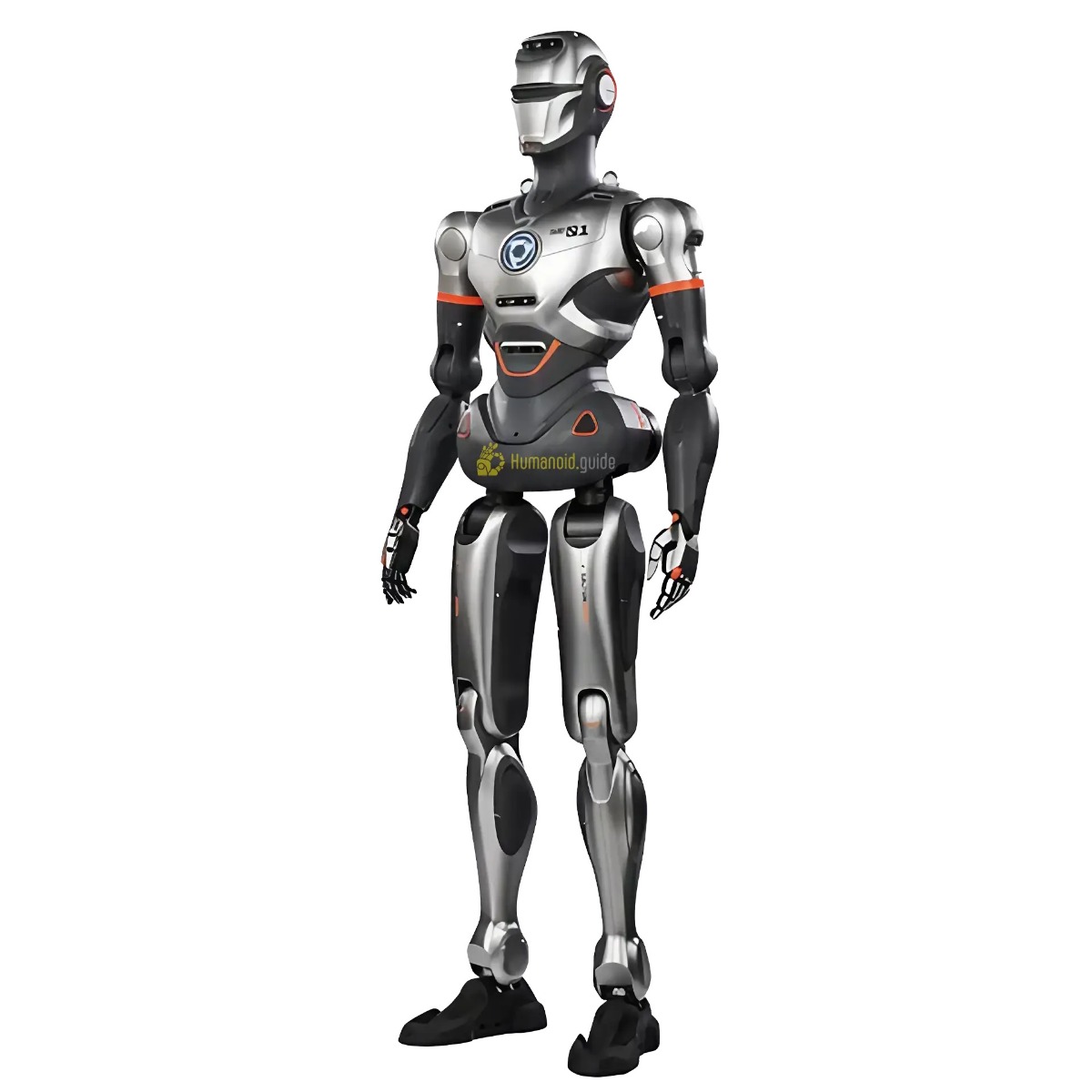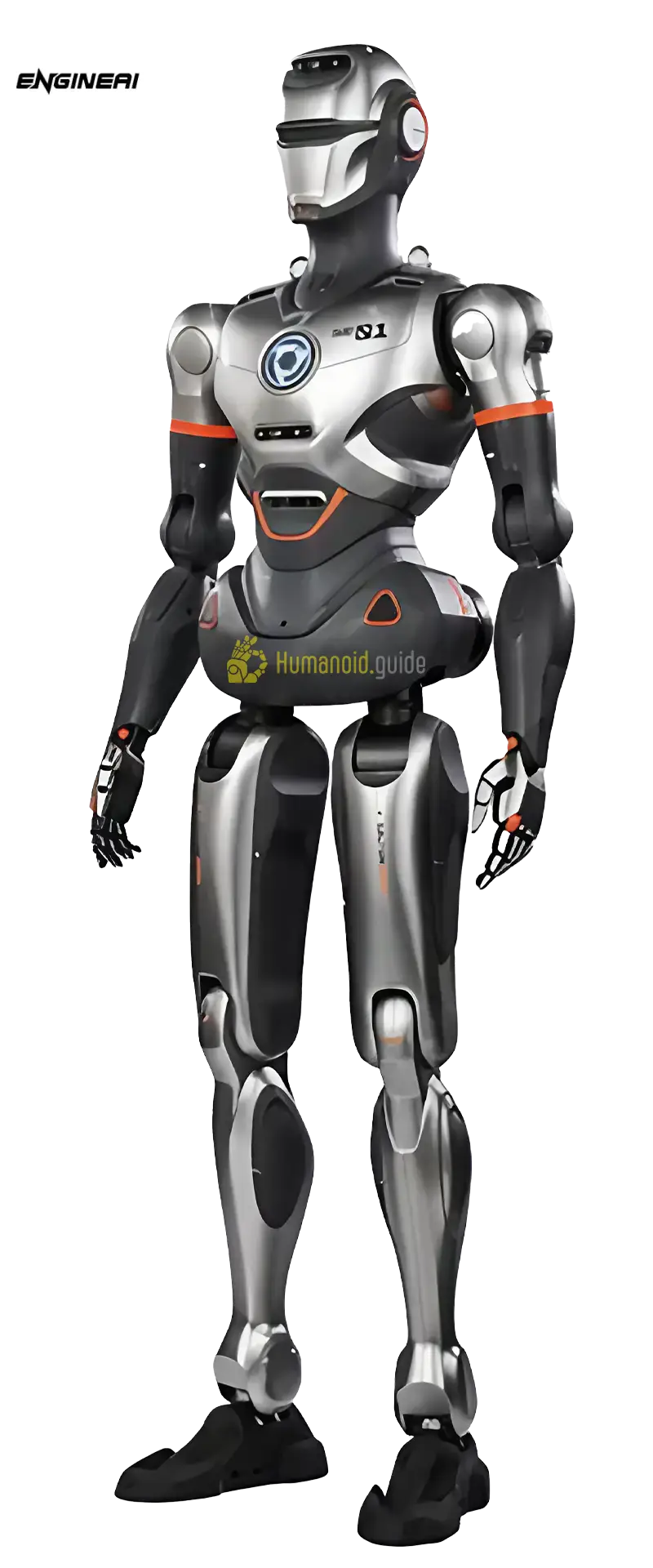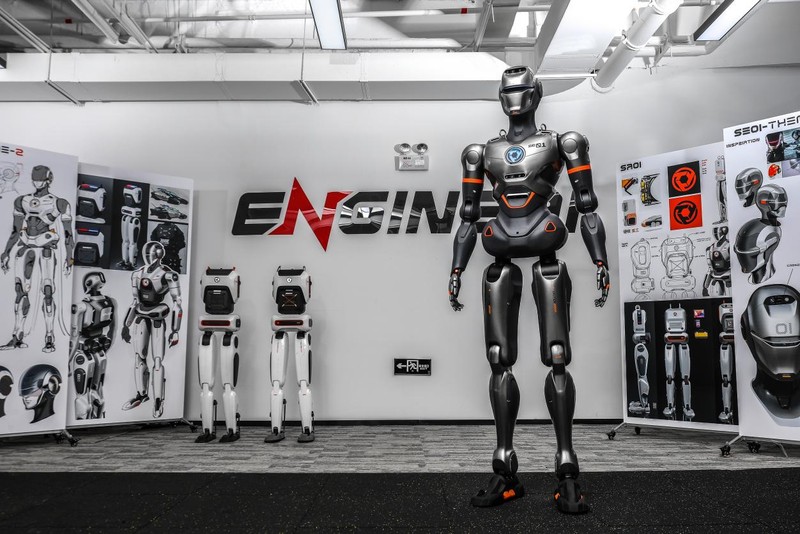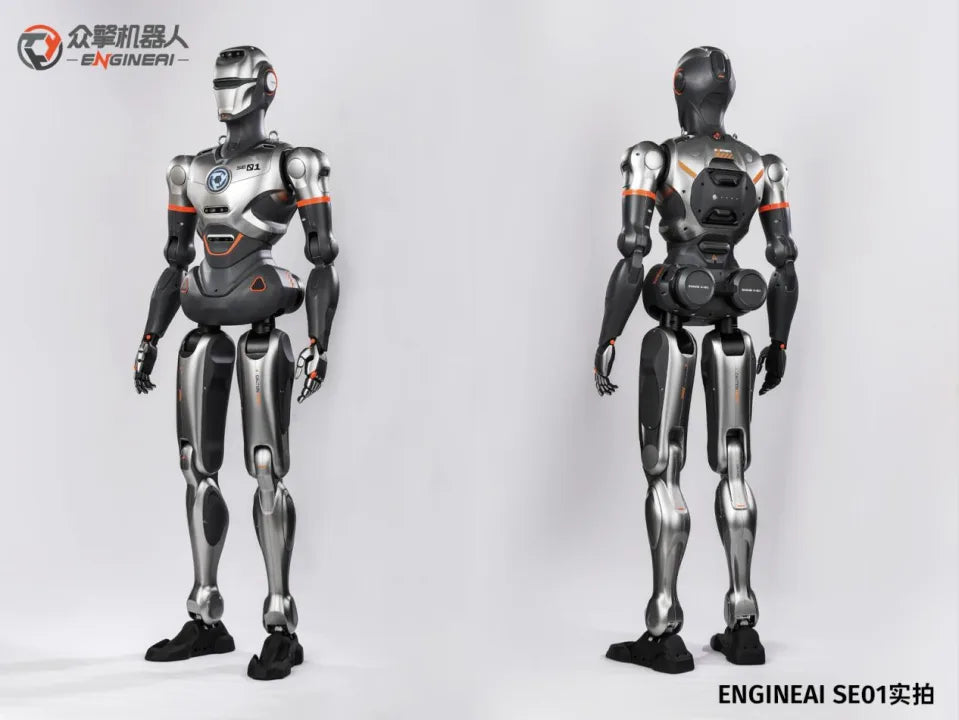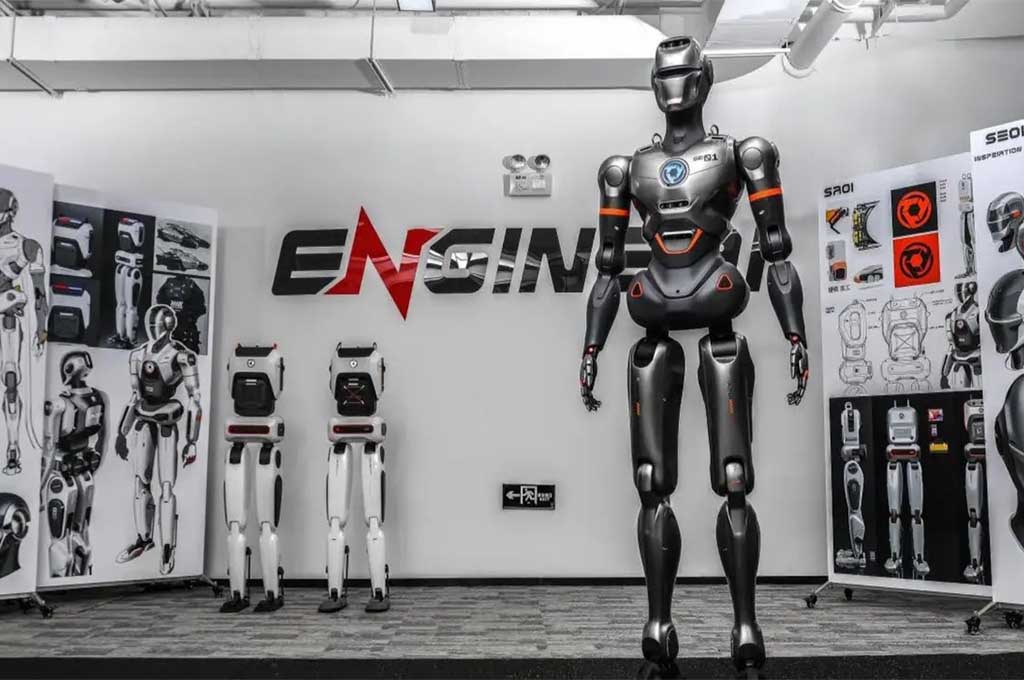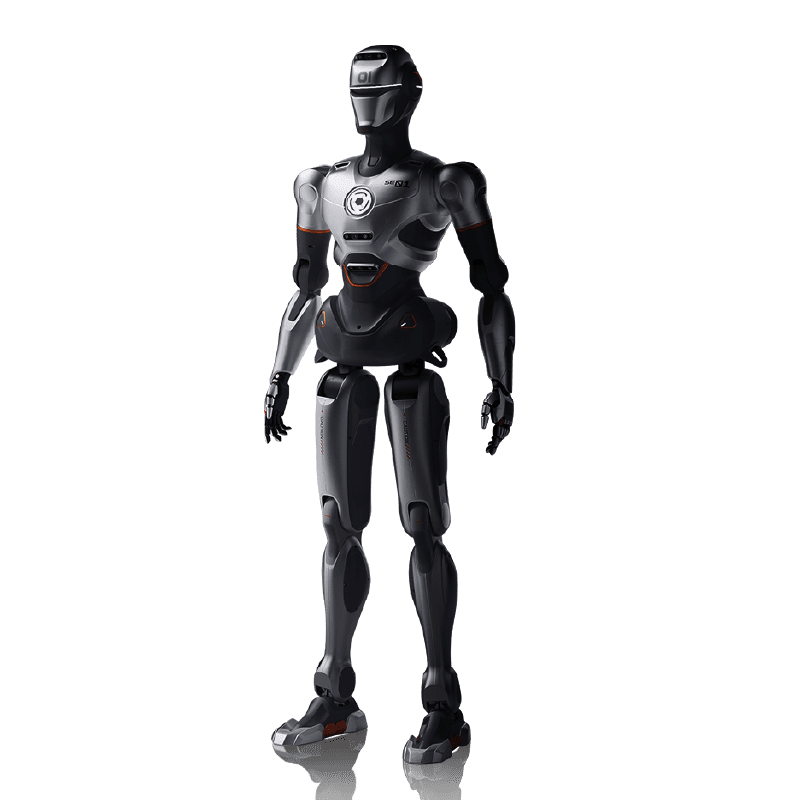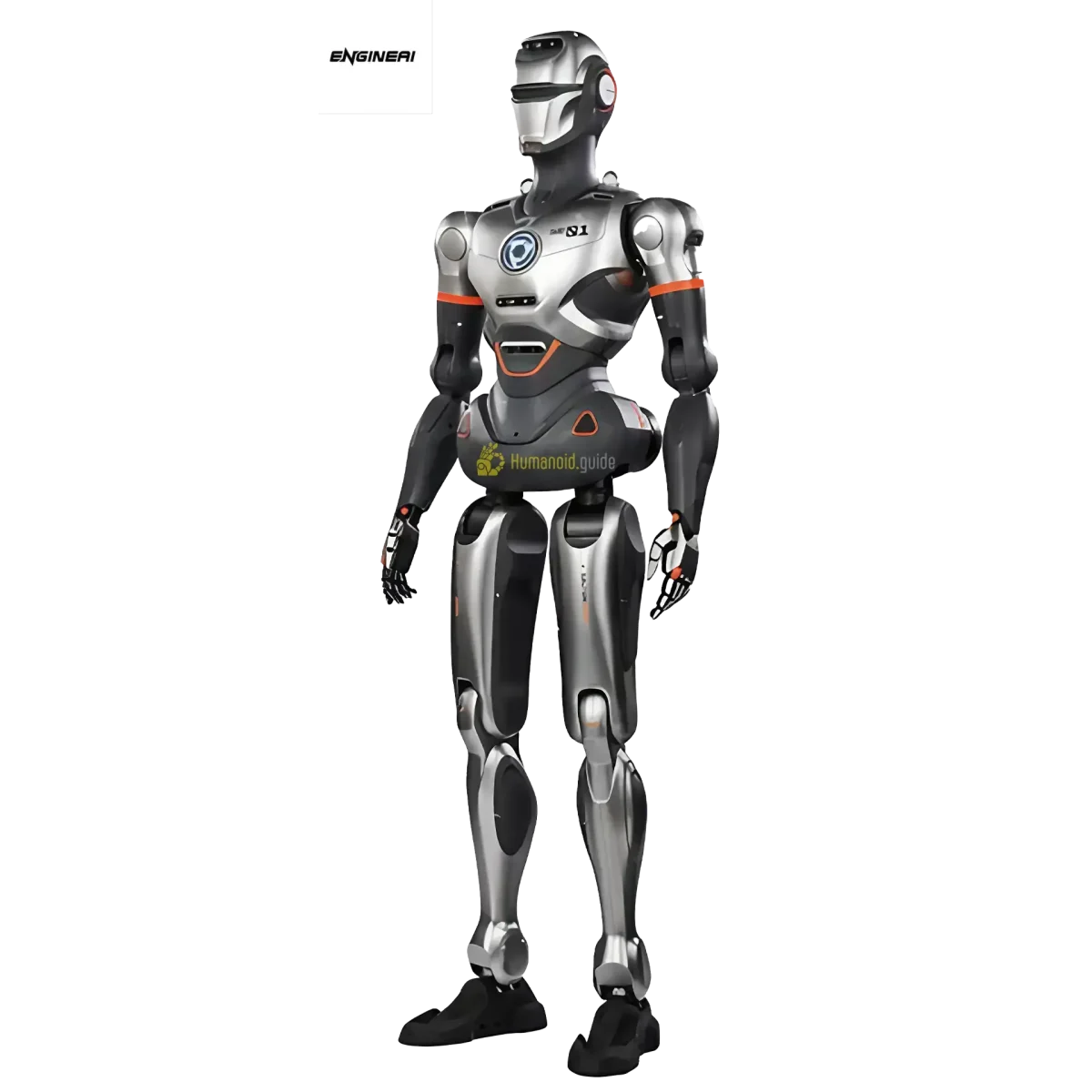
What is the Engineai Se01?
The EngineAI SE01 is a general-purpose humanoid robot developed by EngineAI Robotics, a startup based in Shenzhen, China founded in 2023. It is one of the first commercially available affordable humanoids, launching globally in December 2024 at a price of $20,000. Standing 1.70 m tall and weighing 55 kg, the SE01 features 12 degrees of freedom and a bipedal design optimized for natural walking. Its primary differentiator is its emphasis on human-like gait—EngineAI claims it achieves a more lifelike stride than similarly priced competitors, making it suitable for research labs, education, and public-facing demonstrations. While not as robust as heavier humanoids, its modular actuator design promises easier maintenance and lower total cost of ownership.
Specifications
Here are the full technical specifications.
| Spec | Value |
|---|---|
| Height | 1.70 m |
| Weight | 55 kg |
| Degrees of freedom | 12 |
| Battery life | 2 hours |
| Max speed | 4 km/h |
| Payload | Not specified |
| Price (new) | $20,000 |
| Price (used range) | ~$16,000-$19,000 (est.) |
Price & Value
New MSRP: $20,000
Used range: ~$16,000-$19,000 (est.)
The EngineAI SE01 debuted at $20,000, a remarkable price for a full-sized humanoid with bipedal locomotion. This undercuts many rivals like the Fourier GR-2 (~$40,000) and approaches the smaller Unitree G1 ($16,000), making it a compelling mid-tier option. At this cost, the SE01 offers strong value for gait research and general humanoid experimentation, but buyers should account for limited software and sparse technical support outside China. Depreciation is expected to be moderate, as the robot fills a niche with few direct competitors; used units from early adopters may list between $16,000 and $19,000 depending on condition and included accessories. Total cost of ownership includes regular actuator maintenance, which EngineAI markets as cheaper due to modularity, yet service infrastructure remains concentrated in Shenzhen. No official lease or rental programs are yet available, further favoring outright purchase for research groups. Non-Chinese buyers should also budget for import duties and shipping, which can add 15-25% to the landed cost.
Who Is It For?
Best for: - University research groups exploring bipedal locomotion (natural gait optimization at low hardware cost) - Public science museums and tech exhibitions requiring humanoid presence with human-like movement
Not for: - Industrial material handling (no confirmed arm payload, standing payload only 15 kg) - Long-duration autonomous tasks (2-hour battery limits continuous deployment)
Alternatives & Comparison
The SE01 enters an emerging affordable humanoid market alongside the Unitree G1 and Fourier GR-2. Each robot targets different niches: the G1 for compact, lower-cost research, the GR-2 for heavier payloads, while the SE01 prioritizes natural gait at a mid-range price.
| Model | Price | Available | Key Difference |
|---|---|---|---|
| Unitree G1 | $16,000 | yes | Compact, lower height/weight, less advanced gait |
| Fourier GR-2 | ~$40,000 (est.) | yes | Higher payload capacity (~30 kg arm payload), more robust |
Verdict: For labs focused on gait research and human-robot interaction demos, the SE01 offers the best combination of lifelike walking and affordability. The Unitree G1 is a better choice if space is tight or if a pre-configured research stack is needed, while the Fourier GR-2 suits those who need actual strength and arm dexterity beyond walking. However, the SE01’s walking performance remains to be independently verified, so buyers should test gait realism thoroughly before committing.
Use Cases & Capabilities
Natural Gait Research
The SE01 is ideal for universities studying bipedal locomotion algorithms. Its 12-DOF design and 4 km/h walking speed provide a capable platform for testing gait generation, balance control, and terrain adaptation. Researchers can leverage its modular actuators to experiment with different walking patterns at a fraction of the cost of higher-end robots like Atlas or Digit. The reported natural gait characteristic makes it particularly useful for studies seeking human-like motion, though independent validation of walking quality is still limited as of 2026. Some early adopters have shared video footage online that appears smooth and natural, but peer-reviewed benchmarks are absent. Labs must also consider the 2-hour battery constraint for extended experiments.
Education and STEM Outreach
At $20,000, the SE01 brings humanoid robotics into the budgets of many undergraduate and graduate programs. Students can program walking, object interaction, and sensor integration on a full-sized humanoid rather than a small desktop robot. Its modular design facilitates hands-on maintenance and customization, giving students practical experience with actuator replacement and debugging. However, limited software documentation and community support may present challenges for beginner-level courses. As the platform matures, it could become a standard teaching tool, but for now it suits programs with strong robotics curricula willing to develop their own codebase.
Public Demonstration and Events
The SE01’s natural gait and humanoid form attract visitors in museums, trade shows, and retail environments. It can serve as a moving exhibit, performing simple gestures or guided walking routes. With a 2-hour battery, it can operate for extended demonstrations with planned charging breaks. The robot’s relatively low weight (55 kg) and compact stature also ease transportation between venues. Event organizers should note the noise from actuators may be noticeable in quiet settings, and the robot lacks interactive speech capabilities, requiring external systems for full visitor engagement.
History & Background
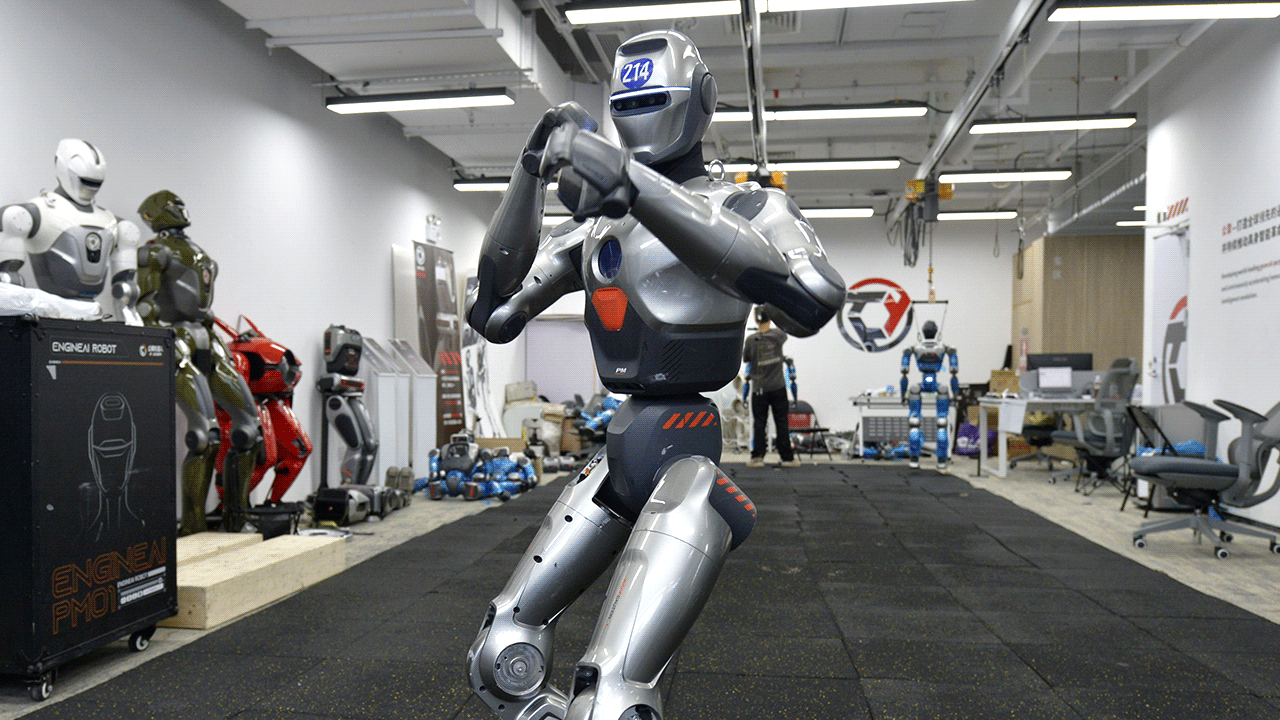
EngineAI Robotics, founded in 2023 in Shenzhen, emerged from China’s vibrant hardware startup ecosystem. The SE01 humanoid was rapidly developed and revealed in summer 2024, capturing attention for its human-like walking and a then-unheard-of $20,000 price. Global pre-orders opened on December 24, 2024, and first units shipped to universities and private labs in early 2025. By 2026, the SE01 has not seen a second-generation update, but EngineAI has applied its learnings to a lighter research model, the PM01, and a heavier payload variant, the T800. The company remains privately held and continues to refine its locomotion algorithms. Early adopters praise the gait but note immature software tooling.
Buying Used — What to Check
Verify battery health and cycle count Battery degradation can significantly reduce the already short 2-hour runtime.
Confirm actuator wear and gait calibration Modular actuators wear over time and may require recalibration for natural walking.
Check for after-market modifications Early academic owners may have modified hardware or software, affecting reliability.