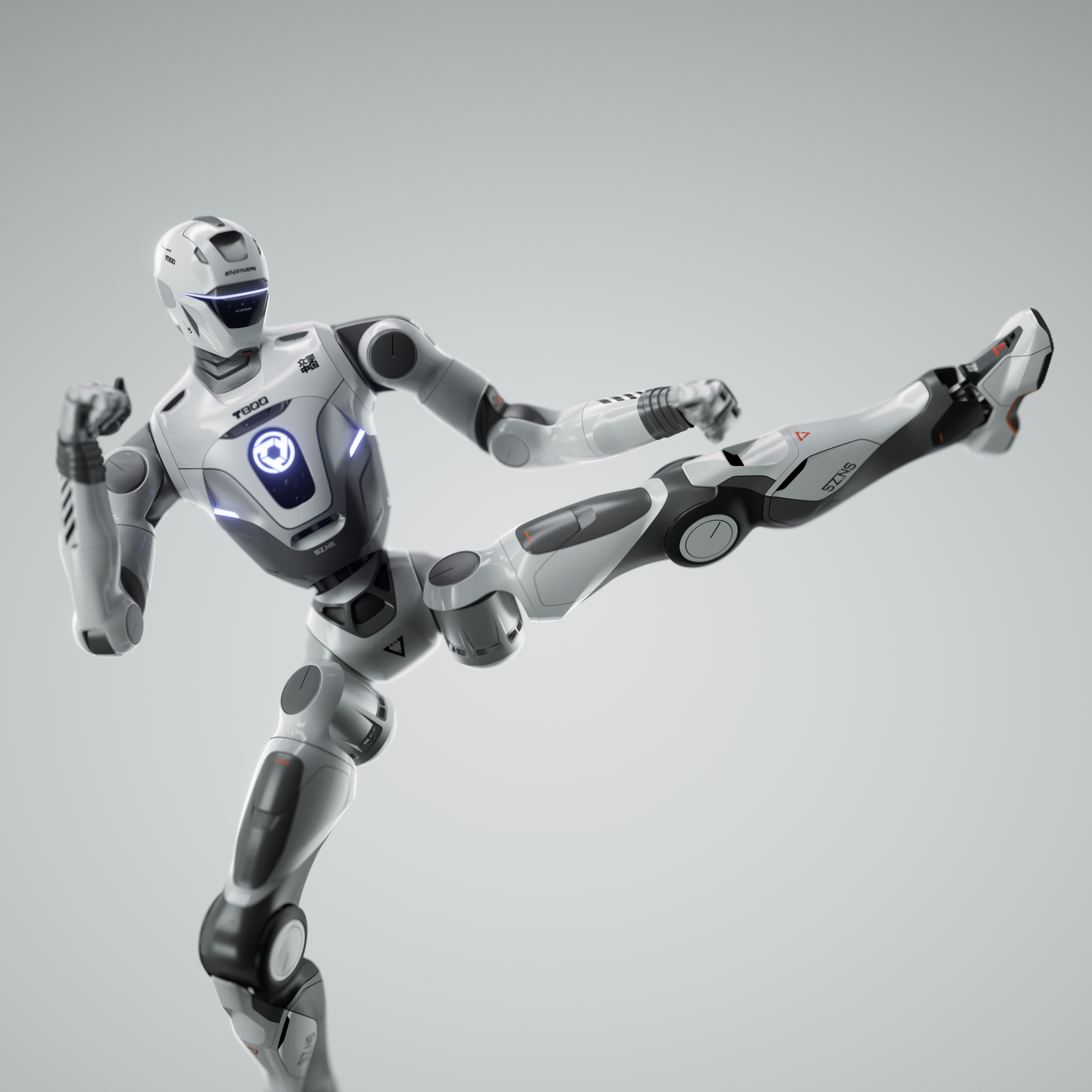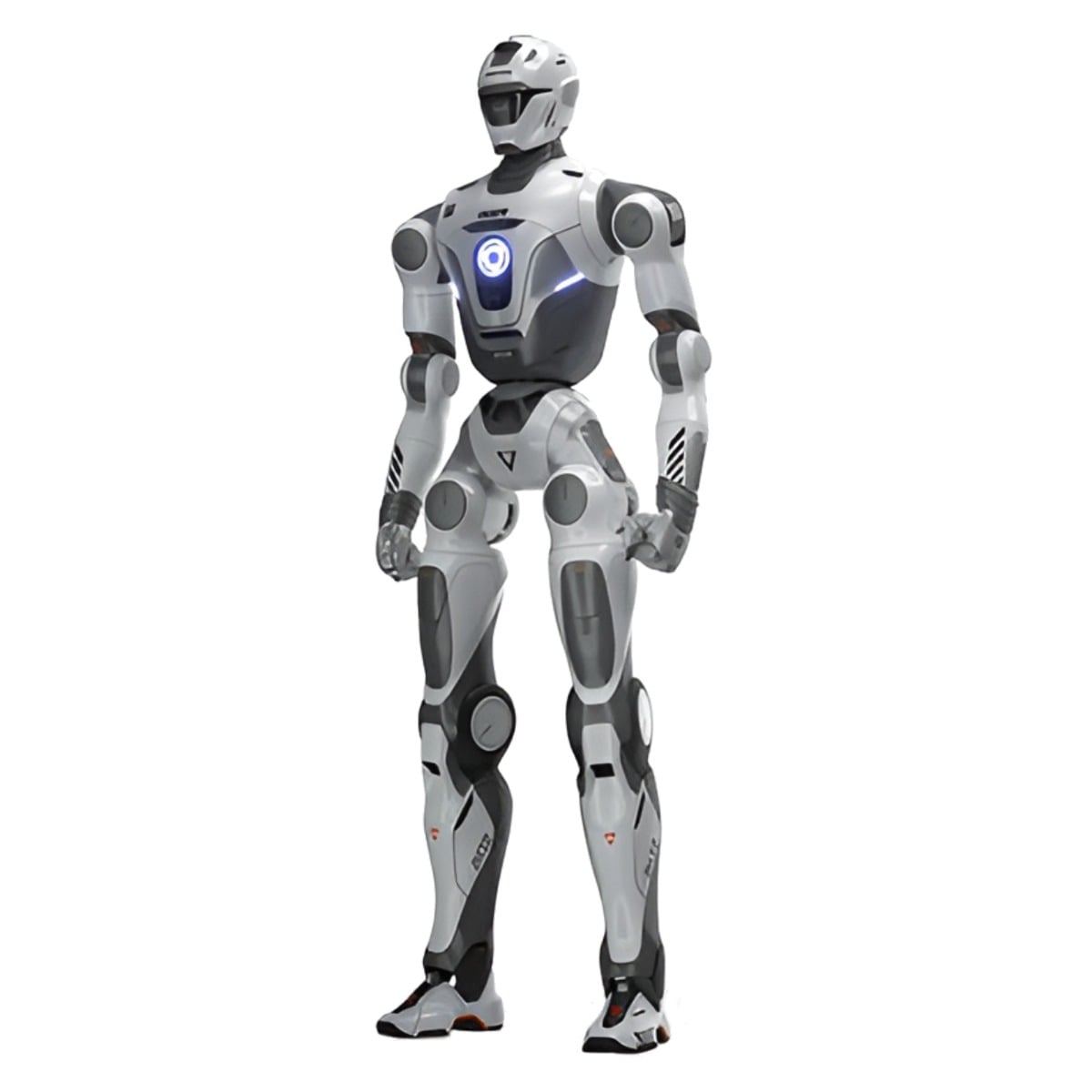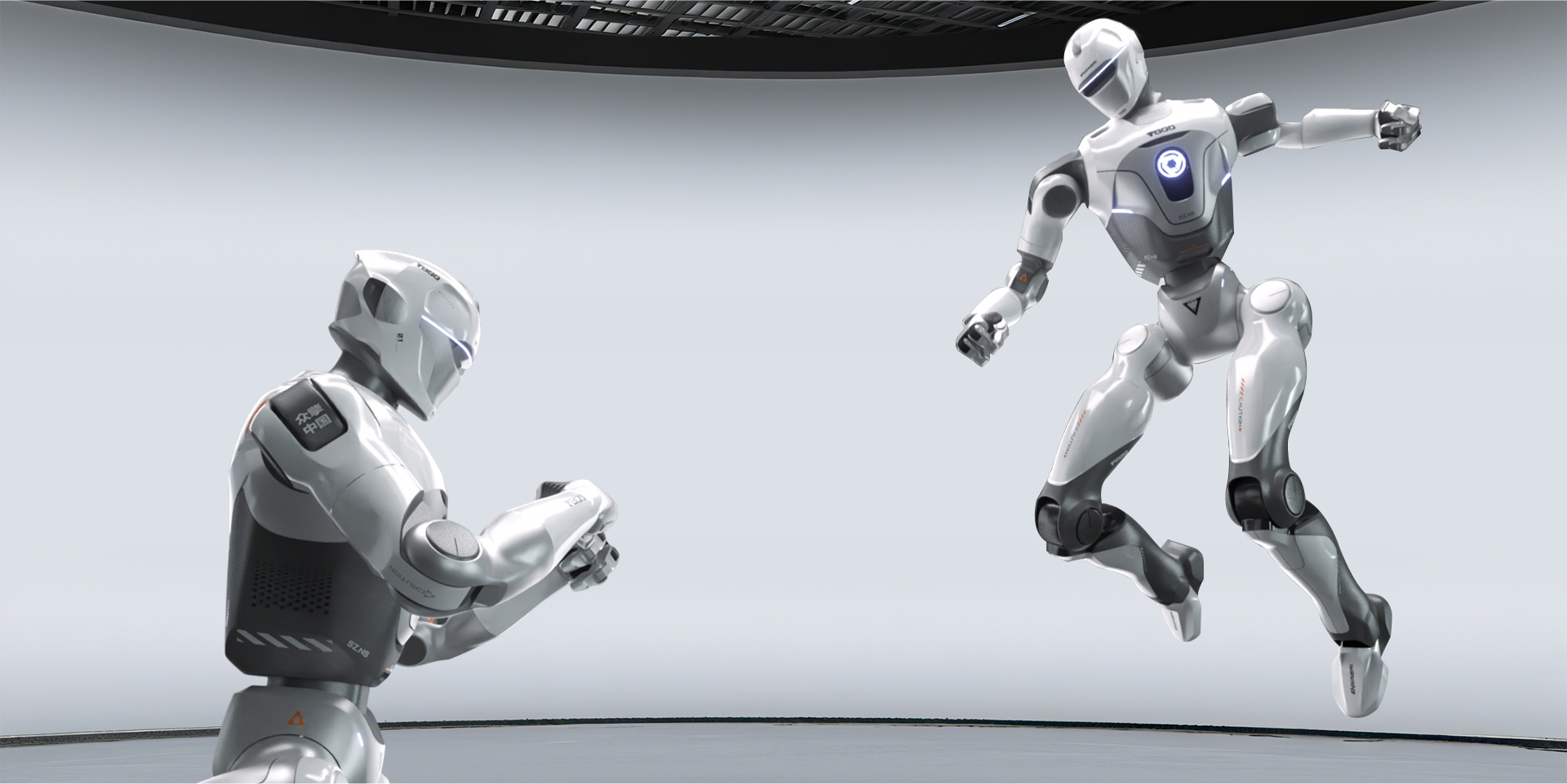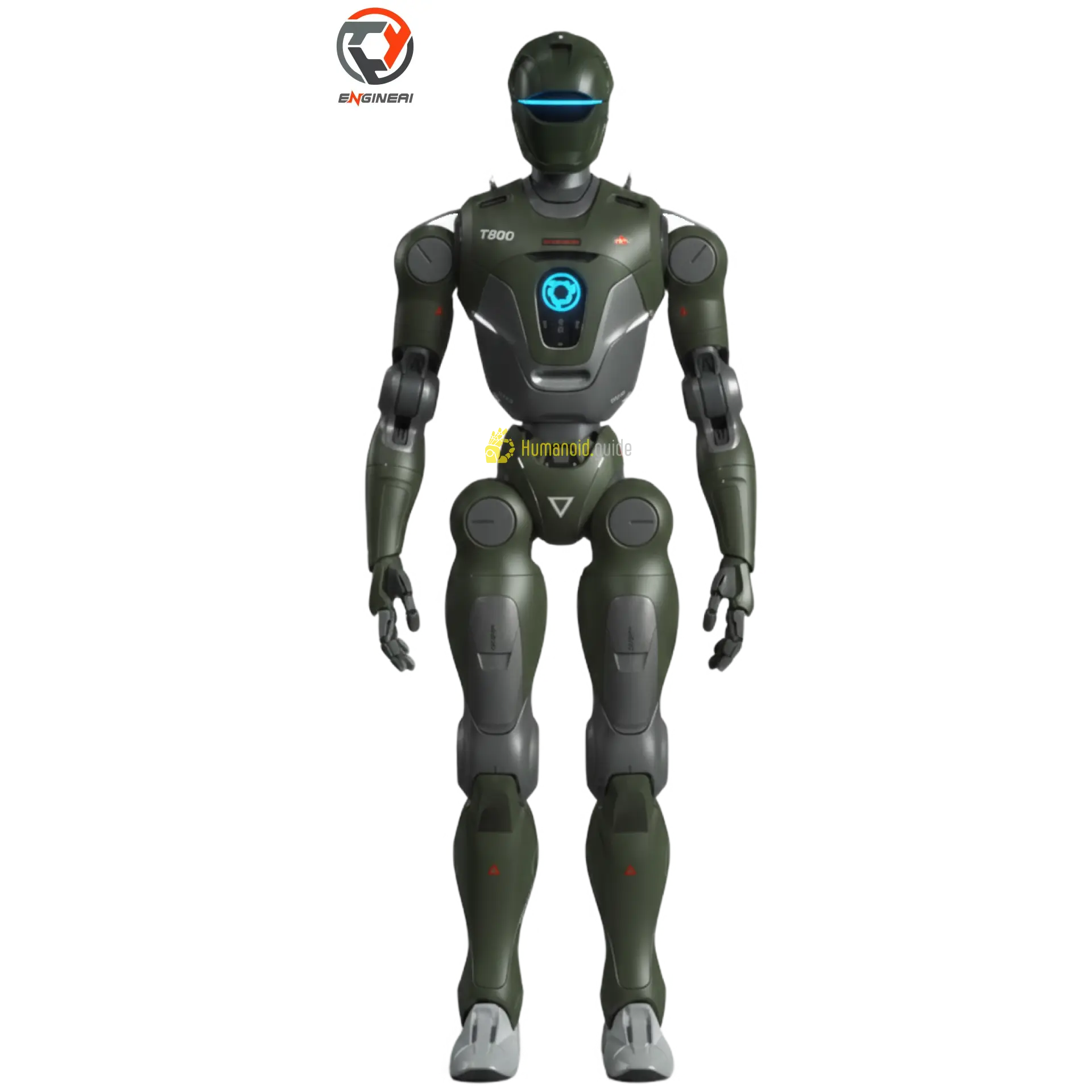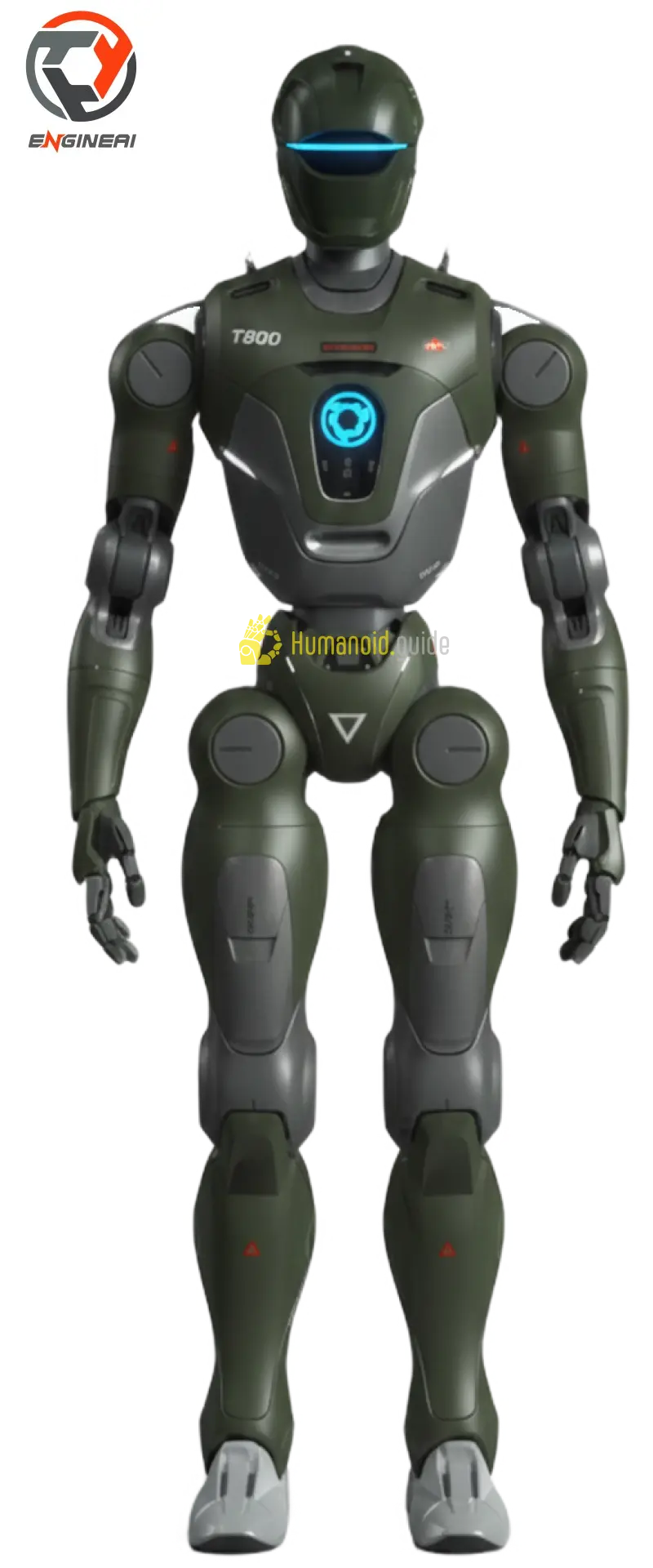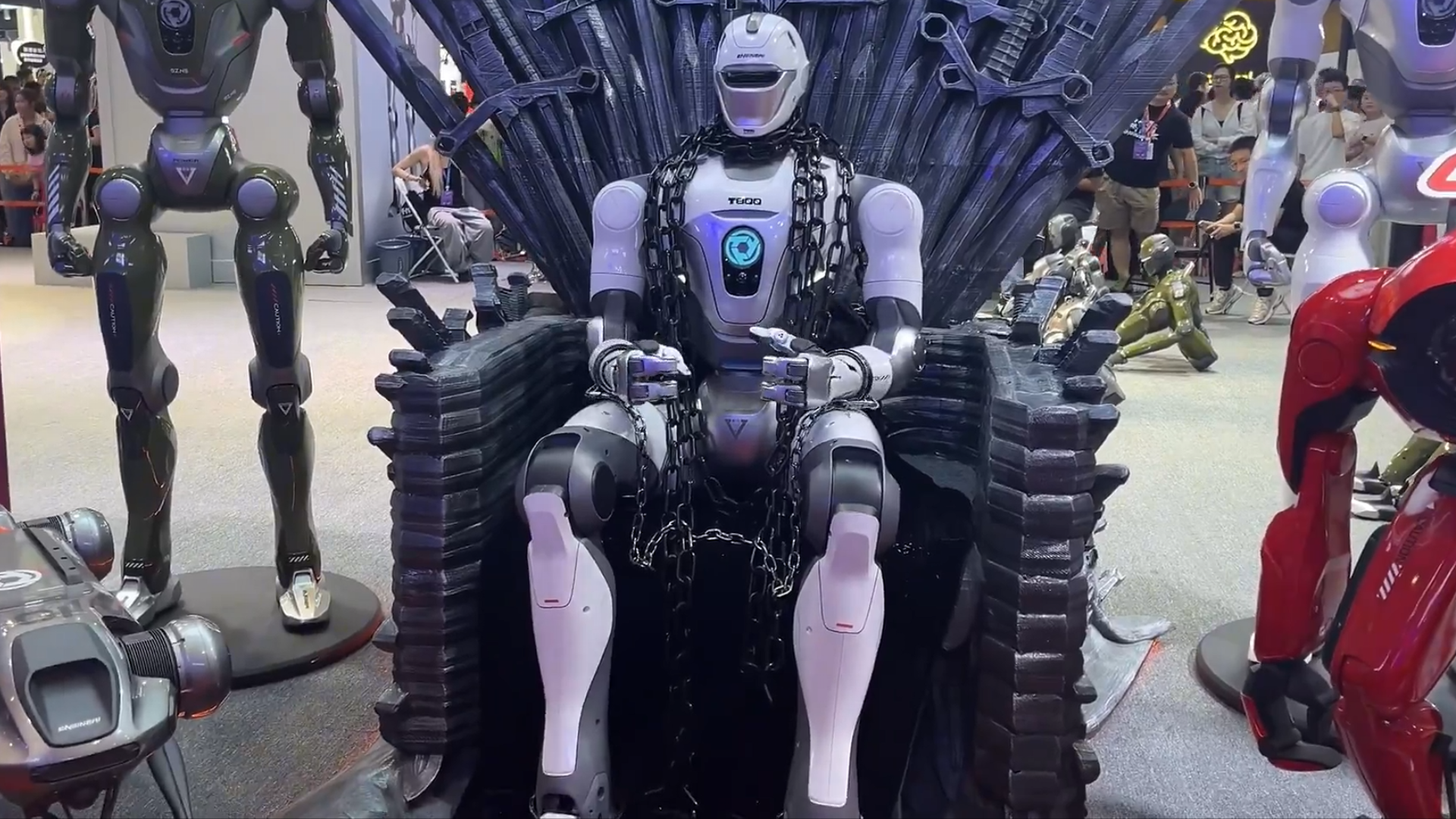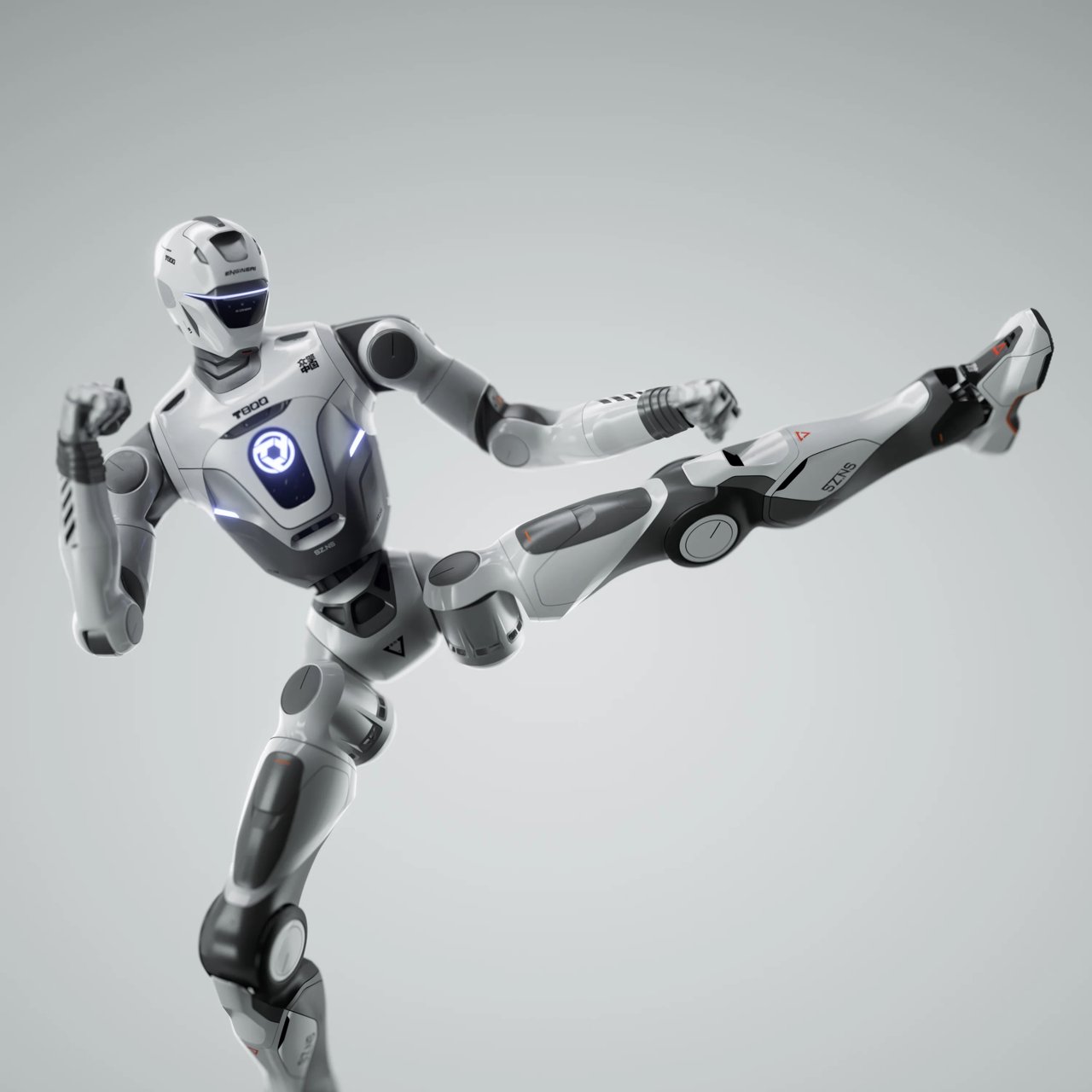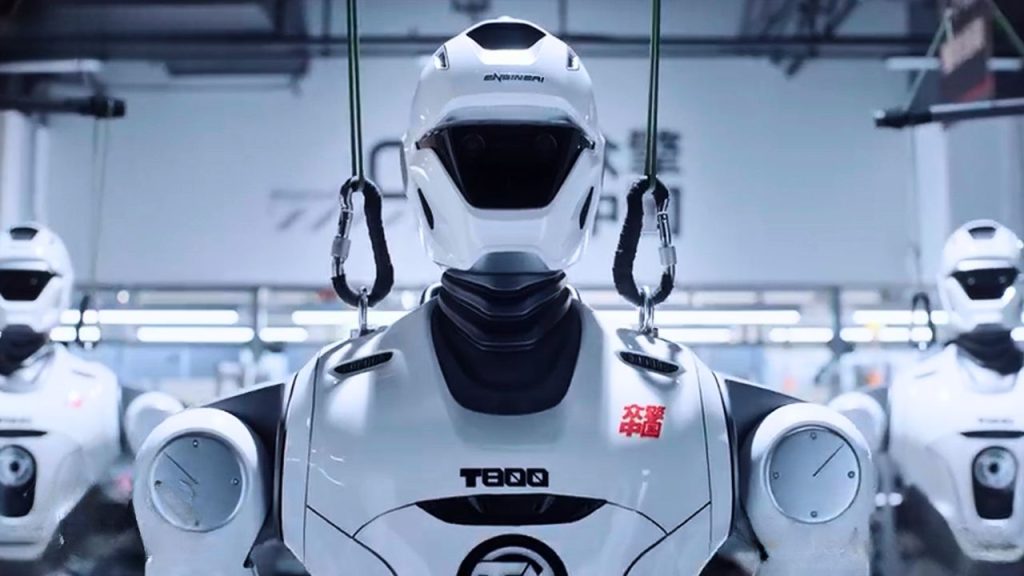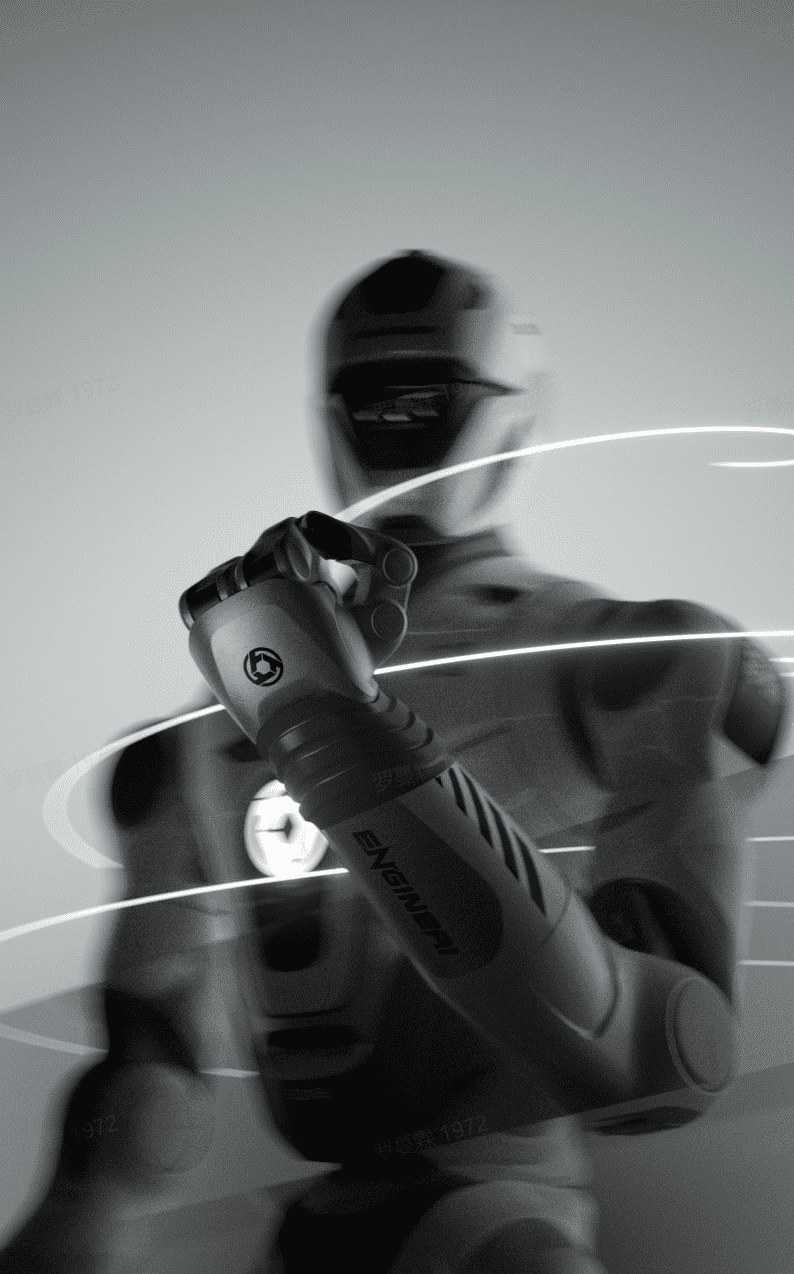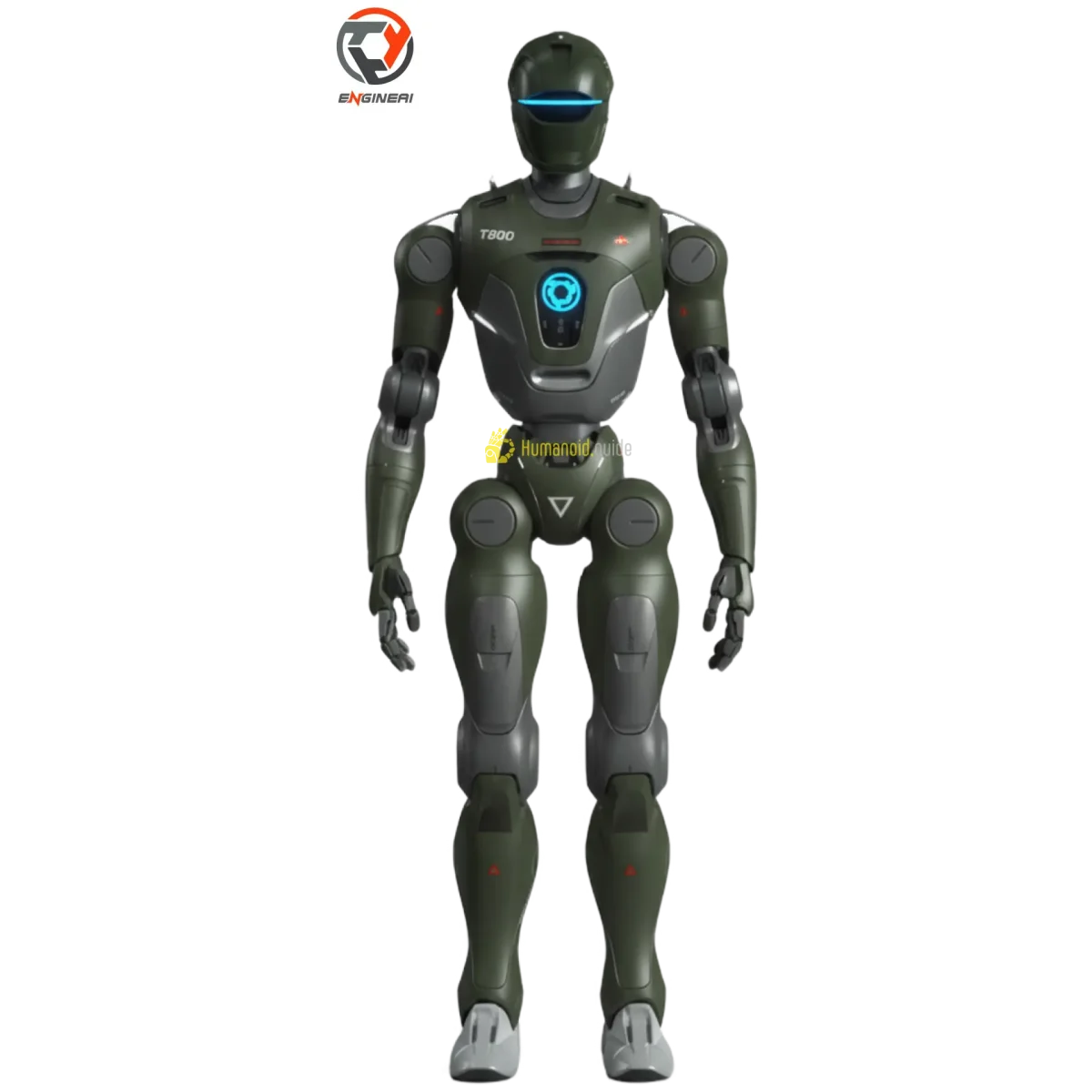
What is the Engineai T800?
The EngineAI T800 is a full-size humanoid robot from EngineAI Robotics, a Chinese robotics company. Standing at 173 cm and weighing 60 kg, it is designed for industrial automation, inspection, and heavy-duty tasks. Its 41 degrees of freedom (29 in the body plus 12 in the hands) enable complex manipulation and bipedal movement. The robot is powered by electric servo motors with harmonic drives, an embedded industrial computer (likely NVIDIA Orin-class), and advanced perception with dual 1080p depth cameras. A key differentiator is its focus on gait stability and payload capacity, with a standing payload of 20 kg. The T800 is still in development but represents EngineAI's push into full-scale humanoid robotics.
Specifications
Here are the full technical specifications.
| Spec | Value |
|---|---|
| Height | 173 cm |
| Weight | 60 kg |
| Degrees of freedom | 41 |
| Battery life | 2 hours |
| Max speed | 6 km/h |
| Payload | Not specified |
| Price (new) | $85,000 |
| Price (used range) | N/A |
Price & Value
New MSRP: $85,000
Used range: N/A
The EngineAI T800 carries an indicated price of $85,000, placing it in the mid-range of industrial humanoids, alongside the Unitree H1 ($90,000) and below the upcoming Tesla Optimus (expected under $20,000) but with a different capability set. At present, no used units exist, so depreciation and resale value are speculative. Value is heavily dependent on final payload and reliability specifications, which remain undisclosed. Enterprise buyers should budget for ongoing maintenance, software licenses, and potential customization, which could significantly increase the total cost of ownership. Compared to research-focused competitors, the T800’s enterprise-only positioning may limit aftermarket support and community resources, though its competitive pricing could drive adoption in industrial settings once released.
Who Is It For?
Best for: - Industrial automation teams evaluating heavy-lifting humanoid robots (20 kg standing payload) for inspection and manipulation tasks
Not for: - Research labs requiring open-source software or off-the-shelf purchase (enterprise-only with undisclosed arm payload)
Alternatives & Comparison
The EngineAI T800 competes in the emerging full-size industrial humanoid market, where buyers weigh cost, payload, and availability against robotic agility and AI integration.
| Model | Price | Available | Key Difference |
|---|---|---|---|
| Unitree H1 | $90,000 | yes | More agile and dynamic movement, lighter weight, focus on research and development. |
| Tesla Optimus | Undisclosed | no | Expected to be more affordable at scale, integrated with Tesla AI, still in development. |
| Figure 02 | Undisclosed | no | Designed for general-purpose humanoid tasks, strong AI integration, not yet commercially available. |
Verdict: For immediate industrial deployment with a known price, the Unitree H1 is the better choice today, offering a proven platform. The EngineAI T800’s focus on heavy-duty tasks and slightly lower price point could make it a strong contender once commercially available, especially for logistics and inspection where payload matters more than agility. The Tesla Optimus and Figure 02 remain longer-term bets with uncertain timelines and undisclosed costs.
Use Cases & Capabilities
Industrial Automation
The T800's robust bipedal design and 20 kg standing payload make it suitable for automating material handling on factory floors. It can transport workpieces between stations, assist in assembly lines, and operate in environments built for human workers without retooling. With the ability to walk at up to 6 km/h, the robot can cover significant floor space, although actual arm payload for tool holding remains unspecified. Its dual depth cameras and embedded compute enable real-time path planning and obstacle avoidance.
Inspection and Monitoring
Equipped with dual 1080p depth cameras and likely environmental sensors, the T800 can patrol industrial sites, data centers, or hazardous areas to capture visual data and detect anomalies. Its 41 DOF allows it to navigate stairs and uneven terrain, expanding inspection coverage beyond wheeled robots. The robot's 2-hour battery life may be limiting for large facilities, but hot-swappable batteries could mitigate downtime. Combined with remote monitoring, it can serve as a persistent presence in dangerous or remote locations.
Heavy Manipulation
Although specific arm payload ratings are not disclosed, the T800 is positioned for manipulation tasks like loading and unloading pallets, sorting heavy parcels, or operating machinery levers. Its full-size frame and 12-DOF hands promise dexterous grasping, but real-world performance in heavy lifting awaits validation. For applications where lifting 10-20 kg repetitively is needed, the T800 could fill a gap between lighter research robots and traditional industrial arms. Enterprise buyers should request a detailed payload demo before integration.
Logistics and Warehousing
Logistics centers can deploy the T800 for order picking, package transport, and palletizing, especially in dynamic environments where fixed automation is inflexible. The robot's height of 173 cm and weight of 60 kg make it human-proportioned, but it may require safety caging or speed restrictions around workers. Its 2-hour runtime may necessitate frequent recharging, so fleet management software and charging infrastructure will be critical. The T800’s 6 km/h walking speed is respectable but not exceptionally fast for large warehouses.
History & Background
EngineAI Robotics, headquartered in Shenzhen, China, emerged as a notable player in the humanoid robotics space with the unveiling of its SE01 and PM01 models. The T800 was first shown in 2025 as a full-size, high-payload platform aimed at industrial users. It shares the SE01’s bipedal locomotion technology but is optimized for heavier tasks. As of 2026, the T800 remains in the prototype stage with enterprise availability expected. No generational variants have been announced, and the company has not indicated any ownership changes. EngineAI’s website highlights the T800’s gait control and dynamic capabilities, positioning it between the agile SE01 and the lightweight PM01 in its product lineup.
Buying Used — What to Check
Verify payload documentation Arm payload specifications are critical for manipulation tasks and have not been publicly disclosed.
Confirm battery degradation The 2-hour runtime may degrade over time, affecting operational efficiency, especially in continuous shift environments.
Check availability of spare parts As a pre-commercial model, spare parts and service networks may be limited, impacting long-term maintenance.