What is the Engineered Arts Mesmer?
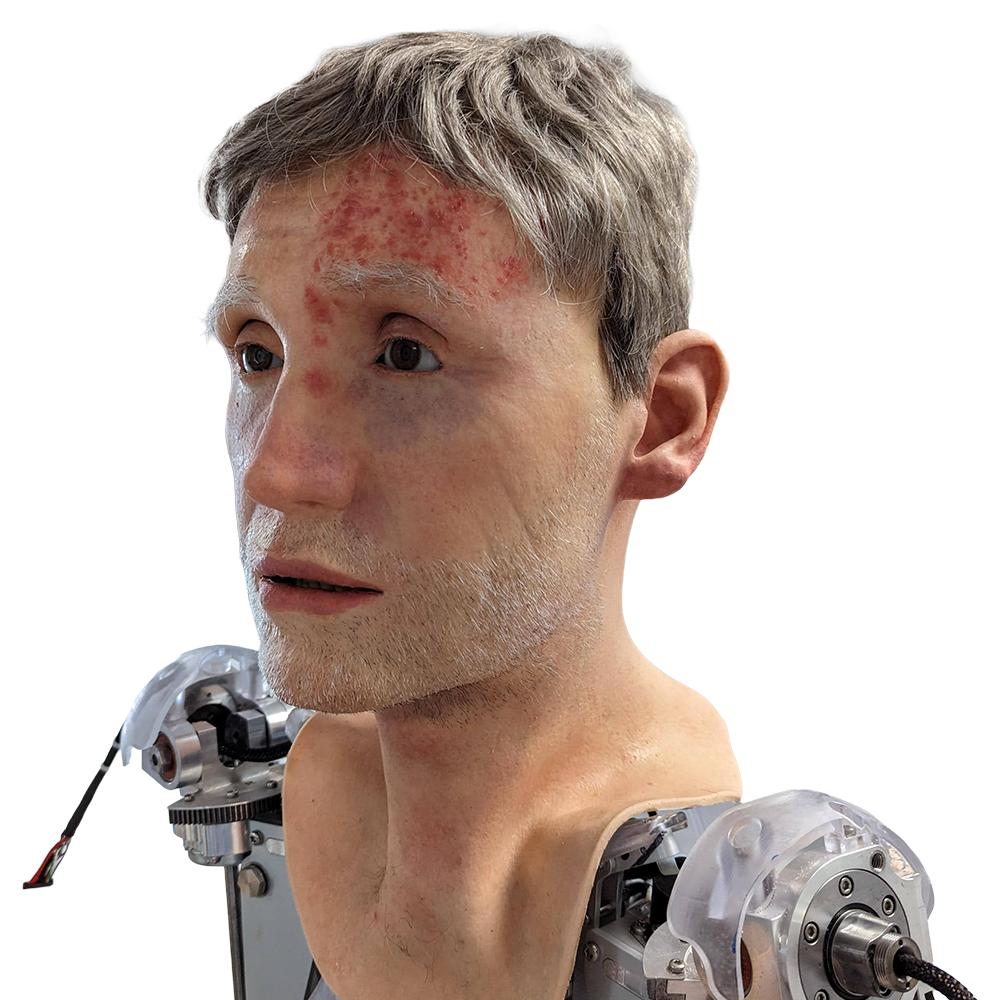
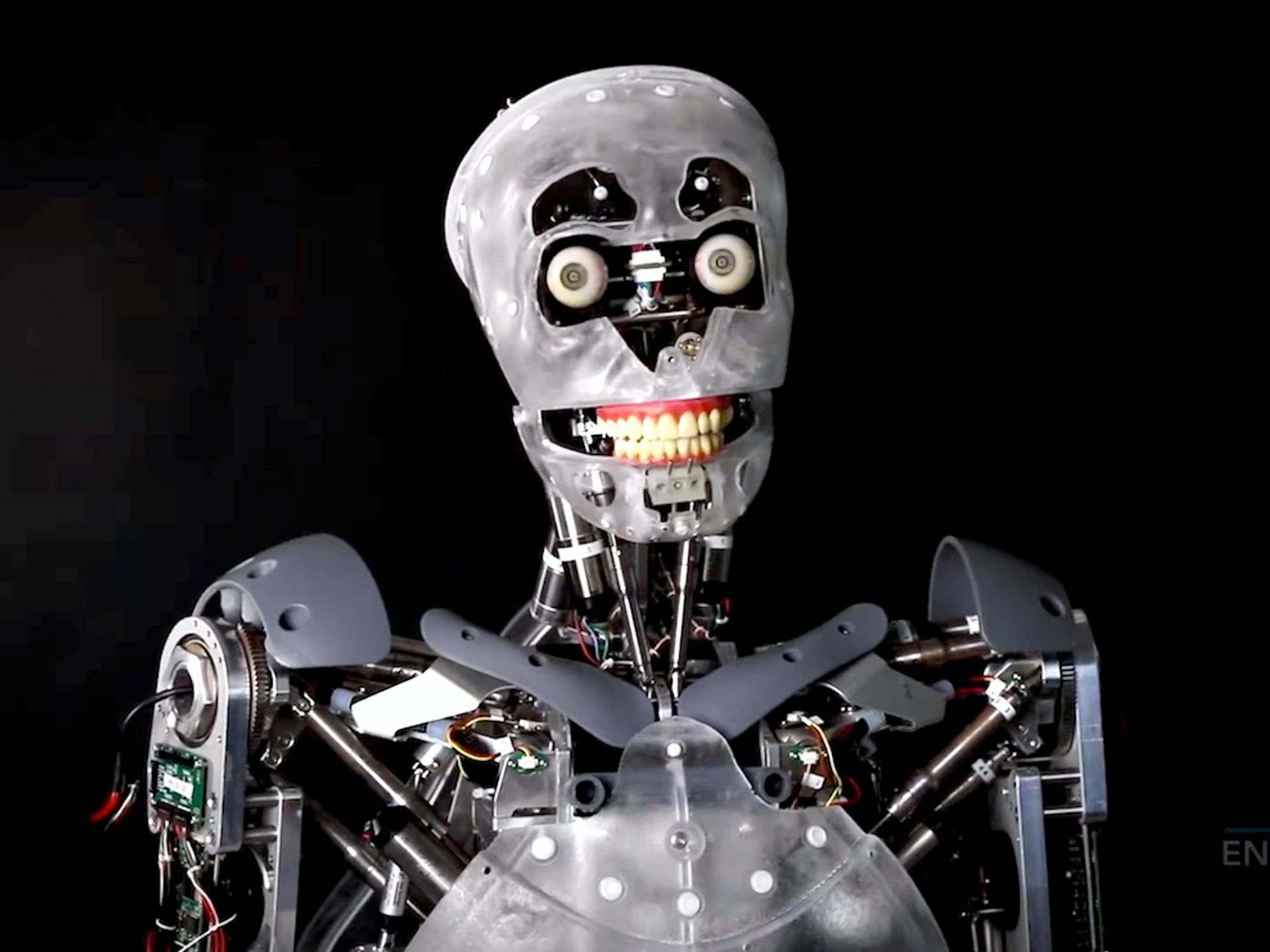
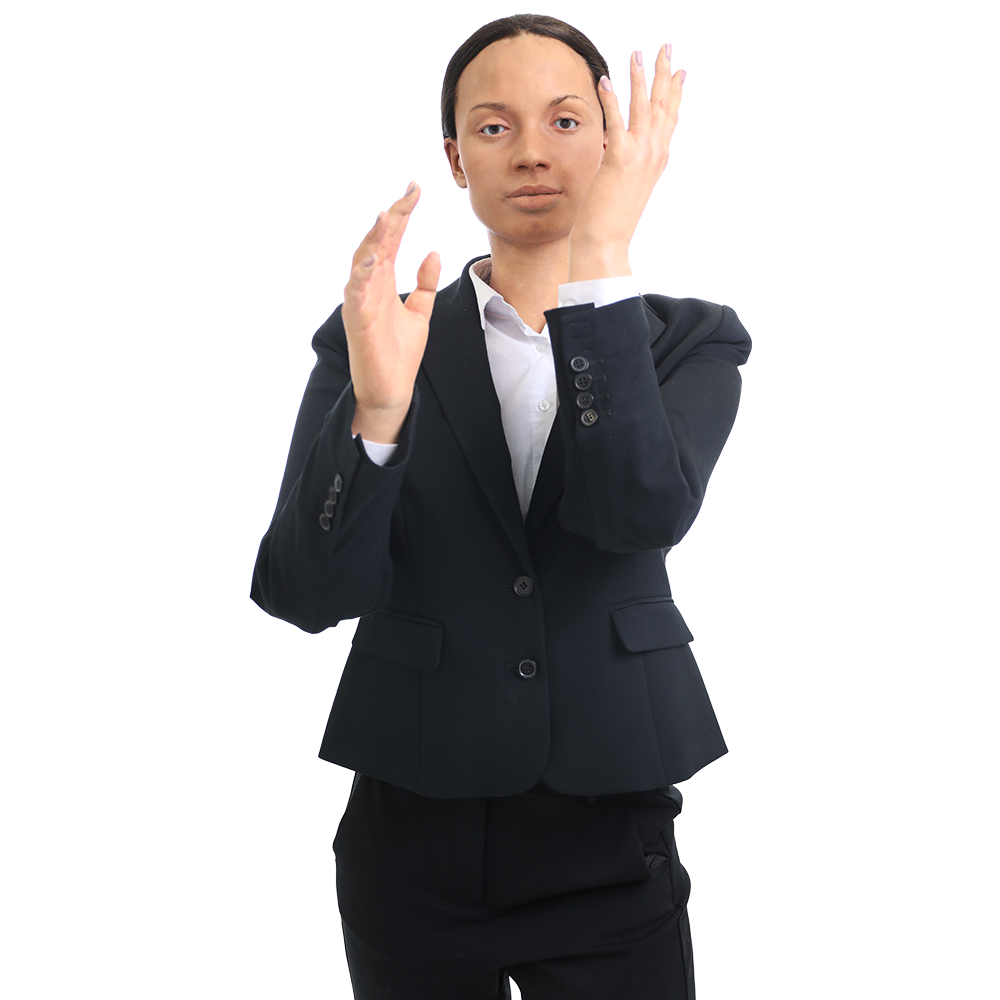
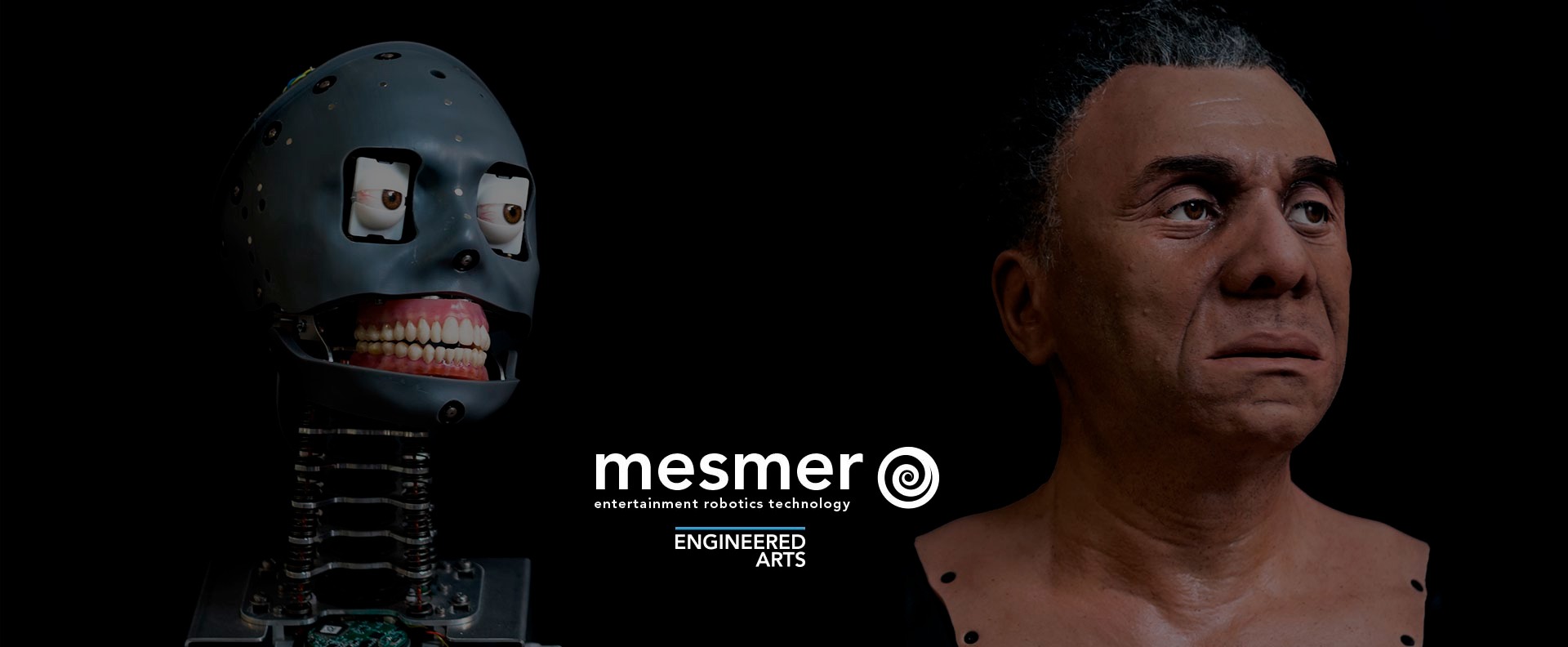
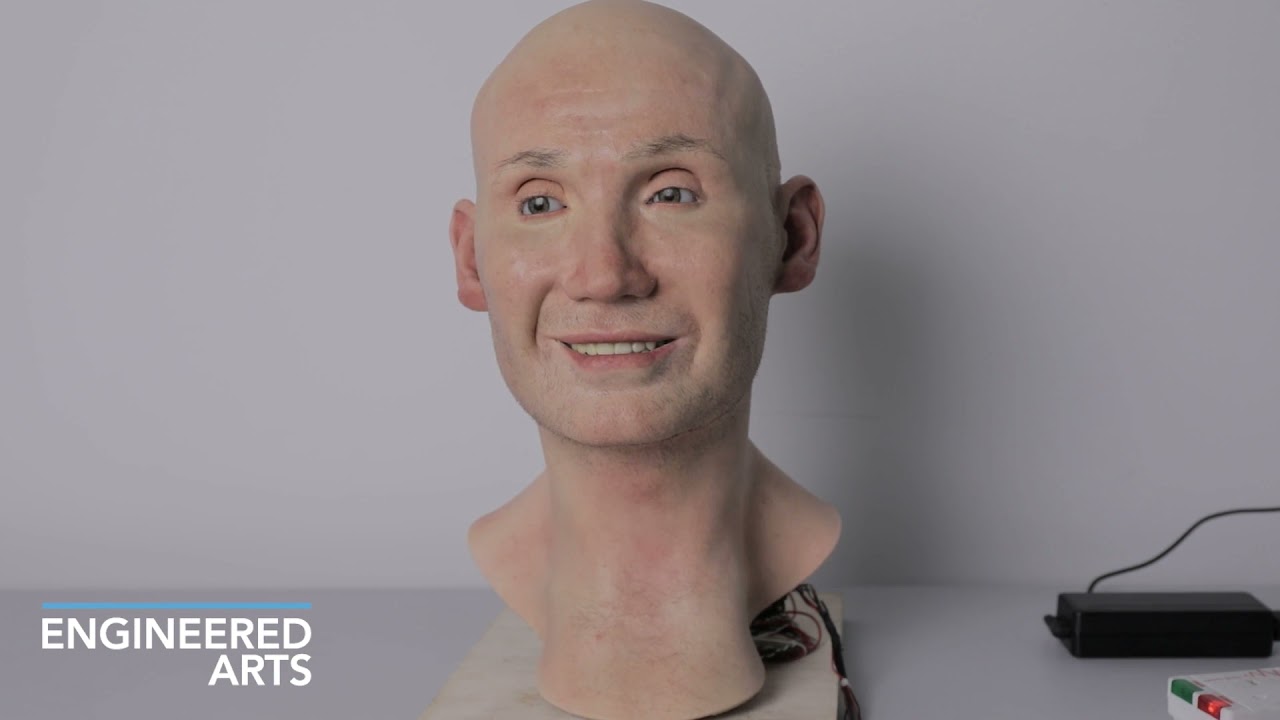
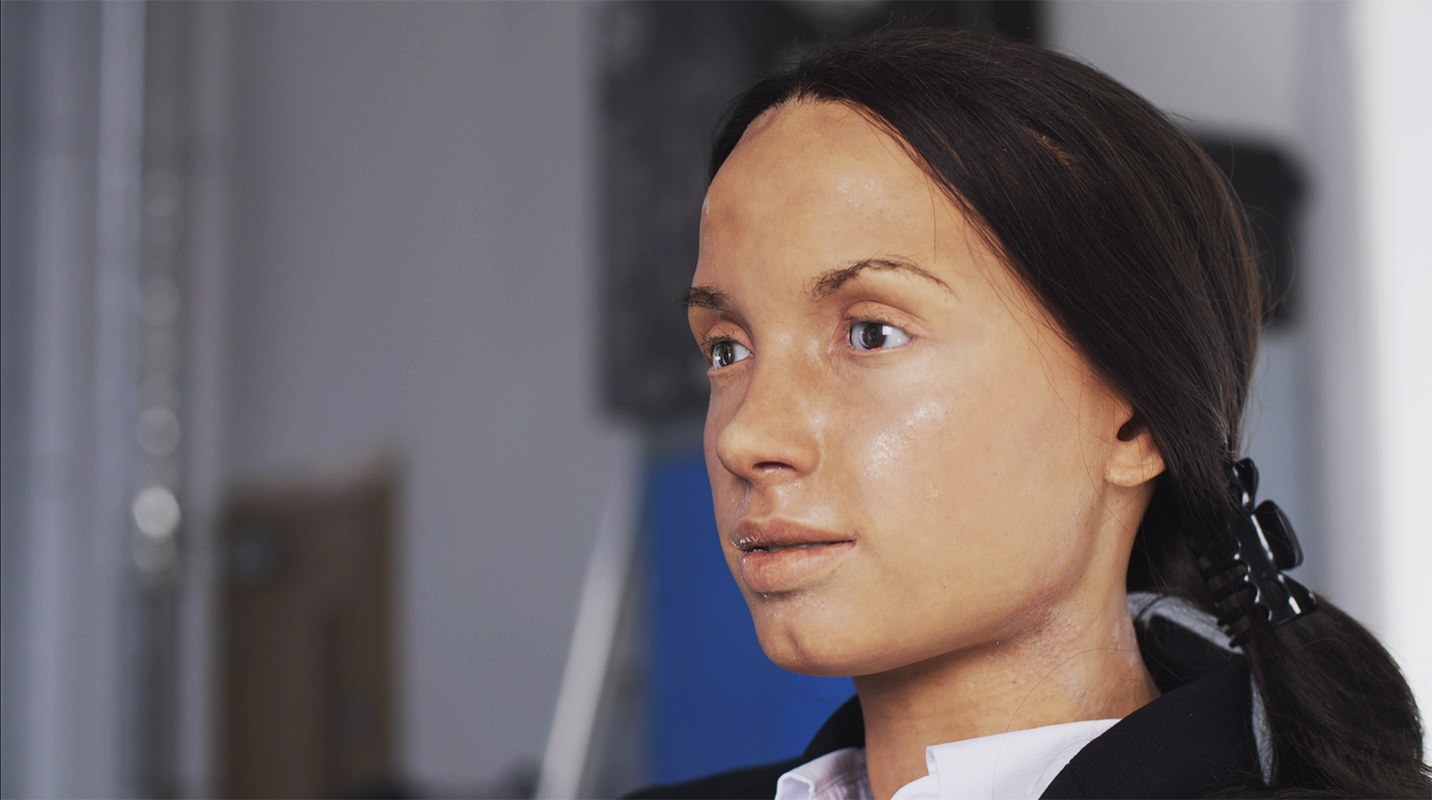
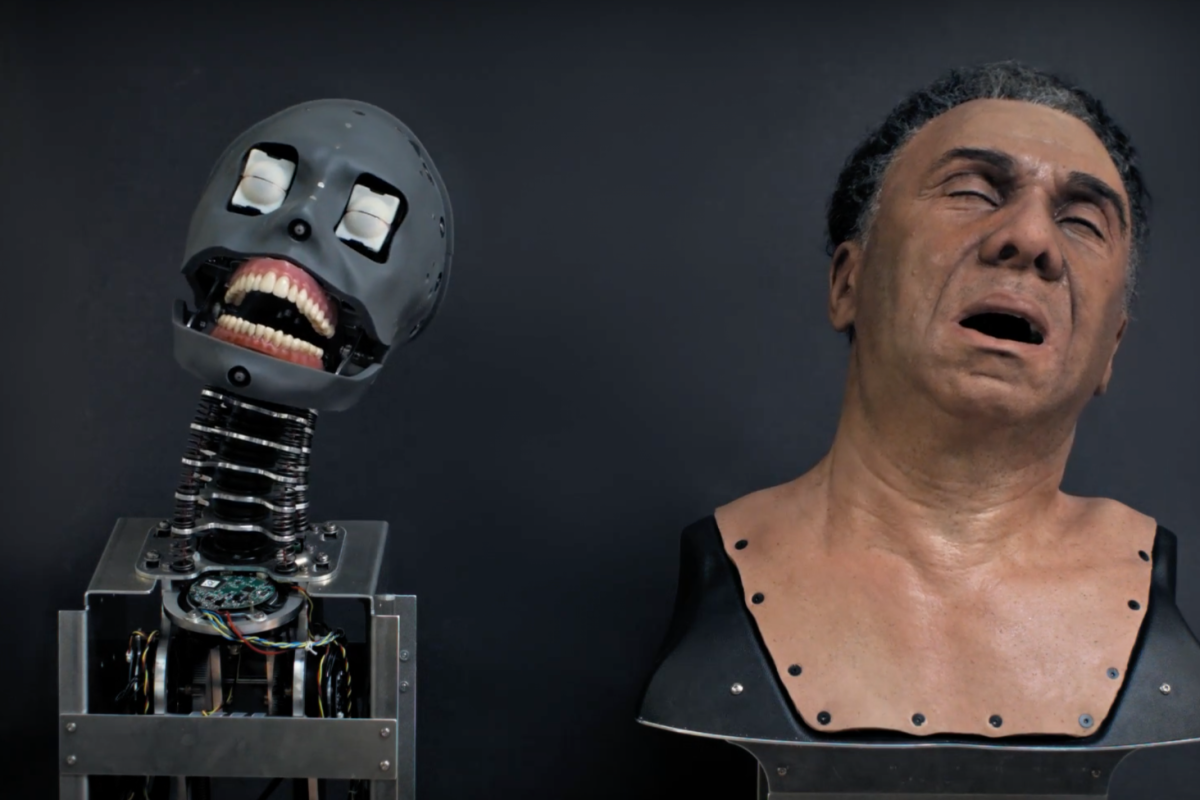
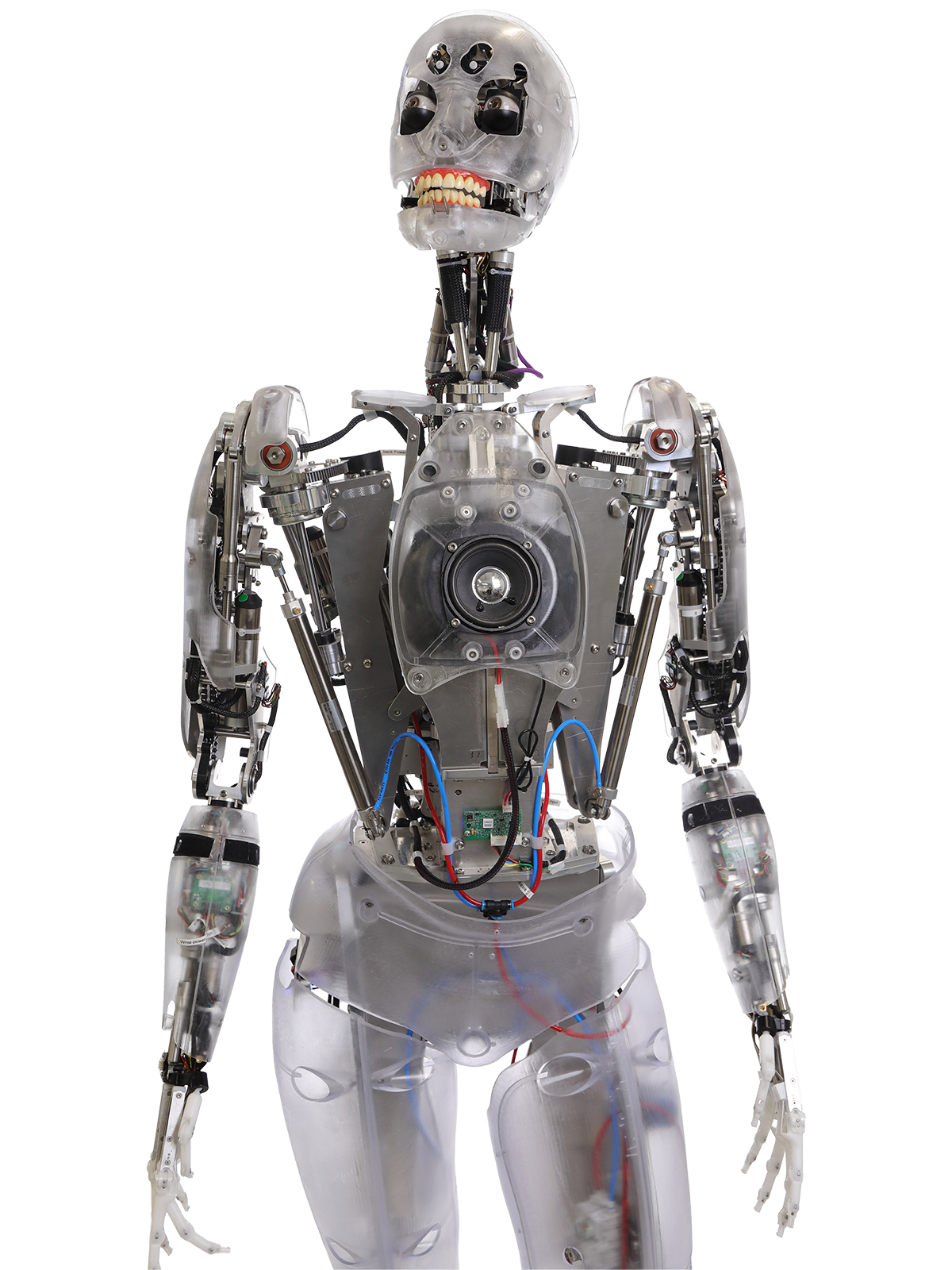
The Engineered Arts Mesmer is a highly specialized humanoid platform designed to deliver the most realistic synthetic human faces available commercially. Manufactured by Engineered Arts in Penryn, Cornwall, UK, Mesmer robots are not mass-produced; each is custom-built to replicate a specific person or character using 3D-printed skulls, intricate silicone skin, and dozens of miniature electric motors. Unlike general-purpose humanoids that walk or autonomously chat, Mesmer emphasizes physical presence and expressive subtlety—it can smile, frown, blink, and even raise an eyebrow with disconcerting realism. The robot is typically stationary, powered by mains electricity, and controlled through an off-board computer running proprietary software. Its primary applications are in museums, brand activations, and research, where the uncanny likeness creates intense public engagement. While Mesmer lacks built-in AI, it can be integrated with external conversational systems, making it a flexible canvas rather than a complete solution. This focus on custom realism over autonomy sets it apart from both high-tech humanoid competitors and traditional theme-park animatronics.
Specifications
Here are the full technical specifications.
| Spec | Value |
|---|---|
| Height | Not specified (custom built) |
| Weight | Not specified (custom built) |
| Degrees of freedom | Not specified (configurable, face up to ~30 DOF) |
| Battery life | N/A (vehicle-mount / tethered power) |
| Max speed | N/A (stationary) |
| Payload | N/A (not designed for manipulation) |
| Price (new) | Undisclosed (contact manufacturer) |
| Price (used range) | Rare; typically 10–30% of original build cost |
Price & Value
New MSRP: Undisclosed (custom quote; estimated >$100,000 based on sibling products)
Used range: Varies widely, typically $20,000–$50,000 for decommissioned units
Pricing for the Mesmer is not publicly listed; each system is quoted individually based on the custom likeness, required degrees of facial freedom, and installation complexity. Industry analysts estimate that a fully configured Mesmer typically costs well above $100,000, given that the simpler RoboThespian starts at $79,000 and Mesmer adds highly complex skin molding. For organizations that need a truly lifelike character, this represents a fraction of the cost of building a bespoke animatronic from scratch, while offering greater flexibility through reprogrammable performances. Because each robot is purpose-built for a specific role, depreciation is steep and resale value depends heavily on whether the character can be repurposed; units from closed exhibits may sell for a small percentage of original cost. Total cost of ownership includes periodic skin refurbishment, software maintenance, and possibly a full-time operator, making it a long-term commitment. However, when compared to the recurring expense of renting similar animatronics for events, owning a Mesmer can prove economical over several years.
Who Is It For?
Best for: - Museums and science centers seeking a lifelike interactive exhibit character - High‑end brand marketers looking for unique event installations - University robotics labs studying facial expression and human‑robot interaction
Not for: - Home hobbyists or cost‑constrained small businesses (custom price likely >$100,000 and requires expert operation) - Mobile robotics applications (Mesmer is stationary, tethered, no autonomous navigation)
Alternatives & Comparison
The Mesmer competes in the niche market of hyper‑realistic humanoid robots for entertainment and interaction, against both integrated AI platforms and one‑off animatronic creations.
| Model | Price | Available | Key Difference |
|---|---|---|---|
| Hanson Robotics Sophia | Undisclosed (custom order, similar range) | yes | Sophia has built‑in AI conversational capabilities, while Mesmer focuses on physical realism and is often a blank slate for third‑party characters. |
| Disney Audio‑Animatronics | Undisclosed (millions, not sold commercially) | no | Disney figures are proprietary, never sold, whereas Mesmer is commercially available to any organization. |
Verdict: For organizations that need total control over the character design and don’t require built‑in AI, Mesmer is the superior choice—it’s available, customizable, and more agile than a custom theme‑park figure. However, if an off‑the‑shelf AI personality is critical, Sophia offers a ready‑made conversational agent, though at the expense of physical customization. In short, Mesmer wins for bespoke physical realism and branding flexibility; Sophia wins for integrated AI dialogue.
Use Cases & Capabilities
Museum and Exhibit Characters
Mesmer robots serve as interactive characters in museums, science centers, and historical exhibits, providing a visceral, human connection that static displays cannot match. They can be sculpted to look like a specific historical figure—from a Roman emperor to a space pioneer—delivering scripted commentary in character, complete with eye movements and subtle facial gestures. This level of realism not only boosts visitor engagement but also increases dwell time and repeat visits, as audiences are drawn to the uncanny human presence. Because the robot is stationary and requires mains power, it is typically placed in a dedicated exhibit space with controlled lighting and audio. Museums can update content via software, allowing seasonal shows or multi‑language presentations without altering the physical robot. Although the initial investment is high, the educational and promotional value often justifies it for flagship exhibits.
Brand Experiences and Retail
In luxury retail and trade shows, a custom Mesmer can serve as an unforgettable brand ambassador, embodying the company’s image in a way that screens and static mannequins cannot. Brands can commission a Mesmer with the face of a founder, a celebrity endorsement, or an entirely original persona, dressed in branded attire and programmed to deliver key messages. The robot’s subtle facial expressions create an immediate emotional connection, making interactions feel personal and shareable—guests frequently capture video that spreads on social media. Because the robot is tethered, it suits fixed installations like pop‑up stores, lobby receptions, or permanent boutique fixtures. While the daily operation demands a trained technician to manage the system and ensure safety, the overall effect can elevate a brand’s perception as innovative and premium. Several major automotive and fashion companies have successfully deployed Mesmer for product launches, reporting significant spikes in booth traffic and media coverage.
Education and University Research
For academic robotics research, Mesmer offers a uniquely realistic platform to study human‑robot interaction, perception of the uncanny valley, and affective computing. Research groups can access the robot’s control API to program facial expressions, sync speech with lip movements, and integrate external AI modules such as GPT‑based conversational models. Unlike CGI avatars, a physical Mesmer provides the three‑dimensional, immediate presence necessary for experiments on social compliance, empathy, and proxemics. The extensive customizability—from skin texture to eye color—allows researchers to isolate variables that influence human responses. The high cost means Mesmer is typically found in well‑funded labs or as part of large‑scale collaborative projects, but it fills a niche that more generic humanoid platforms cannot. Academic publications using Mesmer often highlight its expressive fidelity as a key enabler for reproducing results across subjects.
Event Entertainment
From product reveals to celebrity meet‑and‑greets, a Mesmer robot delivers a futuristic spectacle that few other technologies can rival. A unit can be programmed to perform a monologue, sing, or even hold simple tele‑operated conversations, creating a sense of wonder that delights attendees. Because the robot does not walk, it is usually positioned on a stage or in a photo‑op area, but its head and facial movements are sufficiently expressive to captivate audiences. Rental agencies specializing in animatronics have added Mesmer to their fleets, offering turnkey solutions for one‑night events without the full ownership commitment. The main logistical considerations are power routing and a quiet backdrop to avoid ambient noise interfering with the robot’s microphone. Despite the setup requirements, event planners consistently report higher engagement metrics and social media shares when a Mesmer is the centerpiece.
History & Background
Engineered Arts was founded in 2005 in Penryn, Cornwall, with a vision to create the world’s most expressive humanoid robots. Their first major success was the RoboThespian, a programmable theatrical robot that toured globally. The Mesmer platform emerged as a refinement focused on hyper‑realistic facial animation, first demonstrated publicly around 2018. Unlike the more performance‑oriented RoboThespian, Mesmer incorporates 3D‑printed skulls and silicone skin to achieve a lifelike appearance, often based on 3D scans of actual people. Over the years, Mesmer robots have been commissioned for museums, shopping malls, and corporate events worldwide. The company continues to iterate on the platform, and while newer products like Ameca have garnered attention for autonomous interaction, Mesmer remains the go‑to choice for organizations seeking an exact human likeness. The technology has not been discontinued and is still actively offered. The company's expertise in facial animation has been recognized by multiple awards and features in major tech outlets.
Buying Used — What to Check
Verify character rights Many Mesmer robots are built as a likeness of a real person under a specific agreement; using the face for a different project may require legal clearance.
Inspect skin condition The synthetic silicone skin can wear, crack, or discolor over time; replacement is expensive and must be remanufactured by Engineered Arts.
Request control documentation Custom modifications to the puppeteering software may conflict with your intended use; ensure you receive full schematics and routines.