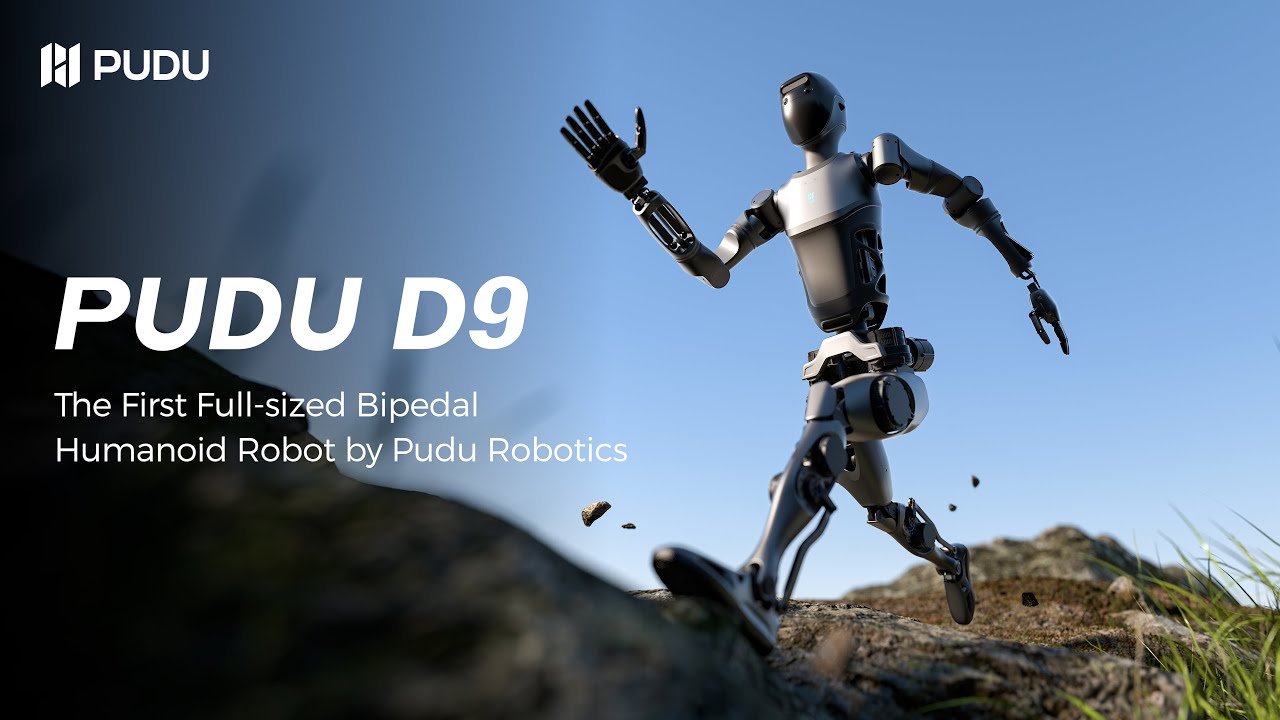
What is the Flashbot Arm Pudu?
The Pudu Robotics FlashBot Arm is a semi-humanoid service robot that combines an autonomous delivery base with two robotic arms, enabling manipulation of objects in human environments. Built by Shenzhen-based Pudu Robotics (founded 2016), it extends the existing FlashBot delivery platform with 7-DOF arms—two arms providing 14 degrees of freedom total—plus dexterous hands (6 active, 5 passive DOF per hand). This allows it to press elevator buttons, open doors, and handle objects while navigating with LiDAR SLAM and visual SLAM. Targeted primarily at hospitality, healthcare, and office logistics, the FlashBot Arm represents a bridge between simple delivery robots and full humanoids, offering practical manipulation without bipedal locomotion.
Specifications
Here are the full technical specifications.
| Spec | Value |
|---|---|
| Height | 144 cm |
| Weight | 70 kg |
| Degrees of freedom | 14 (arms total) |
| Battery life | 8 hours |
| Max speed | 4.5 km/h |
| Payload | 15 kg per arm |
| Price (new) | Undisclosed (contact manufacturer) |
| Price (used range) | N/A |
Price & Value
New MSRP: Undisclosed (contact manufacturer)
Used range: N/A
Pricing for the FlashBot Arm has not been publicly disclosed as of 2026, as the robot is currently in pre-order phase for enterprise pilot programs. When commercially available, it is expected to command a premium over standard delivery robots—which typically range from $15,000 to $25,000—due to the added dual-arm manipulation capability. Early adopters should budget for service and integration costs, though leasing options may be available through Pudu's partner network. Compared to full humanoids (often exceeding $150,000), the FlashBot Arm could offer a cost-effective middle ground for semi-autonomous manipulation. Organizations should factor in ongoing maintenance for the arm actuators and sensors, which are more complex than those on armless delivery bots. Without verified pricing, interested buyers are advised to contact Pudu Robotics directly or monitor BotMarket for pilot unit availability.
Who Is It For?
Best for: - Hospitality chains seeking autonomous tray delivery with the ability to press elevator buttons and open doors (14 DOF arms handle simple manipulation).
Not for: - Heavy industrial lifting (arm payload limited to 15 kg per arm, not intended for heavy loads).
Alternatives & Comparison
In the service robotics market, the FlashBot Arm's closest competitors are standard delivery robots without arms, though a few emerging mobile manipulators are also entering trials.
| Model | Price | Available | Key Difference |
|---|---|---|---|
| Keenon DINERBOT | Undisclosed | yes | No robotic arm—only tray delivery. |
| Bear Robotics Servi | Undisclosed | yes | No robotic arm—focuses on food running. |
Verdict: If your facility requires autonomous manipulation (elevators, doors) alongside delivery, the FlashBot Arm is the clear choice, as no other mainstream delivery robot currently offers this capability. For pure point-to-point food or item transport in arm-free environments, Keenon DINERBOT or Bear Robotics Servi are more mature and likely cheaper options. Compared to full humanoids, the FlashBot Arm strikes a balance between advanced manipulation and the reliability of a wheeled base, though its arm payload limits it to light-duty tasks.
Use Cases & Capabilities
Hospitality Food & Beverage Delivery
The FlashBot Arm can autonomously deliver meals from kitchen to tables, then use its arms to pick up trays and return them. Unlike standard delivery robots, it can navigate multiple floors by pressing elevator buttons, expanding service coverage across a hotel or large restaurant. In hotels, it delivers room service items and can open automatic doors with its manipulators—a first for Pudu's product line. The 8-hour battery covers a full shift, and the 30 kg base payload capacity (separate from arm payload) allows it to carry multiple meals at once. Its 4.5 km/h top speed ensures timely deliveries without compromising safety around guests.
Healthcare Logistics
In hospitals, the FlashBot Arm transports medications, lab samples, and meals across departments without requiring dedicated corridors or human escorts. The arms can open manual doors equipped with push handles and press elevator buttons, allowing autonomous navigation throughout a facility. Its 15 kg payload per arm is adequate for most medical supply bins, and the base's 30 kg cargo capacity handles larger loads. LiDAR and RGB-D sensors provide 360-degree obstacle detection, critical for operating near patients and staff. The robot can also be integrated with hospital information systems for scheduled deliveries, reducing the manual tasks of nursing and orderly personnel.
Office Building Services
The FlashBot Arm delivers mail, packages, and coffee between floors, autonomously calling elevators using its arms. Its ability to open standard office doors (with lever handles) allows access to secured areas when integrated with access control systems—a feature lacking in conventional delivery bots. The compact base (500x500 mm) and 70 kg weight fit through typical corridors and elevators. With an 8-hour runtime, it can operate throughout a business day, recharging during off-hours. This use case is attractive for corporate campuses aiming to automate internal logistics, though the robot's arm reach and payload limit it to smaller items and light parcels.
Retail Restocking
In retail environments, the FlashBot Arm transports stock from back-of-store areas to shelves, then uses its arms to place items on lower shelves within reach. It works alongside staff, reducing the time employees spend walking between storerooms and aisles. The 15 kg per arm payload can handle multiple beverage crates or medium-sized grocery bags, though heavy bulk items still require forklifts or manual handling. Its SLAM navigation adapts to dynamic store layouts, avoiding shoppers and displays. Integration with inventory management systems could enable real-time restocking alerts, making the FlashBot Arm a flexible tool for retailers exploring automation beyond simple cleaning robots.
History & Background
Pudu Robotics, founded in 2016 in Shenzhen, China, established itself as a leading manufacturer of delivery robots with models like BellaBot and FlashBot, deployed globally in restaurants and hospitals. The FlashBot Arm concept was first announced at CES 2024, previewing a mobile manipulator that leveraged the existing FlashBot wheeled base. In April 2025, Pudu X-Lab, the company's advanced R&D division, publicly demonstrated the first functional prototype. As of 2026, the FlashBot Arm is in pre-order status, available for enterprise pilot deployments, marking Pudu's entry into semi-humanoid service robots. It remains the only product in their lineup with integrated arms, bridging dedicated delivery bots and the more experimental full humanoids like the Pudu D7 and D9.
Buying Used — What to Check
Arm calibration and repeatability Pre-production arms may have inconsistent performance; verify recent calibration logs.
Battery health After months of pilot use, battery capacity may degrade; ensure full 8-hour runtime is achievable.
Sensor functionality LiDAR and RGB-D cameras are critical for navigation and object detection—test in varied lighting conditions.