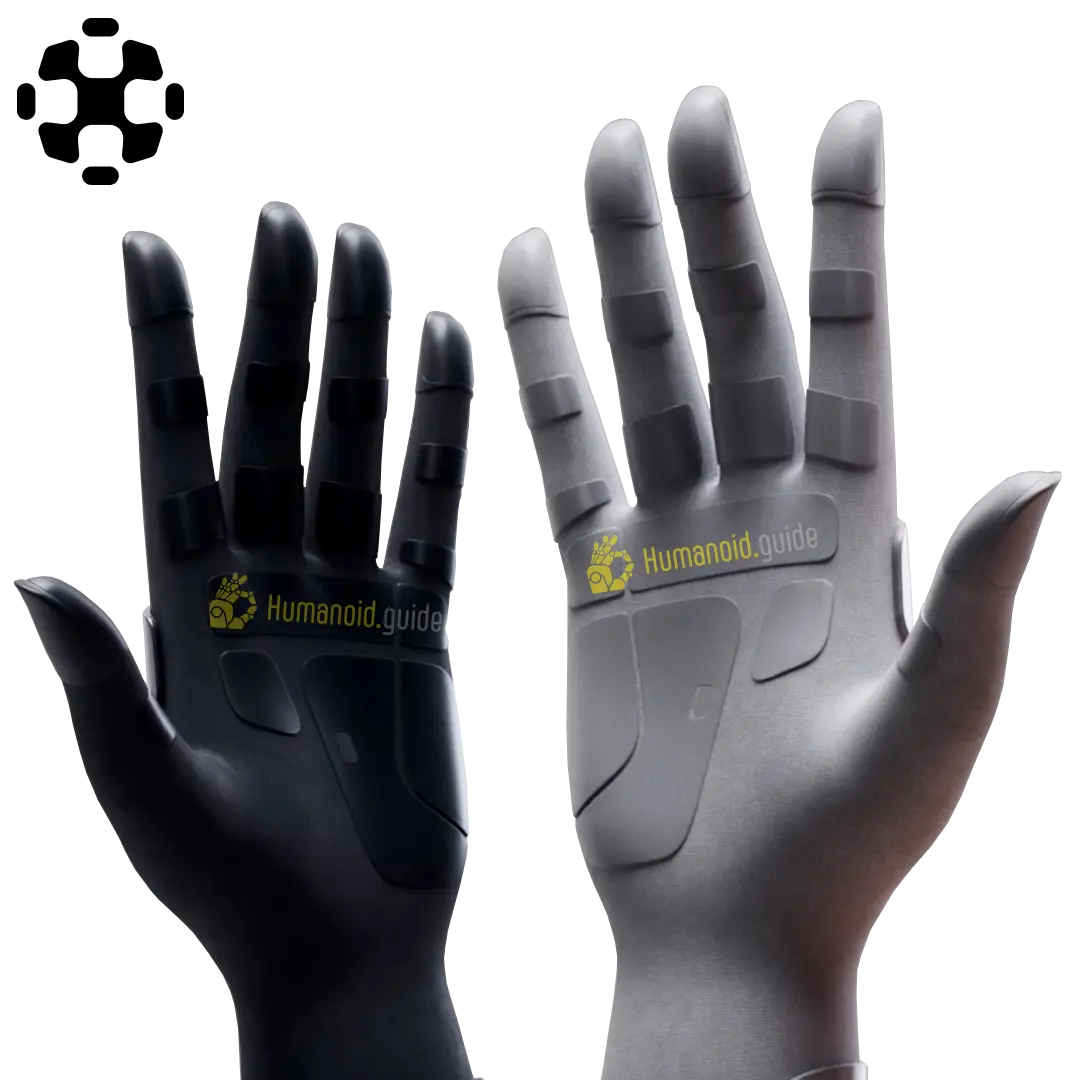
What is the Flex 2?
The Xynova Flex-2 is a high-dexterity robotic hand designed as an end-effector for humanoid robots and automation systems. Manufactured by Xynova, a robotics company founded in 2024 in Hangzhou, China, the Flex-2 delivers 23 degrees of freedom across five fingers, weighing just 0.4 kg while providing a 12 kg grip strength. It uses micro linear actuators and integrated tactile/force sensors for precise manipulation. Unveiled in May 2026, the Flex-2 succeeds the Flex-1 (launched August 2025) and targets humanoid OEMs, particularly in manufacturing and logistics, supported by backers CATL Capital and Xiaomi. Its lightweight, sensorized design makes it suitable for fine assembly, teleoperation, and dexterous tasks where full hand functionality is required.
Specifications
Here are the full technical specifications.
| Spec | Value |
|---|---|
| Height | N/A |
| Weight | 0.4 kg |
| Degrees of freedom | 23 |
| Battery life | N/A |
| Max speed | N/A |
| Payload | N/A |
| Price (new) | Undisclosed |
| Price (used range) | N/A |
Price & Value
New MSRP: Undisclosed (contact manufacturer)
Used range: N/A (new product, no used units yet)
As of 2026, Xynova has not publicly disclosed pricing for the Flex-2, requiring interested buyers to contact the manufacturer directly. While its price point remains unconfirmed, competitors like the Shadow Dexterous Hand are priced well above $100,000, and the SCHUNK SVH dexterous hand also comes at a premium, suggesting the Flex-2 could be positioned as a more affordable alternative if it lands in the sub-$20,000 range. The Flex-2’s lightweight design and integrated sensing offer high dexterity per kilogram, potentially reducing the overall cost of humanoid robot builds by lowering actuator load requirements. However, without a public price, it's difficult to assess value precisely; early adopters should request detailed quotes including support and integration fees. Integration with a host robot requires a compatible electrical and software interface, which may incur additional engineering costs. Moreover, the lack of a built-in battery means robot designers must provision power from the arm, affecting overall system architecture. Prospective buyers should factor in these integration expenses when evaluating the Flex-2 against bundled hand-arm solutions. As the product matures and enters mass production, depreciation is expected to be rapid in the first year, similar to other OEM components. Overall, the Flex-2 promises compelling specs for the cost if priced competitively.
Who Is It For?
Best for: - Humanoid robot manufacturers needing a lightweight, high-DOF hand for dexterous manipulation (23 DOF enables fine finger control) - Industrial automation integrators seeking an off-the-shelf robotic hand for assembly and pick-and-place tasks requiring tactile feedback - Research labs and teleoperation systems that require a sensorized, anthropomorphic hand for grasping studies
Not for: - Robots requiring heavy payload lifting (grip strength limited to 12 kg, unsuitable for industrial material handling) - Cost-sensitive educational robotics (undisclosed pricing may be prohibitive for hobbyist or classroom use) - Systems that cannot accommodate a wired end-effector (the Flex-2 is not battery-powered, requiring a tethered power connection)
Alternatives & Comparison
The Xynova Flex-2 competes in the niche market of full-DOF robotic hands, where high dexterity and lightweight design are critical for humanoid integration. Below we compare it against two leading alternatives. Given the Flex-2's undisclosed pricing, the comparison emphasizes weight, dexterity, and cost-effectiveness from available market estimates.
| Model | Price | Available | Key Difference |
|---|---|---|---|
| Shadow Dexterous Hand | ~$120,000 (est.) | yes | Higher DOF (24) but significantly heavier and more expensive, suited for research. |
| SCHUNK SVH | ~$70,000 (est.) | yes | Robust industrial hand with 9-DOF, less dexterous but proven in production; heavier. |
| Wonik Allegro Hand | ~$35,000 (est.) | yes | 16-DOF hand, lighter than Shadow, but lower grip strength and no integrated tactile sensors. |
Verdict: If cost and weight are your primary drivers, the Xynova Flex-2 — with its 23 DOF and 0.4 kg weight — is unmatched among competitors. However, for industrial environments requiring proven reliability and higher payloads, the SCHUNK SVH may be a safer bet. Researchers who need the maximum dexterity and can afford the cost should consider the Shadow Dexterous Hand. For integrators willing to take a chance on a newer entrant, the Flex-2’s weight advantage could significantly reduce arm actuator costs, making the whole robot more efficient.
Use Cases & Capabilities
Humanoid Robot Dexterous Manipulation
The Flex-2 is purpose-built for humanoid robots that need to handle tools, open doors, or manipulate small objects. Its 23 degrees of freedom across five fingers, with thumb abduction, enables a wide range of natural hand postures. The integrated tactile sensors provide feedback for force-controlled grasping, essential for delicate operations like plugging in cables or assembling electronics. Thanks to its low weight of 0.4 kg, it minimizes the inertia on the robot arm, improving overall dynamic performance and battery life of the hosting robot.
Teleoperation and VR Haptics
In teleoperation systems, the Flex-2 serves as a remote hand that mirrors an operator's movements sensed by a glove or controller. Its micro linear actuators allow smooth, compliant motion that closely replicates human finger kinematics. The tactile sensors relay pressure data back to the operator, enabling a realist feel for remote tasks such as bomb disposal, surgical training, or undersea manipulation. The hand's compact size and low power consumption make it suitable for telerobots that require long-duration missions.
Flexible Manufacturing and Assembly
For factories adopting collaborative robots, the Flex-2 provides an upgrade from simple grippers to a full hand capable of complex bin picking and small-part insertion. Its 12 kg grip strength is sufficient for handling objects up to several kilograms, covering most small-manufacturing components. The soft synthetic skin and composite structure offer durability and gentle contact, reducing the risk of damaging fragile parts. Integration with standard robot arms via a common interface simplifies retrofitting existing automation cells.
Research and Developmental Platforms
Academia and R&D labs benefit from the Flex-2's open programmability and high DOF for studying grasping algorithms, machine learning-based manipulation, and human-robot interaction. Researchers can access raw sensor data from the hand's array of tactile sensors to develop advanced feedback control. Its lightweight nature means it can be mounted on a wide range of robot arms, including university-built platforms, without overloading the joints. The hand's availability as a commercial product, rather than a one-off prototype, ensures reproducibility across different research groups.
Service Robotics and Hospitality
In service robots deployed in retail, hospitality, or eldercare, the Flex-2 provides a human-like hand for tasks such as passing items, opening doors, or operating appliances. Its soft synthetic skin ensures safe interaction with people, while the tactile sensors allow the robot to gauge grip force on fragile objects like cups. The hand's light weight reduces arm wear, extending the service interval of the robot. As service humanoids become more common, an off-the-shelf hand like the Flex-2 accelerates deployment by avoiding custom end-effector development.
History & Background
Xynova was founded in late 2024 in Hangzhou, China, with a focus on dexterous robotic hands for humanoid robots. The company quickly garnered strategic investment from CATL Capital and Xiaomi, signaling strong backing from the EV and consumer electronics sectors. Its first product, the Flex-1, launched in August 2025, establishing Xynova in the humanoid component market. Building on that foundation, Xynova unveiled the Flex-2 in May 2026, featuring a reduced weight of 0.4 kg, 23 degrees of freedom, and 12 kg grip strength—advancing the dexterity-to-weight ratio. The Flex series leverages micro linear actuator technology, which the company claims enables more lifelike motion compared to traditional tendon-driven hands. The Flex-2 incorporates composite polymers, a metal framework, and synthetic skin, along with tactile sensors. Xynova’s rapid development timeline, from founding in 2024 to delivering a 23-DOF hand in 2026, underscores the intense competition within China’s humanoid supply chain. As of 2026, the Flex-2 is in production and targets humanoid OEMs in manufacturing and logistics, positioning Xynova as a key supplier in the emerging humanoid supply chain.
Buying Used — What to Check
Verify actuator wear Micro linear actuators in early units may degrade with heavy use; inspect for backlash or reduced range of motion.
Test tactile sensors Sensor calibration can drift; confirm all sensor zones respond uniformly and signal integrity is intact.
Check grip strength Worn components or power supply issues can reduce effective grip force; test with a dynamometer.