What is the Friday?
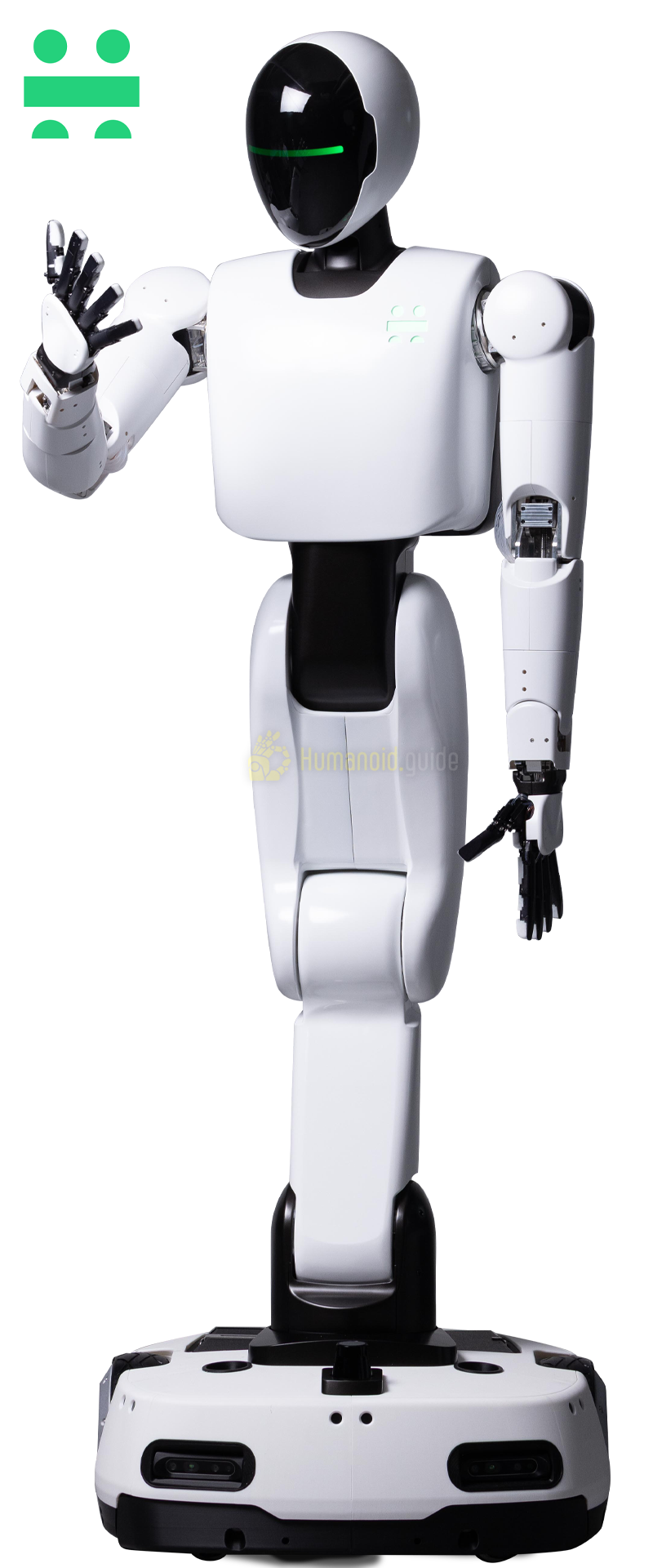
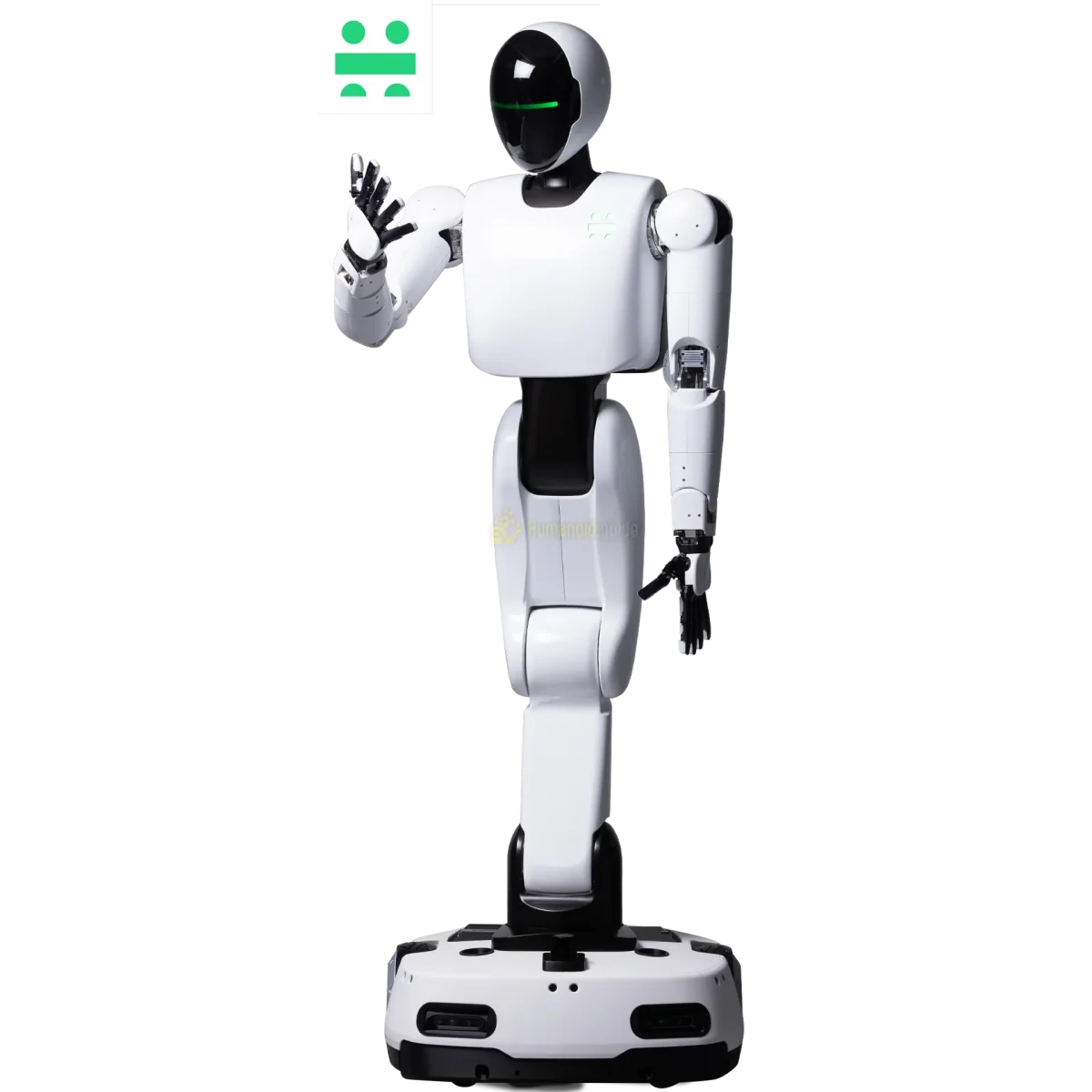
The Holiday Robotics Friday is a full-size humanoid robot designed for manufacturing environments. Built by the Chinese company Holiday Robotics, the Friday was first shown in 2024 and integrates an NVIDIA Jetson Orin processor with BLDC motors and Quasi Direct Drive (QDD) gearing. Its 63 degrees of freedom include 20 in the hands, enabling dexterous manipulation tasks. The robot measures 173 cm in height and weighs 115 kg, with a payload capacity of 20 kg. It uses Wi‑Fi connectivity and runs on a Linux operating system. The Friday remains a prototype as of mid‑2026, with no confirmed release date or pricing.
Specifications
Here are the full technical specifications.
| Spec | Value |
|---|---|
| Height | 173 cm |
| Weight | 115 kg |
| Degrees of freedom | 63 (20 in hands) |
| Battery life | 4 hours |
| Max speed | 6.84 km/h |
| Payload | 20 kg |
| Price (new) | Undisclosed (contact manufacturer) |
| Price (used range) | N/A — not yet released |
Price & Value
New MSRP: Undisclosed (contact manufacturer)
Used range: N/A — not yet released
Holiday Robotics has not published an official price for the Friday, and no units have been delivered to customers. Industry observers speculate that a full‑size humanoid with 63 DOF and industrial‑grade components could cost around $200,000, but this is unconfirmed. For comparison, the Fourier GR‑2, a similarly sized humanoid, is available for pre‑order at approximately $200,000, while the UBTECH Walker S is quoted at $150,000 for enterprise buyers. Without official pricing or a track record of customer deployments, potential buyers should treat the Friday as a development‑stage project with unknown total cost of ownership. Used units are not available, and residual value cannot be estimated.
Who Is It For?
Best for: - Research institutions investigating advanced humanoid manipulation (63 DOF enables complex grasping) - Manufacturers planning future adoption of humanoid robots and willing to engage with emerging suppliers
Not for: - Production lines requiring proven uptime and service support (prototype status means limited reliability data) - Budget‑constrained buyers looking for an off‑the‑shelf solution (no price, no delivery timeline)
Alternatives & Comparison
The Friday competes in the nascent market of full‑size humanoids alongside the Fourier GR‑2 and UBTECH Walker S, both of which have clearer commercial readiness.
| Model | Price | Available | Key Difference |
|---|---|---|---|
| Fourier GR‑2 | ~$200,000 (pre‑order) | preorder | Lighter weight, established partner integrations |
| UBTECH Walker S | ~$150,000 (enterprise) | yes | Proven in automotive manufacturing pilots |
| Figure 02 | Undisclosed | no | Advanced vision‑language models and fleet learning |
Verdict: While the Friday showcases impressive dexterity with 63 DOF and a sturdy build, its lack of pricing, availability, or customer references places it behind the Fourier GR‑2 and UBTECH Walker S for near‑term industrial deployment. For labs and early adopters willing to work directly with Holiday Robotics, the Friday may offer a compelling platform, but most manufacturers should monitor its progress and instead evaluate the GR‑2 or Walker S.
Use Cases & Capabilities
Assembly Line Assistance
The Friday can perform pick‑and‑place operations and small‑part assembly thanks to its 20‑DOF hands and 20 kg payload. Its 173 cm height matches human worker stations, easing integration into existing lines. The robot’s NVIDIA Jetson Orin provides the compute power for real‑time object recognition, but its unproven reliability and lack of industrial certifications limit deployment to pilot projects. Until full validation, manufacturers will use it only in controlled, supervised settings.
Material Handling
With a 20 kg lifting capacity and 115 kg body weight, the Friday can move boxes, tools, and components across a factory floor. Its QDD gearing and BLDC motors promise efficient power use, while the 4‑hour battery supports a half‑shift of work before recharge. Navigation performance is rated at 1 by Humanoid.guide, indicating basic walking and obstacle avoidance, which may restrict autonomous material transport in cluttered environments. Additional sensor integration and safety certifications would be needed for full deployment.
Quality Inspection
Equipped with Wi‑Fi connectivity and a Linux‑based control system, the Friday could be programmed to perform visual and tactile inspection of finished products. The dual‑hand design allows it to manipulate objects for multi‑angle camera views, though no onboard camera specification is provided. Its reported 0.2‑second latency from perception to action enables fast, conditioned responses, making it suitable for tasks requiring quick defect identification. Without integrated machine‑vision hardware, users would need to mount third‑party cameras and software.
Research Platform
The Friday’s 63 DOF and open Linux architecture make it a valuable testbed for whole‑body control algorithms, dexterous manipulation, and human‑robot interaction studies. University labs can explore AI‑driven task learning on a human‑scale platform, leveraging the Jetson Orin’s GPU for machine learning. The absence of a commercial support network means researchers must rely on in‑house expertise, and the prototype status means hardware changes are likely between units. Nonetheless, its high‑DOF hands and robust aluminum frame offer a rare combination for academic research.
History & Background
The Friday was first revealed by Holiday Robotics in 2024, emerging from the company’s development efforts in China. Little public information exists about Holiday Robotics’ founding year or its team. The Friday prototype was demonstrated at trade events and online videos, showcasing whole‑body coordination and hand dexterity. By 2026, the robot remains in the prototype phase, with Holiday Robotics reportedly engaging with manufacturing partners to refine the platform. No commercial release or pilot program has been announced, and the robot’s journey from lab to factory floor is still underway.
Buying Used — What to Check
Verify operational hours Prototype units may have accumulated high test cycles, increasing joint wear and the risk of motor failures.
Confirm software stack Without the full control software and calibration tools, the robot cannot be reprogrammed for new tasks.
Inspect battery health Used prototypes stored for extended periods may have degraded lithium‑ion batteries, reducing the already limited 4‑hour runtime.