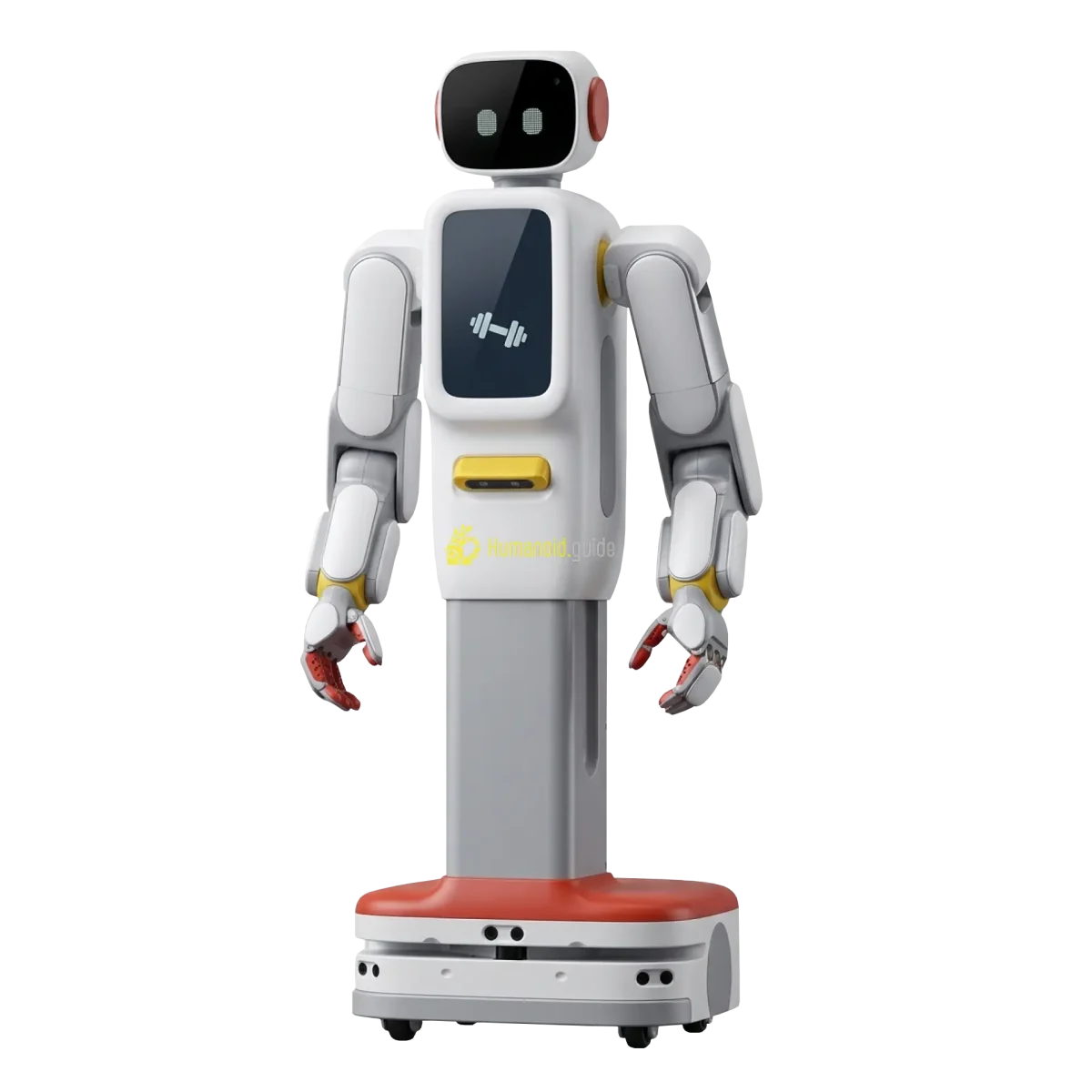
What is the Futuring 2?
Futuring 2 is a second-generation humanoid robot by Futuring Robotics, a Chinese startup. It features an upgraded sensor stack for companion, education, healthcare, and hospitality applications. Standing 170 cm tall and weighing 60 kg, it uses electric servo motors and harmonic drives for precise motion, with 26 degrees of freedom (including 12 in the hands). Unlike earlier demo-only designs, Futuring markets it as a household general robot moving toward real-world deployment. The robot runs a Linux-based ROS system, supports edge AI, and is intended for human-safe interaction with wired and wireless connectivity. Its unique selling point is an ultra‑low price target of $5,000, aiming to make full‑size humanoids accessible to consumers and smaller labs.
Specifications
Here are the full technical specifications.
| Spec | Value |
|---|---|
| Height | 170 cm |
| Weight | 60 kg |
| Degrees of freedom | 26 |
| Battery life | 3 hours |
| Max speed | 4 km/h |
| Payload | 6 kg |
| Price (new) | $5,000 |
| Price (used range) | N/A |
Price & Value
New MSRP: $5,000
Used range: N/A
At $5,000, the Futuring 2 is positioned as an extremely affordable humanoid, undercutting most competitors by an order of magnitude. However, as an in‑development robot, this price likely reflects an introductory or pre‑order estimate — real‑world costs may change upon full commercial release. For comparison, other full‑size Chinese humanoids like Unitree H1 start around $90,000, while even stripped‑down research platforms rarely drop below $10,000. The value proposition hinges on whether Futuring can deliver reliable full‑body autonomy and a practical sensor suite at this price point. Buyers should factor in potential additional costs for compute modules, software licenses, and service contracts that may not be included in the base price. Availability remains uncertain, but early adopters could secure a uniquely affordable platform if production scales and software matures.
Who Is It For?
Best for: - Companion robotics and assisted living — the low entry price makes it feasible for home trials and elderly support. - Universities and research labs — 26 DOF, ROS compatibility, and human‑safe interaction enable human‑robot interaction studies. - Hospitality and public service — the humanoid form plus expected AI integration suits reception, information, and guest‑engagement roles. - Developer and maker communities — the $5,000 price point lowers barriers for tinkering and building custom applications on a full‑size humanoid platform.
Not for: - Heavy industrial tasks — arm payload is only 6 kg and no IP rating, unsuitable for manufacturing or outdoor logistics. - Precision manipulation research — the 2‑finger gripping claws lack dexterity for fine object handling or advanced grasping studies.
Alternatives & Comparison
The Futuring 2 enters an uncharted ultra‑low‑cost segment. No other full‑size humanoid comes close to $5,000; alternatives are either smaller educational robots or much more expensive full‑size platforms.
| Model | Price | Available | Key Difference |
|---|---|---|---|
| Unitree G1 | $16,000 | yes | Full‑size humanoid with climbing and robust manipulation, but 3× the price. |
| Fourier GR‑2 | ~$35,000 (est.) | preorder | 60‑DOF humanoid with high dexterity, aimed at industrial customers. |
| NAO v6 | $7,990 | yes | Compact 58‑cm educational robot; mature ecosystem but not full‑size or home‑suitable. |
Verdict: If budget is the absolute priority and you can tolerate development risk, the Futuring 2 is unmatched at $5,000. For those who need proven, ready‑to‑ship hardware, the Unitree G1 offers a reliable full‑size humanoid with superior durability and mobility, albeit at a higher price. The Fourier GR‑2 provides far greater dexterity and industrial pedigree but costs seven times as much. Choose the Futuring 2 only if you are comfortable with pre‑order uncertainty and plan to actively contribute to its early‑stage ecosystem.
Use Cases & Capabilities
Companion Robotics & Assisted Living
The Futuring 2 is designed for real‑home use, offering social interaction and simple assistance to elderly or isolated individuals. Its 170 cm height and 60 kg weight make it imposing enough to be seen as a companion yet light enough to move safely around people. The upgraded sensor stack supports basic object recognition and conversation, while the humanoid form encourages natural engagement. With a targeted $5,000 price, it could be deployed in multiple households for pilot assisted‑living programs. However, limited payload and a currently unverified software stack mean it is not yet ready for critical care tasks like lifting or emergency response.
Education & Research
Universities and research labs are a primary market for a low‑cost, full‑size humanoid. The 26 degrees of freedom and ROS‑based operating system provide a capable platform for studying locomotion, manipulation, and human‑robot interaction. Students can program the robot for tasks such as object handover, navigation, or expressive gestures without investing in a six‑figure system. The availability of HD stereo vision and edge AI computing hints at potential for perception research, though actual sensor specifications remain undisclosed. The absence of a proven release schedule may limit grant‑funded projects that require near‑term delivery.
Hospitality & Public Service
At hotels, airports, and retail spaces, the Futuring 2 could serve as an engaging information kiosk or brand ambassador. Its humanoid appearance and likely voice interaction capabilities make it suitable for greeting visitors, giving directions, and promoting events. The price point allows deployment in multiple locations without breaking budgets, and the robot’s safe‑interaction design (no exposed sharp edges) aligns with public‑facing requirements. The wheeled platform (the available data points to a wheeled base, not walking) may limit movement in spaces with stairs or uneven floors, but it still covers large indoor areas effectively. Energy consumption and maintenance costs are unknown, so commercial operators should budget for unexpected downtime.
Developer & Maker Community
The $5,000 price tag opens the door for individual developers and small maker spaces to experiment with full‑size humanoids. The Futuring 2’s openness (ROS, Ethernet/WiFi connectivity, edge AI support) encourages custom software and hardware add‑ons, from additional grippers to vision payloads. Enthusiasts can build home automation assistants, interactive art installations, or educational tools without relying on corporate grants. However, the robot’s pre‑commercial status means documentation, spare parts, and community support will initially be scarce, and the 2‑finger claws may need to be upgraded for more complex DIY projects. Early adopters should be prepared to contribute to, rather than just consume, the ecosystem.
History & Background
Futuring Robotics, a Chinese startup, revealed its second‑generation humanoid, the Futuring 2, in 2024. The company claims to be the first to move beyond PowerPoint demos to real‑home use, targeting a consumer‑friendly price of $5,000. The first Futuring robot (likely the Futuring 1) featured 21–22 degrees of freedom and served as an early prototype; the Futuring 2 upgrades to 26 DOF including 12 in the hands, an enhanced sensor pack, and a refined wheelbase. As of 2026, the robot remains in development with pre‑orders anticipated but no confirmed shipment date. The manufacturer’s website displays “Full article coming soon,” indicating that marketing materials are still being completed. Futuring Robotics aims to disrupt the humanoid market by undercutting established players like Unitree and UBTECH by an order of magnitude, though its ability to scale production and deliver reliable autonomy remains unproven.
Buying Used — What to Check
Verify payload rating Payload and runtime are critical for any real‑world task — confirm they match the specs before purchase.
Check battery health A 3‑hour battery will degrade over time; on a pre‑commercial unit, replacement logistics may be unclear.
Confirm software maturity Early units may ship with incomplete APIs or limited autonomy; ensure the software matches your project needs.