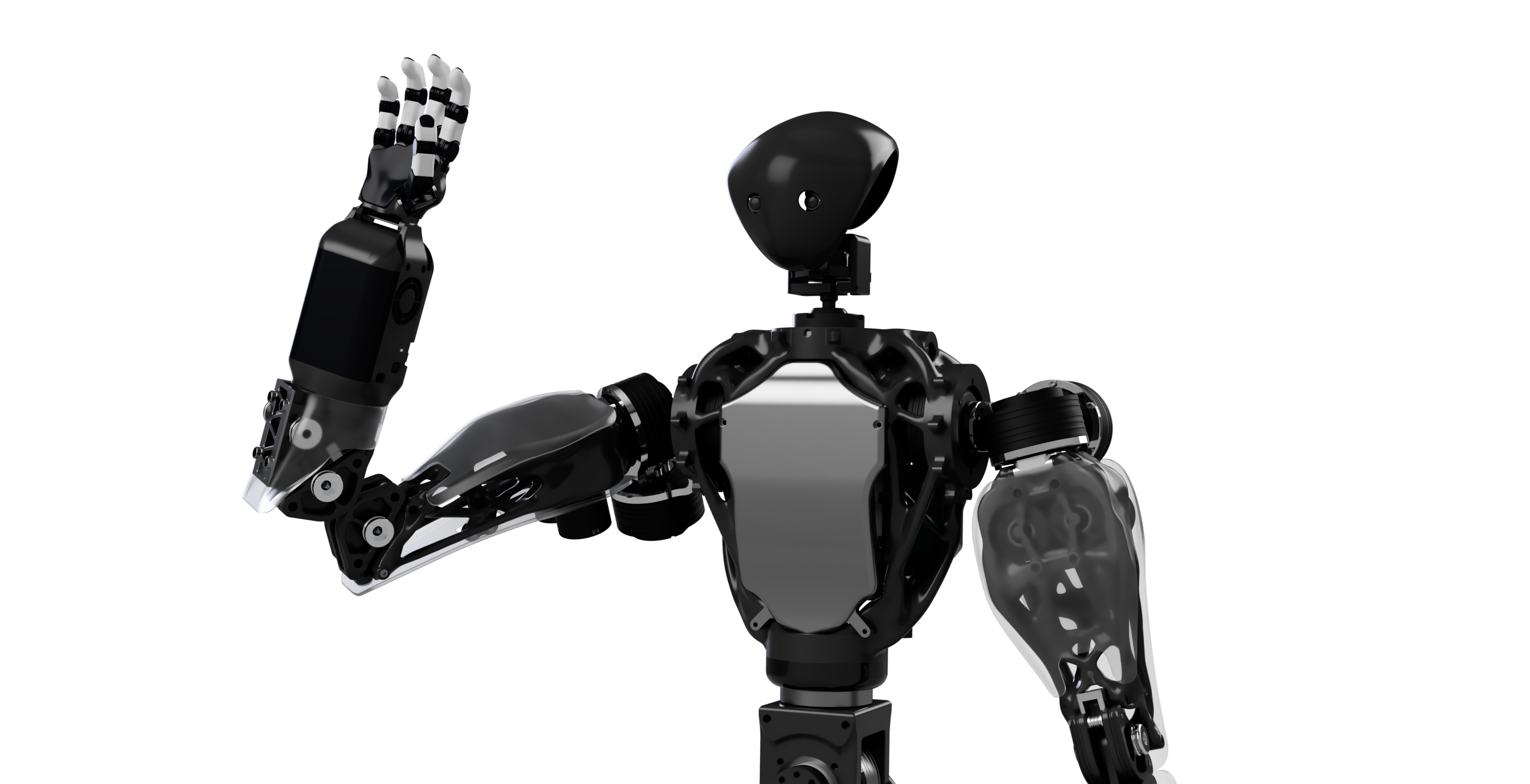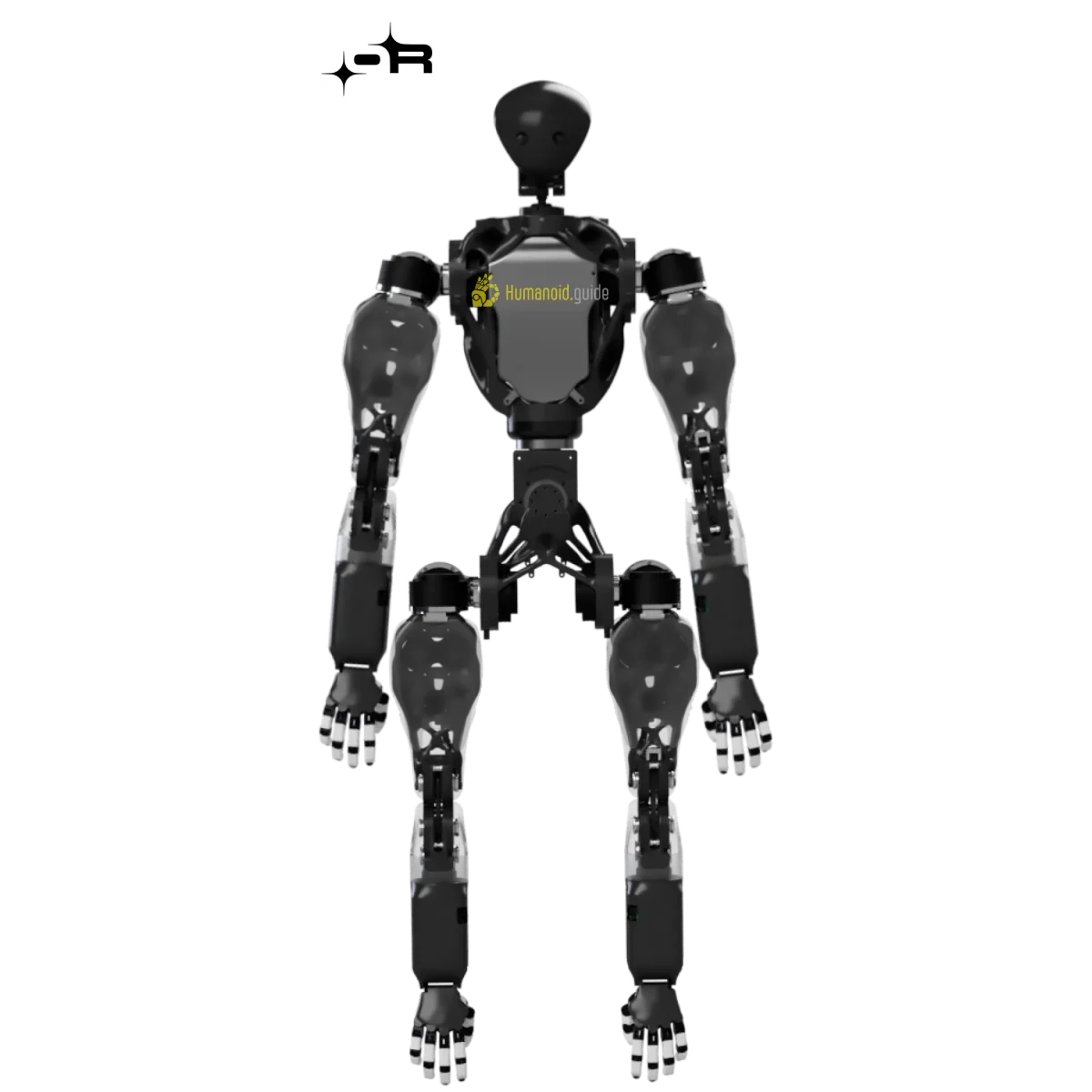
What is the Helios?
The HELIOS is a four-arm humanoid robot prototype from Swiss-Canadian startup ORBIT Robotics, built for autonomous experimentation and teleoperation aboard space stations. Standing 160 cm tall and weighing approximately 80 kg, it uses a tendon-driven electric actuation system with rolling-contact joints and carbon-fiber body. Unlike standard bipedal humanoids, HELIOS has two additional arms, enabling complex multi-limb manipulation in microgravity. The robot is currently a single prototype, unveiled in May 2026, targeting a $75,000 price point for research institutions.
Specifications
Here are the full technical specifications.
| Spec | Value |
|---|---|
| Height | 160 cm |
| Weight | 80 kg |
| Degrees of freedom | 28 |
| Battery life | 3 hours |
| Max speed | 2 km/h |
| Payload | 15 kg |
| Price (new) | $75,000 |
| Price (used range) | N/A |
Price & Value
New MSRP: $75,000
Used range: N/A
The HELIOS is priced at an ambitious $75,000, making it one of the most affordable humanoid robots ever announced, though this figure is a target for future production, not a confirmed retail price. For comparison, terrestrial humanoids like Unitree H1 cost around $90,000 for basic bipedal mobility but lack four arms and space-grade hardware. If Orbit Robotics achieves mass production, the HELIOS could become a disruptive tool for space labs and universities, but buyers should expect significant lead times and potential cost increases. As a prototype, there is no used market, and no firm delivery timeline exists currently.
Who Is It For?
Best for: - Space agencies and research institutions developing autonomous systems for space stations - Universities studying multi-limb coordination and tendon-driven robotics
Not for: - Industrial manufacturers needing high payload (15 kg is low for heavy tasks) - Outdoor terrestrial use (no weatherproofing or ruggedization)
Alternatives & Comparison
The HELIOS competes with no direct four-arm space humanoid, but prospective buyers might consider standard bipedal research humanoids or teleoperated space manipulators.
| Model | Price | Available | Key Difference |
|---|---|---|---|
| Unitree H1 | ~$90,000 | yes | General-purpose bipedal humanoid for terrestrial use, 19 DOF, no space heritage. |
| Fourier GR-1 | Undisclosed | no | Full-sized humanoid, 54 DOF, not rated for microgravity or vacuum. |
| NASA Robonaut 2 | N/A (legacy system) | no | Upper-body space robot, tested on ISS, no bipedal locomotion or lower body. |
Verdict: For researchers specifically needing a multi-arm platform for microgravity studies, HELIOS is the only purpose-built prototype, though it remains unproven. Buyers needing a terrestrial humanoid with immediate availability should consider Unitree H1. Those seeking space heritage design might explore collaborations with robotics labs using Robonaut-derived systems.
Use Cases & Capabilities
Microgravity Experiment Automation
HELIOS is intended to autonomously handle lab equipment, mix chemicals, and monitor experiments on space stations. Its four arms allow parallel manipulation, while the tendon-driven grippers can grasp delicate glassware. The 15 kg payload per arm is sufficient for typical lab apparatus, but precision under real microgravity remains unverified. Onboard vision and LLM integration may eventually enable verbal task instructions.
Teleoperated Space Maintenance
Operators on Earth or aboard a station can remotely control HELIOS for repair tasks, inspections, and valve adjustments. Low-latency Ethernet/Wi-Fi connectivity and likely ROS2 compatibility enable real-time teleoperation. The multi-arm setup provides extra dexterity when tightening bolts or threading cables. However, the current prototype lacks space-rated ingress protection, so usage would be limited to pressurized modules.
Multi-Arm Manipulation Research
Academic groups can use HELIOS to study coordinated control of four limbs, force distribution, and collision avoidance in cluttered environments. The tendon-driven actuation and rolling-contact joints offer a platform for testing novel control algorithms. Because the robot uses open-source ROS software, it can integrate with simulation environments like Gazebo or Isaac Sim. Its compact size and relatively low weight allow deployment in standard robotics labs.
History & Background
Orbit Robotics was founded by a team of engineers and researchers from Switzerland and Canada, aiming to deploy humanoid assistants in space environments. The company developed the HELIOS prototype in roughly two months during 2025, leveraging modular, lightweight designs. The robot was publicly revealed in May 2026 via a YouTube video, demonstrating its four-arm layout, bipedal walking, and tendon-driven grippers. HELIOS remains a single-unit prototype, with teleoperation and autonomous experimentation capabilities being tested in simulated space settings. No production variants have been announced, but the company’s roadmap includes space station deployment and eventual sale to research institutions for microgravity studies.
Buying Used — What to Check
Verify payload and battery Payload is stated as 15 kg but untested in extended microgravity; battery life may degrade under continuous operation.
Confirm DOF count Total DOF reported as 28 overall and 14 in hands; ensure these are independent axes, not double-counted across arms.
Assess space readiness Prototype lacks space-rated sealing and radiation hardening; modifications may be needed for vacuum exposure.