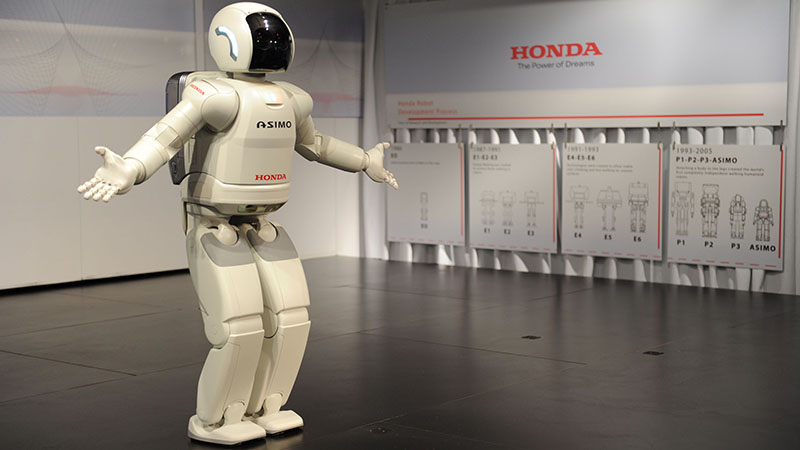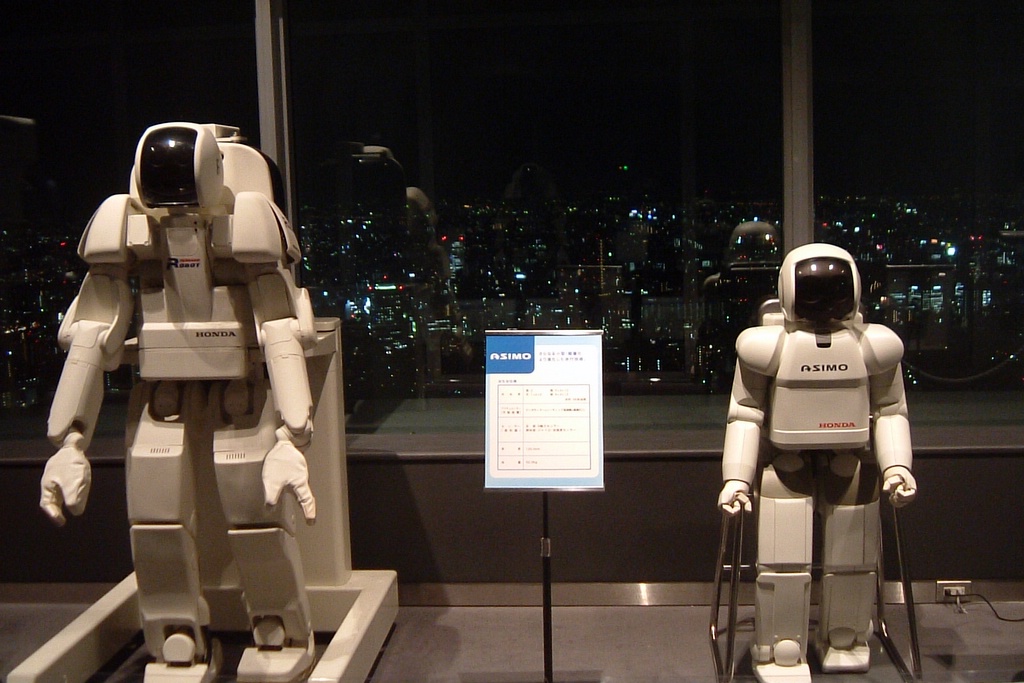
What is the Honda P3?
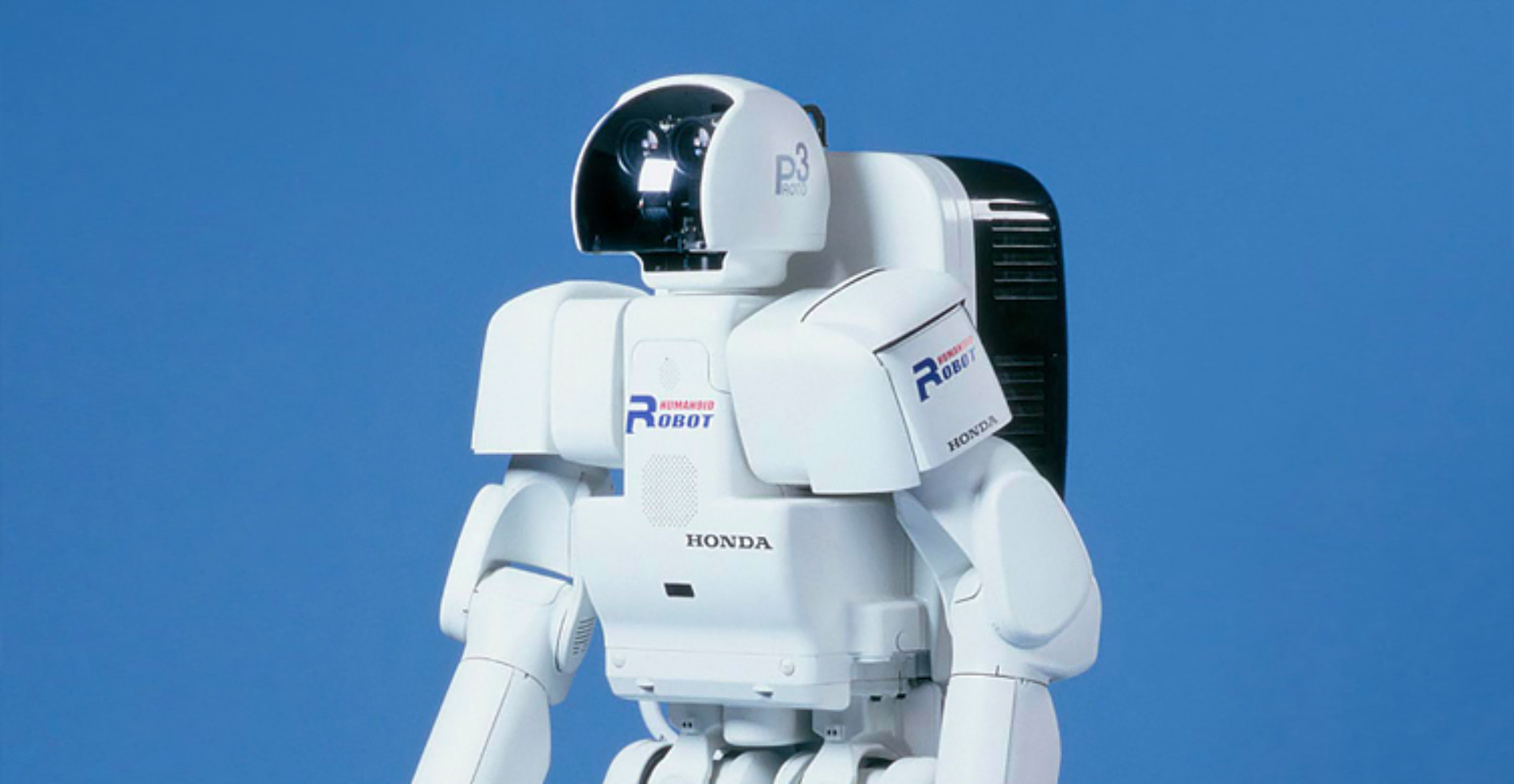
The Honda P3 is a full-scale humanoid robot developed by Honda R&D at its Wako Research Center in Japan. First completed in 1997, it was the third and final iteration of Honda's P-series (preceding ASIMO) and served as a bipedal locomotion testbed. Standing 1.60 m and weighing 130 kg, the P3 integrated 28 harmonic-drive servomotors to achieve stable dynamic walking, stair climbing, and basic push recovery. Its onboard stereo cameras, gyroscopes, and foot force sensors enabled autonomous balance and terrain adaptation. As a pure research prototype, the P3 was never commercialized, but its control architecture and design directly influenced the subsequent ASIMO line.
Specifications
Here are the full technical specifications.
| Spec | Value |
|---|---|
| Height | ~1.60 m |
| Weight | ~130 kg |
| Degrees of freedom | 28 |
| Battery life | 0.42 hours |
| Max speed | 2 km/h |
| Payload | Not specified |
| Price (new) | Undisclosed (research prototype) |
| Price (used range) | N/A |
Price & Value
New MSRP: Undisclosed
Used range: N/A
The Honda P3 was never offered for sale; it was a purely internal R&D platform. No new or used unit pricing exists. Comparable university prototypes of the era (e.g., WABIAN) also had no commercial price tags. The value of the P3 lies in its historical contribution to bipedal robotics, not in a market transaction. For institutions seeking similar capabilities today, modern humanoids like Unitree H1 or Fourier GR-2 present multi-hundred-thousand-dollar price points that reflect decades of advancement.
Who Is It For?
Best for: - Robotics historians and museums documenting the evolution of humanoid robots (the P3 is a key ancestor of ASIMO) - Biomechanics researchers studying early dynamic walking algorithms (its published control methods remain relevant)
Not for: - Commercial deployment or any practical task (no payload, 25-min battery life, 2 km/h speed) - Graduate research labs needing a platform for new manipulator control (hands had only 2 DOF total, no precision grasping)
Alternatives & Comparison
At the time of its development (1990s), the Honda P3 competed against a few parallel bipedal humanoid projects, though none were commercial products.
| Model | Price | Available | Key Difference |
|---|---|---|---|
| Waseda WABIAN | Undisclosed | no | University research humanoid with hydraulic actuation and earlier bipedal walking |
| MIT Leg Lab Spring Flamingo | Undisclosed | no | 2D bipedal walking machine, not a full humanoid; focused on dynamic balance |
| Sony QRIO | Undisclosed | no | Small entertainment humanoid introduced later, with more advanced interactions |
Verdict: Among 1990s biped platforms, the Honda P3 was the most complete full-scale humanoid, achieving robust dynamic walking that directly fed into ASIMO. Its rivals were either more specialized (Spring Flamingo for 2D balance) or less full-bodied (QRIO was small, WABIAN earlier and hydraulic). For historians studying the ASIMO lineage, the P3 is irreplaceable; for those seeking working hardware today, these are all museum pieces.
Use Cases & Capabilities
Bipedal Locomotion Research
The P3 was Honda's platform for developing and testing bipedal walking algorithms in the era before ASIMO. Researchers used its 28 degrees of freedom—especially the 6-DOF legs with harmonic drive actuation—to refine dynamic balance, push recovery, and stair climbing. By processing data from foot force/torque sensors and an internal gyroscope, the P3 could walk at 2 km/h and handle uneven terrain. Its onboard stereo cameras provided visual feedback for step planning. The resulting control strategies were published in academic papers and ultimately scaled down for the smaller, lighter ASIMO.
Human-Robot Interaction Studies
Although the P3’s primary purpose was locomotion, its humanoid form factor enabled early experiments in human-robot interaction. Researchers could script simple arm gestures and head tracking using the 14-DOF arm system and the two stereo cameras. The robot’s presence as a full-scale, walking machine attracted media attention and sparked public interest in humanoid robotics. However, interaction was limited because the P3 lacked advanced speech or facial expression capabilities; it was a walking research platform first.
Legacy & Educational Reference
Today, the Honda P3 serves as a reference point for robotics historians and educators. Its specs and design documents illustrate the challenges of 1990s humanoid engineering, including battery life constraints (only 25 minutes of operation) and compute limitations (distributed microprocessors). Museums and university archives may feature images, technical papers, or even a preserved P3 unit (Honda reportedly lent one to AIST). Students studying humanoid evolution can contrast the P3’s 130-kg frame and 2 km/h walking speed with modern platforms like Honda’s later ASIMO or current market entrants.
History & Background
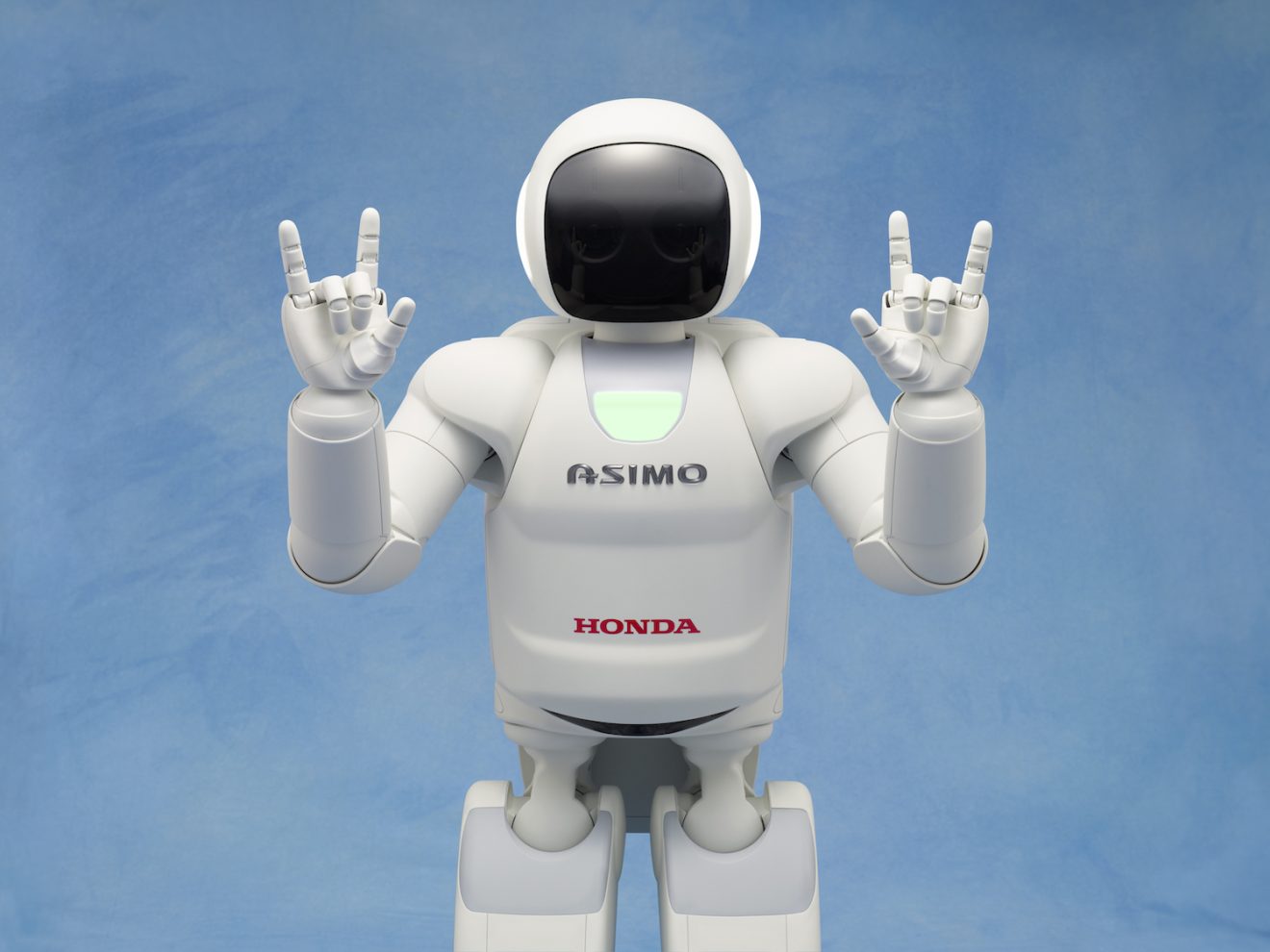
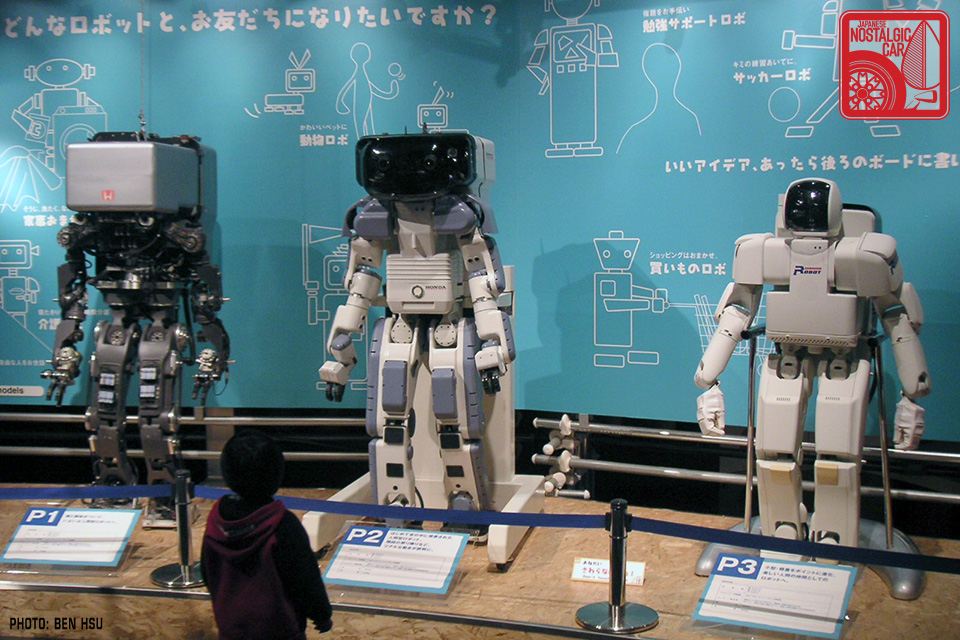
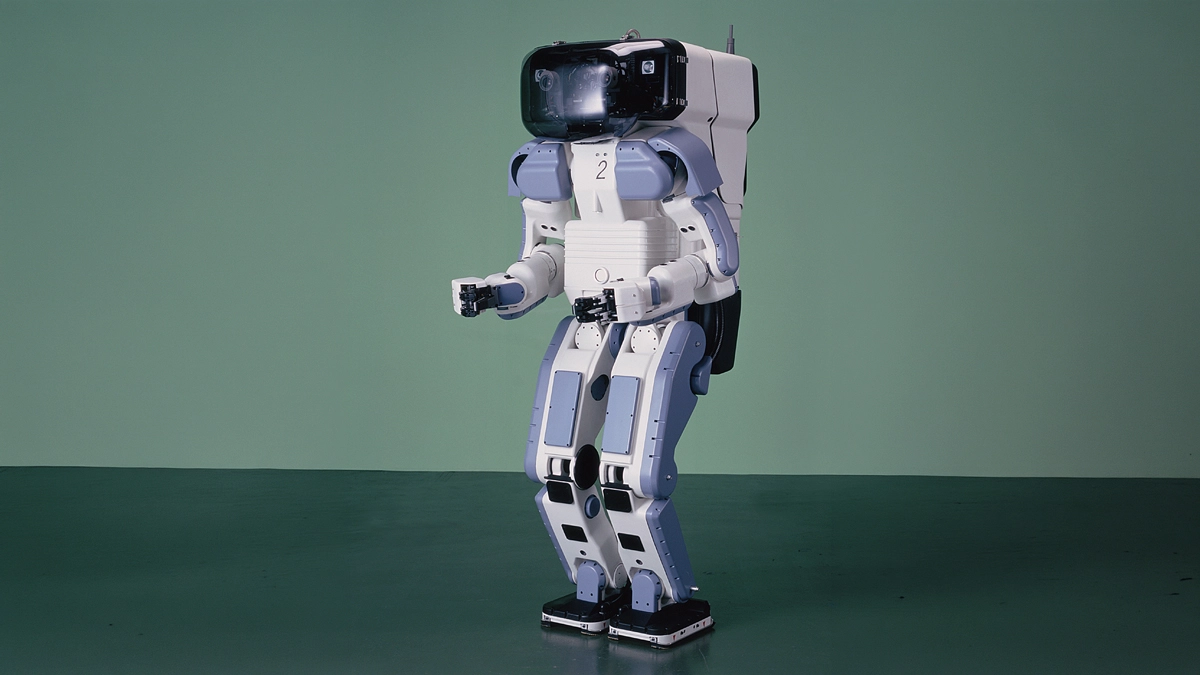
Honda Motor Co. began its humanoid robotics program in secret during the 1980s, aiming to replicate human walking dynamics. The P1 (1993) proved basic bipedal locomotion; the P2 (1996) added wireless control and a self-contained power supply. The P3, unveiled in 1997, refined the design to be more compact and practical: it stood 1.60 m tall, weighed 130 kg, and had 28 DOF with harmonic drive motors. In 1998, Honda loaned a P3 to Japan’s AIST laboratory for the Humanoid Robot Project, aiding broader research. Lessons from the P-series culminated in 2000 with ASIMO, a smaller, friendlier humanoid that advanced walking, stair climbing, and eventually running. The P3 was discontinued as a research platform after ASIMO’s arrival but remains an important stepping stone in Honda’s robotics history.
Buying Used — What to Check
Verify provenance Ensure any unit claimed to be a P3 is indeed an original Honda prototype, not a replica or cobbled-together display. Documentation from Honda or AIST would be critical.
Check operational condition A P3 unit, if uncrated after decades, may have degraded batteries, seized harmonic drives, or outdated electronics. Restoration costs could be significant.
Confirm safety and certification As a laboratory prototype, the P3 likely lacks modern safety certifications for public demonstration. Liability and compliance must be assessed.