What is the Honor Humanoid?
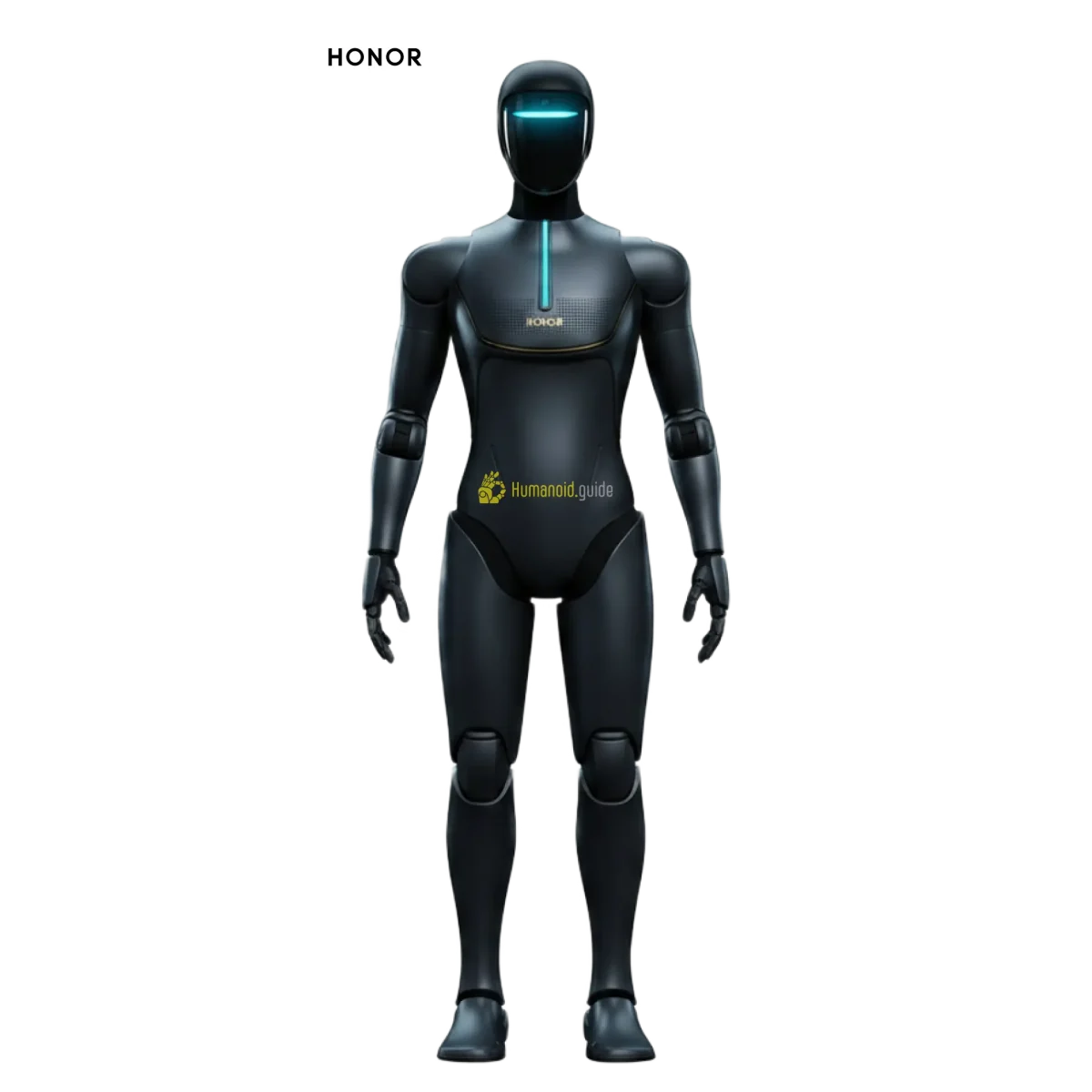
The HONOR Humanoid Robot is a full-scale humanoid concept developed by Honor Device Co., Ltd., a major Chinese smartphone manufacturer. Intended to be part of Honor’s AI ecosystem, the robot was first publicly shown at MWC 2026 in Barcelona alongside the ‘Robot Phone,’ performing a backflip and dance routine. Standing 160 cm tall and weighing 80 kg, it features 20 degrees of freedom (including 10 in its five-fingered hands) and is powered by an assumed AI-optimized SoC with neural processing for real-time interaction. Although its exact application is unconfirmed, the robot is envisioned for smart home assistance and elder care, leveraging Honor’s connectivity and AI portfolio. As of 2026, it remains a prototype with no announced commercial launch date.
Specifications
Here are the full technical specifications.
| Spec | Value |
|---|---|
| Height | 160 cm |
| Weight | 80 kg |
| Degrees of freedom | 20 |
| Battery life | 2 hours |
| Max speed | 4 km/h |
| Payload | Not specified |
| Price (new) | Undisclosed (contact manufacturer) |
| Price (used range) | N/A (pre-commercial) |
Price & Value
New MSRP: Undisclosed (contact manufacturer)
Used range: N/A (pre-commercial)
As a prototype, the HONOR Humanoid Robot has no announced pricing or commercial availability. Its value proposition is tied to Honor’s ambition to embed AI assistants into daily life, leveraging its smartphone manufacturing scale to potentially reduce costs compared to dedicated robotics startups. If eventually mass-produced, a price in the $50,000–$100,000 range could make it competitive with other mid-tier humanoids like the Unitree H1 or Fourier GR-1, though certification and safety testing would need to be completed. Until a launch roadmap is provided, the robot offers no current purchasing option, and any estimates remain highly speculative. Organizations interested in early partnership should contact Honor directly via https://www.hihonor.com.
Who Is It For?
Best for: - Smart home and elder care research (concept stage) — suited for evaluating AI integration and human-robot interaction in domestic settings.
Not for: - Commercial deployment or industrial tasks — lacks verified payload rating and mature safety certifications.
Alternatives & Comparison
While the HONOR Humanoid Robot is still a prototype, its proposed role as an AI-powered home assistant puts it in competition with emerging humanoid robots targeting domestic use, such as Tesla Bot, Xiaomi CyberOne, and Sanctuary AI Phoenix. However, these rivals are at different stages of development and have more defined specs.
| Model | Price | Available | Key Difference |
|---|---|---|---|
| Tesla Optimus Gen 2 | ~$20,000 (est.) | preorder | Targeted at factory work with higher payload (~20 kg) |
| Xiaomi CyberOne | ~$70,000 (est.) | no | Advanced curved OLED face and emotional AI |
| Sanctuary AI Phoenix | Undisclosed | no | Specialized in retail tasks with human-like hands |
Verdict: For potential buyers exploring home-assistant humanoids in 2026, the HONOR platform is most intriguing for its smartphone ecosystem integration, but it lacks concrete specs and a commercialization timeline. Xiaomi’s CyberOne offers a more polished concept with demonstrated bipedal walking and emotion, while Tesla’s Optimus seems closer to production with a lower projected cost. Until Honor releases full specifications and a path to market, the HONOR Humanoid remains a research curiosity rather than a viable purchase option.
Use Cases & Capabilities
Smart Home Assistant
The HONOR Humanoid Robot is designed to operate as an intelligent companion in domestic environments, handling tasks like scheduling, home device control, and possibly physical chores. With LLM integration, it can engage in natural conversation and learn household routines. However, its payload and manual dexterity (speculative 10 kg lift) would limit lifting heavy objects. Until safety certifications are achieved, unsupervised home deployment is not yet feasible.
Elder Care & Companionship
Honor has indicated elder care as a potential market, where the robot could provide reminders, social interaction, and emergency alerts. Its humanoid form and AI-driven communication may reduce loneliness, but clinical reliability and fall-detection capabilities are unproven. The 2‑hour battery life would restrict sustained monitoring without frequent recharging.
Event Promotion & Demonstration
Given its flashy backflip and dance routine at MWC 2026, the HONOR Humanoid excels as a brand ambassador at trade shows and tech events. Its ability to perform dynamic movements attracts attention, but continuous operation is limited by battery and motor duty cycles. This use case leverages Honor’s showmanship while the core domestic features mature.
History & Background
Honor, originally a sub-brand of Huawei, became an independent smartphone company in November 2020. Known for cutting-edge mobile technology, Honor entered the humanoid robotics space with a surprise reveal at MWC 2026 in Barcelona where the robot danced and performed a backflip alongside the ‘Robot Phone.’ No prior robotics projects have been publicly disclosed by Honor, and the humanoid appears to be a first-generation prototype focused on AI integration. The company has not announced any production timeline, commercial partnerships, or research institutes involved. As of 2026, the robot remains a concept demonstrator, with Honor leveraging its AI and hardware expertise from the smartphone market to explore home-service robotics. The project’s development is closely tied to Honor’s broader ecosystem strategy, but details remain scarce.
Buying Used — What to Check
Verify purpose-built components Prototype units may use off-the-shelf parts not designed for durability; inspect actuator and battery quality.
Confirm software and AI integration The robot’s value depends heavily on Honor’s proprietary AI ecosystem; ensure cloud connectivity and updates remain functional after acquisition.
Check battery health A two-hour battery that has been cycled at trade shows may be significantly degraded.