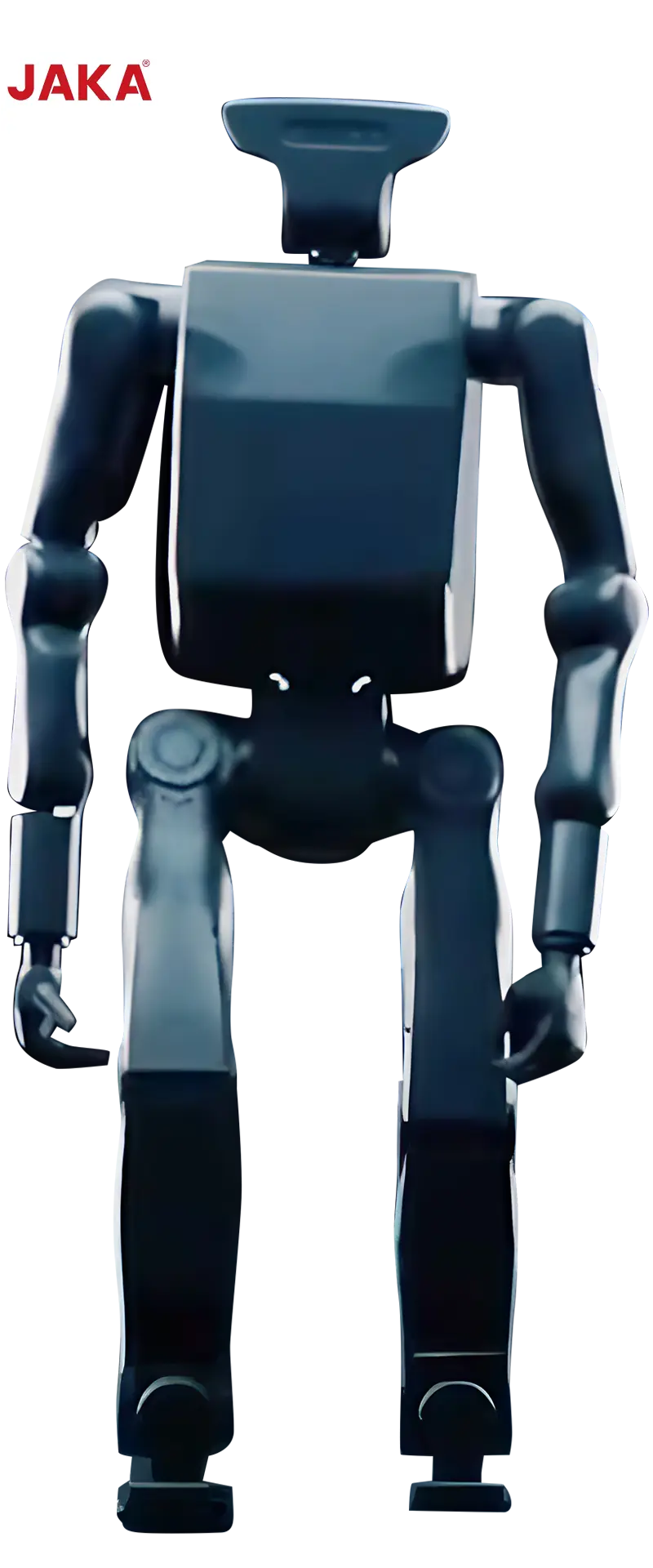
What is the Jaka K1?
JAKA K1 is a full‑size humanoid robot developed by JAKA Robotics, the Shanghai‑based manufacturer best known for its collaborative robot arms. The K1 stands 165 cm tall, weighs 40 kg, and features 18 degrees of freedom. It is aimed at education, research labs, and competitive robotics events. The robot marks JAKA's entry into the humanoid space, joining the smaller JAKA π and the heavy‑payload JAKA Kargo models. With a lightweight frame and a 3‑hour runtime, the K1 is designed for indoor experimentation rather than industrial deployment. Detailed specifications remain limited, as the robot was shown as a prototype in 2025.
Specifications
Here are the full technical specifications.
| Spec | Value |
|---|---|
| Height | 165 cm |
| Weight | 40 kg |
| Degrees of freedom | 18 |
| Battery life | 3 hours |
| Max speed | 4 km/h |
| Payload | 8 kg |
| Price (new) | Undisclosed |
| Price (used range) | N/A |
Price & Value
New MSRP: Undisclosed
Used range: N/A
JAKA Robotics has not released pricing for the K1, and no orders are being taken. As a prototype, its eventual price remains speculative. Given JAKA's commercial robot arm pricing, a humanoid with similar complexity would likely fall in the mid‑five‑figure range if it reaches market, but no official figures exist. Until production units appear, total cost of ownership cannot be estimated, and used units do not exist. Prospective adopters should budget for research‑grade support and be prepared for a custom quoting process when the robot becomes available.
Who Is It For?
Best for: - University robotics labs needing a lightweight, indoor humanoid for locomotion and manipulation research (18 DOF, 8 kg payload, 3‑hour runtime)
Not for: - Heavy industrial tasks (payload and speed insufficient), or outdoor use (no IP rating, unproven reliability)
Alternatives & Comparison
The JAKA K1 exists in a competitive landscape of sub‑$100k and prototype humanoids. While unavailable for purchase, it can be compared with similarly positioned robots that target research and preliminary humanoid development.
| Model | Price | Available | Key Difference |
|---|---|---|---|
| Unitree G1 | $16,000 (est.) | yes | Mass‑produced and commercially available, with 23–43 DOF, half the payload (3 kg), and a smaller frame |
| Xiaomi CyberOne | Undisclosed | no | More advanced perception (Mi‑Sense), taller (177 cm) and heavier (52 kg), but remains a research project with no commercial sales |
Verdict: For labs that want a mid‑size humanoid from a proven cobot manufacturer, and can wait for a commercial release, the K1 is a promising option—if and when it ships. Today, the Unitree G1 is the only ready‑to‑ship humanoid in this weight class, while the CyberOne offers superior sensing but no sales channel. The K1’s ultimate value will depend entirely on price and delivery timeline.
Use Cases & Capabilities
University Research & Teaching
The K1’s 18 DOF, 8 kg payload, and 3‑hour battery make it suitable for humanoid locomotion and whole‑body control courses. Its size and weight allow safe interaction in lab environments. Researchers can develop walking algorithms, object manipulation tasks, and human‑robot interaction studies on a platform that bridges education and light research. The prototype nature means early adopters will help define the software stack.
Competitive Robotics (RoboCup)
With a maximum speed of 4 km/h and a 40 kg body that can handle falls, the K1 is designed for events like the RoboCup Humanoid League. Its 8 kg payload enables carrying objects typical of disaster‑response or service challenges. The robot’s battery life exceeds a standard half‑game plus preparation time. JAKA’s experience with fast‑cycling cobots should give the K1 an edge in dynamic motion.
Prototype Development & Experimentation
Corporate R&D teams evaluating humanoid platforms can use the K1 to test new sensors, grippers, or autonomy stacks before committing to a heavier system. The robot’s open architecture (based on JAKA’s cobot ecosystem) may allow easier integration than many humanoid startups. Its lightweight frame reduces injury risk during development, and the 8 kg payload supports a variety of end‑effectors.
History & Background
JAKA Robotics was founded in 2014 in Shanghai, China, and quickly gained traction with its line of lightweight collaborative robot arms. The company expanded into humanoids in the mid‑2020s, unveiling the small, child‑sized JAKA π (122 cm, 42 kg) and the heavy‑lifting JAKA Kargo (156 cm, 180 kg) for industrial and logistics settings. The K1 is JAKA’s mid‑range humanoid, first shown in 2025 as a prototype. Details are sparse, but it appears to bridge the gap between education‑focused π and the industrial Kargo. As of early 2026, the K1 has not entered production, and no price has been announced. JAKA’s existing global distribution network for cobots positions it well for a future humanoid launch.
Buying Used — What to Check
Verify payload rating Payload and runtime are critical for research setups; early units may differ from prototype specs.
Test battery health Lithium batteries lose capacity over time; a used unit may deliver less than the advertised 3 hours.
Inspect joints for play Lightweight joints can develop backlash after heavy use in competitions or labs.