What is the K0 Robotis?
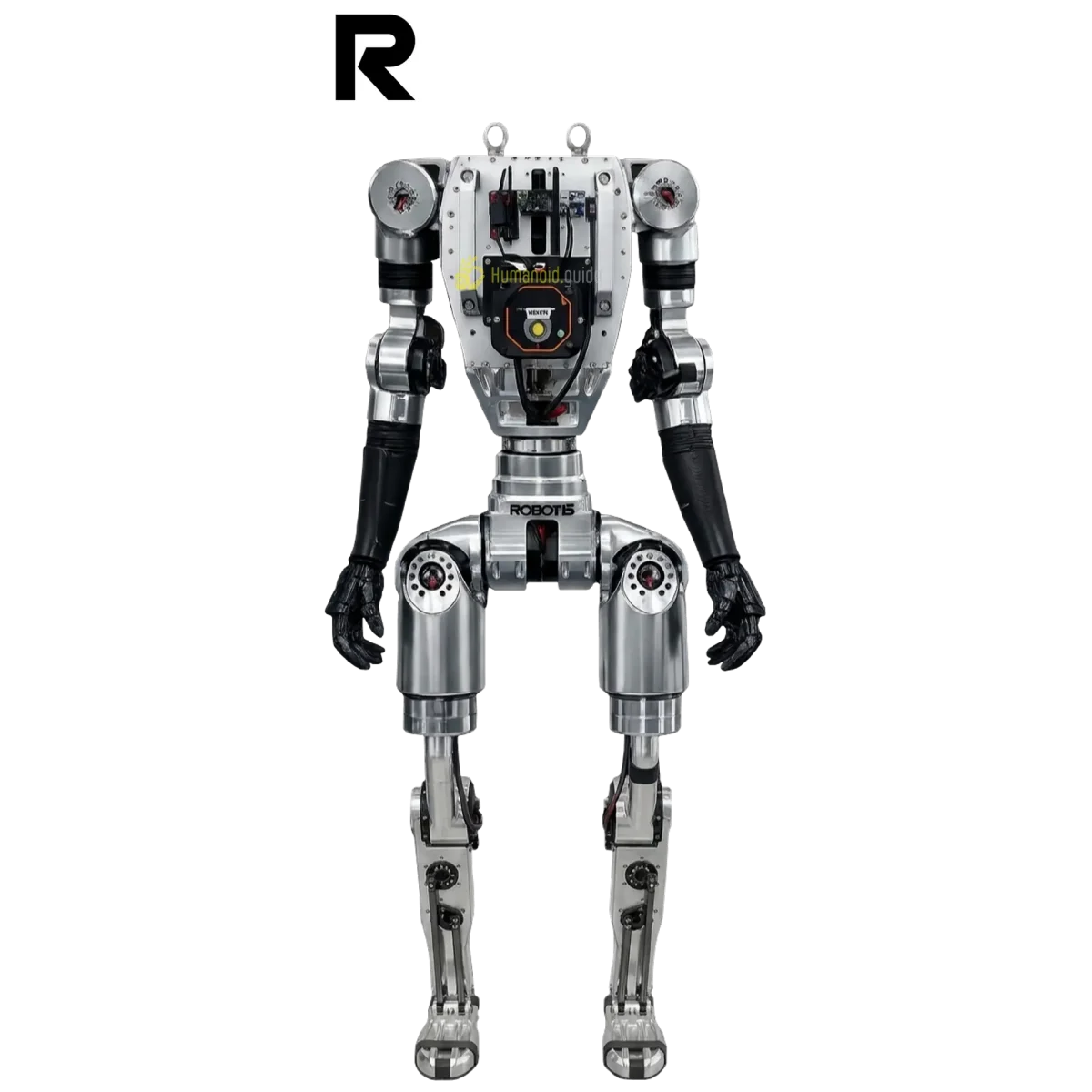
The ROBOTIS K0 is an open‑source humanoid research platform developed by ROBOTIS Co., Ltd. in Seoul, South Korea. First built in 2024, it stands 130 cm tall, weighs 34 kg, and offers 23 degrees of freedom driven by DYNAMIXEL‑Q all‑in‑one smart actuators. The K0 is equipped with a Cortex‑A76 + A55 processor and Mali‑G610 GPU, running ROS‑compatible software. Designed for academic and industrial R&D, it supports locomotion algorithm testing, sensor integration, and actuator performance studies. Its modular, fully documented architecture makes it a practical successor to earlier ROBOTIS platforms like DARwIn‑OP and THORMANG, but in a more compact, cost‑conscious form factor.
Specifications
Here are the full technical specifications.
| Spec | Value |
|---|---|
| Height | 130 cm |
| Weight | 34 kg |
| Degrees of freedom | 23 |
| Battery life | 1 hour |
| Max speed | 4 km/h |
| Payload | 5 kg (arm payload) |
| Price (new) | Undisclosed (contact manufacturer) |
| Price (used range) | N/A (pre‑commercial) |
Price & Value
New MSRP: Undisclosed (contact manufacturer)
Used range: N/A (pre‑commercial)
ROBOTIS has not publicly released a price for the K0; prospective buyers must contact the manufacturer directly. The robot’s value proposition is built on open‑source accessibility and the widely adopted DYNAMIXEL actuator ecosystem, which lowers long‑term integration and spare‑part costs. If priced competitively in the $50,000–$100,000 range typical of small research humanoids, the K0 could appeal strongly to university labs seeking a modular platform. However, without confirmed pricing, its competitiveness against commercially available alternatives like the Unitree H1 (~$90,000) remains uncertain. Total cost of ownership will include custom software development, actuator spares (readily available), and potential hardware upgrades, though the open community may offset some of these expenses. Depreciation on pre‑production units is highly dependent on final retail price and community uptake, but early adopters may benefit from contributing to an evolving ecosystem.
Who Is It For?
Best for: - University robotics labs – open‑source platform with DYNAMIXEL actuators simplifies custom research and lowers instrument integration overhead. - AI/ML locomotion researchers – 23 DOF and ROS compatibility enable rapid testing of gait algorithms in a self‑contained hardware package. - Actuator developers – DYNAMIXEL‑Q architecture allows real‑world actuator performance benchmarking in a humanoid context.
Not for: - End‑users seeking a ready‑made service robot – the K0 has no hands, limited arm payload (5 kg), and no corporate service or maintenance packages. - Heavy industrial environments – no IP rating and limited runtime (1 hour) make it unsuitable for extended outdoor or factory‑floor tasks.
Alternatives & Comparison
The ROBOTIS K0 competes in the narrow space of mid‑sized, open‑source research humanoids. Below we compare it against other platforms a lab might evaluate for locomotion and manipulation research.
| Model | Price | Available | Key Difference |
|---|---|---|---|
| Unitree H1 | ~$90,000 | yes | Larger (180 cm, 47 kg) with 19 DOF, faster (max 12 km/h), and a ready‑to‑run full‑body biped; less open than K0. |
| Fourier GR‑2 | Undisclosed | preorder | Higher DOF (53) and arm payload (5 kg) but significantly taller (175 cm, 70 kg); still pre‑order with unconfirmed specs. |
| UBTECH Walker S | ~$150,000 (est.) | preorder | Full‑size (156 cm, 45 kg) with advanced sensor suite and AI integration; positioned more toward service and enterprise. |
Verdict: The K0’s strength is its open DYNAMIXEL architecture and community‑first design. For labs that already own ROBOTIS actuators or plan to release open‑source improvements, it is a compelling platform. However, the Unitree H1 offers far greater physical performance and is shipping today, making it a safer bet for teams that need reliable walking immediately. Fourier GR‑2 promises more manipulation ability but remains pre‑order with unverified details; it might suit well‑funded groups willing to wait.
Use Cases & Capabilities
Academic Research and Education
The K0 is designed to serve as a primary teaching and research tool in university robotics labs. Its 23 degrees of freedom allow students to explore full‑body kinematic chains and inverse dynamics on a real platform. The open‑source software stack encourages modification of gait controllers and integration of external sensors like depth cameras and LiDAR. Because it uses standard ROS interfaces, it fits neatly into existing curricula and research pipelines. Its compact size reduces lab space requirements and makes demonstration sessions more manageable.
Locomotion Algorithm Development
With a top speed of 4 km/h and a stable walking gait, the K0 is a practical testbed for bipedal locomotion algorithms. Researchers can tune step frequency, push recovery, and ground reaction strategies using real‑time data from its onboard processor. The 1‑hour battery life supports iterative testing of walking patterns on flat indoor terrain. Because the robot uses familiar DYNAMIXEL actuators, torque‑control parameters can be adjusted programmatically for compliant or stiff gaits. This makes the K0 ideal for early‑stage algorithm validation before scaling to larger, more expensive humanoids.
Open‑Source Community Projects
ROBOTIS has a history of fostering grassroots development, and the K0 continues that tradition. Enthusiasts and small labs can share modified controller code, 3D‑printed accessories, and sensor mounts. The platform’s modular build encourages community‑driven upgrades such as swapping the onboard computer or adding custom grippers. Since DYNAMIXEL‑Q actuators are commercially available, any lab can maintain or expand the robot independently. This collaborative model accelerates the evolution of the K0 and may lead to official future variants designed by the community.
History & Background
ROBOTIS was founded in 1999 in Seoul, South Korea, and grew into a global supplier of smart servo actuators with the DYNAMIXEL product line. Over the following two decades, the company released several educational and research robots, including the DARwIn‑OP mini‑humanoid and the larger THORMANG platforms. In 2024, ROBOTIS introduced the K0, a new mid‑sized open‑source humanoid that incorporated the company’s latest DYNAMIXEL‑Q actuators and a modern ARM‑based processor. The K0 was envisioned as a community‑friendly alternative to proprietary research bots, continuing the company’s commitment to open hardware. As of 2026, the K0 is offered through pre‑order, with initial units deployed to partner universities and research labs to gather field feedback.
Buying Used — What to Check
Verify actuator firmware version DYNAMIXEL‑Q firmware updates can introduce compatibility changes; ensure all actuators share the same revision and can be re‑flashed if needed.
Inspect hip and knee joints for wear As a research platform, these joints will have undergone many gait cycles — check for backlash, noisy gears, or play beyond manufacturer tolerances.
Confirm onboard computer specs Pre‑production units may have been shipped with varying RAM/storage configurations; validate that the installed board matches the official specifications for the ROS software stack you plan to use.