What is the Kawada Nextage Fillie?
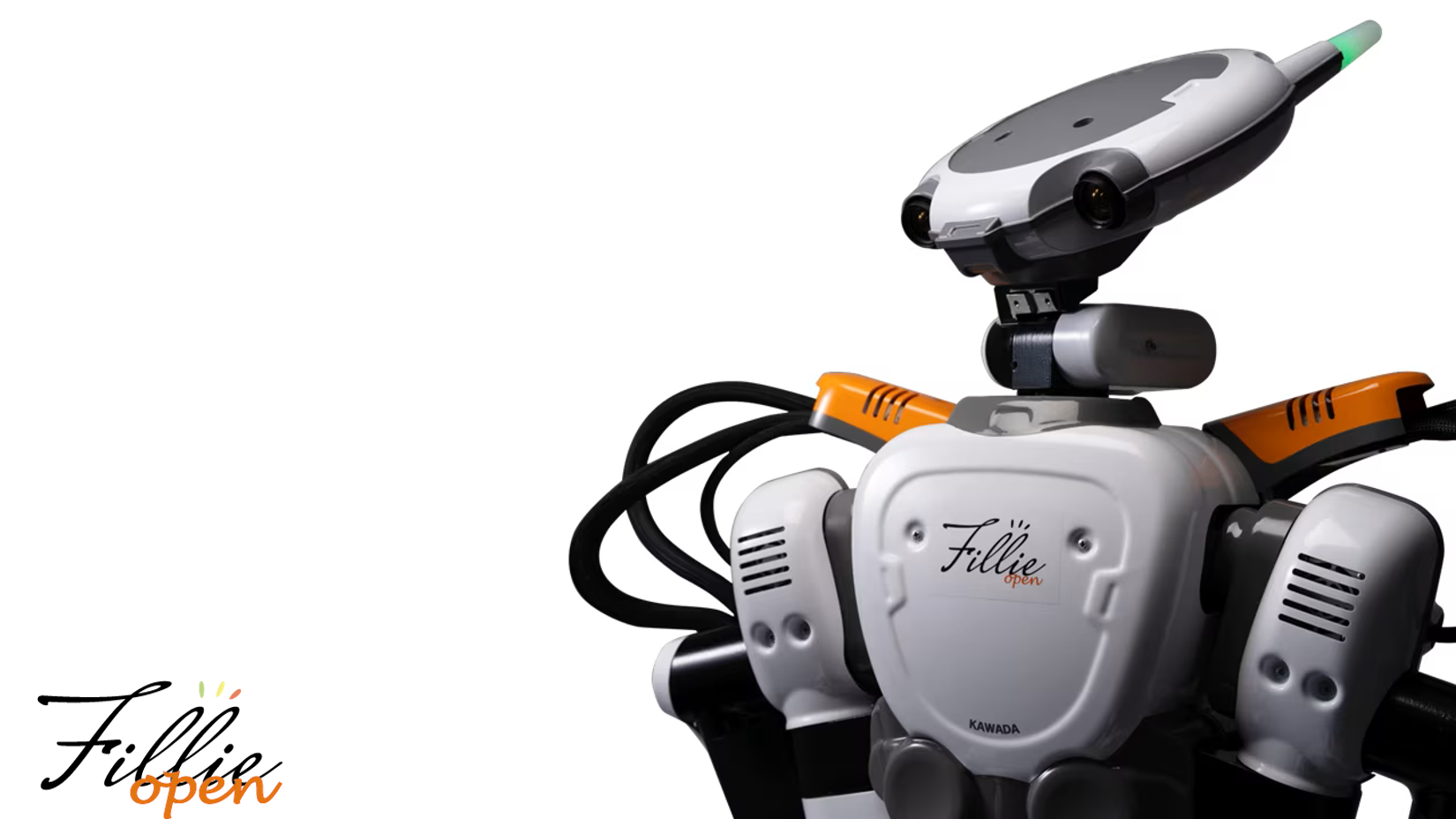
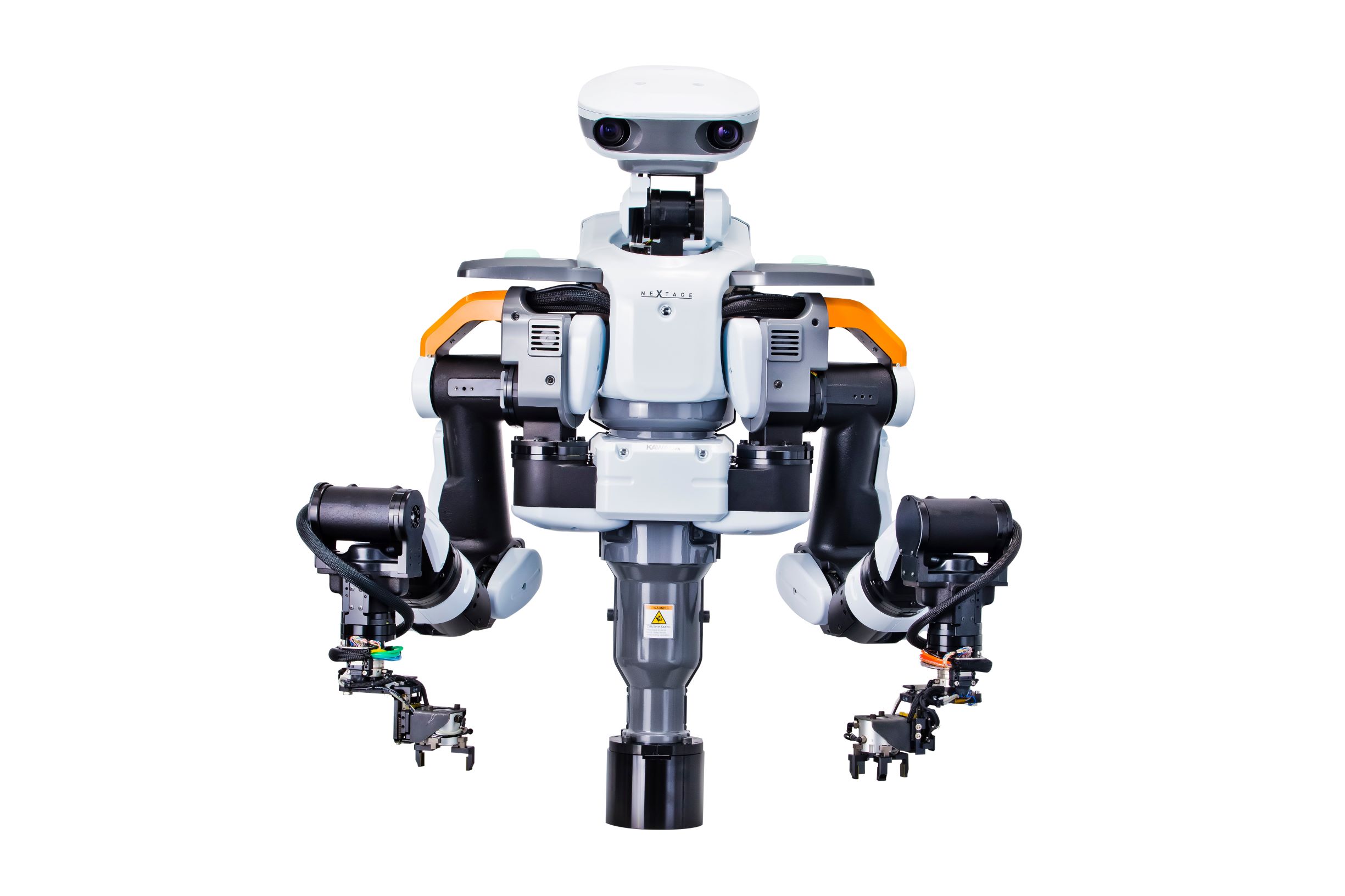
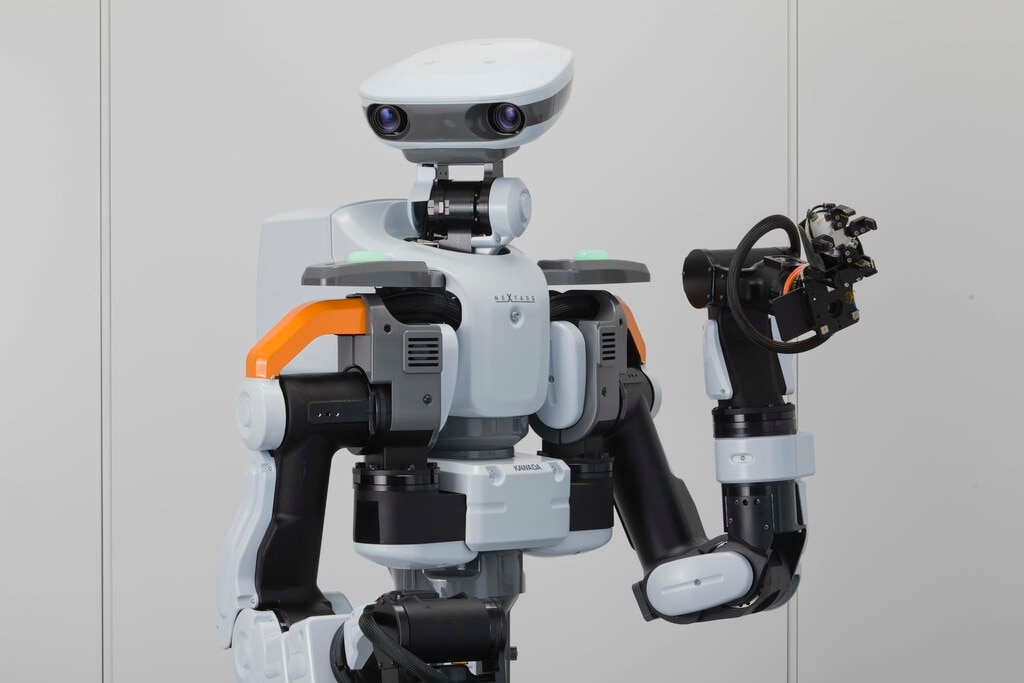
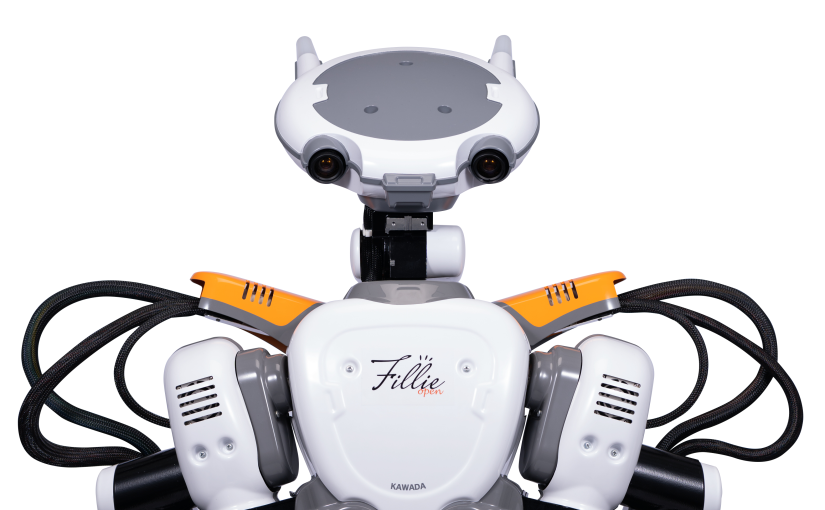
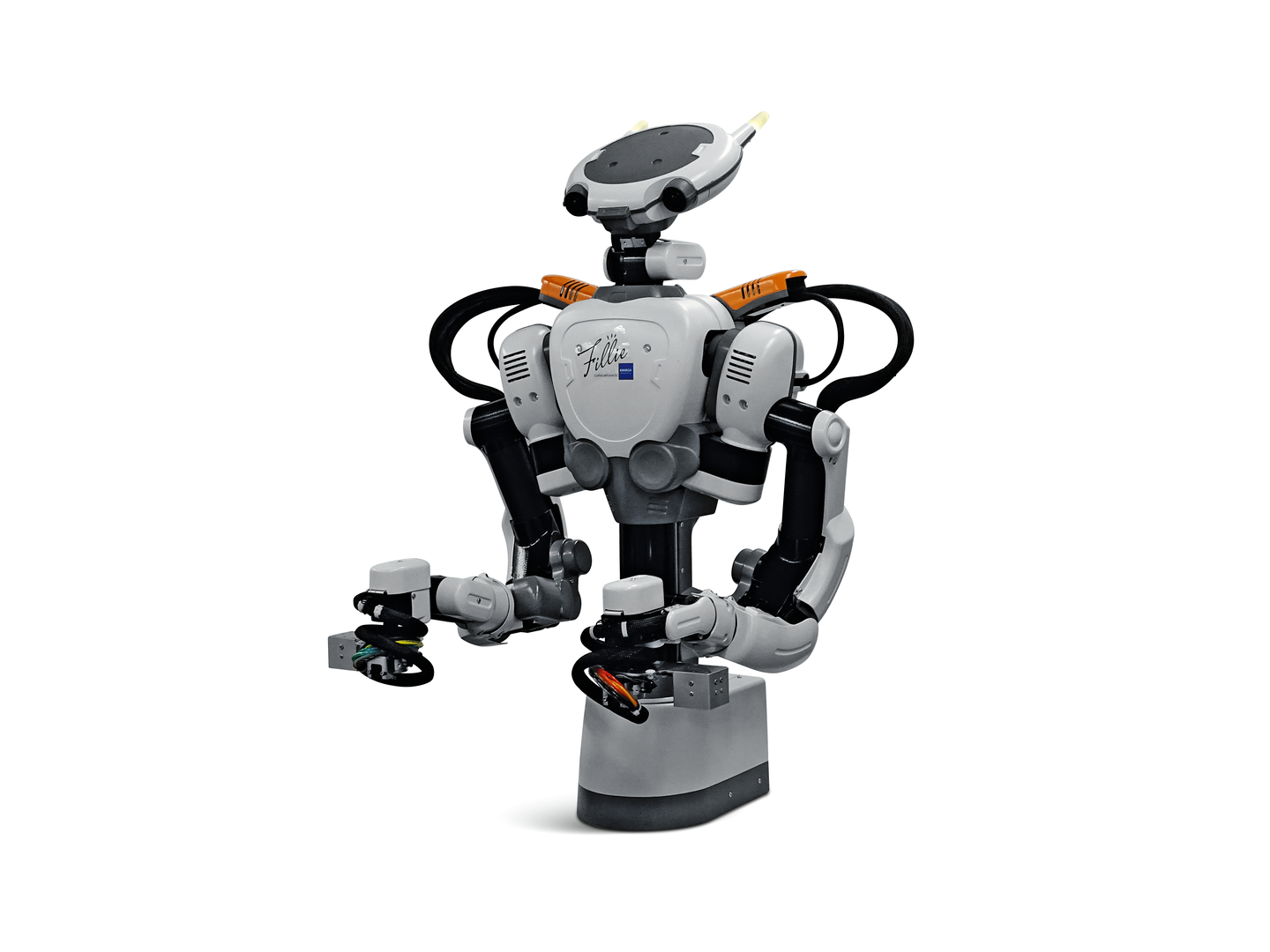
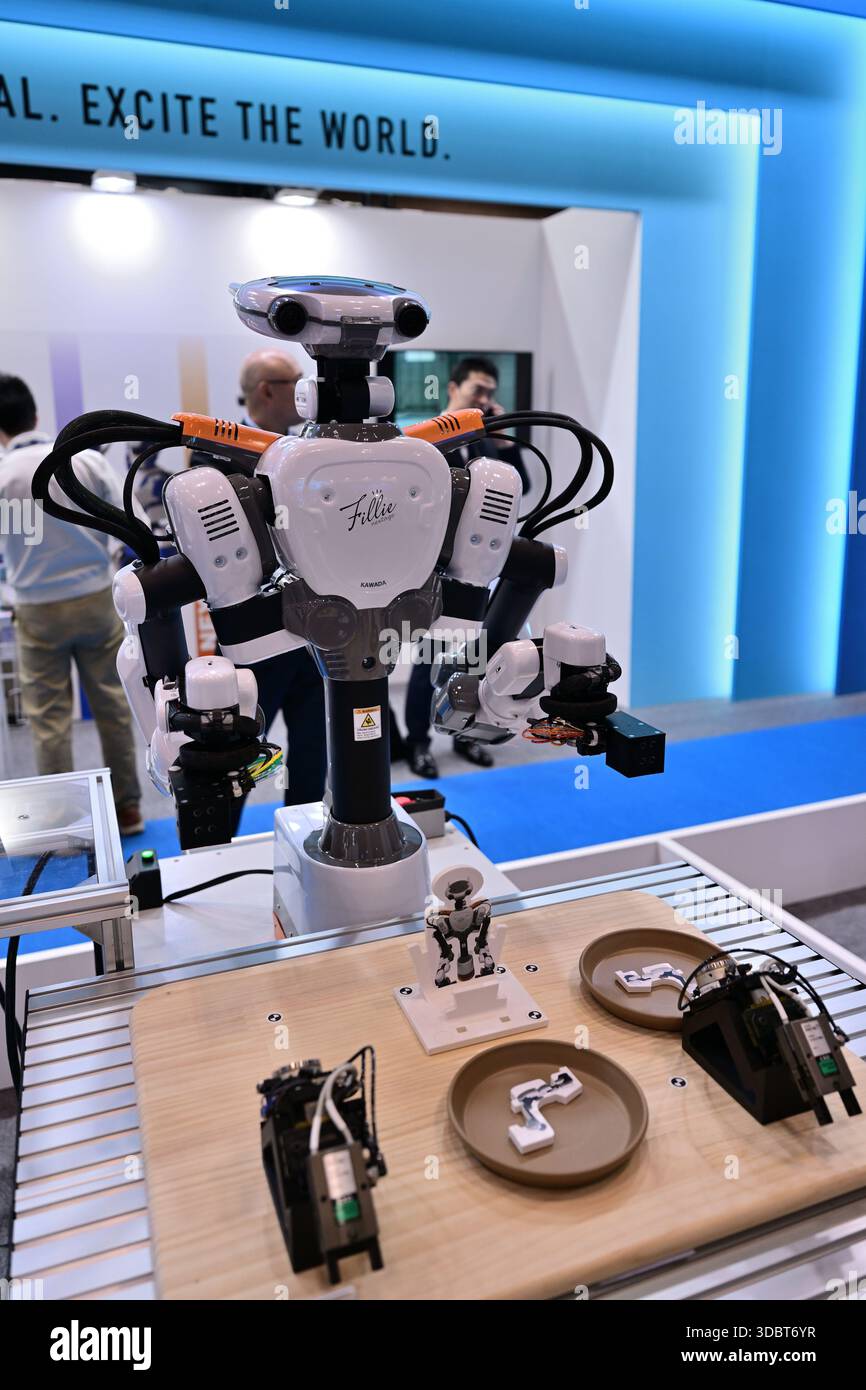
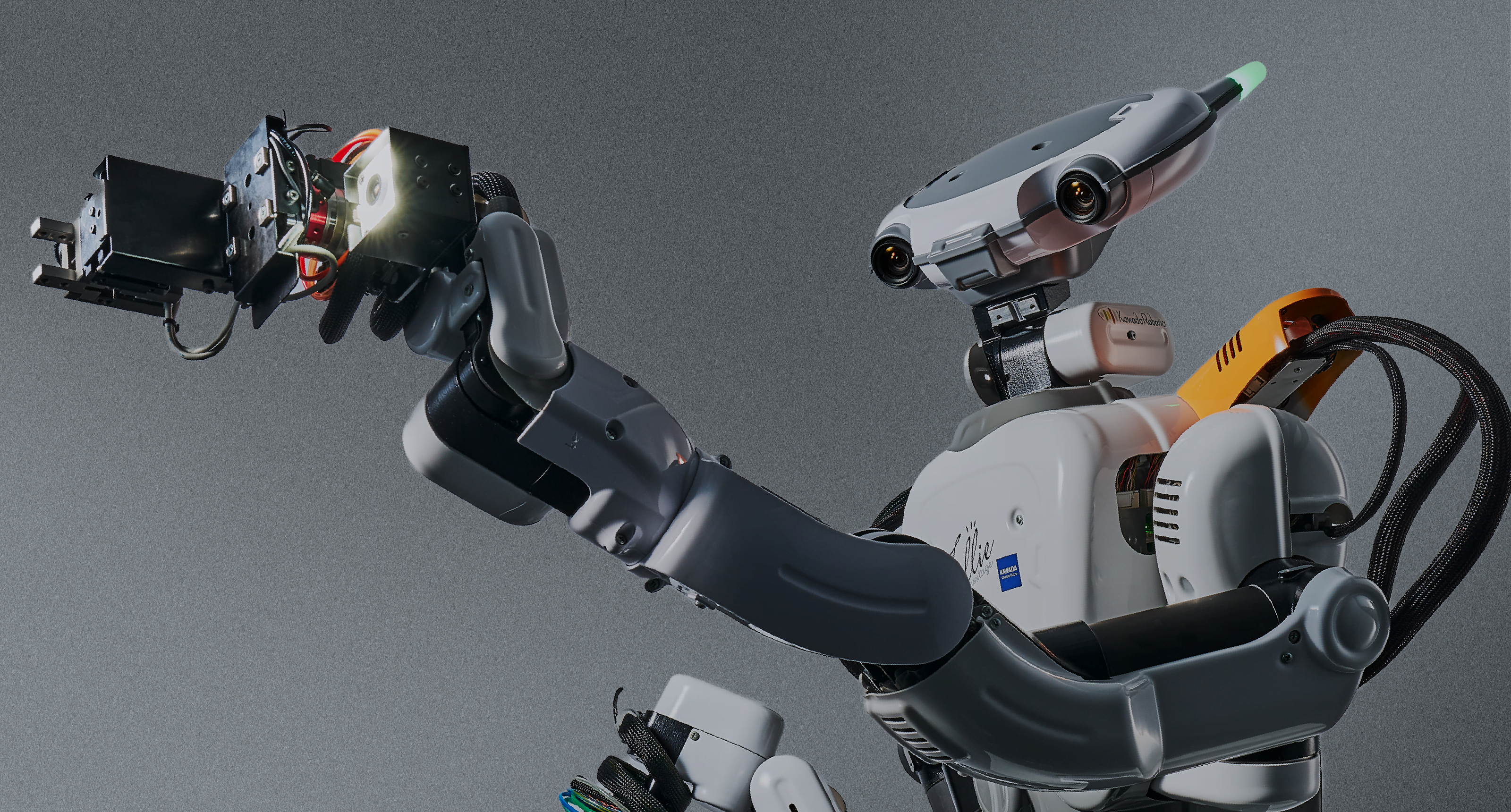
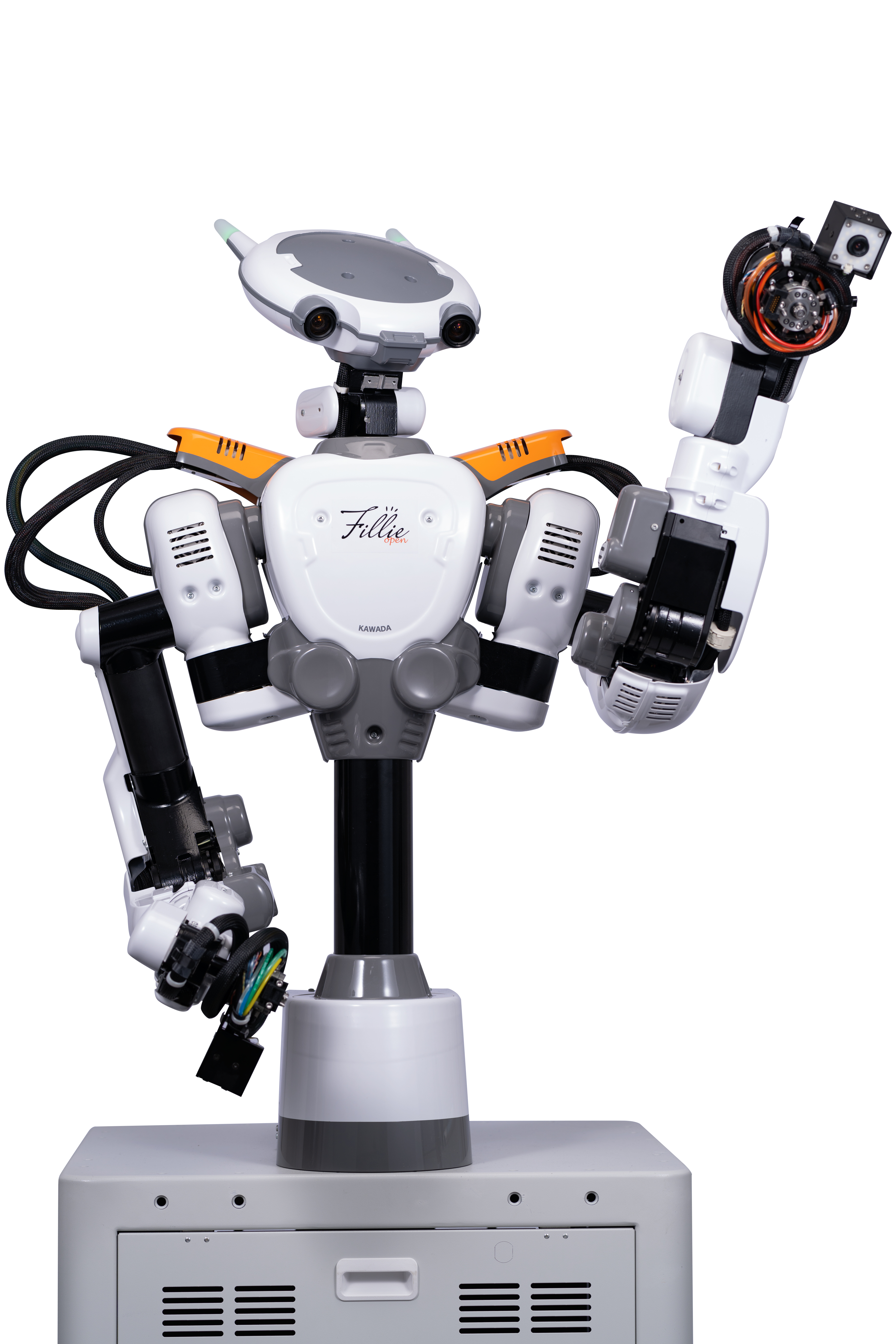
The NEXTAGE Fillie by Kawada Robotics (Tokyo, Japan) is a compact, dual-arm collaborative humanoid robot engineered for precision industrial tasks. Standing 898 mm tall with a 460×450 mm footprint, it features two 6-axis arms plus a 1-axis torso and 2-axis head, totalling 15 degrees of freedom. Each arm handles 1.5 kg and reaches 430 mm with a repeatability of 0.02 mm, driven by AC servo motors. Integrated stereo vision and 6-axis force/torque sensors enable delicate assembly, machine tending, and inspection. Unlike the original NEXTAGE, Fillie packs a Linux-based controller and a sleeker, floor-standing pedestal design, targeting electronics and automotive assembly lines where dual-arm dexterity is needed without mobile navigation.
Specifications
Here are the full technical specifications.
| Spec | Value |
|---|---|
| Height | 898 mm |
| Weight | 72 kg |
| Degrees of freedom | 15 |
| Battery life | N/A (mains powered) |
| Max speed | 14.4 km/h |
| Payload | 1.5 kg per arm |
| Price (new) | Undisclosed (~$80K–$120K est.) |
| Price (used range) | N/A (limited market; expect ~$60K–$80K) |
Price & Value
New MSRP: Undisclosed (~$80,000–$120,000 est.)
Used range: N/A (too new for established used market; inquiries suggest ~$60,000–$80,000 if available)
Kawada Robotics does not publish a list price for NEXTAGE Fillie; it is sold through direct sales and certified distributors on a custom-quote basis. Based on the previous NEXTAGE lineup and comparable dual-arm cobots, the price with standard controller and vision package typically lands between $80,000 and $120,000. This positions Fillie competitively against ABB’s YuMi (often $50,000–$80,000 for a lower-payload system) and well below heavy industrial dual-arm platforms. The value proposition hinges on integrated force sensing and sub-millimetre repeatability, reducing external quality inspection needs. Depreciation is hard to gauge because so few used units have circulated; a well-maintained Fillie with low operational hours would likely retain 70–80% of its original purchase price. Total cost of ownership includes integration, end‑effectors, and occasional AC servo drive maintenance, but since the robot is mains‑powered, energy costs are modest.
Who Is It For?
Best for: - Electronics manufacturers needing dual-arm precision for pick-and-place, screwdriving, or connector insertion (1.5 kg payload, 0.02 mm repeatability) - Automotive tier‑1 suppliers automating light assembly or machine tending where coordinated two-handed movements replace human operators - Research labs prototyping advanced human‑robot collaboration techniques (15 DOF, stereo vision, wrist force sensors)
Not for: - Heavy material handling exceeding 1.5 kg per arm — a single larger cobot or industrial SCARA would be more suited - Mobile manipulation tasks — Fillie is a stationary pedestal robot with no autonomous navigation - Budget‑constrained educational programs — the undisclosed five‑figure price and integration cost are prohibitive for many schools
Alternatives & Comparison
The NEXTAGE Fillie competes with other dual‑arm collaborative robots that target high‑precision manufacturing. Its main rivals are the ABB YuMi (IRB 14000) and the original Kawada NEXTAGE, which represent lighter‑payload and predecessor designs respectively.
| Model | Price | Available | Key Difference |
|---|---|---|---|
| ABB YuMi (IRB 14000) | ~$50,000–$80,000 (est.) | yes | YuMi delivers only 0.5 kg per arm and slower TCP speed; Fillie’s 1.5 kg and 4 m/s speed suit faster, heavier part handling. |
| Kawada NEXTAGE (original) | ~$60,000–$90,000 (est.) | yes | The original NEXTAGE shares similar reach and payload but uses older controllers and lacks Fillie’s updated stereo vision and refined force sensing, making Fillie a more precise and easier to program upgrade. |
Verdict: Choose NEXTAGE Fillie if your application demands dual‑arm coordination with payloads between 0.5–1.5 kg and you prize sub‑0.1 mm accuracy. Its integrated force control and Linux‑based controller give it a clear edge for delicate electronics assembly. If your tasks stay below 0.5 kg and budget is tight, the ABB YuMi remains a trusted, lower‑cost entry. For existing Kawada users, the Fillie is a natural, worthwhile modernization.
Use Cases & Capabilities
Electronics assembly and testing
Fillie’s 0.02 mm repeatability and dual‑arm coordination make it ideal for SMT board handling, connector mating, and functional testing. One arm can hold a fixture while the other inserts components or probes with a force‑sensitive end effector. The stereo vision head allows it to read barcodes and check component orientation on the fly, reducing inline QA stations. However, its 1.5 kg payload limits it to small‑to‑medium electronic assemblies.
Machine tending and light CNC support
Placed next to a CNC lathe or injection moulder, Fillie uses both arms to unload finished parts, reposition raw stock, and present details to a camera scanner. The 6‑axis force sensors enable safe hand‑over of parts without marring surfaces. Because it is stationary and mains‑powered, it fits easily in machine‑dense cells. The speed of 4 m/s TCP allows it to keep pace with short cycle times.
Research and human‑robot interaction studies
With 15 DOF and full‑body compliance, Fillie serves as a platform for testing collaborative assembly algorithms and human‑aware motion planning. The OPEN variant released in late 2022 provides deeper software access for university labs. Researchers appreciate the built‑in stereo vision for perception experiments and the Linux controller that integrates with ROS. Limitations include the fixed‑height pedestal, which constrains workspace reconfigurability.
Automotive sub‑assembly (small parts)
In automotive tier‑2 plants, Fillie handles small parts like sensor brackets, cable clips, and trim clips. It can pick mixed bins, orient parts with vision, and place them into fixtures or onto conveyors. Dual‑arm operation mimics a human worker’s ability to hold and fasten simultaneously, improving throughput on multi‑step processes. Its CE and ISO safety certifications allow it to work alongside operators without safeguarding cages.
History & Background
Kawada Industries was founded in 1920 and grew into a diversified Japanese manufacturer; its robotics division later became Kawada Robotics. The original NEXTAGE humanoid robot debuted in 2009 as one of the world’s first commercially available dual‑arm collaborative robots, targeting industrial assembly. NEXTAGE Fillie was revealed in early 2022 as a slimmer, more precise successor, adding integrated stereo vision and a new Linux‑based controller. It entered commercial shipment on March 1, 2022, while a research‑focused “OPEN” variant followed in September 2022. The robot remains in active production as of 2026, with no announced discontinuation. The Fillie name and updated design underscore Kawada’s commitment to human‑like dual‑arm dexterity in factory environments.
Buying Used — What to Check
Verify arm hours and service history High‑cycle assembly can wear AC servo drives and joints; request maintenance logs to estimate remaining life.
Confirm controller software version The OPEN variant and newer firmware releases add features; older versions may lack critical collaborative modes.
Inspect the stereo camera calibration Vision‑guided tasks rely on proper calibration; a used unit may need recalibration or hardware replacement if cameras have drifted.