What is the Kepler Forerunner K1?
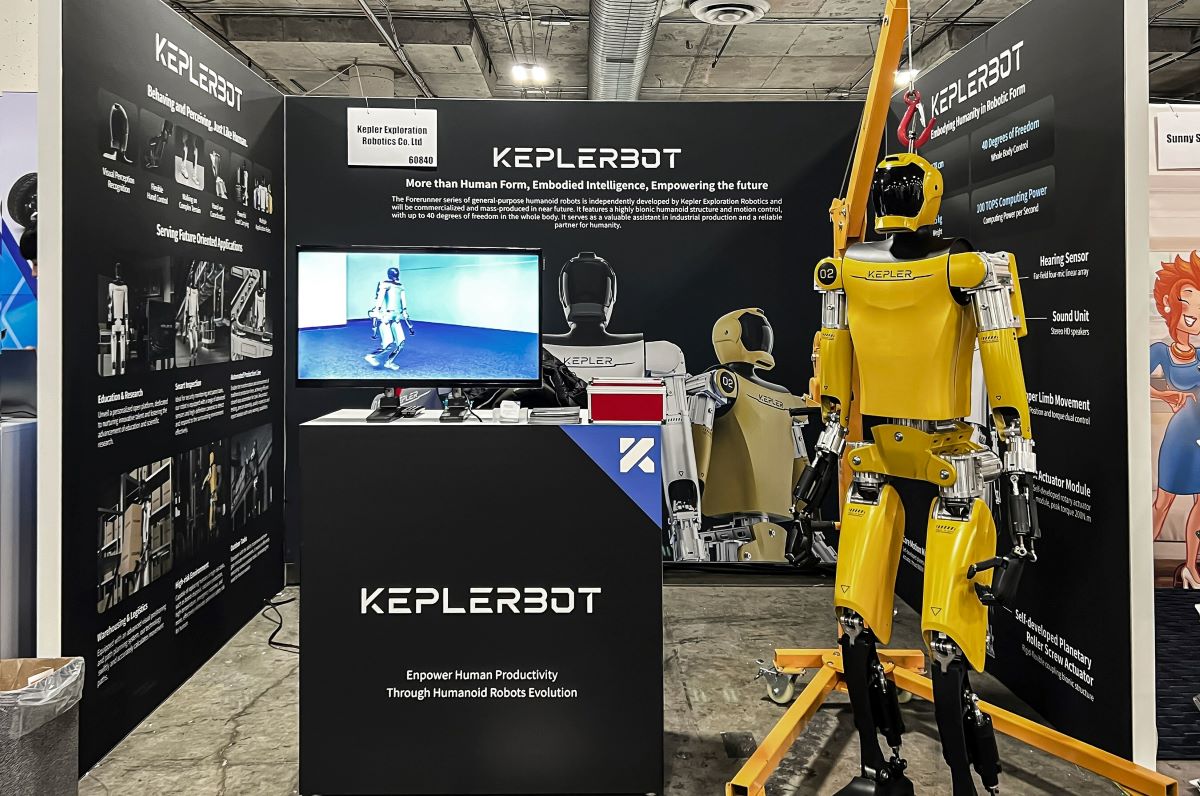
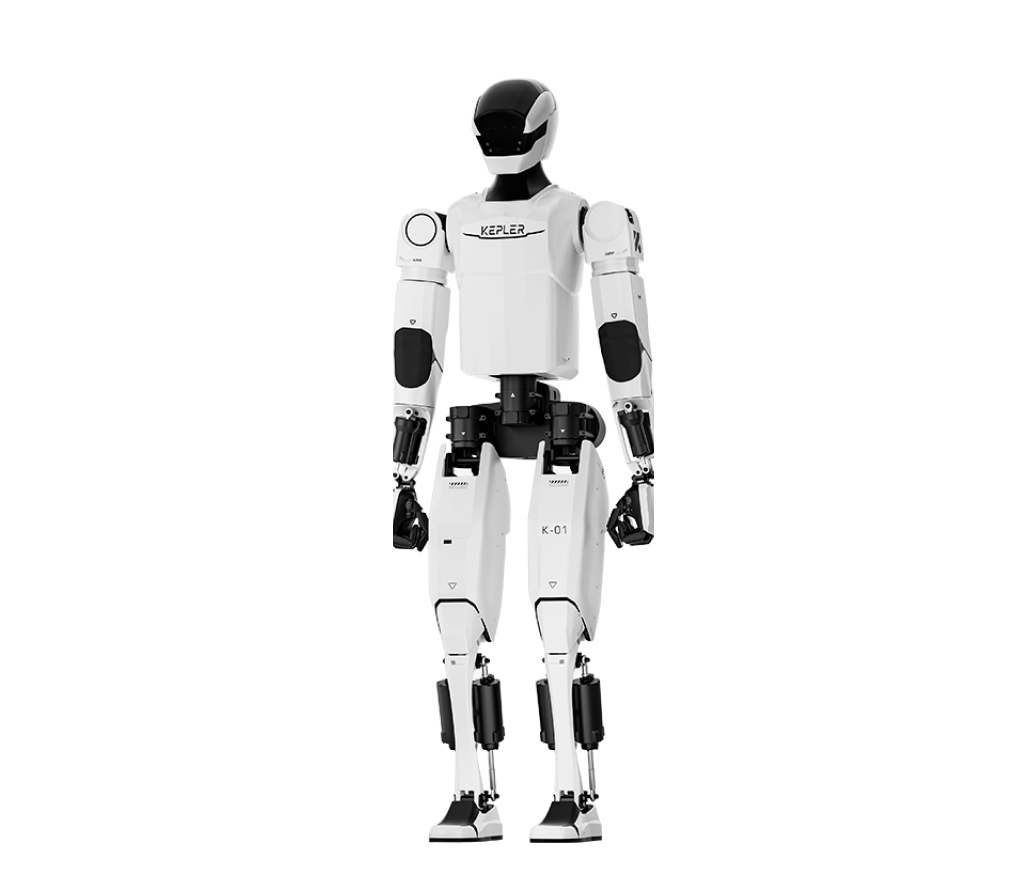
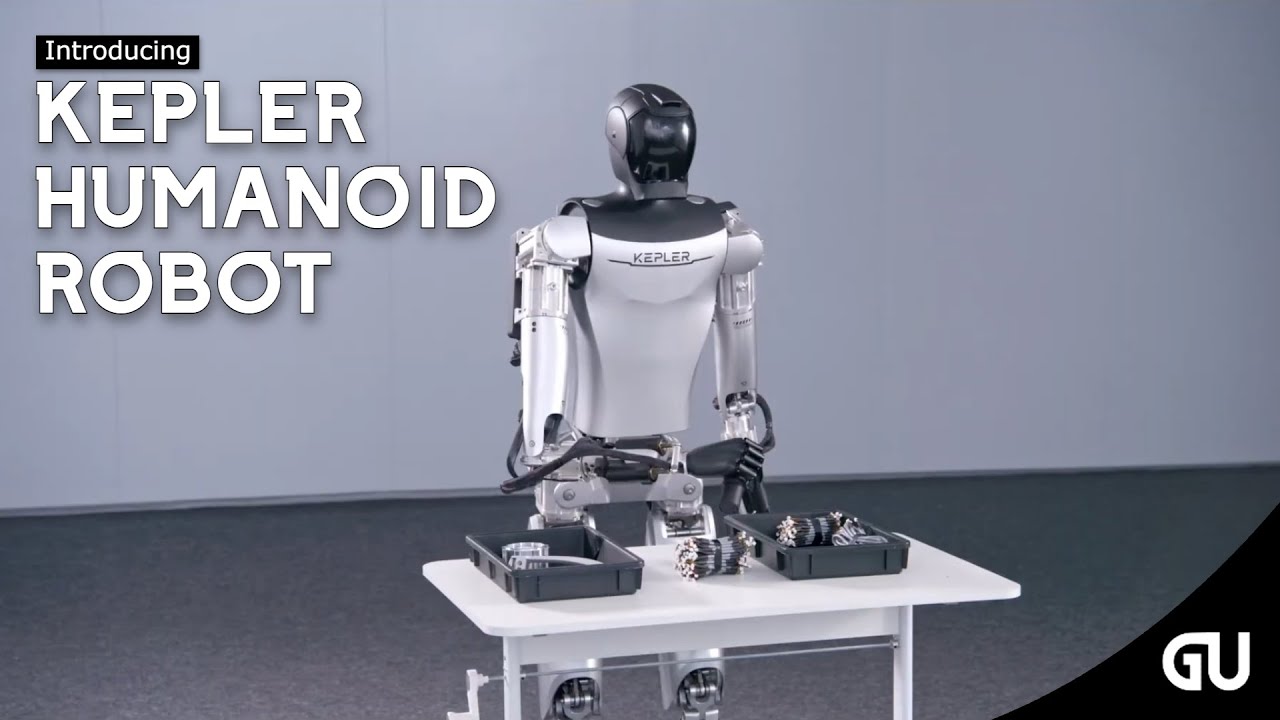
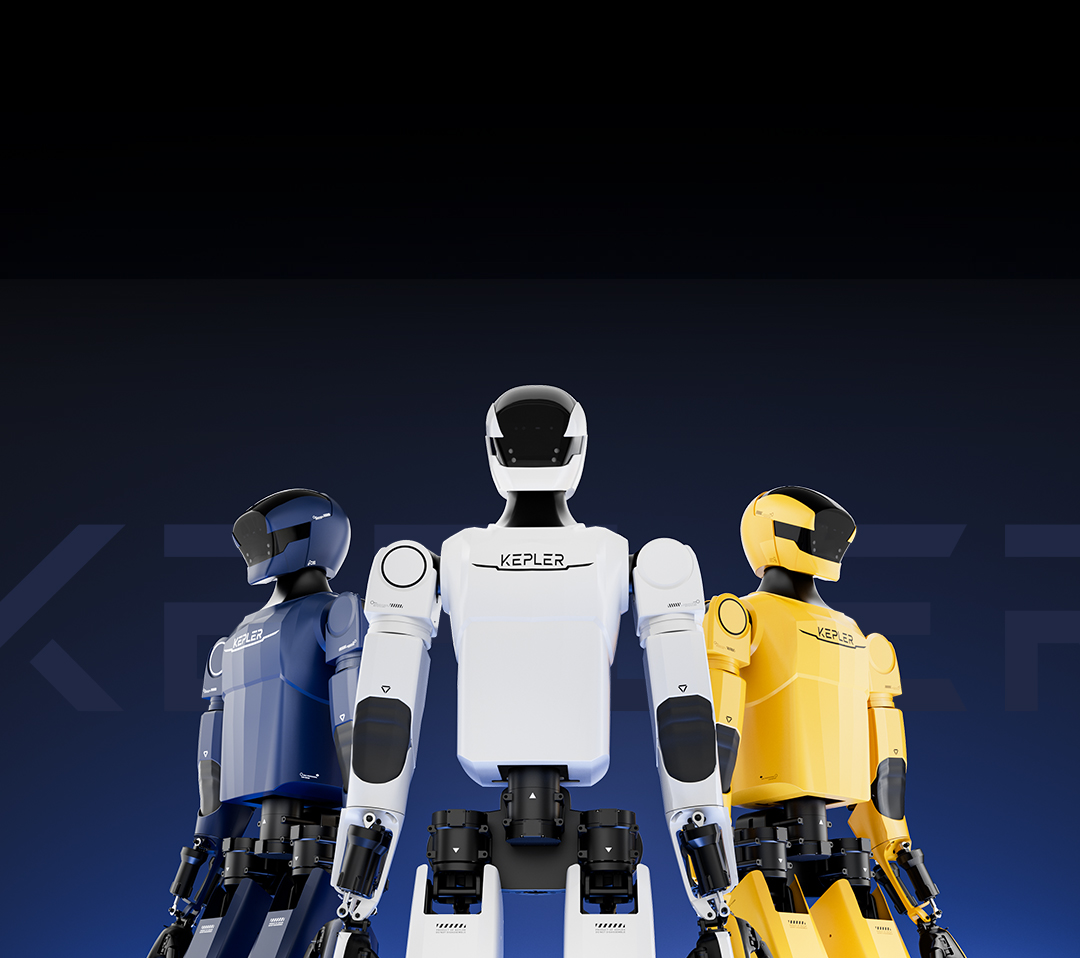
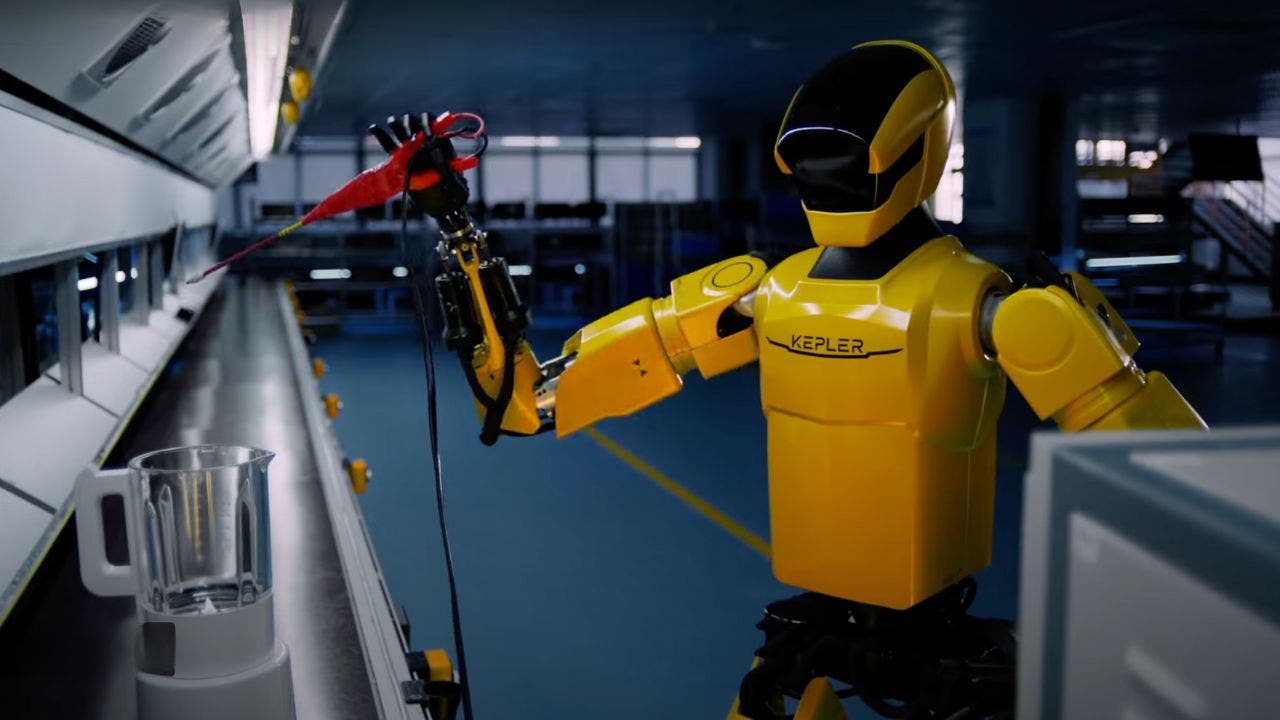
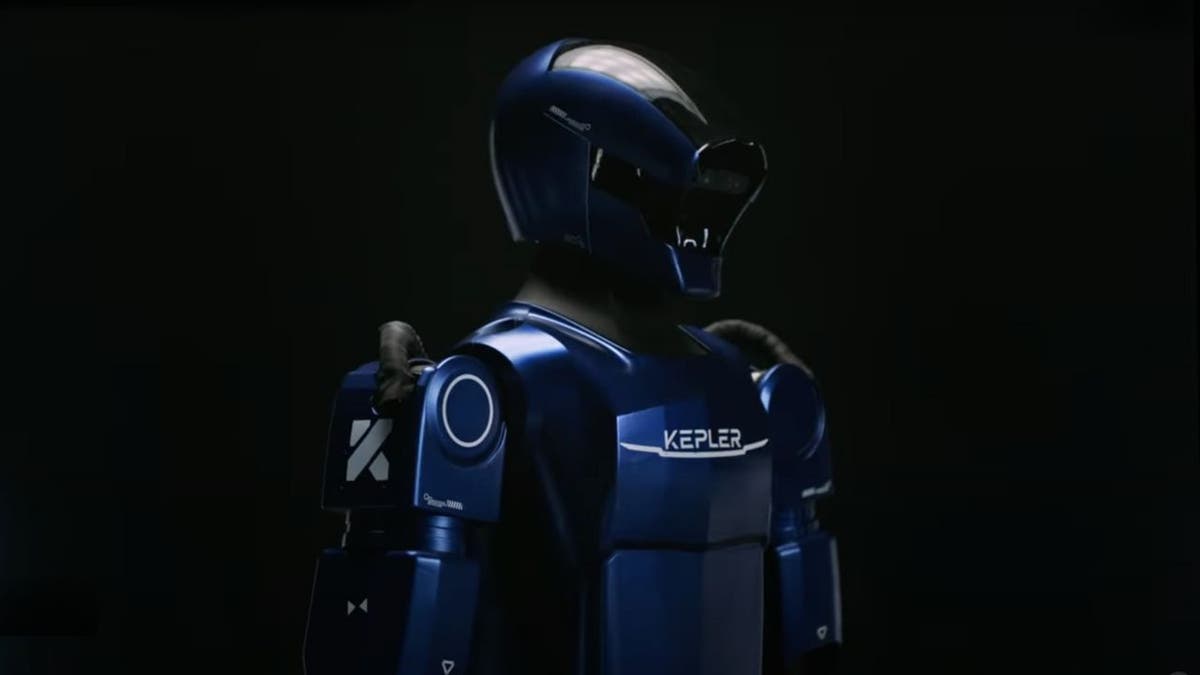
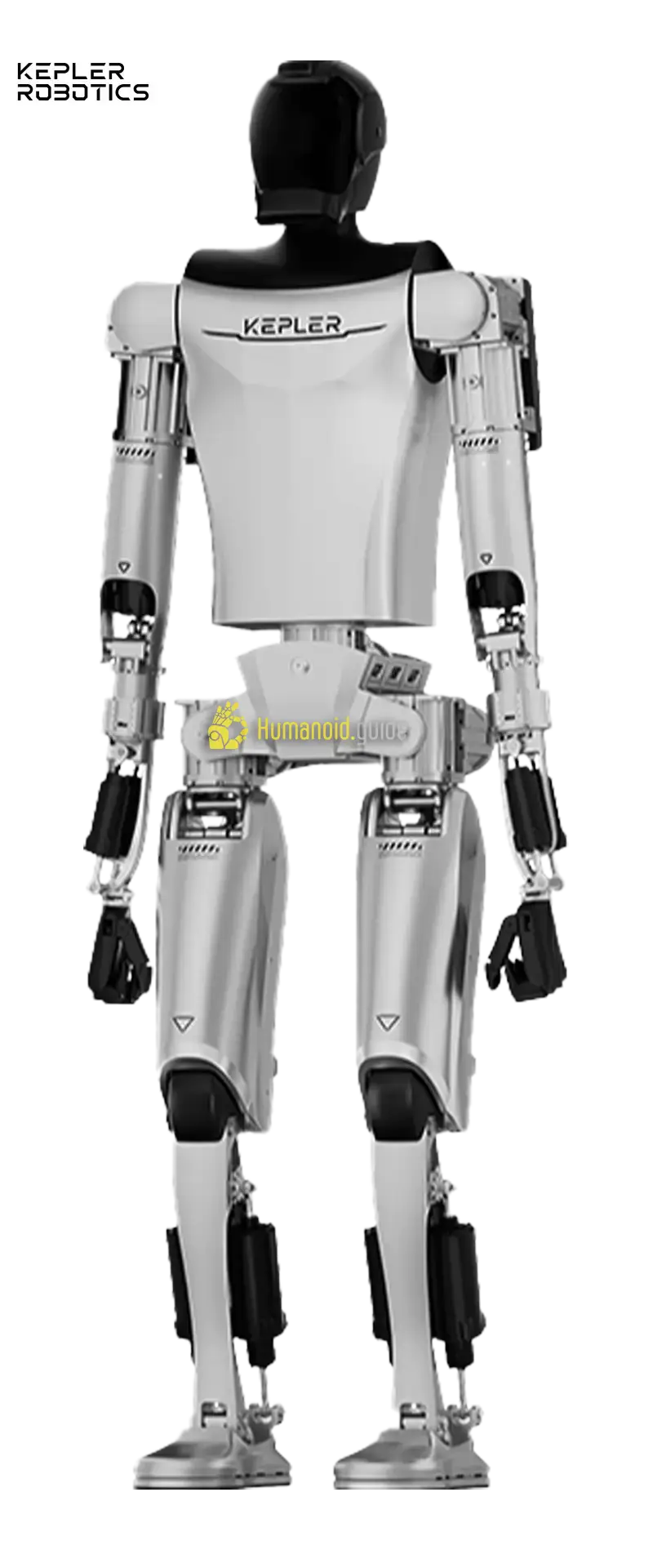
The Kepler Forerunner K1 is a humanoid robot developed by Shanghai-based Kepler Robotics (also known as Kepler Exploration Robot Co.). It was engineered for industrial labor in manufacturing, logistics, and material handling. The K1 stands out for its proprietary planetary roller-screw actuators and its aggressive price target of $20,000, aiming to undercut similar humanoids. First unveiled in November 2023, the K1 was marketed as Kepler’s first mass-production humanoid. Although the K1 has been withdrawn in favor of the newer K2 model, it laid the groundwork for affordable bipedal automation. Its operating system, NEBULA, coordinates full-body motion across 40 degrees of freedom and includes dexterous multi-fingered hands.
Specifications
Here are the full technical specifications.
| Spec | Value |
|---|---|
| Height | 1.78 m |
| Weight | 85 kg |
| Degrees of freedom | 40 |
| Battery life | 3 hours |
| Max speed | 4 km/h |
| Payload | 20 kg |
| Price (new) | $20,000 |
| Price (used range) | $15,000 - $20,000 |
Price & Value
New MSRP: $20,000 (target price)
Used range: $15,000 - $20,000
The Kepler Forerunner K1 was announced with a target price of $20,000, making it one of the most aggressively priced humanoids of its generation. This undercut competitors such as the Tesla Optimus (also ~$20,000) and the Fourier GR-1 ($30,000). As a discontinued model, the K1 no longer carries a manufacturer’s warranty and availability is limited to the secondary market. Used units typically list between $15,000 and $20,000, depending on condition, runtime hours, and included accessories. For purchasers prioritizing low up-front cost and are comfortable with a support risk, a used K1 can still deliver capable bipedal handling at industrial labor tasks. However, the newer Kepler K2 offers improved payload (30 kg) and up to 8 hours of battery life for an additional $10,000–$30,000, which may justify the upgrade for sustained factory shifts.
Who Is It For?
Best for: - University robotics labs (40 DOF with proprietary roller-screw actuators enables dexterous manipulation research at a fraction of the cost of other humanoids). - Small-scale manufacturers testing humanoid integration for short-shift tasks like kitting or inspection (3-hour runtime per charge).
Not for: - 24/7 industrial operations — the 3-hour battery is insufficient without hot-swappable packs. - Certified human-robot collaborative environments, as the K1 lacks safety certifications for direct co-work alongside people.
Alternatives & Comparison
The Kepler Forerunner K1 competes in the $20,000–$30,000 humanoid segment, where a few Chinese and US models target industrial labor.
| Model | Price | Available | Key Difference |
|---|---|---|---|
| Tesla Optimus | $20,000 (target) | preorder | Uses electric linear actuators; backed by Tesla's AI ecosystem. |
| Fourier GR-1 | $30,000 | yes | Heavier 55 kg structure, different actuator approach; higher price with proven hardware. |
Verdict: For pure budget, a used K1 can be a steal if you can tolerate short runtime and no OEM support. However, the newer K2 from Kepler offers doubled battery life and greater payload for a modest premium. If you need a humanoid now with assured parts and robust community, the Fourier GR-1 provides a more polished but more expensive package. The Forerunner K1 remains an interesting historical benchmark and a viable secondary-market option for experimental labs.
Use Cases & Capabilities
Material Handling
With a standing payload of 20 kg, the K1 can transport small components across factory floors, loading and unloading conveyors or carts. Its bipedal locomotion allows it to navigate between workstations without fixed rails, making it suitable for dynamic, mixed-flow production lines. The lack of a high-speed walking gait limits throughput for long-distance moves, but for short-range shuttling it is effective. Users have used it in pilot lines for electronic components handling.
Assembly Assistance
The dexterous hands and 40-DOF body enable the K1 to perform simple assembly tasks like screw driving, part placement, and wiring. Roller-screw actuators provide backdrivability for delicate assembly, reducing the risk of damaging parts. However, the 3-hour battery means it must swap in and out with human workers or have a charging station nearby. It found niche use in electronics assembly where precision outweighs speed.
Quality Inspection
Equipped with a wide-angle binocular camera and far-field microphone array, the K1 can conduct visual and audio inspections of finished products. Its humanoid form factor allows it to mimic human inspectors in ergonomic workflows, reaching into bins and checking labels. The 4 km/h walking speed is adequate for patrols across a moderate-sized inspection area. Kepler’s NEBULA OS provides basic anomaly detection integration.
Academic Research
The K1's low cost and open-ish platform (NEBULA OS) made it attractive for university robotics labs. Researchers can study full-body bipedal locomotion, manipulation planning, and human-robot interaction without the six-figure investment of other humanoids. Its 40 DOF offer enough complexity for advanced control algorithms, and the roller-screw actuator data provides a real-world case study for actuator dynamics. Many groups have repurposed used K1 units for DARPA-like challenge preparation.
History & Background
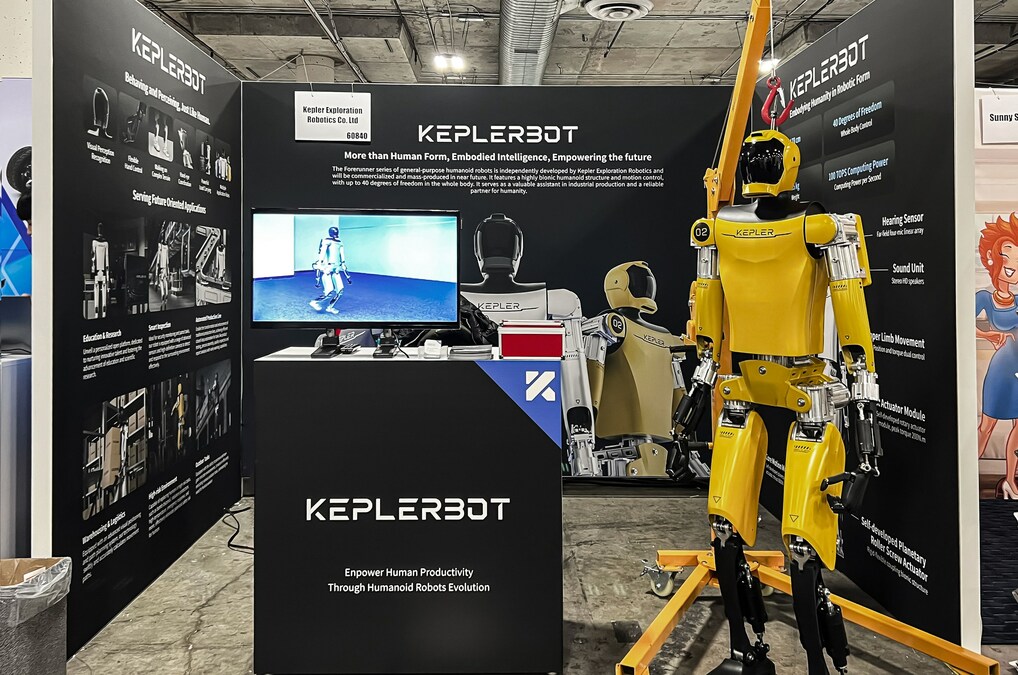
Kepler Exploration Robot Co., based in Shanghai, emerged as a promising Chinese robotics startup in the early 2020s. The Forerunner K1 was first introduced in November 2023 as a bold entry into the affordable humanoid market, targeting a mass-production price of just $20,000. It debuted alongside the announcement of the Forerunner series, with some sources citing a taller ~2 m configuration for specific tasks. The K1 was intended for industrial labor and was showcased at CES 2024, drawing attention for its proprietary planetary roller-screw actuators. By late 2024, Kepler pivoted to the improved K2 model, offering 52 DOF and up to 8-hour battery life, rendering the K1 effectively withdrawn from production. Despite its short lifecycle, the K1 demonstrated that a sub-$25K bipedal humanoid for factories was feasible, influencing subsequent designs from Tesla and others. Used units occasionally surface on robotics marketplaces, preserving its legacy as a pioneer in accessible humanoid robotics.
Buying Used — What to Check
Battery health Original 3-hour runtime may degrade; low cycles with proper storage maximize usable life.
Actuator condition Roller-screw actuators are robust but can wear; listen for unusual noise or excessive backlash.
Software support NEBULA OS may no longer receive updates from Kepler; ensure the installed version meets your needs.