What is the Leju Aelos?
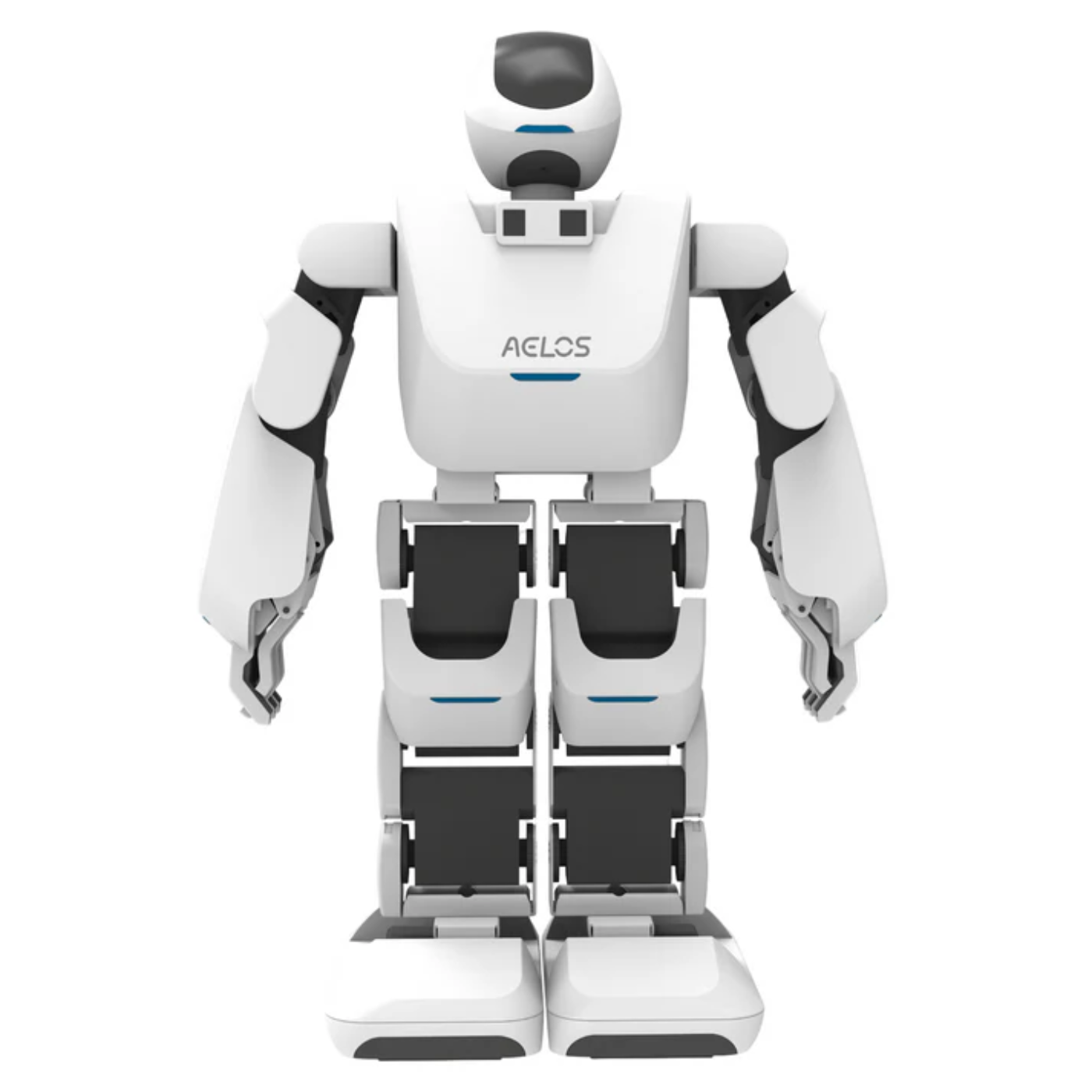
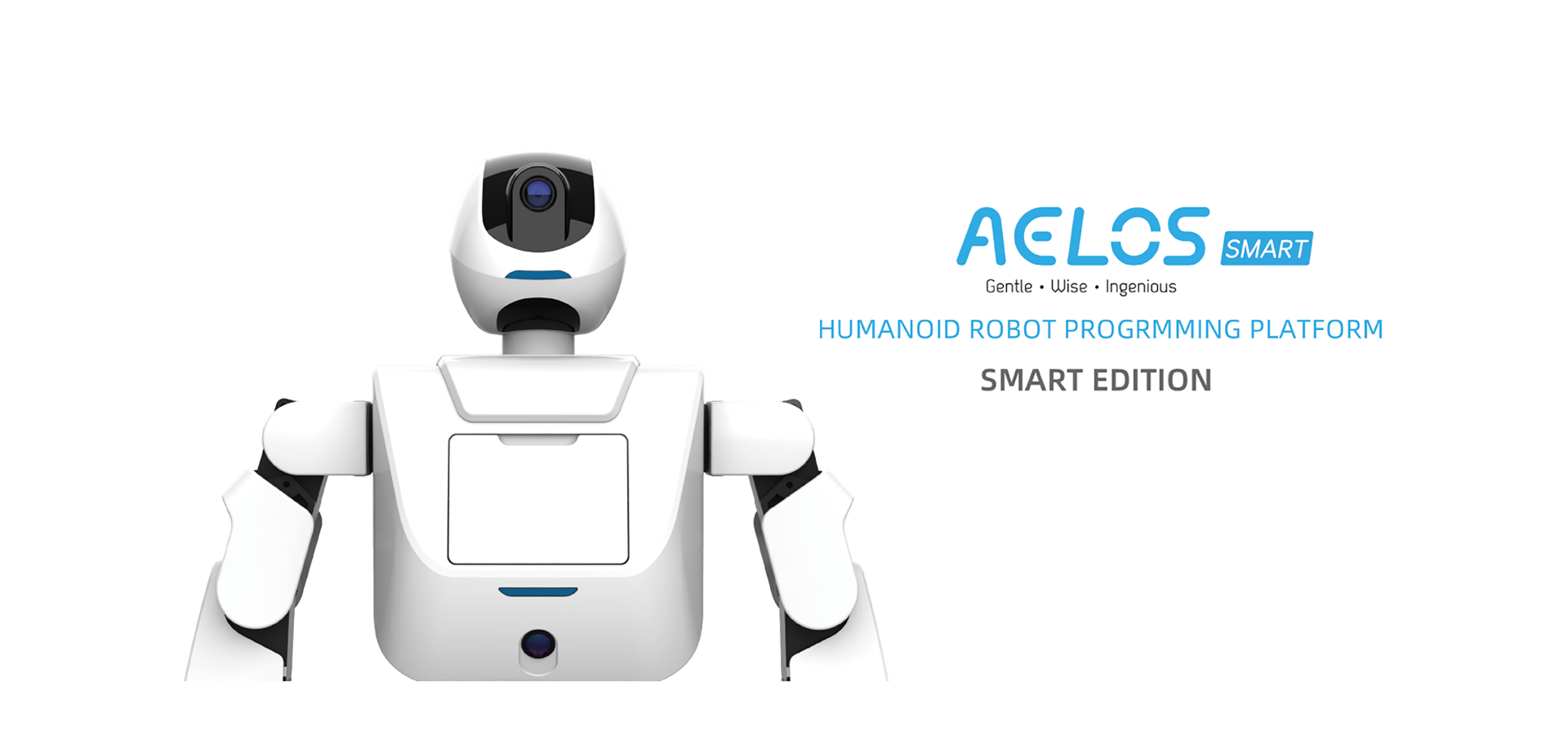
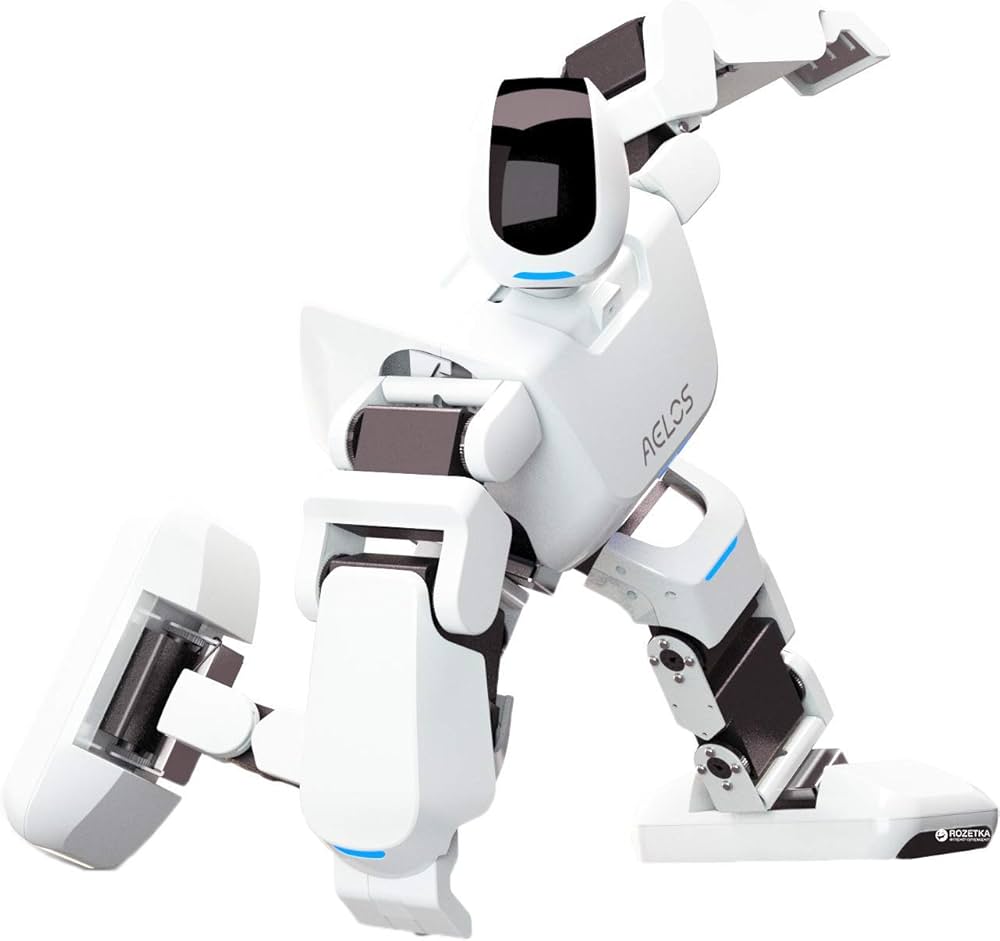
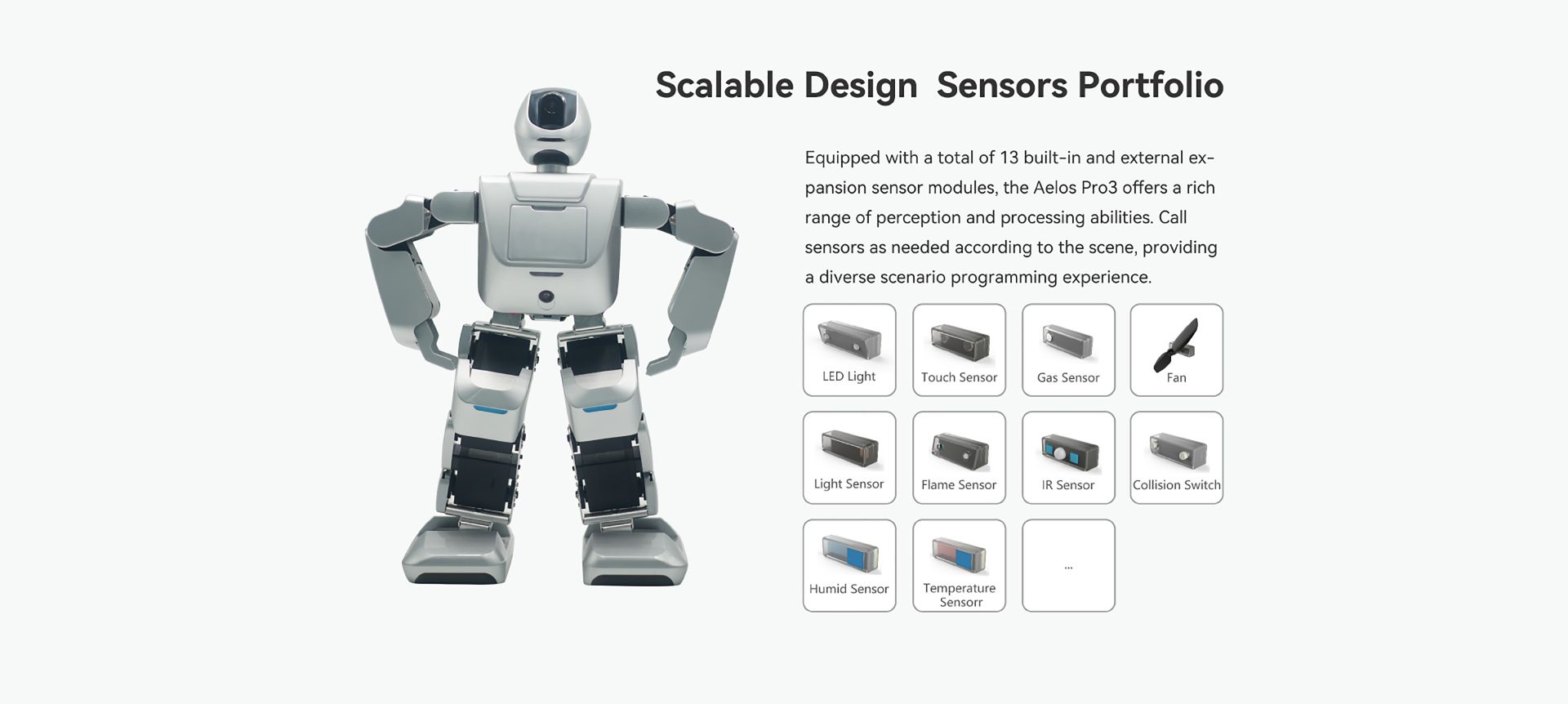
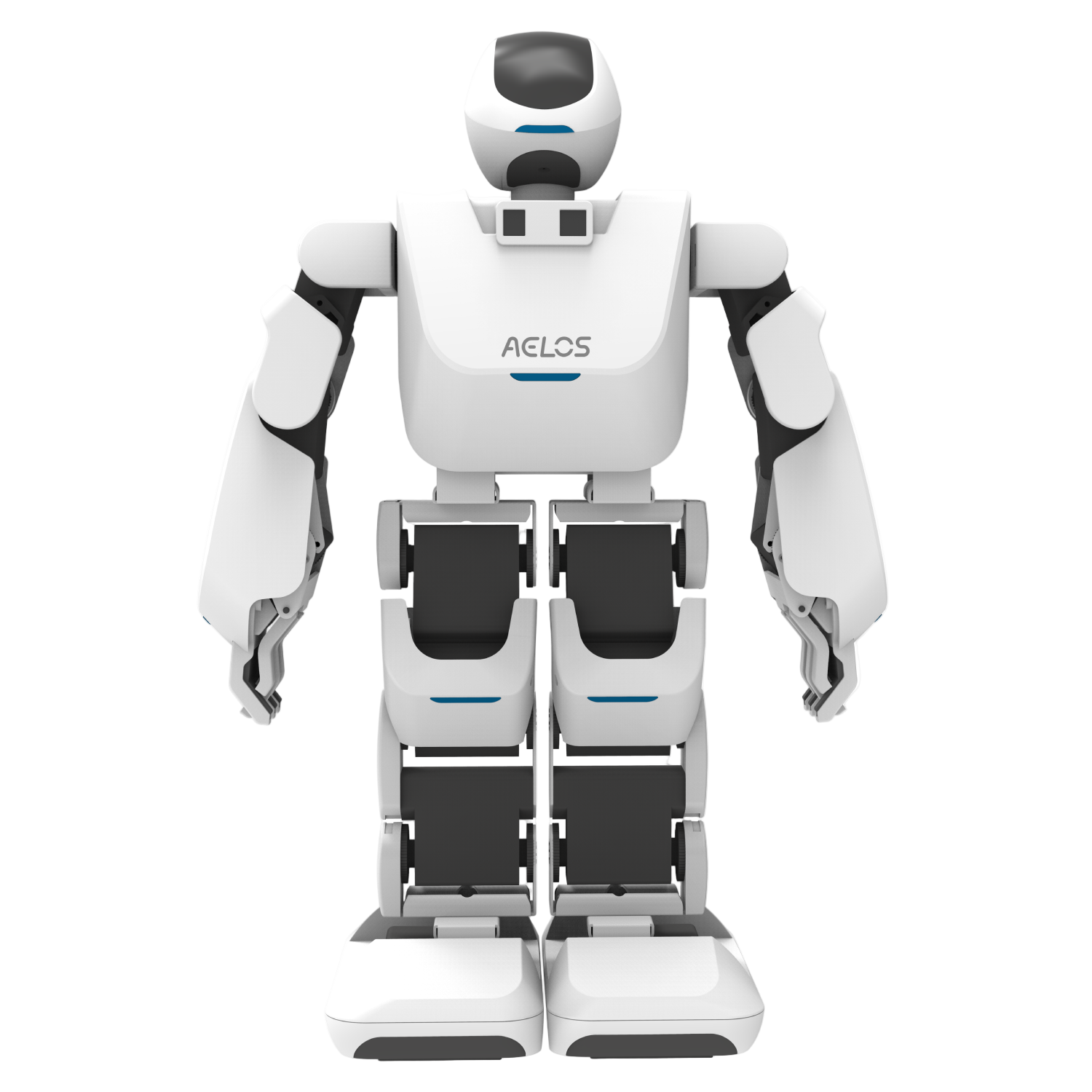
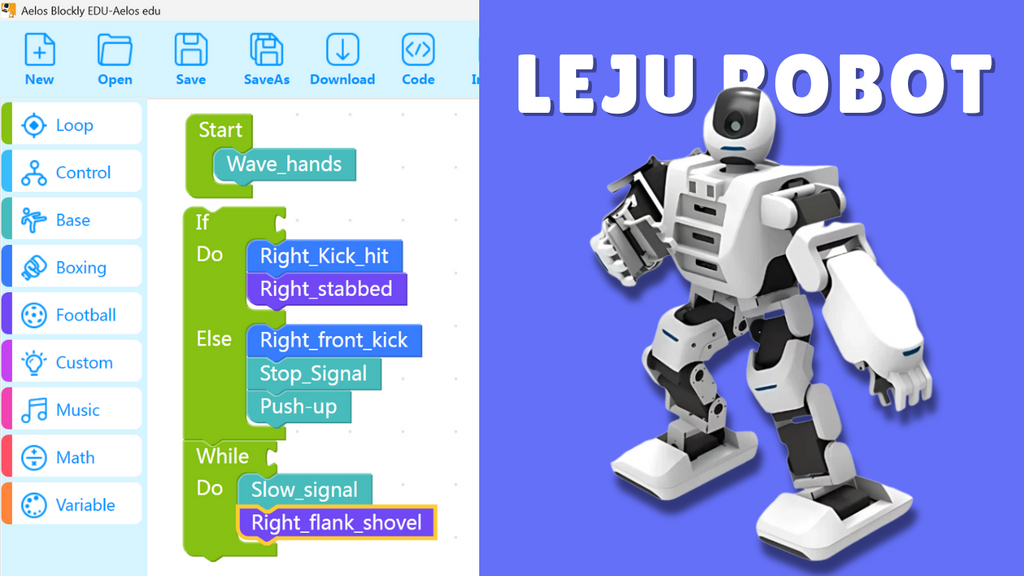
The Leju Robotics Aelos is a small-scale humanoid robot designed for STEM education, university research, and robotics competitions. Manufactured in Shenzhen, China, since 2016, it stands 34.6 cm tall and weighs 1.5 kg, with 22 degrees of freedom powered by digital serial bus servos. It runs on an ARM Cortex-M4 processor with a real-time operating system (RTOS), and can also be used with Arduino-compatible firmware, supporting block-based coding and C/C++ programming. Sensors include a 3-axis gyroscope, accelerometer, ultrasonic distance sensor, speaker, and microphone. The upgraded Aelos Pro (around 2018) adds a 5 MP camera and improved processing for vision tasks. Its aluminum alloy frame and plastic shells keep weight low while enduring classroom use. The Aelos competes with the UBTECH Alpha 1 Pro and SoftBank NAO, offering an open programming environment at a moderate price.
Specifications
Here are the full technical specifications.
| Spec | Value |
|---|---|
| Height | 34.6 cm |
| Weight | 1.5 kg |
| Degrees of freedom | 22 |
| Battery life | 2 hours |
| Max speed | 0.36 km/h |
| Payload | 0.2 kg |
| Price (new) | ~$1,000–$2,500 (est.) |
| Price (used range) | $600–$2,000 (est.) |
Price & Value
New MSRP: ~$1,000–$2,500 (est.)
Used range: $600–$2,000 (est.)
Leju positions the Aelos in the mid-range of educational humanoid robots, with reported prices spanning $1,000 to $2,500 depending on the variant, region, and institutional discount. A consumer-facing version is often cited at around $1,500, making it accessible for individual enthusiasts. Compared to the UBTECH Alpha 1 Pro at $499, the Aelos offers 22 DOF versus 16, a taller build, and an open Arduino environment that avoids proprietary lock-in. Against the SoftBank NAO at $7,990, it is a fraction of the cost, making it feasible for schools to buy multiple units. On the used market, Aelos robots typically trade between $600 and $2,000, with prices reflecting condition, generation, and included accessories. Total cost of ownership is attractive because standard servos can be replaced for $20 each, and the Arduino ecosystem has a vast community for support. For a classroom of 20 students, five Aelos units cost roughly the same as a single NAO, offering broader hands-on access.
Who Is It For?
Best for: - Middle and high school STEM programs requiring a programmable humanoid with block-based and Arduino coding options (22 DOF enables comprehensive motion lessons). - University robotics and mechatronics labs teaching inverse kinematics, control theory, and sensor fusion on a budget. - RoboCup Junior soccer teams seeking a lightweight humanoid under 1.5 kg with agile motion capabilities. - After-school coding clubs and maker spaces that need a durable bot for multi-week workshops. - Edtech startups developing interactive learning experiences that can scale across schools at moderate cost. - Event organizers wanting an engaging tech display robot for conferences and exhibitions without breaking the bank.
Not for: - AI research groups requiring real-time object recognition, SLAM, or deep learning inference (the ARM Cortex-M4 lacks necessary compute). - Industrial or household tasks that involve lifting objects over 0.2 kg or operating in unstructured environments. - Professional theatre productions where robots must perform hundreds of shows without failure (plastic shell and servo longevity may be insufficient). - Developers looking to program in Python or ROS out of the box (no official support; requires advanced hacking).
Alternatives & Comparison
In the educational humanoid market, the Leju Aelos competes primarily with a handful of sub-$10,000 bots offering varying levels of sophistication, openness, and price. The comparison below highlights key trade-offs.
| Model | Price | Available | Key Difference |
|---|---|---|---|
| SoftBank NAO | $7,990 | yes | Advanced research platform with 25 DOF, but 5x the cost of Aelos. |
| UBTECH Alpha 1 Pro | $499 | yes | More affordable but only 16 DOF, smaller ecosystem. |
| UBTECH Alpha Mini | $999 | yes | 24 cm tall with voice and LCD eyes, but 14 DOF and limited openness. |
Verdict: For most schools and competition teams, the Aelos strikes the best balance between capability and cost. It has more DOF than the UBTECH Alpha bots and is far cheaper than NAO, with an open programming stack that avoids vendor lock-in. If budget is the absolute priority, the Alpha 1 Pro at $499 is compelling, but the Aelos's extra degrees and camera option provide a longer learning curve. For research universities, NAO remains the gold standard, but the Aelos can supplement it for introductory courses.
Use Cases & Capabilities
K-12 STEM Education
In K-12 settings, the Aelos serves as an engaging introduction to robotics and programming. Students start with drag-and-drop block coding to animate the robot's 22 servos, learning sequencing and logic. More advanced classes can use Arduino C/C++ to program sensor-driven behaviors, such as obstacle avoidance using the ultrasonic sensor. The robot's compact size and light weight make it easy for young students to handle, and its durable plastic shells withstand classroom drops. Many schools purchase classroom sets of 5–10 units, allowing collaborative project-based learning.
University Robotics Courses
At the university level, the Aelos is used in introductory and intermediate robotics courses covering kinematics, dynamics, and control. Students model the robot's 22 DOF chain to derive forward and inverse kinematics, then implement motion planning algorithms. The onboard sensors (gyroscope, accelerometer, ultrasonic) provide real-world data for sensor fusion labs, while the open software environment permits experimentation with custom controllers. Professors appreciate its low cost, which allows each team to have their own robot without sharing. However, the limited compute power means complex AI tasks remain beyond its scope, often supplementing higher-end platforms like NAO.
RoboCup Competition
The Aelos is a popular choice in RoboCup Junior's humanoid soccer league, where its 0.36 km/h walking speed and 22 DOF enable agile play. Teams program it to detect the ball using the ultrasonic sensor (or external IR) and execute kick motors. Its lightweight build allows quick direction changes, though the 2-hour battery limits continuous match play. The open ecosystem encourages custom hardware mods, such as adding a Raspberry Pi for vision processing. Success in competitions has driven a community of Aelos users who share code and strategies online.
Entertainment and Exhibitions
For trade shows, museum exhibits, and school performances, the Aelos can be choreographed to dance, speak, and respond to spectators. The built-in speaker and microphone enable voice interaction, while the optional camera on the Aelos Pro adds face tracking. Pre-programmed motion sequences stored on the RTOS can be triggered via Wi-Fi or Bluetooth commands. Its small size makes it easy to transport and set up in tight spaces. However, professional entertainment companies should note the robot's limited robustness for prolonged, high-cycle use.
Teacher Training and Curriculum Development
Many educational authorities and private training centers adopt the Aelos to upskill teachers in robotics. Its block-based interface allows non-programming instructors to quickly grasp control concepts, while Arduino compatibility provides a path for deeper learning. Training kits from Leju often include lesson plans aligned with China's national STEM standards, easing classroom deployment. The robot's durability ensures it survives repeated handling during workshops. As a result, the Aelos has become a standard tool for professional development programs aiming to integrate robotics into core curricula.
History & Background
Leju Robotics was founded in 2014 in Shenzhen, China, with a mission to bring humanoid robotics into education. The Aelos line premiered in 2016, marking the company's first commercial mini-humanoid for schools and competitions. Standing 34.6 cm tall and offering 22 DOF, it quickly gained traction in Chinese STEM programs and at RoboCup events. Around 2018, Leju introduced the Aelos Pro, which added a 5 MP camera and enhanced processing, addressing requests for vision capabilities. During this period, the company began developing larger research platforms such as the Roban and Kuavo series for university labs and industrial proofs-of-concept. The Aelos remains a foundational product, updated sporadically but still in production as of 2026. International adoption has grown through RoboCup and educational distributors in Europe and Southeast Asia, and the platform has inspired a hobbyist community that shares modifications on Chinese social media.
Buying Used — What to Check
Servo condition Servo wear is common in educational robots; replacements cost about $20 each, but excessive play indicates imminent failure.
Battery health The lithium polymer battery degrades after hundreds of cycles; a significantly reduced runtime suggests need for a new pack (~$30–$50).
Included accessories Aelos Pro units may be missing the 5 MP camera module; verify that the original charger and programming cable are present to avoid extra purchases.