What is the Magicbot Z1?
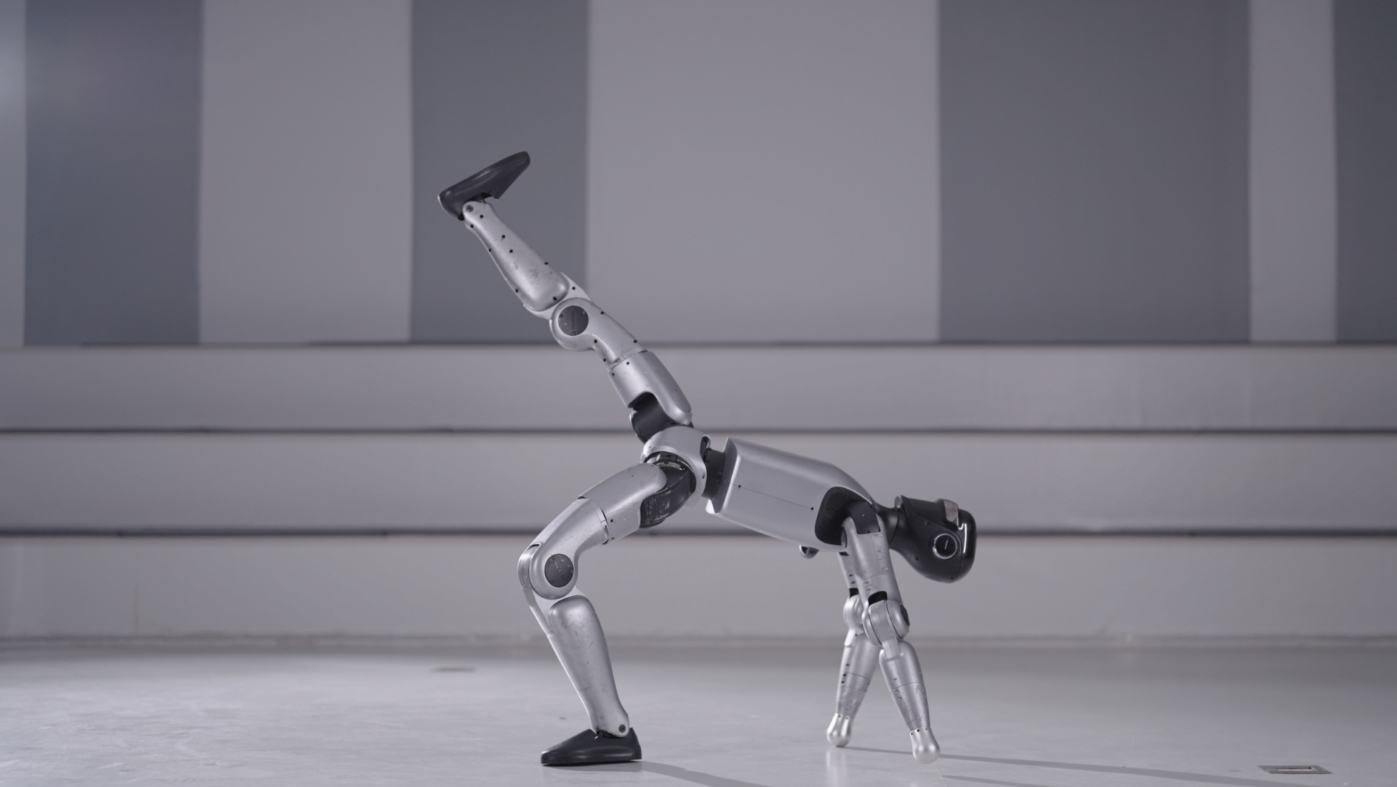
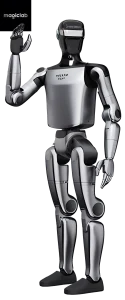
The MagicBot Z1 is a small-scale humanoid robot designed by MagicLab, a robotics company based in China. Introduced in 2025, the Z1 stands at 140 cm and weighs 40 kg, making it one of the more compact adult-sized humanoids. It packs 49 degrees of freedom, powered by self-developed high-performance smart joint modules and variable-ratio transmission. The Z1 is equipped with stereo cameras, depth sensors, and 3D LiDAR for navigation and interaction. Its ten-fingered hands and 10 kg payload capacity target tasks in education and home companionship scenarios. As of 2026, the robot remains a prototype, with no confirmed pricing or mass-production timeline.
Specifications
Here are the full technical specifications.
| Spec | Value |
|---|---|
| Height | 140 cm |
| Weight | 40 kg |
| Degrees of freedom | 49 |
| Battery life | Not specified |
| Max speed | 9 km/h |
| Payload | 10 kg (standing payload) |
| Price (new) | Undisclosed (contact manufacturer) |
| Price (used range) | N/A (no used units exist) |
Price & Value
New MSRP: Undisclosed
Used range: N/A
No official price has been announced for the MagicBot Z1; all figures floating online are speculative. An unverified rumor suggests a possible $50,000 target, but data confidence is low and the robot is still in prototyping. For context, the Unitree G1 humanoid—similar in size—starts at $16,000, while more sophisticated research humanoids like the Fourier GR-1 exceed $100,000. Given its 49 DOF and integrated sensor suite, the Z1 would likely need to be priced competitively (probably under $30,000) to gain a foothold in the education and companionship markets. Total cost of ownership would also depend on spare parts, software licenses, and battery replacements—none of which have been disclosed. Interested parties should contact MagicLab directly, but as of 2026 there is no confirmed pathway to purchase.
Who Is It For?
Best for: - University robotics labs needing a compact humanoid with high DOF for dexterous manipulation research (49 hands+arms DOF) - Home automation developers prototyping companionship applications in a lightweight, child-safe form factor - Museums or science centers looking for a lifelike interactive exhibit with ten-fingered hands and built-in LiDAR - Early-stage startups exploring humanoid locomotion algorithms on a 49-DOF platform
Not for: - Industrial factories requiring heavy lifting (10 kg payload insufficient) - Outdoor autonomous navigation in rain or dust (no IP rating specified) - Large-scale commercial deployment (no reliability track record or service infrastructure)
Alternatives & Comparison
The compact humanoid market for education and companionship is nascent, with few off-the-shelf options. The MagicBot Z1 faces the most direct competition from the Unitree G1, a more established Chinese humanoid that ships as a pre-order platform.
| Model | Price | Available | Key Difference |
|---|---|---|---|
| Unitree G1 | $16,000 | pre-order | More powerful compute (NVIDIA Jetson), 23-43 DOF, lower price, proven software stack |
| Fourier GR-1 (for reference) | ~$150,000 (est.) | pre-order | Much larger (165 cm, 55 kg), 23 DOF, heavy payload for industrial R&D |
Verdict: For buyers seeking a ready-to-use research humanoid with strong software support and a proven supply chain, the Unitree G1 is the clear winner at $16,000. The MagicBot Z1, while boasting higher DOF and a friendlier size, remains a prototype without a price. Should MagicLab bring it to market at a competitive cost (below $30,000), it could carve a niche in dexterous manipulation and companionship research. Until then, it's a speculative choice against the G1's tangible value.
Use Cases & Capabilities
Education and Research
With 49 DOF and a height of 140 cm, the MagicBot Z1 offers a versatile platform for university labs and AI research institutions. Its full-body motion capabilities enable studies in bipedal locomotion, dexterous manipulation, and human-robot interaction. The integrated stereo cameras and 3D LiDAR provide rich perception data for developing SLAM and object recognition algorithms. The robot's lightweight 40 kg frame and 10 kg payload allow safe interaction with students and researchers. However, the lack of open-source software or published API details may hinder rapid integration, and prototypes may be difficult to obtain.
Home Companionship
MagicLab envisions the Z1 as a companion for elderly care and home assistance. The robot's human-like appearance (10 fingers, expressive hands) and compact size suit domestic environments. It could assist with light fetching tasks, medication reminders, and social interaction through voice and gestures. The 9 km/h walking speed lets it navigate a home at a brisk walk. Still, the absence of safety certifications and battery runtime data raises concerns for unsupervised home use. As a prototype, it is not yet ready for real-world deployment.
Museum and Entertainment
The Z1's lifelike movements and ten-fingered hands make it an attraction for science museums and theme parks. It could perform scripted demos, greet visitors, and participate in educational shows. Its sensor suite allows interactive experiences, while the durable aluminium-and-plastic construction withstands repeated operation. However, the lack of an IP rating means it is not suited for outdoor or uncontrolled environments. Reliable support infrastructure is also unclear, making long-term exhibit planning risky.
Prototyping and Custom Development
The Z1's 49-DOF architecture and variable-ratio transmission offer a flexible testbed for robotics startups developing novel manipulation or locomotion algorithms. Its sensor suite provides immediate perception capabilities without additional hardware. The lightweight, child-sized frame simplifies transport and reduces safety hazards during development. However, without an official SDK or spare parts catalog, integration effort could be high. As a prototype, obtaining a unit remains challenging.
History & Background
MagicLab, the developer of the MagicBot humanoid series, emerged from China's bustling robotics startup ecosystem, though its exact founding year remains obscure. The company initially presented a more basic MagicBot prototype (42 DOF, 138 cm, 54 kg) before unveiling the Z1 in 2025. The Z1 improved on its predecessor with an upgraded 49-DOF kinematics, lighter 40 kg frame, and a refined hand design. It also added stereo cameras and 3D LiDAR, aimed at education and companionship markets. As of 2026, the Z1 remains in prototype testing, with no public manufacturing partner or commercial launch. MagicLab has not released detailed software or hardware roadmaps, keeping the project largely under wraps.
Buying Used — What to Check
Verify payload and battery specs Preliminary specs may differ from final production units; payload (10 kg) and battery runtime are critical for your application.
Check parts and software support MagicLab has no visible spares catalog or SDK, so repairing or integrating the robot could be impossible if the company disappears.
Inspect joint condition With 49 DOF, gear and actuator wear is a real risk on a prototype that may have undergone extensive testing.