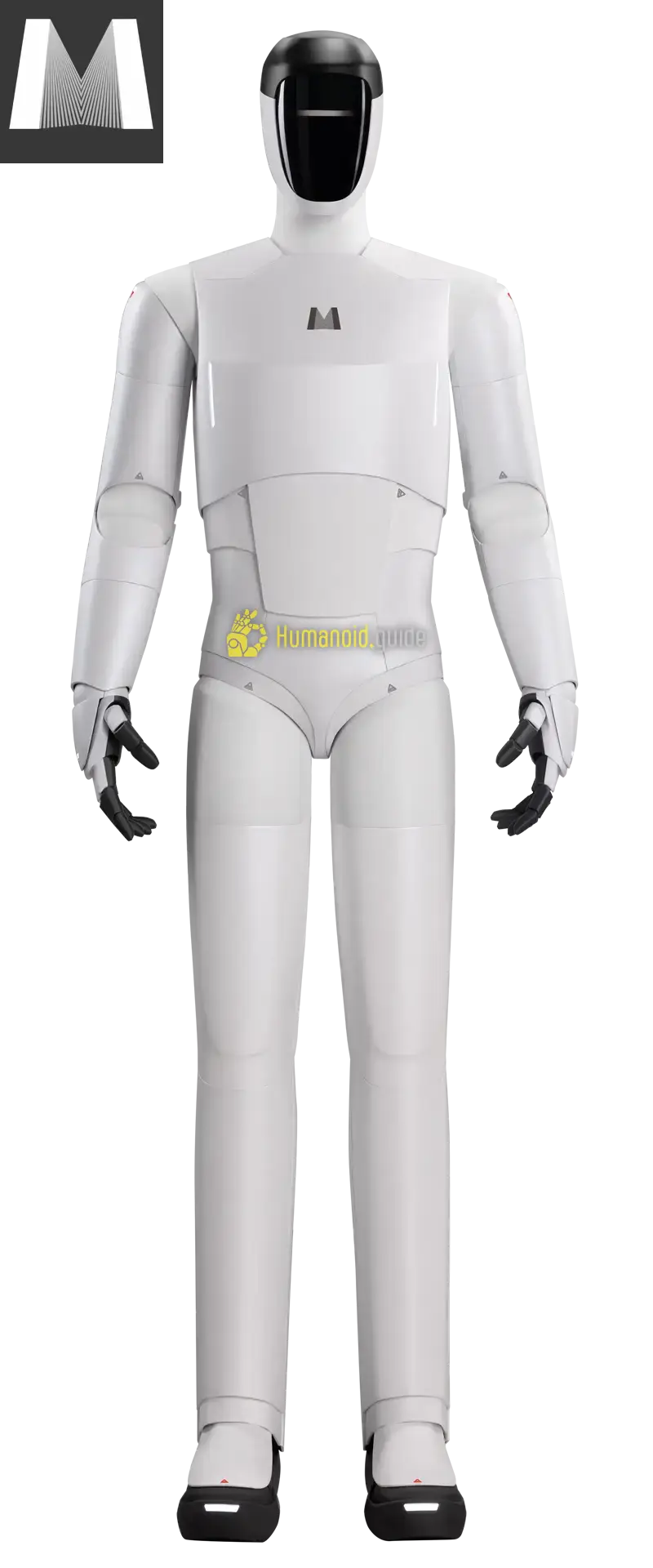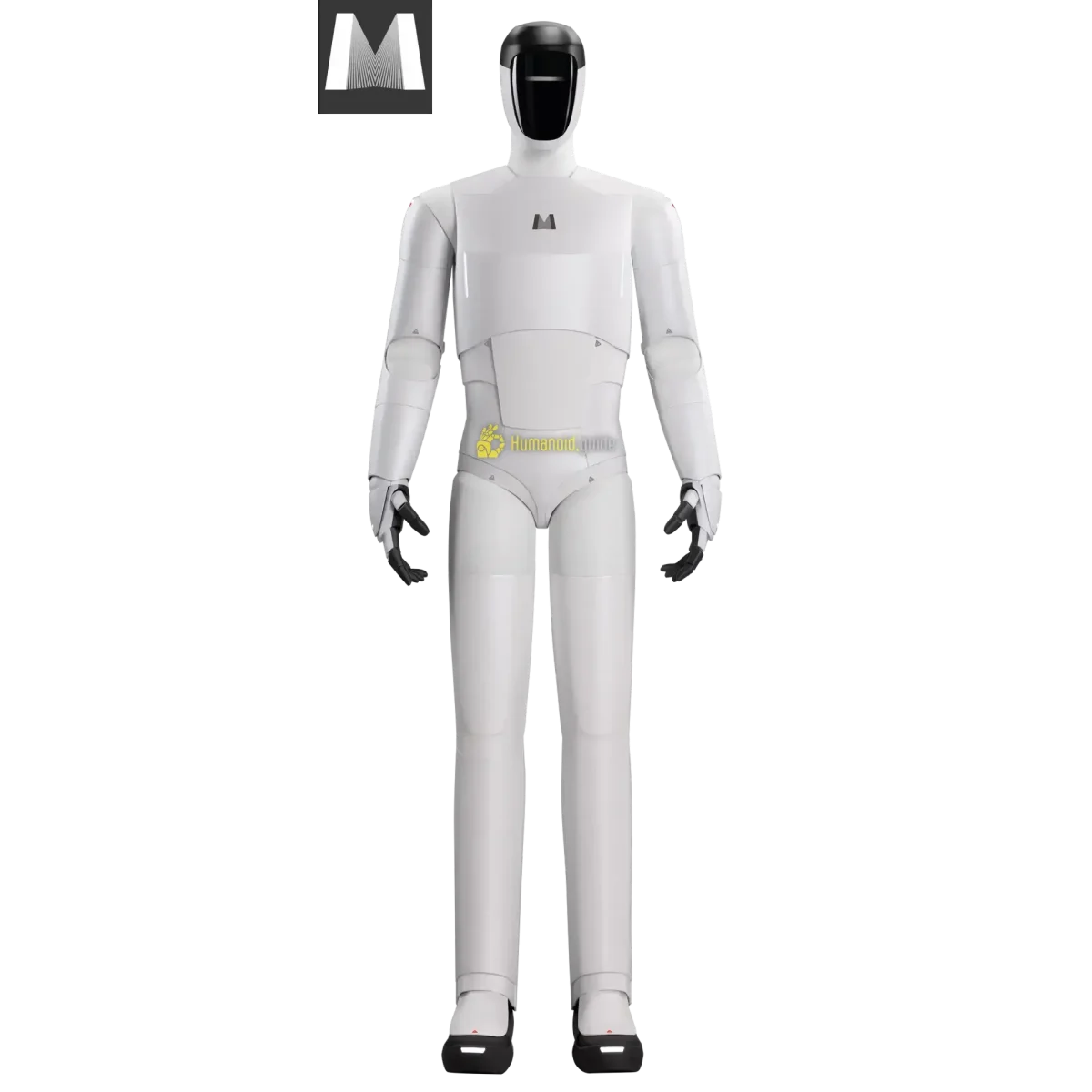
What is the Matrix 1?
The Matrix 1 is a humanoid robot developed by Matrix Robotics, a Chinese robotics company. Unveiled in 2024, it is a first-generation research and commercial platform designed for navigation, manipulation, and interaction tasks. Standing 180 cm tall and weighing 67 kg, it features 55 degrees of freedom across its body, enabling complex whole-body motion. With a 5-hour battery life and 4.3 km/h max speed, it targets logistics, inspection, and service applications. The robot's design emphasizes sim-to-real transfer and onboard GPU inference, making it suitable for AI-driven autonomy research.
Specifications
Here are the full technical specifications.
| Spec | Value |
|---|---|
| Height | 180 cm |
| Weight | 67 kg |
| Degrees of freedom | 55 |
| Battery life | 5 hours |
| Max speed | 4.3 km/h |
| Payload | 15 kg |
| Price (new) | $100,000 |
| Price (used range) | N/A (pre-order) |
Price & Value
New MSRP: $100,000
Used range: N/A (pre-order)
At $100,000, the Matrix 1 is priced competitively among first-generation humanoids for research and light industrial use. Compared to competitors like Unitree H1 ($90,000) and Fourier GR-2 (~$130,000), it offers a strong DOF count and speed. With 55 DOF, it provides dexterity for manipulation tasks, though payload is modest at 15 kg. As a pre-order product, early adopters should anticipate rapid depreciation as newer models emerge; used prices may settle around $70,000–$80,000 after one year. Total cost of ownership includes routine actuator maintenance and potential battery replacements, though detailed service plans are not yet published. Early adopters should budget for service and support, though official maintenance contracts are not defined. Battery replacement costs could add $2,000–$5,000 every 2–3 years.
Who Is It For?
Best for: - Research institutions evaluating whole-body motion control (55 DOF enables complex manipulation studies) - Logistics and warehousing pilots needing bipedal navigation (4.3 km/h for efficient movement)
Not for: - Heavy payload industrial tasks (15 kg payload limits lifting to light objects) - Outdoors or unstructured environments (no IP rating disclosed for dust/water resistance)
Alternatives & Comparison
The Matrix 1 competes in the nascent humanoid robotics market, where buyers weigh dexterity, speed, and price. Here's how it stacks up against similar pre-order humanoids.
| Model | Price | Available | Key Difference |
|---|---|---|---|
| Unitree H1 | $90,000 | yes | Lower DOF (27) but higher payload (20 kg) and proven bipedal walking. |
| Fourier GR-2 | ~$130,000 (est.) | preorder | 43 DOF, higher build quality, but slower speed (1.6 km/h). |
Verdict: For labs prioritizing dexterity and AI research, the Matrix 1's 55 DOF and speed give it an edge over the Unitree H1. However, for heavier lifting tasks, the H1's 20 kg payload is more practical. The Fourier GR-2 offers a refined hardware platform but at higher cost and lower speed. Overall, the Matrix 1 is a strong candidate for institutions that need a versatile, fast humanoid under $100k.
Use Cases & Capabilities
Research & Education
The Matrix 1's 55 degrees of freedom and 5-hour battery make it an ideal platform for universities studying whole-body motion planning, reinforcement learning, and human-robot interaction. Its speed of 4.3 km/h enables dynamic locomotion experiments, and the onboard GPU allows real-time neural network inference. Researchers can develop sim-to-real policies using the manufacturer's simulation tools. Pre-order availability offers early access for cutting-edge labs, although documentation and community support are still maturing.
Logistics & Warehousing
With a payload capacity of 15 kg and brisk walking speed, the Matrix 1 can handle light material transport, shelf restocking, and inventory scanning in structured environments. Its 55 DOF arms allow object manipulation such as picking and placing items from shelves. However, the lack of ingress protection limits deployment to clean indoor facilities, and its height (180 cm) may restrict movement in low-clearance areas. Integration with existing warehouse management systems remains to be demonstrated.
Service & Hospitality
For customer-facing roles like guiding visitors, delivering items, or providing information kiosk functionality, the Matrix 1's humanoid form factor is engaging. Its speed and battery life support all-day operation with periodic recharging. Yet, safety features are not certified, so human-close operation requires careful monitoring. The robot's pre-order status means that practical service trials are just beginning, and proven reliability in public spaces is limited.
History & Background
Matrix Robotics, a Chinese startup, unveiled the Matrix 1 in 2024 as its first humanoid robot. Development emphasized sim-to-real transfer and GPU-accelerated autonomy. The company had previously demonstrated the Matrix 3 (a research platform with around 30–45 DOF) before launching the more capable Matrix 1. The Matrix 3 featured cable-driven hands and zero-shot generalization with neural models, serving as a testbed for the technologies scaled up in the Matrix 1. As of 2026, the Matrix 1 is offered for pre-order to enterprise customers, with shipping timelines not yet disclosed. The company operates behind a limited public presence, and detailed corporate information is scarce.
Buying Used — What to Check
Verify actuation hours 55 DOF means many actuators; early wear could affect dexterity and reliability.
Battery health Li-ion battery degradation may reduce the 5-hour runtime below acceptable thresholds.
Software update history As a first-generation platform, firmware upgrades are critical for safety and performance improvements.