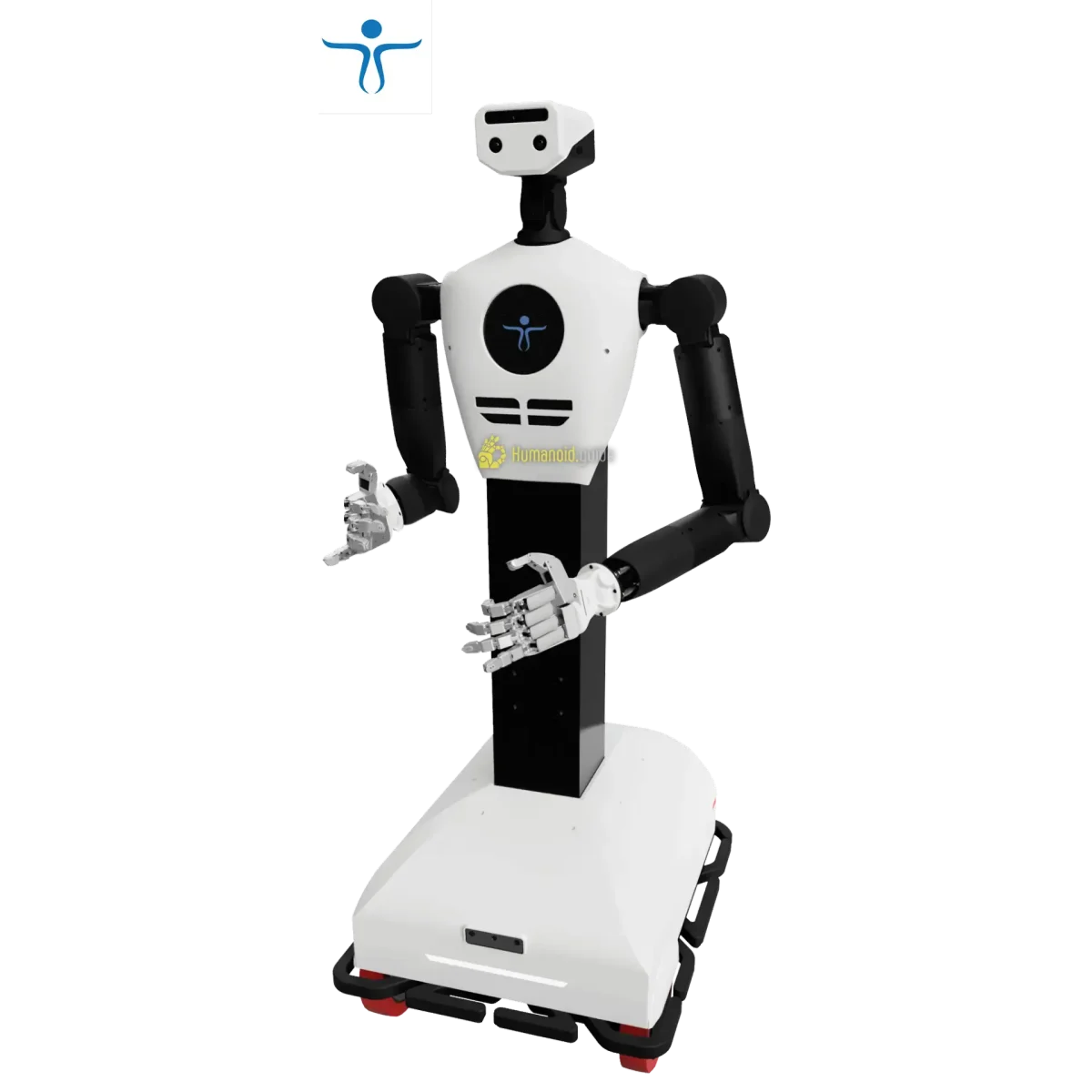
What is the Mh3 Mirsee?
The Mirsee Robotics MH3 is a humanoid robot designed for critical infrastructure operations. Manufactured by Mirsee Robotics, a company with roots in Canada (and possible ties to China), the MH3 stands out for its robust build — IP54-rated against dust and water, NVIDIA-powered computing, and a 10-hour battery that supports full-shift untethered work. With 31 degrees of freedom overall (6 per hand) and a 30 kg payload capacity, it balances dexterity and strength. The robot runs ROS2, integrates various LLMs, and achieves sub-100ms glass-to-action latency, making it suitable for teleoperation and autonomous tasks in harsh environments. Its aluminum 6061 frame weighs 125 kg yet reaches 5 km/h, offering a blend of endurance and mobility rarely seen in the current market.
Specifications
Here are the full technical specifications.
| Spec | Value |
|---|---|
| Height | 180 cm |
| Weight | 125 kg |
| Degrees of freedom | 31 |
| Battery life | 10 hours |
| Max speed | 5 km/h |
| Payload | 30 kg (arm payload; total standing may be higher) |
| Price (new) | Undisclosed (contact manufacturer) |
| Price (used range) | N/A — no secondary market yet |
Price & Value
New MSRP: Undisclosed (contact manufacturer)
Used range: N/A (new model, no secondary market)
Mirsee has not published a price for the MH3, a common practice for enterprise humanoid robots sold into industrial sectors. Based on comparable full-size humanoids like the UBTECH Walker S or Figure 02, analysts expect a price in the $100,000–$150,000 range, though actual quotes may vary based on volume and support contracts. The MH3’s value proposition is its IP54 rating and 10-hour runtime, which reduce the need for intermediate charging in harsh environments, a differentiator against many rivals that offer shorter endurance or lack weather sealing. Total cost of ownership will include LLM subscription fees, regular maintenance of harmonic drives, and potential satellite connectivity costs for remote operations. Given the nascent humanoid market, depreciation is likely to be steep in the first few years, with early adopters reselling at a significant discount. For now, no used units exist, so secondary-market pricing remains speculative.
Who Is It For?
Best for: - Utility companies and remote infrastructure operators who need an IP54-rated humanoid capable of 10-hour outdoor shifts. - Industrial facilities requiring dexterous manipulation (6 DOF hands) integrated with existing ROS2-based automation systems.
Not for: - Academic labs or hobbyists — undisclosed pricing and pure enterprise sales model make it inaccessible for low-budget research. - High-speed logistics (max speed 5 km/h) or heavy lifting beyond 30 kg per arm.
Alternatives & Comparison
The MH3 competes in the emerging class of full-size enterprise humanoids designed for infrastructure and industrial work. Its closest rivals are other bipedal platforms with dexterous hands and ruggedization.
| Model | Price | Available | Key Difference |
|---|---|---|---|
| UBTECH Walker S | Undisclosed (estimated $100,000+ | enterprise-only | Shorter battery life (~2 hours) and no IP rating, but has 36 DOF and a longer track record. |
| Figure 02 | Undisclosed | preorder | Advanced AI learning capabilities but lacks an IP54 rating, limiting outdoor use. |
| Fourier GR-2 | Undisclosed (estimated $120,000+ | enterprise-only | Higher strength and payload capacity, but not explicitly designed for critical infrastructure. |
Verdict: For organizations prioritizing all-weather reliability and multi-hour autonomous operations, the MH3’s IP54 rating and 10-hour battery make it a compelling choice, though its undisclosed price and unproven track record put it behind more established platforms like the Walker S in terms of production maturity. Budget-conscious buyers should look elsewhere until pricing is transparent. If your use case demands extreme durability over cutting-edge AI, the MH3 is worth a quote request.
Use Cases & Capabilities
Remote Substation Inspection
Electrical substations in desert or coastal regions expose equipment to dust, salt, and rain. The MH3’s IP54 rating and 180 cm height allow it to navigate standard switchgear and read analog gauges, while the 10-hour battery supports a full shift of thermal imaging and gas detection. Its 6-DOF hands can open cabinet doors and flip breakers if needed for reset operations. Connectivity via cellular and satellite ensures remote operation from a control center hundreds of miles away, reducing the need for hazardous human entries. The sub-100ms glass-to-action latency enables real-time teleoperation for complex tasks that AI cannot yet handle autonomously.
Oil & Gas Platform Operations
Offshore platforms demand robots that withstand salt spray and occasional high-pressure washdowns, and the MH3’s aluminum 6061 construction with IP54 meets these thresholds. The 30 kg payload allows it to carry inspection tools, gas monitors, or sample containers across grated walkways. A 10-hour runtime matches typical shift lengths, minimizing charging interruptions. ROS2 integration lets operators script routine inspection paths and valve checks, while LLM modules can verbally report findings to human supervisors. The main limitation is a top speed of 5 km/h, which may slow emergency response across large platforms.
Disaster Response and Reconnaissance
After earthquakes or chemical spills, first responders need a durable robot that can traverse rubble and operate in dusty, wet conditions. The MH3’s 125 kg frame and 5 km/h walking speed are modest, but its manipulation skills (6-DOF hands) allow door opening, debris removal, and first-aid kit retrieval. Cellular and satellite connectivity maintain command links even when local networks are down. At 180 cm, it can reach standard door handles and light switches, making it effective inside damaged buildings. Battery endurance is critical for extended search operations, and 10 hours is competitive. However, its weight may be a drawback if collapsed floors are a concern.
Industrial Maintenance and Repair
In factories with harsh environments — foundries, cement plants, paper mills — the MH3 can perform repetitive maintenance tasks like lubrication, filter changes, and bolt tightening, all while dust and moisture are present. The 31 DOF (including 6 per hand) rival many stationary industrial arms, but on a mobile platform. NVIDIA computing allows onboard vision algorithms to guide precise movements, and ROS2 compatibility eases integration with existing factory MES. The 10-hour battery means one robot can cover multiple shifts with a single charge, a major productivity advantage. However, for tasks requiring millisecond reaction times, the 5 km/h speed may be a bottleneck in dynamic environments.
History & Background
Mirsee Robotics emerged in the early 2020s with a focus on humanoid robots for critical infrastructure. The company’s headquarters appear tied to both Canada and China, though exact corporate details remain scarce. The MH3 was first built in 2024, targeting deployment in environments where IP54 protection and long endurance are essential. Unlike many rival humanoids that emphasize general-purpose AI, Mirsee prioritized ruggedization and teleoperation-friendly latency (sub-100ms). As of 2026, the MH3 is in production and available for enterprise orders, though no public deployments have been widely reported. The company’s website (mirsee.com) provides sparse details, suggesting a selective, business-to-business go-to-market strategy. Despite limited information, the MH3’s unique combination of IP rating, battery life, and dexterity has garnered quiet interest in industrial circles.
Buying Used — What to Check
Verify IP54 seals The all-weather rating is a core advantage; damaged gaskets would cripple its value.
Certify battery health The 10-hour runtime is a headline spec; a degraded battery drastically cuts utility.
Check LLM subscription transferability Many enterprise humanoids require ongoing AI subscriptions; ensure the license transfers with the unit.