What is the Nasa Valkyrie?
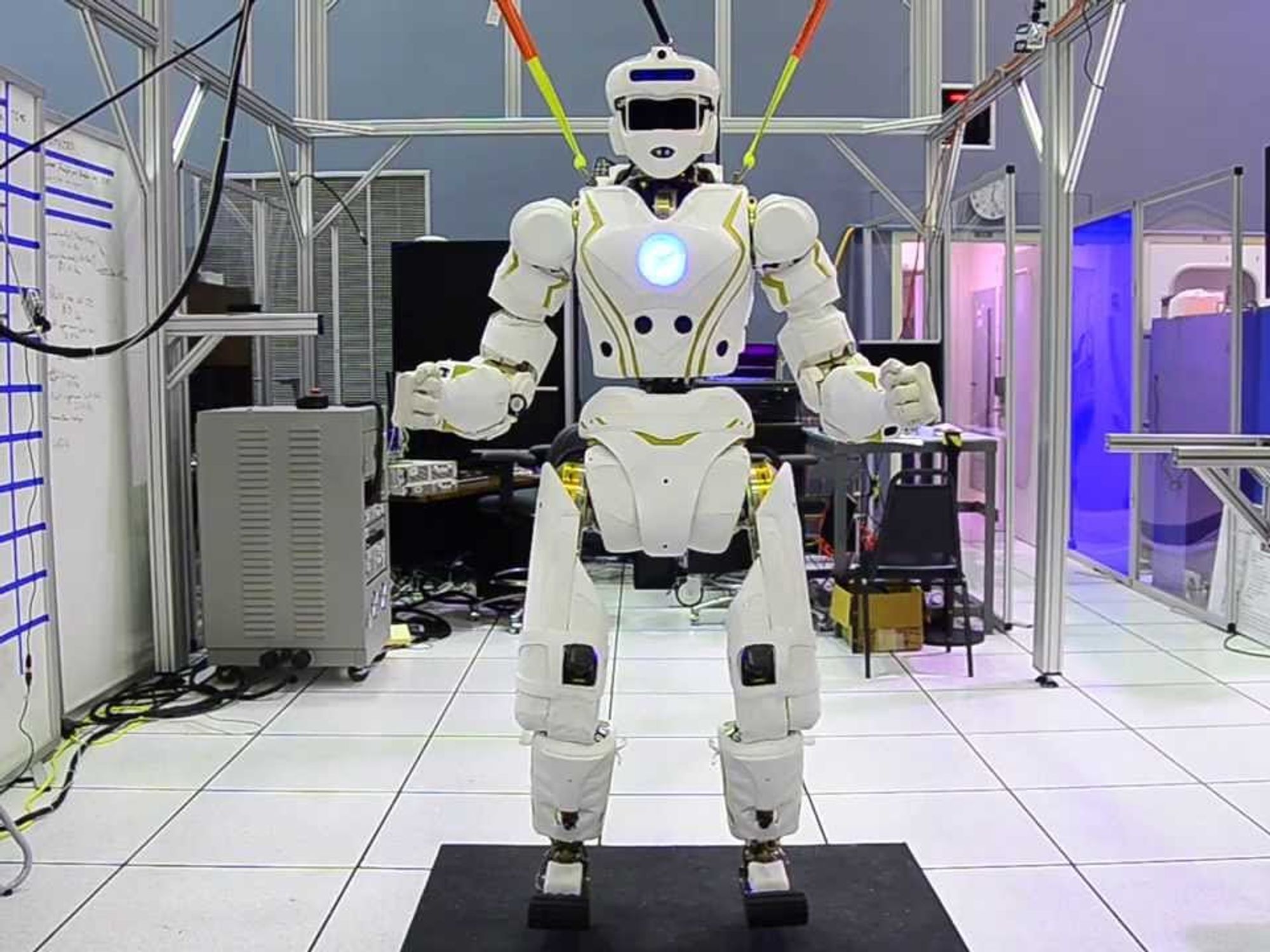
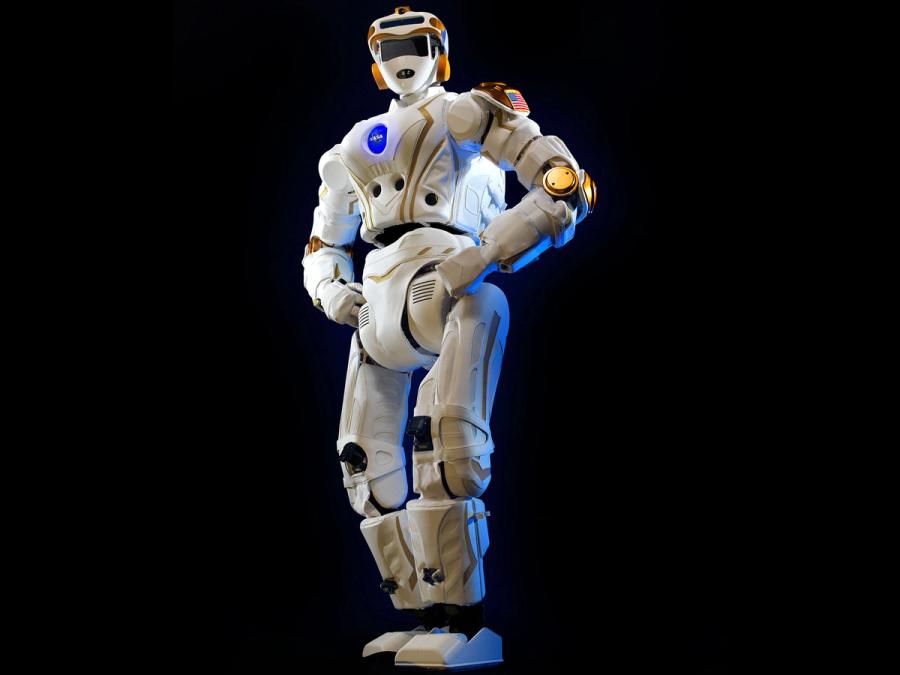
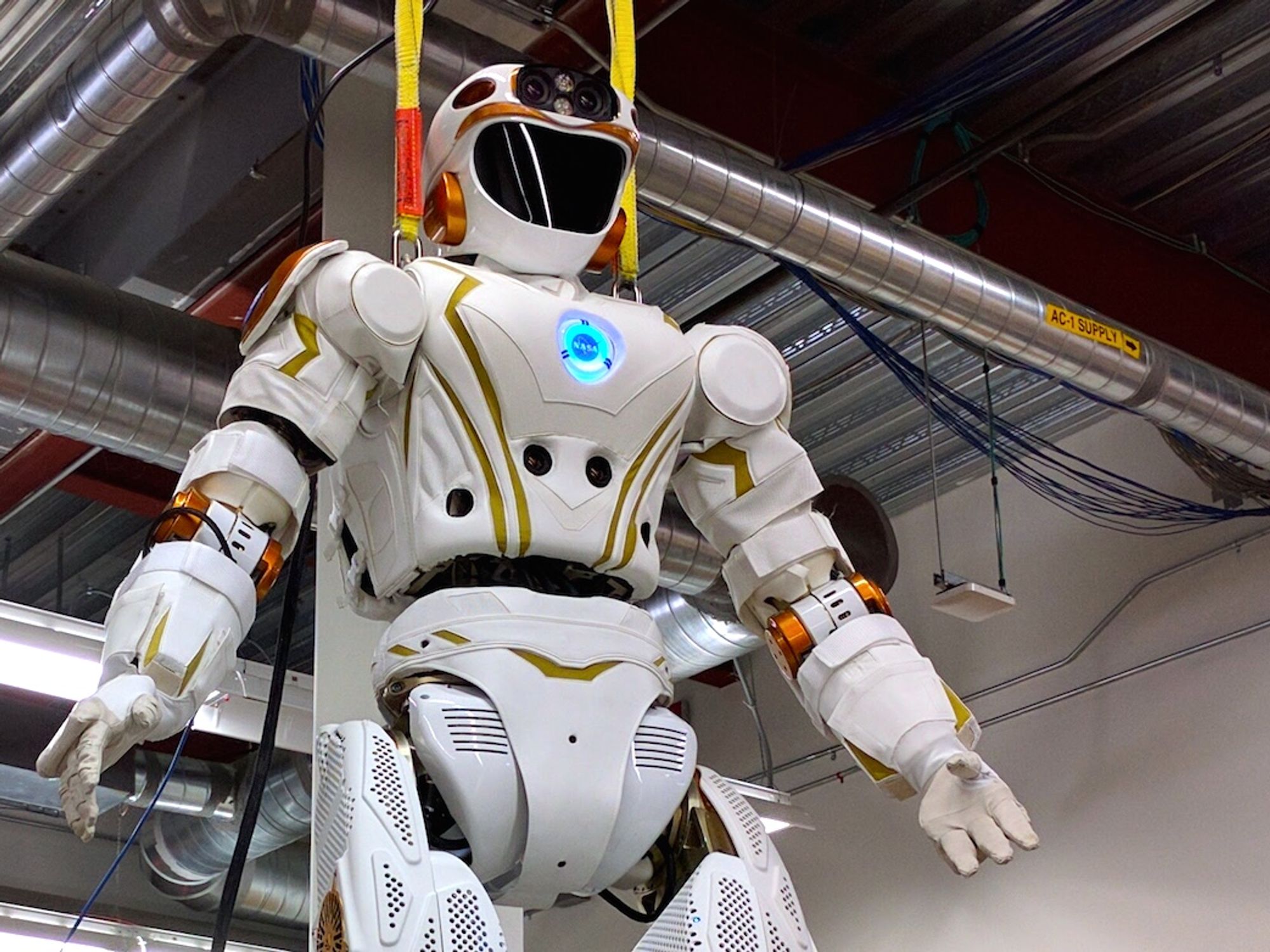
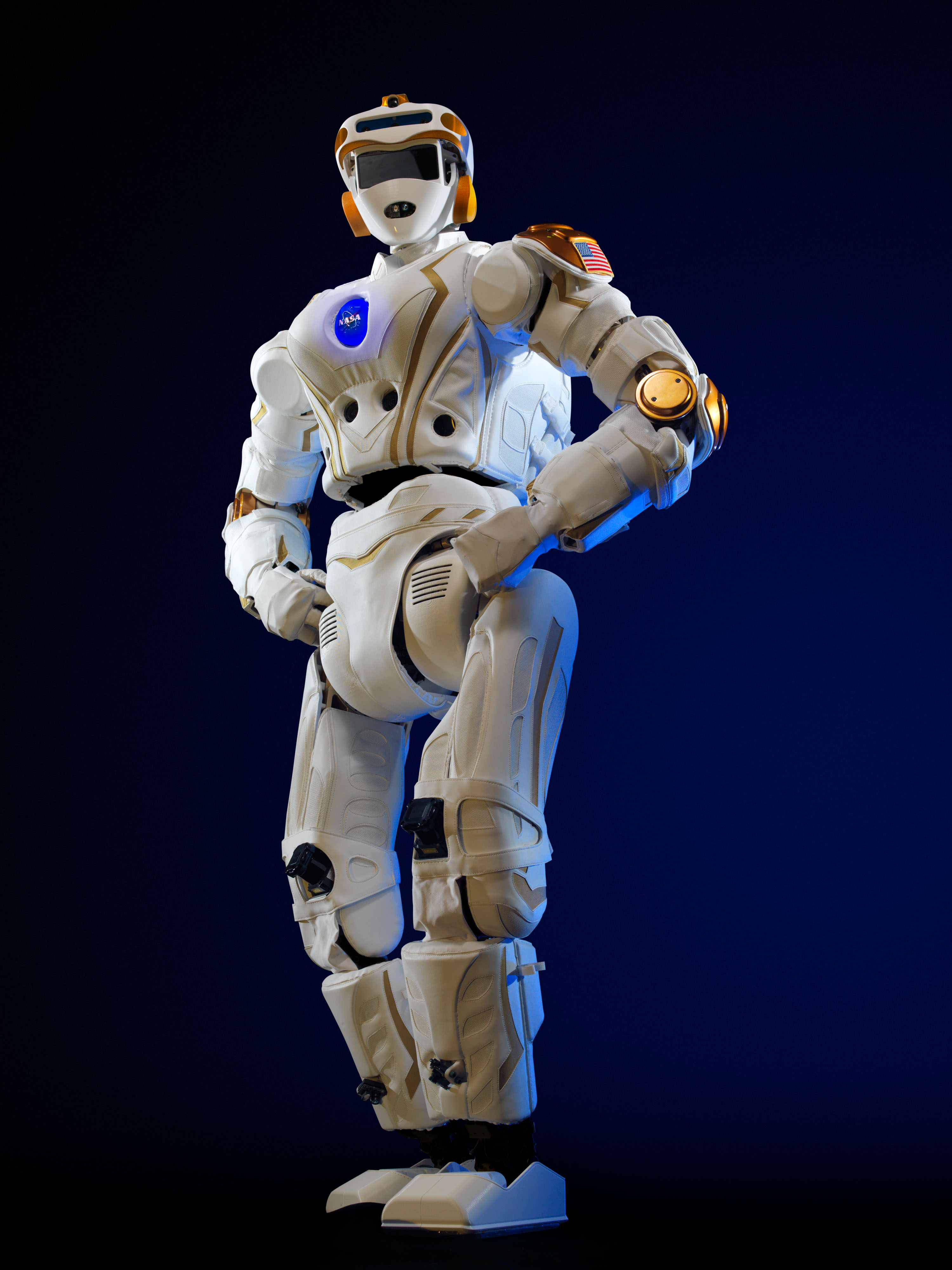
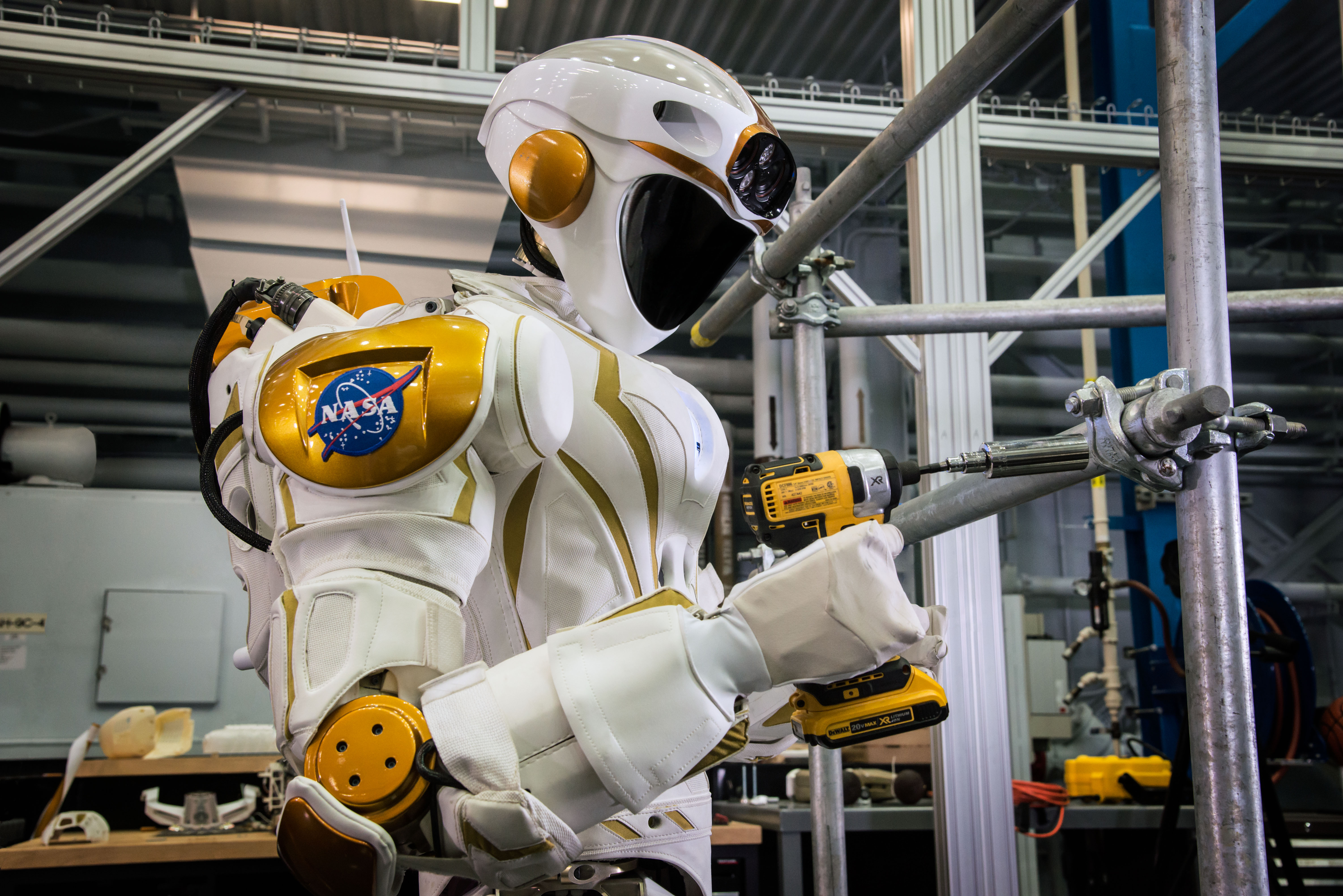
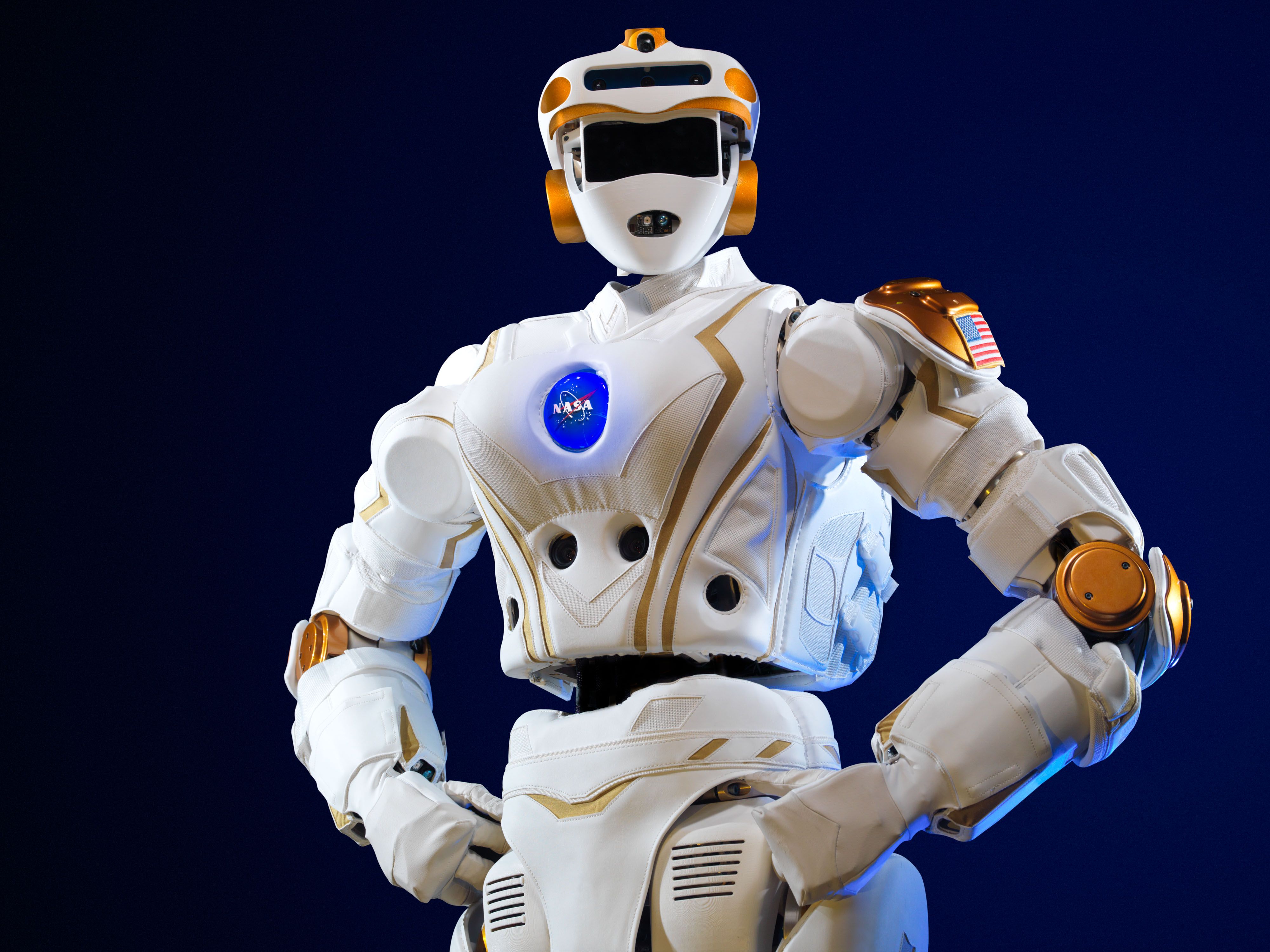
NASA Valkyrie (R5) is a full-size humanoid robot developed by the NASA Johnson Space Center in Houston, Texas, for dexterous manipulation in unstructured environments. Designed originally for the DARPA Robotics Challenge (DRC) in 2013, Valkyrie features 44 series elastic actuators, a Carnegie Robotics Multisense SL head sensor suite, and ROS-based control. Its primary mission is advancing autonomous capabilities for planetary surface habitat maintenance, disaster response, and industrial upkeep. Unlike commercial humanoids, Valkyrie is a pure research platform — not sold to the public but loaned to partner universities to explore human-robot teaming, supervised autonomy, and whole-body motion planning.
Specifications
Here are the full technical specifications.
| Spec | Value |
|---|---|
| Height | 1.88 m |
| Weight | 127 kg |
| Degrees of freedom | 44 |
| Battery life | 1 hour |
| Max speed | 1.8 km/h |
| Payload | Not specified |
| Price (new) | Undisclosed (research platform) |
| Price (used range) | N/A |
Price & Value
New MSRP: Undisclosed (research platform, not commercially available)
Used range: N/A
Valkyrie was never a commercial product; its development was entirely funded by NASA, with a reported build cost of around $2 million per unit for the 2013 prototypes. There is no MSRP, lease option, or direct sale. Academic partners such as MIT, UMass Lowell/Northeastern, and the University of Edinburgh have received loaned units, but these are not available on any secondary market. For organizations needing a comparable full-humanoid research platform today, Boston Dynamics’ Atlas remains the closest peer, though Atlas is also not sold commercially. Because no used market exists, price/value comparisons are irrelevant — Valkyrie’s worth is measured in research output, not dollars. Total cost of ownership for a lab would involve NASA support agreements, custom integration, and likely additional sensors, making it a multi-million-dollar investment even without a purchase price.
Who Is It For?
Best for: - Academic robotics labs focusing on whole-body humanoid control, supervised autonomy, and human-robot interaction research (44 DOF and onboard perception suite) - Government-funded space exploration and disaster response projects that can secure NASA collaboration agreements
Not for: - Commercial deployment (no payload rating, not certified for industrial use) - Long-duration field operations (1-hour battery life limits untethered tasks)
Alternatives & Comparison
Valkyrie competes in the full-body humanoid research niche. While no alternative is commercially available, a few platforms offer similar dexterity and perception for advanced robotics programs.
| Model | Price | Available | Key Difference |
|---|---|---|---|
| Boston Dynamics Atlas | Undisclosed (research platform) | no | Hydraulic actuation for highly dynamic locomotion vs. Valkyrie’s electric SEAs |
| Agility Robotics Digit | $250,000 (est.) | enterprise-only | Legs-only lower body for logistics; lacks full upper-body manipulation |
| Toyota T-HR3 | Undisclosed (research platform) | no | Focus on teleoperation with master control system, less autonomy research |
Verdict: If your research demands a complete humanoid form factor with arms, hands, and a sensor-laden head for autonomous manipulation in challenging environments, Valkyrie offers the most NASA‑backed heritage and DRC‑proven design. For pure dynamic locomotion work, Atlas’s hydraulic power wins. For any commercial application, Digit is the only buyable option, but it omits the upper body, making Valkyrie the clear choice for full‑humanoid dexterity studies — when you can get access.
Use Cases & Capabilities
Planetary Surface Habitat Maintenance
Valkyrie was envisioned to assist astronauts with dull, dirty, or dangerous tasks on the Moon or Mars — changing air filters, inspecting equipment, and handling tools in partial gravity. Its 44-DOF design and Carnegie Robotics Multisense SL head provide 3D perception and dexterous manipulation for such tasks. NASA’s partnership with the University of Edinburgh specifically explored multi-contact planning for climbing ladders and navigating tight habitat modules. While battery life currently limits untethered outdoor operation, lab tests have proven its ability to turn valves, connect hoses, and carry objects, making it a promising platform for future space habitat autonomy.
Disaster Relief Operations
Valkyrie was originally built for the DARPA Robotics Challenge, which required robots to drive a vehicle, walk over rubble, and operate tools in degraded environments. Its SEAs allow compliant manipulation, essential for turning difficult valves and opening doors under unpredictable conditions. The robot’s onboard stereo cameras, LiDAR, and forearm hazard cameras provide situational awareness through smoke and debris. Despite early autonomy limitations, the DRC trials proved Valkyrie’s hardware could survive falls and continue operations, a critical trait for real‑world disaster zones. Today, research at MIT and elsewhere uses Valkyrie to advance fall‑resilient whole‑body control for search and rescue scenarios.
Human‑Robot Collaboration Research
NASA’s loan agreements place Valkyrie in academic labs focused on supervised autonomy — where a human operator gives high‑level commands and the robot plans and executes tasks with minimal intervention. UMass Lowell/Northeastern’s work includes shared autonomy for manipulation, while MIT explored learning from demonstration to teach Valkyrie new skills. The robot’s open ROS architecture and comprehensive joint torque sensing make it ideal for safe interaction with humans in shared workspaces. Because no payload rating is published, research concentrates on fine manipulation rather than lifting heavy objects, but the adaptive grippers can securely grasp a wide range of tools and objects.
Industrial Maintenance Research
Although Valkyrie was not commercialized for factories, its design addresses typical industrial tasks like visual inspection, tightening bolts, and operating control panels. The underactuated hands allow power grasping of cylindrical tools and precision pinching of small objects. Research groups have tested the robot on mock‑up industrial panels, where it demonstrated plug‑and‑socket connections and switch flipping. The primary limitation is runtime — the 1‑hour battery forces tethered or carefully timed experiments. However, as an R&D platform for testing whole‑body industrial manipulation strategies, Valkyrie provides a credible alternative to custom gantry systems.
History & Background
NASA’s Johnson Space Center began developing Valkyrie in 2013 specifically for the DARPA Robotics Challenge, aiming to create a robust humanoid that could perform disaster‑relief tasks in degraded human environments. The first unit was unveiled in July 2013, featuring a distinctive white protective shell and a glowing blue “heart” in the chest. Following the DRC, NASA retained Valkyrie as an in‑house research platform for advancing space robotics. In 2015, NASA awarded loan agreements to MIT, UMass Lowell/Northeastern, and the University of Edinburgh, transferring three Valkyrie units to those labs for collaborative research into supervised autonomy, locomotion, and manipulation. The robot has seen incremental hardware and software updates since then, but no second‑generation model has been released. As of 2026, NASA continues to use Valkyrie as a testbed for technology destined for lunar and Martian surface missions, maintaining its status as a purely research‑oriented platform.
Buying Used — What to Check
Verify NASA loan status Valkyrie units are not sold; they are transferred under formal Space Act Agreements. Any appearance on a secondary market is unauthorized or fraudulent.
Confirm hardware revision NASA only released a single generation (R5). Ensure any unit came directly from a university lab with documented upgrades, as modifications may affect reliability.