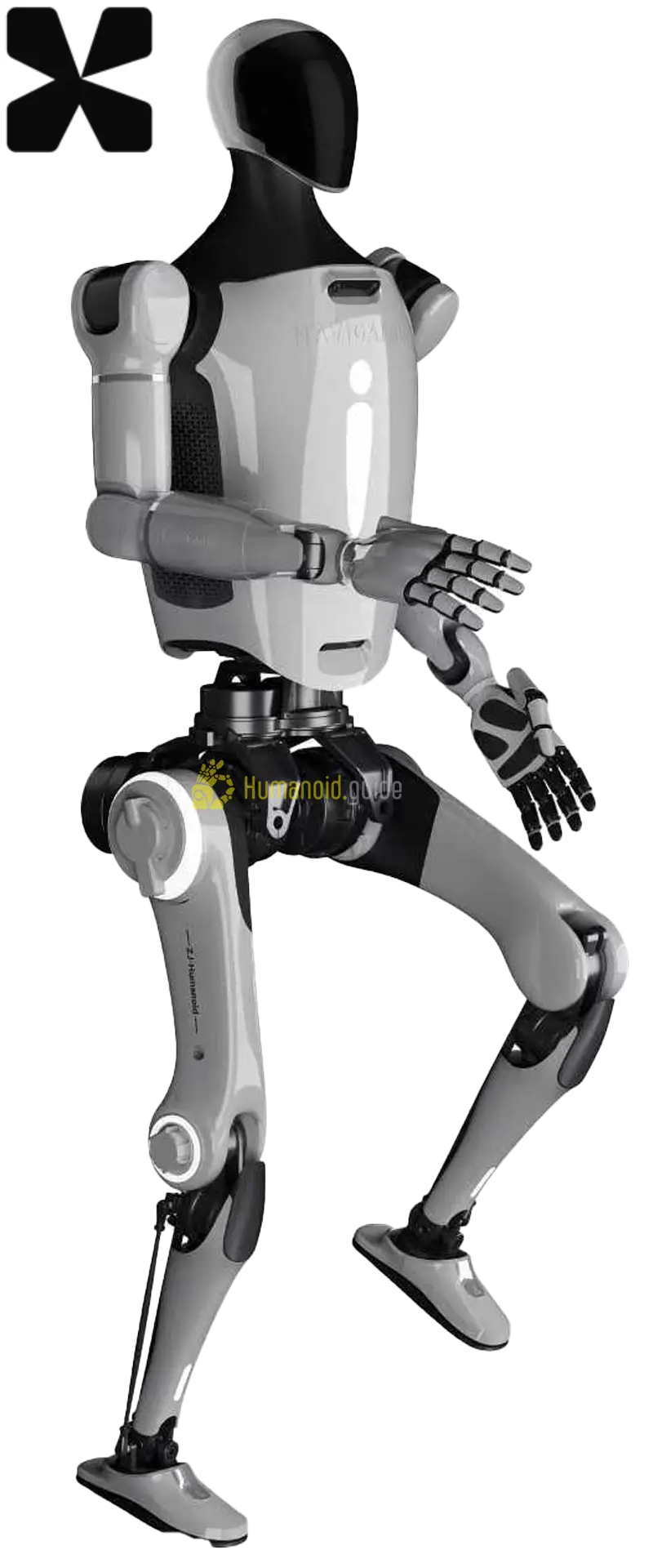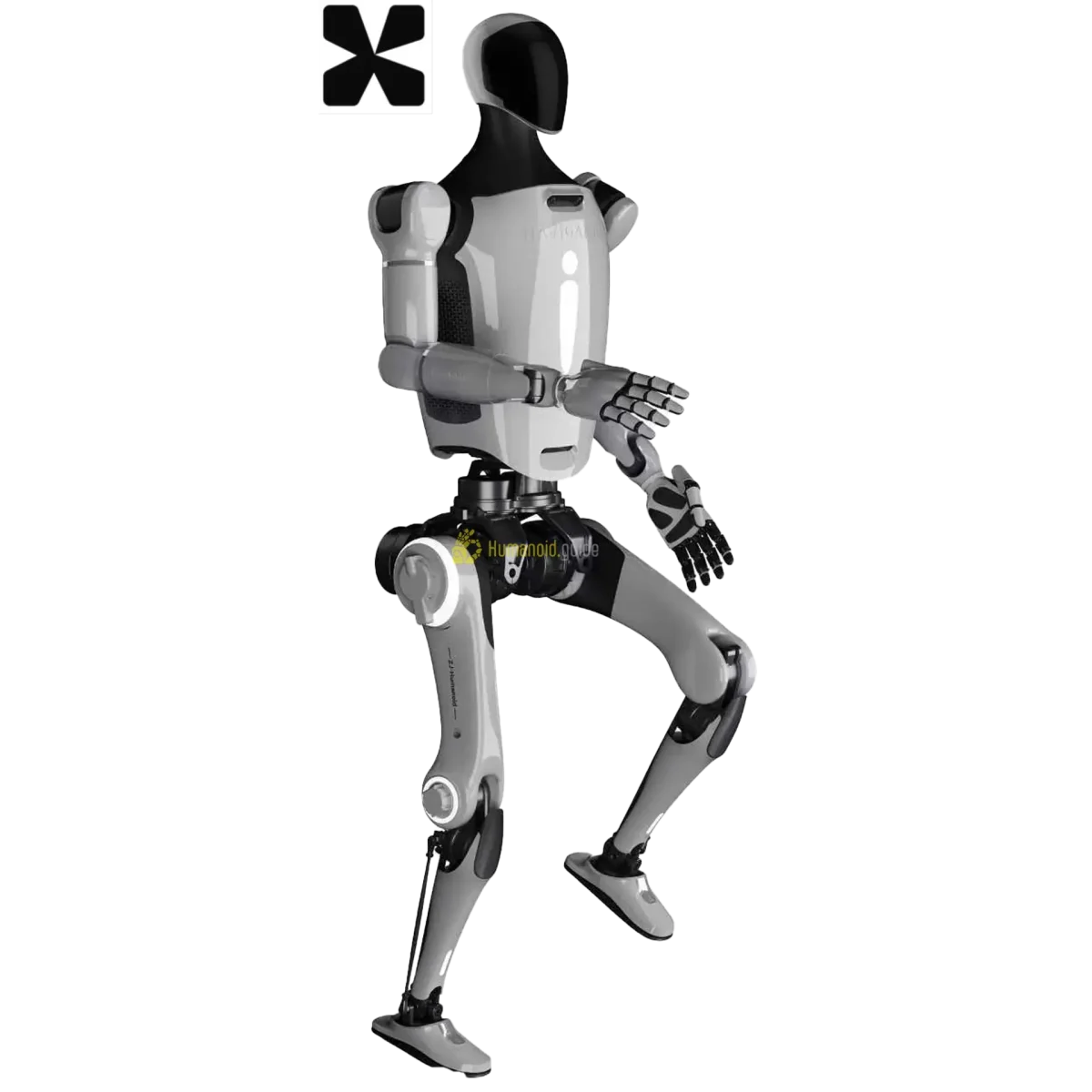
What is the Navigator 2?
The Navigator 2 is a full-body humanoid robot developed by the Zhejiang Humanoid Robot Innovation Center, a Supcon-backed research hub in Hangzhou, China. Unveiled in 2024, it is a prototype designed for general-purpose mobility and manipulation research. Standing 165 cm tall and weighing 60 kg, the robot features 20 degrees of freedom, a maximum walking speed of 1.6 km/h and a top traversal speed of 6 km/h. It can carry a 5 kg standing payload and operate for up to 2 hours on a charge. Aimed at applications in manufacturing and logistics, the Navigator 2 has not yet transitioned to commercial production, and its specifications remain subject to iteration.
Specifications
Here are the full technical specifications.
| Spec | Value |
|---|---|
| Height | 165 cm |
| Weight | 60 kg |
| Degrees of freedom | 20 |
| Battery life | 2 hours |
| Max speed | 6 km/h |
| Payload | 5 kg |
| Price (new) | Undisclosed (contact manufacturer) |
| Price (used range) | N/A |
Price & Value
New MSRP: Undisclosed
Used range: N/A
No public pricing has been released for the Navigator 2; as a research prototype, costs are typically handled through institutional partnerships and custom contracts. Comparable humanoid prototypes from China’s emerging sector—such as early UBTECH or Fourier models—are expected to land in the $100,000–$200,000 range if commercialized, but this robot’s final price remains speculative. Value for a research group lies in direct access to a state-backed hardware platform and a potentially open software stack, though limited documentation and support would raise total cost of ownership. Depreciation is irrelevant while the unit cannot be resold, but early adopters might negotiate unique collaboration terms that offset the financial risk. As with any pre-production robot, buyers must budget for spare parts, engineering support, and likely hardware upgrades that come with iterative development.
Who Is It For?
Best for: - Universities and government-backed robotics labs seeking a full-body humanoid hardware platform for locomotion and manipulation research - Chinese industrial R&D teams with direct ties to Supcon or the Zhejiang Humanoid Innovation Center looking to prototype factory-floor applications - Early-stage humanoid software developers who need a 20-DOF biped with 5 kg payload to test navigation and task-planning stacks
Not for: - Deployment-ready logistics or manufacturing operations (the 5 kg payload and 2-hour runtime are insufficient for continuous industrial duty) - Buyers requiring off-the-shelf warranty, service, or a certified safety rating (the Navigator 2 is a prototype with no IP rating or field-hardened components)
Alternatives & Comparison
The Navigator 2 enters a growing field of Chinese humanoid prototypes, each with different strengths in mobility, payload, and development maturity.
| Model | Price | Available | Key Difference |
|---|---|---|---|
| UBTECH Walker S | Undisclosed (enterprise pre-order, est. $150k+) | preorder | Enterprise-focused with proven bipedal walking and integrated AI, more polished than Navigator 2 |
| Fourier GR-2 | Undisclosed | no | Higher 35-DOF design and 30 kg arm payload, targeting heavy-lift manipulation research |
| Xiaomi CyberOne | Undisclosed | no | Xiaomi's vision-centric humanoid with advanced perception and emotional AI; not available commercially |
| Tesla Optimus (Gen 2) | Undisclosed (target <$20k mass production) | no | Autonomy-driven, designed for high-volume manufacturing; far-off availability but much lower price ambition |
Verdict: For research groups that can partner directly with the Zhejiang Humanoid Innovation Center, the Navigator 2 offers a bare-metal platform with Chinese government backing and potential for tight collaboration. If you need a robot that can actually lift more than 5 kg or run for longer than 2 hours, the Fourier GR-2 is a stronger choice. UBTECH’s Walker S is a safer bet for teams wanting a more mature, enterprise-ready biped, even if it costs more. At this early stage, the Navigator 2’s greatest advantage is institutional access—not out-of-the-box usability.
Use Cases & Capabilities
Humanoid Locomotion Research
The Navigator 2’s 20-DOF bipedal design and 6 km/h top speed make it a suitable testbed for walking and dynamic balance algorithms. Researchers can experiment with terrain adaptation, step planning, and gait optimization on a hardware platform that is not locked to a closed commercial stack. The 2-hour runtime gives sufficient time for iterative gait trials, while the 60 kg weight provides a realistic inertia profile. Limitations include a low walking speed of 1.6 km/h and no published fall-recovery mechanism, so safety rigging is advised.
Industrial Inspection Prototyping
With a 5 kg standing payload and a small footprint, the Navigator 2 can be used to prototype mobile inspection tasks in controlled environments like factories or warehouses. The robot can carry lightweight sensors or tools and is designed with navigation capabilities in mind, though specific navigation sensors are not disclosed. Engineers can test human-robot handover workflows and waypoint-based patrols to evaluate whether a humanoid form factor adds value over wheeled AMRs. However, the lack of IP rating and unknown sensor suite means it is not suited for dusty or dirty real-world settings without modification.
Academic Manipulation Studies
The robot’s two arms and 20 degrees of freedom provide a platform for pick-and-place, object handover, and basic assembly research. Its 5 kg payload is enough for small consumer goods or tool handling, making it viable for academic labs studying dexterous manipulation in a human-scale workspace. Because the Navigator 2 is from a central innovation center, researchers may gain early access to open interfaces and the ability to modify control algorithms. The main limitation is the unknown hand design and lack of finger dexterity specs, which restricts fine manipulation experiments.
Human-Robot Interaction Demonstrations
The Navigator 2’s humanoid shape and expressive motion (20 DOF) make it suitable for social robotics and public-facing demos, such as exhibitions, museums, or educational events. It can gesture, walk, and carry light props, providing an engaging presence. Its Chinese origin and Supcon backing give it a local industrial narrative that can be highlighted in domestic events. Battery life of 2 hours is sufficient for staged demos, but the prototype status means reliability may vary, and no safety certification means safe human-close operation is not yet verified.
History & Background
Supcon (Zhejiang SUPCON Technology Co., Ltd.) was founded in 1993 and grew into one of China’s largest industrial automation companies, headquartered in Hangzhou. In the early 2020s, as part of China’s push into humanoid robotics, the Zhejiang Humanoid Robot Innovation Center was established—likely around 2023—with backing from Supcon and provincial authorities. The Navigator 2 emerged as the center’s first announced humanoid prototype in 2024, showcased at Chinese tech exhibitions. The robot demonstrated basic bipedal walking and payload handling. As of 2026, no subsequent production model or mass-market release has followed, and the Navigator 2 remains a pre-commercial research platform used internally and by select institutional partners.
Buying Used — What to Check
Verify payload and battery endurance The 5 kg standing payload and 2-hour runtime are modest; confirm those numbers match the actual unit, as prototype hardware may vary.
Inspect joint and actuator condition As an early prototype, the 20-DOF system may have wear from testing — request maintenance logs and look for any custom repairs.
Confirm software and documentation availability Without a commercial SDK, you’ll need source code, API docs, or direct support from the Innovation Center; ensure these are obtainable before purchase.