What is the Neura 4ne1?
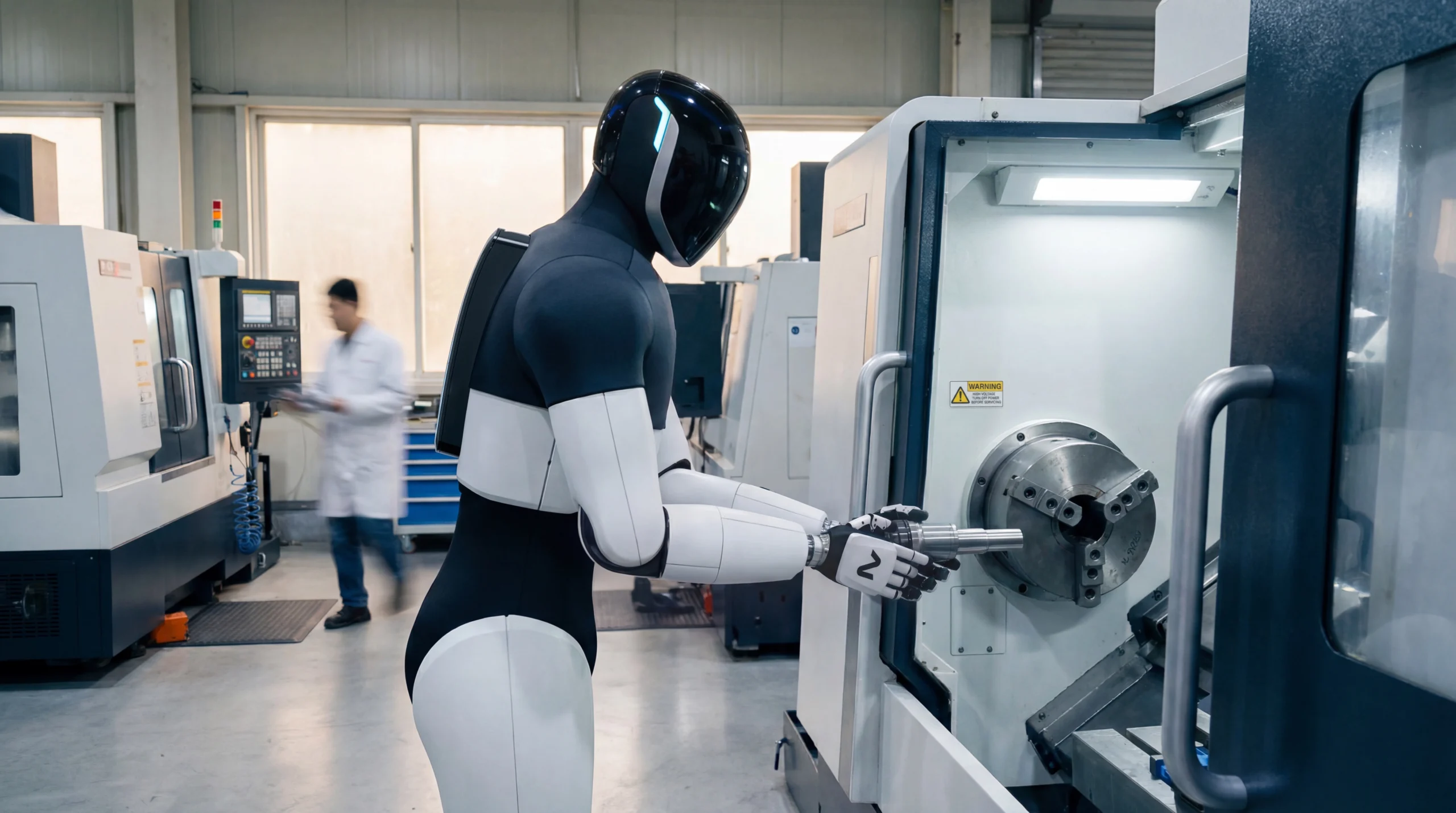
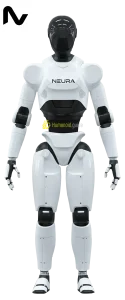
The NEURA 4NE1 is a bipedal humanoid robot built for industrial automation, service tasks, and domestic assistance. Manufactured by NEURA Robotics in Metzingen, Germany, it debuted in 2023 as an early production model. It stands 180 cm tall, weighs 80 kg, and carries up to 15 kg. The robot features an onboard Neuraverse AI platform with edge processing, a 360° multi-camera vision system, LIDAR, ultrasonic sensors, and ROS2 compatibility for flexible integration. Designed for human-safe collaboration and wearing CE certification, it walks at up to 5 km/h and runs 6–8 hours per charge. Early units are deployed in EU logistics, inspection, and assembly roles. Pre-orders are open, positioning it as one of the few commercially available European humanoid robots.
Specifications
Here are the full technical specifications.
| Spec | Value |
|---|---|
| Height | 180 cm |
| Weight | 80 kg |
| Degrees of freedom | 30 |
| Battery life | 6–8 hours |
| Max speed | 5 km/h |
| Payload | 15 kg |
| Price (new) | Undisclosed (contact manufacturer) |
| Price (used range) | N/A — no established used market yet |
Price & Value
New MSRP: Undisclosed (contact manufacturer)
Used range: N/A
NEURA Robotics has not published an official price for the 4NE1; enterprise buyers must inquire directly. Industry peers (e.g., Tesla Optimus, Figure 01) are also undisclosed, but comparable bipedal humanoids typically fall between $100,000 and $200,000, so a similar band is plausible. The value proposition rests on German engineering, edge AI, ROS2 openness, and CE safety certification, which lowers integration risk for European manufacturers. Depreciation is unpredictable in a nascent market—pre-order scarcity may initially support resale value. Total cost of ownership is uncalculated until maintenance contracts and spare parts pricing emerge. In all, the 4NE1 is a premium platform best justified by targeted industrial ROI, not broad price comparisons.
Who Is It For?
Best for: - European industrial automation teams needing a CE-certified, ROS2-compatible humanoid for logistics and light assembly - Research labs requiring a versatile biped with edge AI and 360° vision for dexterous manipulation studies - Service providers exploring human-robot collaboration in healthcare or entertainment settings
Not for: - Budget-conscious buyers (pricing undisclosed, undoubtedly enterprise-level and unlikely below $100k) - High-speed operations (max walking speed 5 km/h limits rapid transit in large facilities) - Users who need turnkey, multi-year proven deployments without company support (Digit has more field data)
Alternatives & Comparison
The NEURA 4NE1 competes in the emerging humanoid class against Tesla Optimus, Figure 01, 1X NEO, and Agility Digit—all bipedal or wheeled platforms targeting industrial tasks. Pricing is uniformly undisclosed, so comparisons rest on technical philosophy and deployment readiness.
| Model | Price | Available | Key Difference |
|---|---|---|---|
| Tesla Optimus | Undisclosed | preorder | Tesla’s AI-driven general-purpose humanoid with potential automotive integration; early access. |
| Figure 01 | Undisclosed | preorder | High-dexterity bipedal humanoid focused on general task execution; advanced hand design. |
| 1X NEO | Undisclosed | preorder | Wheeled base design simplifies locomotion; safety-certified for collaborative settings. |
| Agility Digit | Undisclosed | preorder | Bipedal robot with advanced locomotion stack; most real-world logistics deployments to date. |
Verdict: For Europeans seeking a native CE‑certified humanoid with ROS2 and edge AI, the NEURA 4NE1 is the most direct fit. If you need proven, multi‑year industrial data, Agility Digit has a head start. Figure 01 and Tesla Optimus promise broader AI vision but remain pre‑commercial. The 4NE1 strikes a practical balance: available for pre‑order with real EU deployments and a strong software ecosystem.
Use Cases & Capabilities
Logistics and Material Handling
The 4NE1 can transport items up to 15 kg within warehouses and distribution centers. Its 5 km/h walking speed and 6–8 hour runtime suit shift‑based tasks like picking, placing, and moving goods. Onboard 360° vision and LIDAR enable obstacle avoidance in dynamic environments. ROS2 integration allows rapid mapping and fleet coordination. Early EU deployments show promising results in low‑speed logistics.
Inspection and Monitoring
With multi‑camera 360° perception and optional ultrasonic sensors, the 4NE1 can patrol facilities and inspect equipment. It records visual, thermal, or acoustic data for predictive maintenance. Edge AI processes anomalies on‑board, reducing bandwidth needs. CE safety ensures operation near human workers without cages. The humanoid form factor lets it climb stairs and navigate tight industrial aisles.
Light Assembly
The robot’s 15 kg payload and dexterous hands (5 fingers per hand) allow it to assist in light assembly tasks. Low‑latency edge processing and high‑torque joints enable precise insertion and screw‑driving. NEURA’s SDK and ROS2 support custom task programming. Current limitations include the absence of a published IP rating and unconfirmed hand DOF, but initial tests suggest adequate repeatability for non‑safety‑critical assembly.
Healthcare Assistance
Designed for human‑safe collaboration, the 4NE1 can fetch supplies, deliver medication, or assist patients with mobility. Its gentle touch and 360° awareness prevent collisions. German healthcare providers are exploring its use for non‑clinical tasks, freeing staff for patient care. Battery life covers an 8‑hour shift, and quiet electric actuators suit hospital environments. Full regulatory approval for patient‑handling is pending.
Research & Development
Universities and labs gain a complete bipedal platform with edge AI, ROS2, and a Python/C++ SDK. Researchers can test locomotion, manipulation, and human‑robot interaction on real hardware. The 30 DOF—though less than some research‑only androids—is sufficient for most gait and grasping studies. NEURA’s Neuraverse ecosystem may eventually support cloud AI integration, expanding experimental scope.
History & Background
NEURA Robotics was founded in 2019 in Metzingen, Germany, with the mission to build cognitive robots that understand and learn from their environment. The company first introduced the 4NE‑1 research prototype, then evolved to the 4NE1 model revealed in 2023. The 4NE1 marked NEURA’s first commercially intended humanoid, combining edge AI and CE certification for industrial use. By 2025, limited pre‑orders opened, and early units entered EU logistics and inspection pilots. As of 2026, the 4NE1 remains in pre‑order status with no generational update; the company continues to refine its Neuraverse AI platform and expand deployment partnerships. There have been no acquisitions or ownership changes.
Buying Used — What to Check
Verify battery health Battery runtime degrades over charge cycles; a 6–8 hour claim may drop significantly on a lightly used unit.
Inspect joint wear High‑torque joints and reduction gears are critical for payload capability; listen for noise and request maintenance logs.
Confirm software version Neura OS updates and ROS2 compatibility layers evolve quickly; ensure you receive current firmware and SDK access rights.