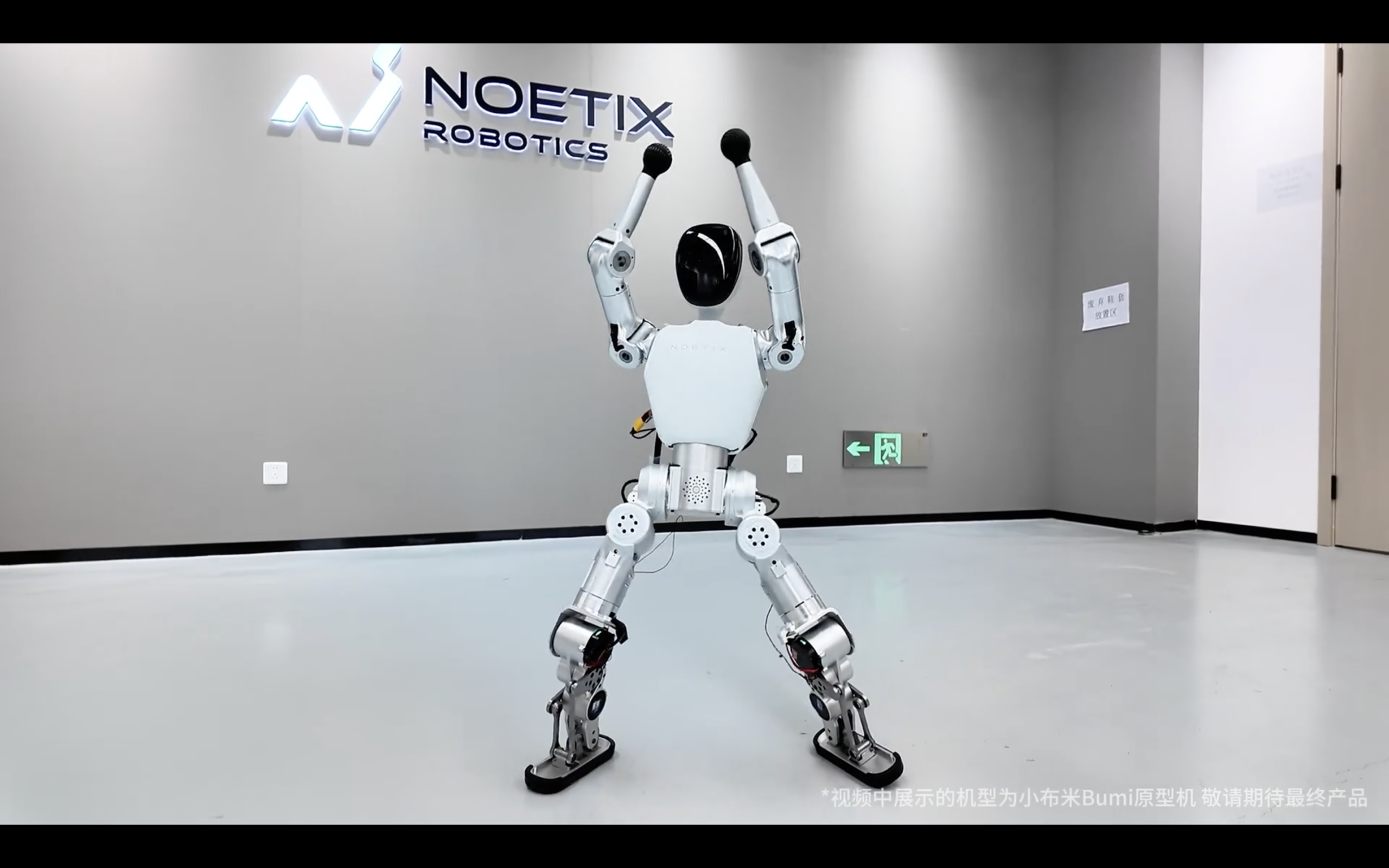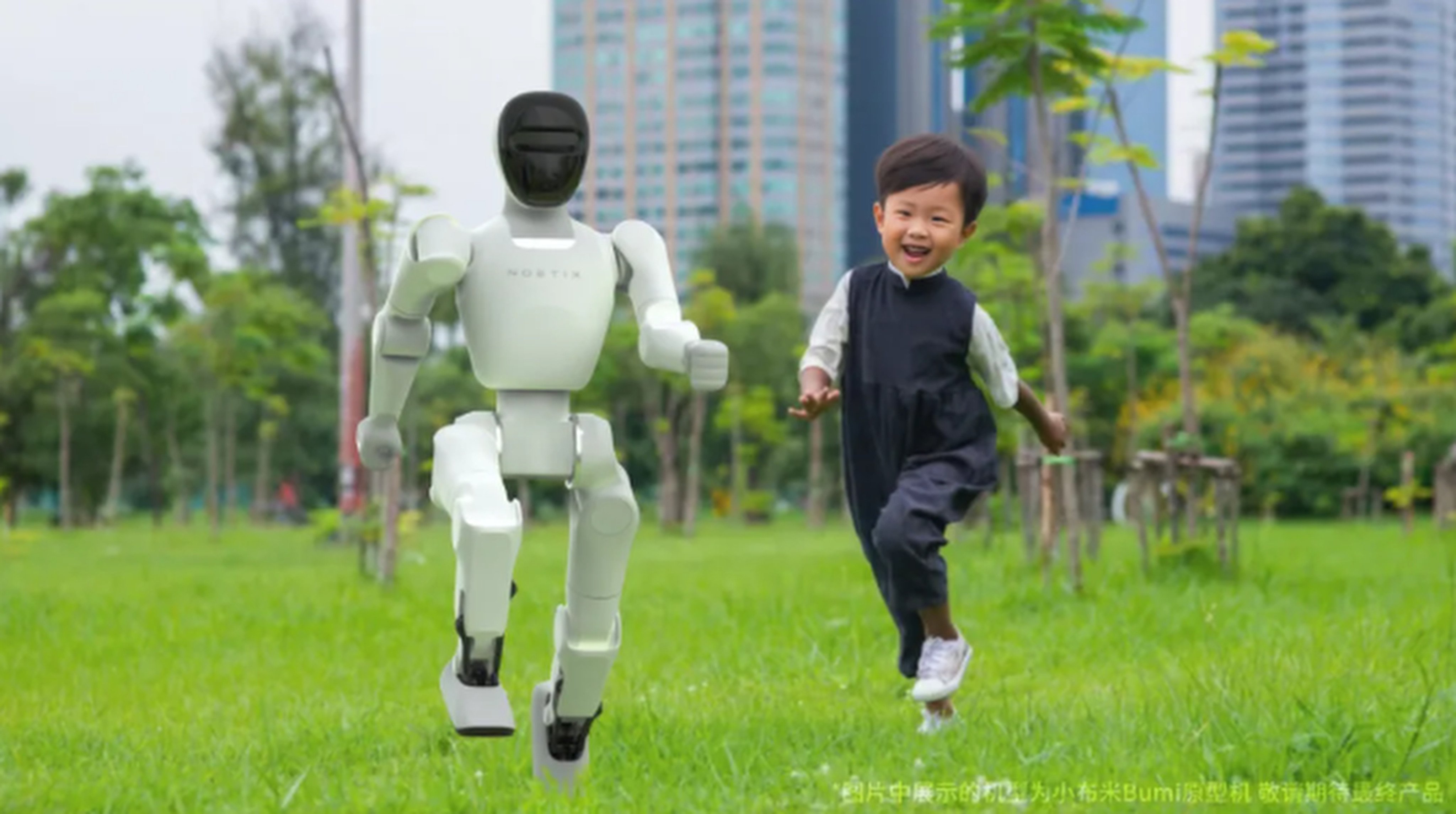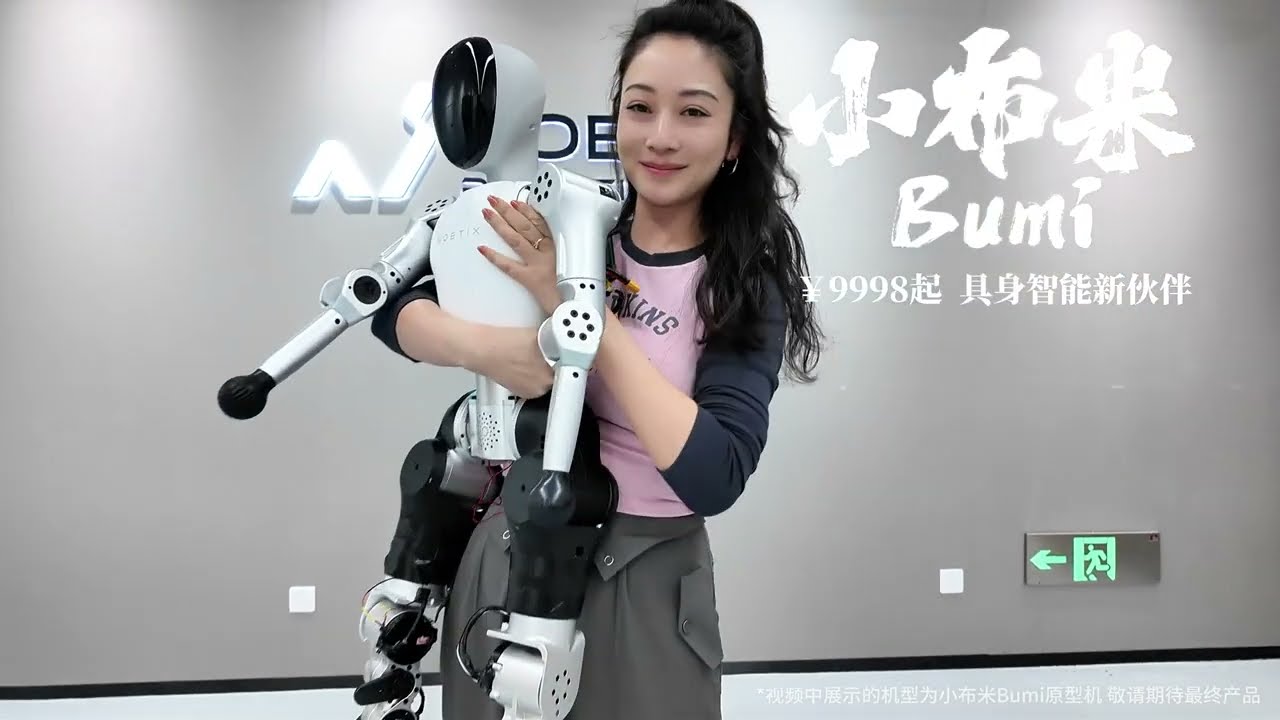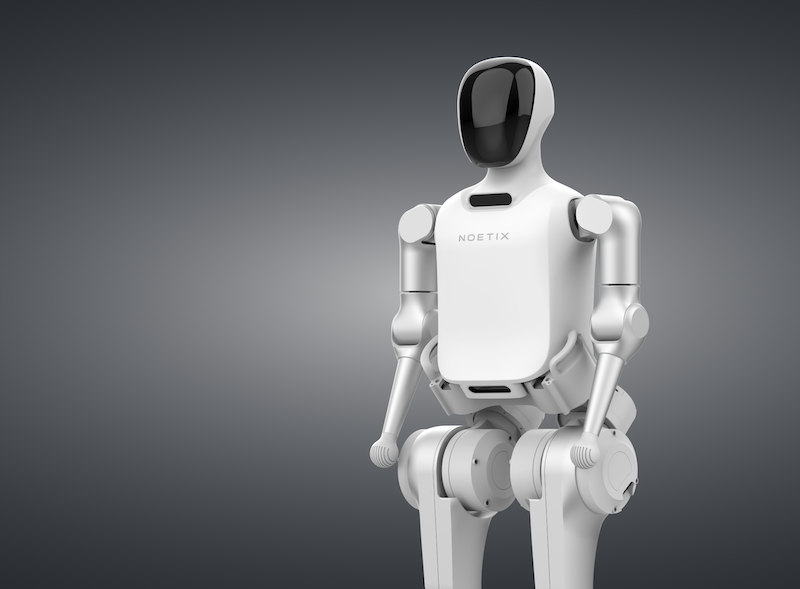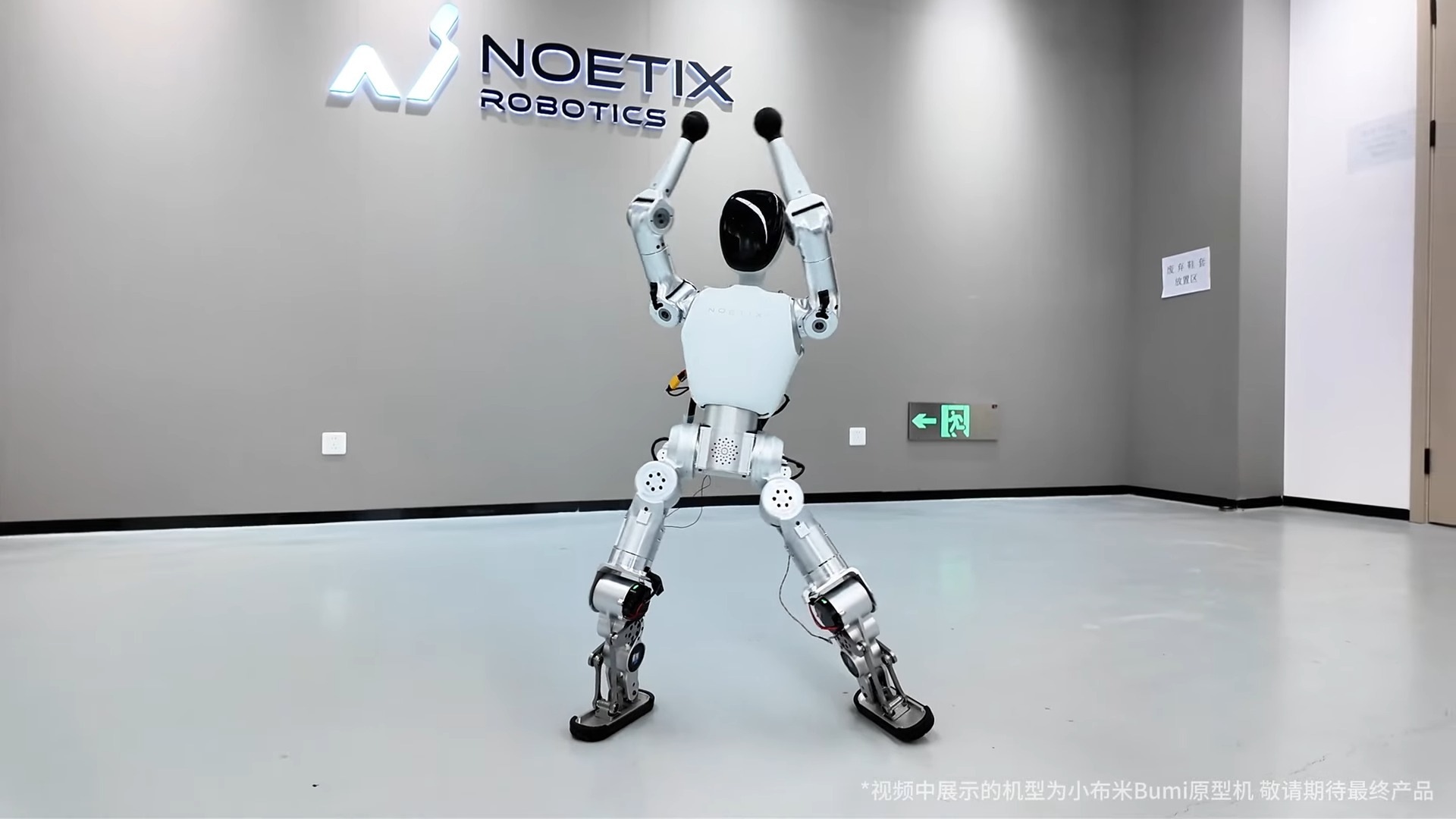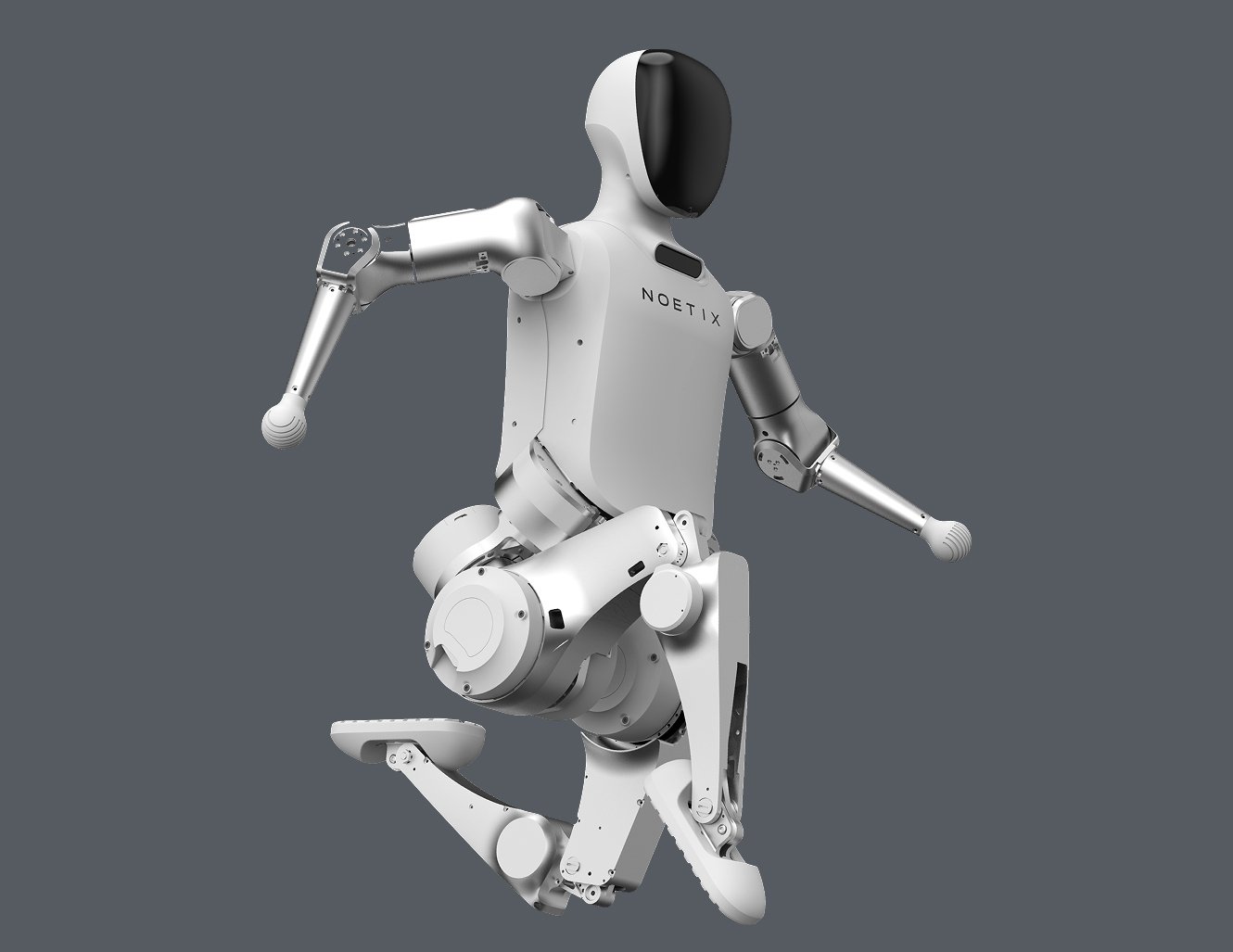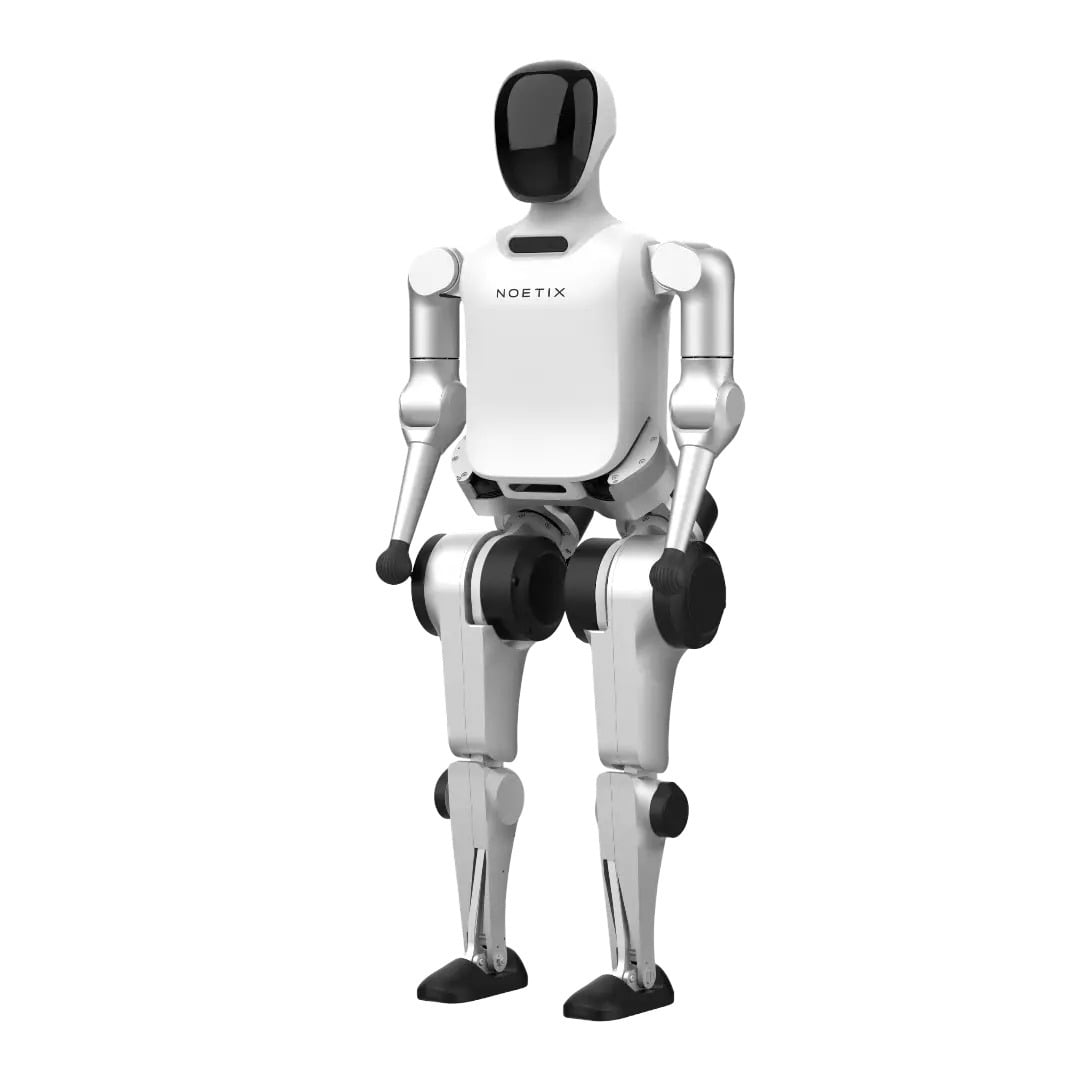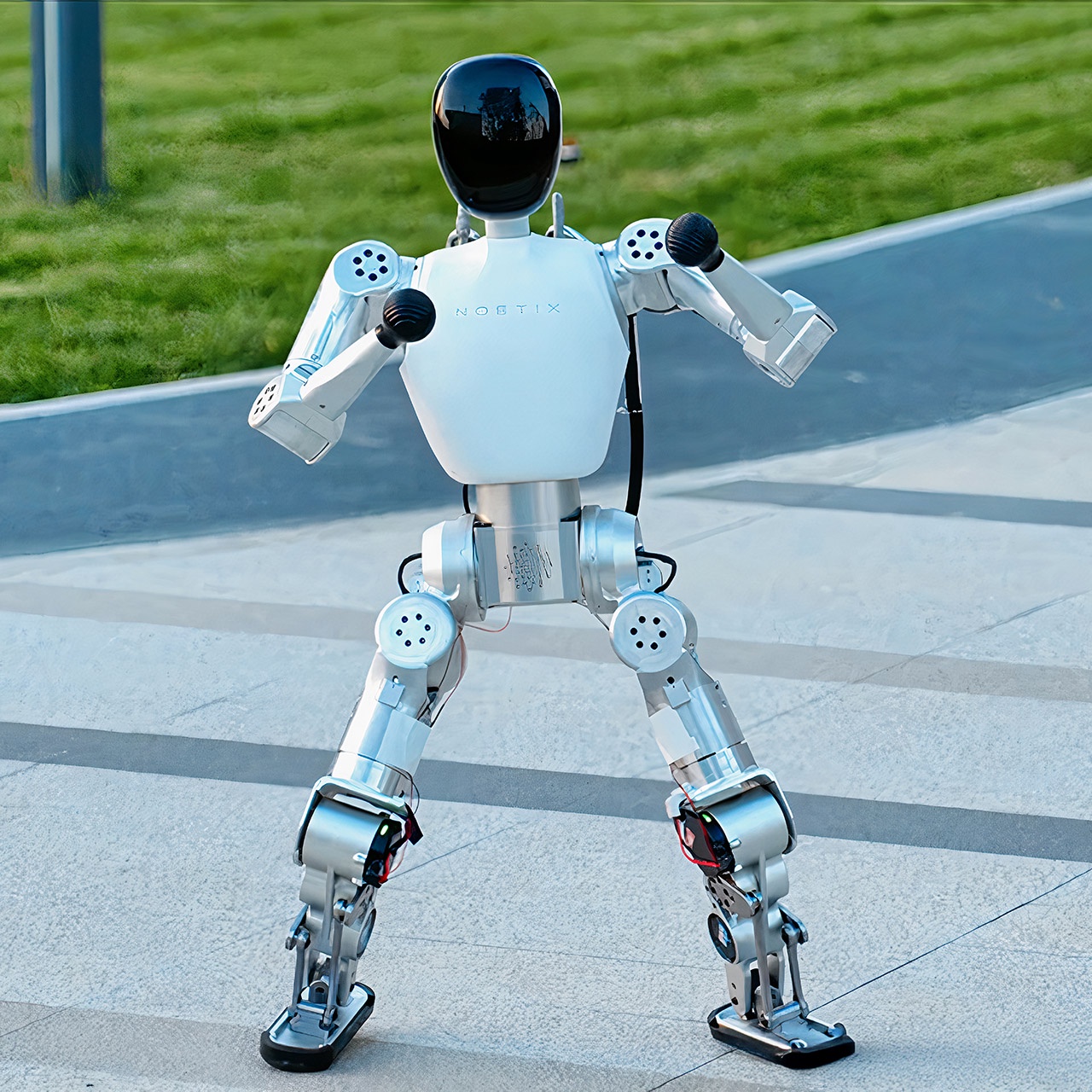
What is the Noetix Bumi?
The Noetix Bumi is a child-sized (94 cm, 12 kg) bipedal humanoid robot designed by Beijing-based Noetix Robotics for STEM education and family entertainment. Launched in October 2025 as the first sub-¥10,000 consumer humanoid in China, Bumi emphasizes accessible programming via drag-and-drop interfaces and voice control. It uses force-controlled joints with up to 50 N·m peak torque, imitation learning plus reinforcement learning for natural motion, and can perform walking, running, dancing, and gymnastic gaits. The robot includes a vision-based camera for scanning and object interaction, a 48V/3.5 Ah lithium battery providing 1–2 hours of runtime, and supports secondary development through its EDU variant. Its modular composite body and internal battery exemplify a lightweight, education-focused design rather than industrial or household labor.
Specifications
Here are the full technical specifications.
| Spec | Value |
|---|---|
| Height | 94 cm |
| Weight | 12 kg |
| Degrees of freedom | 21+ |
| Battery life | 1–2 hours |
| Max speed | 1.8 km/h |
| Payload | Not specified |
| Price (new) | ~$1,400 |
| Price (used range) | N/A (newly released) |
Price & Value
New MSRP: ~$1,400
Used range: N/A (newly released)
At approximately $1,400, the Noetix Bumi is one of the most affordable bipedal humanoids on the market, undercutting many research-grade robots by an order of magnitude. Its price reflects its education-focused design, lacking heavy payload or industrial features. Compared to the Unitree G1 ($16,000) or UBTECH Alpha Mini ($800), Bumi sits in a middle niche: more capable than a toy but less robust than a lab platform. Depreciation is uncertain given the nascent consumer humanoid market; early adopters may see moderate value retention if demand grows. Total cost of ownership includes no known mandatory subscriptions, but replacement batteries and modular parts could add ~$100–$200 per year. Overall, Bumi offers strong value for schools, hobbyists, and STEM outreach programs wanting a walking robot at a consumer price.
Who Is It For?
Best for: - STEM education programs needing a programmable bipedal platform with 21+ DOF and drag-and-drop interface. - Family entertainment and hobby robotics enthusiasts (voice interaction, dancing, gymnastic gaits). - University labs exploring reinforcement learning on low-cost humanoid hardware (secondary development support).
Not for: - Industrial automation or warehouse tasks (no payload rating, not designed for labor). - Heavy-duty research requiring high torque beyond 50 N·m or robust sensor suites. - Buyers expecting long battery life (runtime limited to 1–2 hours) without frequent recharging.
Alternatives & Comparison
The Noetix Bumi competes in the emerging market of small, affordable humanoids. Its direct competition includes both smaller educational bots and larger research-grade platforms, though none match its specific combination of price, bipedalism, and programmability.
| Model | Price | Available | Key Difference |
|---|---|---|---|
| Unitree G1 | $16,000 | yes | Full-sized research humanoid with 23+ DOF, 3 kg arm payload, advanced dynamics. |
| UBTECH Alpha Mini | ~$800 | yes | Compact 24 cm desktop humanoid, fewer DOF, primarily voice/dance interaction, limited bipedalism. |
Verdict: For those who need a fully walking, programmable humanoid at a consumer-friendly price, the Bumi is unmatched—it offers bipedal locomotion and 21+ DOF for under $1,500. Researchers requiring higher payload or a larger form factor should consider the Unitree G1 at $16,000. The Alpha Mini is a cheaper alternative for desktop entertainment but cannot walk continuously. Overall, Bumi wins for education, hobbyists, and low-cost locomotion research.
Use Cases & Capabilities
STEM Education
Bumi serves as an engaging tool for teaching robotics, programming, and AI in K-12 and university settings. Its drag-and-drop graphical interface lowers the barrier to entry, allowing students to create motion sequences and interactions without coding experience. The 21+ degrees of freedom enable demonstrations of bipedal locomotion, balance, and joint control, aligning with physics and engineering curricula. Teachers can use voice commands and app control for interactive classroom demonstrations. The EDU variant supports secondary development via Python and ROS, enabling advanced projects in computer science courses.
Family Entertainment
Designed as a companion bot, Bumi entertains families with dancing, gymnastic gaits, and voice interactions. Its child-like size and expressive movements make it a novel home gadget, responding to voice commands and performing choreographed routines. The robot’s internal battery and mobile app allow untethered playtime in living rooms. While not a labor-assistance device, it can gamify simple tasks like storytelling or timers. The lightweight composite build ensures safety around children during active use.
Research & Development
Academic labs exploring reinforcement learning for locomotion can use Bumi as a low-cost hardware platform. The robot’s proprietary algorithm stack—imitation plus reinforcement learning—provides a baseline for motion policy research, with joint torque data accessible via SDK. Unlike simulation-only work, Bumi offers real-world validation of walking and running gaits on a physical biped. The modular design supports hardware modifications, and the EDU variant’s Linux-based OS enables custom controller injection. However, limited sensor suite and absence of a published payload limit its use in manipulation studies.
Public Demonstrations and Events
Bumi’s eye-catching gymnastic effects and compact footprint make it ideal for trade shows, science museums, and corporate events. Operators can pre-program routines via the drag-and-drop interface and trigger them with voice commands or app controls, requiring minimal technical staff. Its 1–2 hour battery life covers short demos, and the lightweight build simplifies transportation. The robot’s friendly appearance engages audiences of all ages, effectively showcasing bipedal robotics advancements.
Hobbyist Robotics and Maker Projects
Hobbyists benefit from Bumi’s affordability and programmability for custom projects, from animatronics to interactive art. The secondary development support allows integration with Raspberry Pi or Arduino ecosystems, while the gait algorithm can be tweaked for creative movement styles. The internal 48V system and standardized battery open possibilities for power-user modifications. Community-driven modifications may extend functionalities like voice synthesis or object tracking using the onboard camera.
History & Background
Noetix Robotics was founded in 2023 in Beijing, China, with the goal of bringing affordable humanoid robots to consumers. In October 2025, the company launched the Bumi, a 94 cm child-sized humanoid, as the first sub-¥10,000 biped humanoid in China. The Bumi was introduced alongside larger models (N2, Hobbs, Dora) aimed at different sectors, but Bumi targeted mass-market education and entertainment. As of 2026, the Bumi represents the first generation of Noetix’s consumer line, with an EDU variant offering extended programmability. Noetix has not announced a successor, and the robot remains in active production.
Buying Used — What to Check
Verify battery health Battery runtime degrades over cycles; a worn unit may last under an hour.
Check for missing modular parts Modular design means limbs or torso components can be easily detached or lost.
Confirm EDU vs Standard variant EDU variant adds secondary development support; standard model may lack Python/ROS SDK.