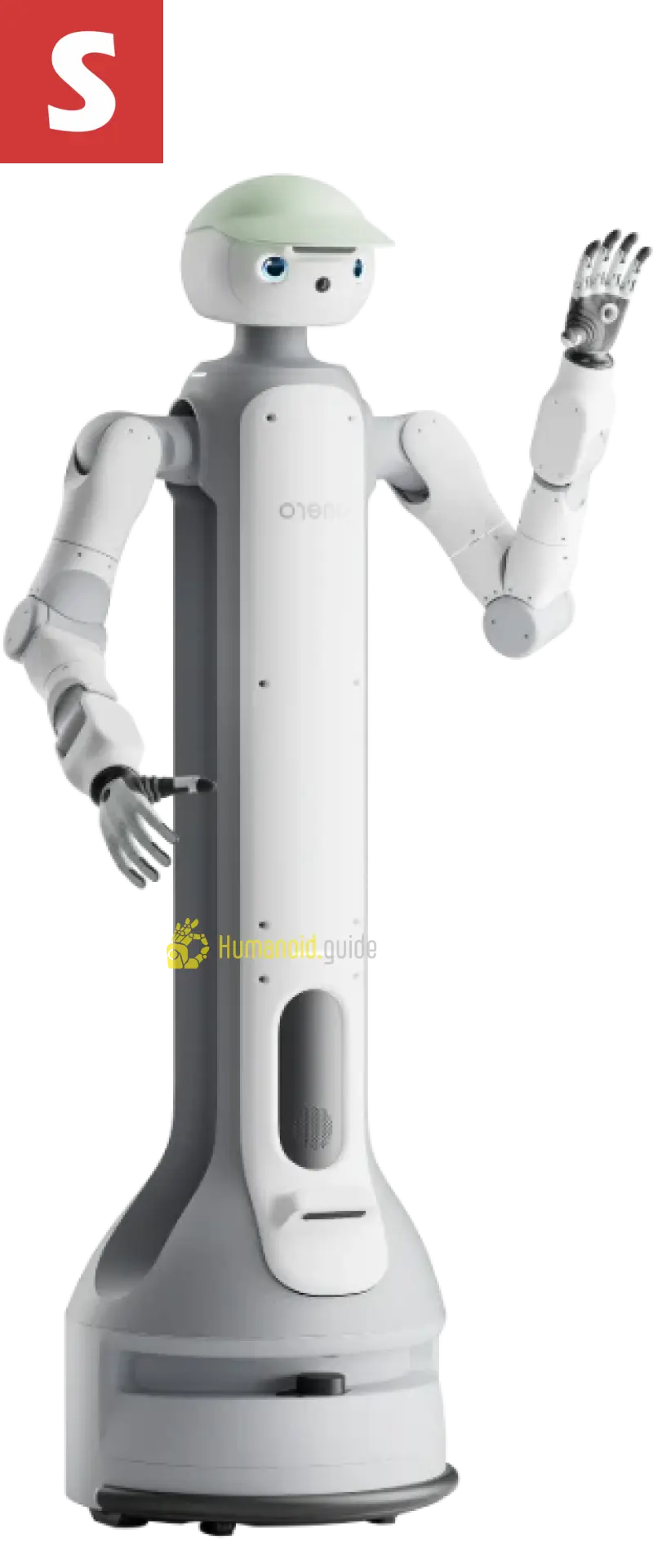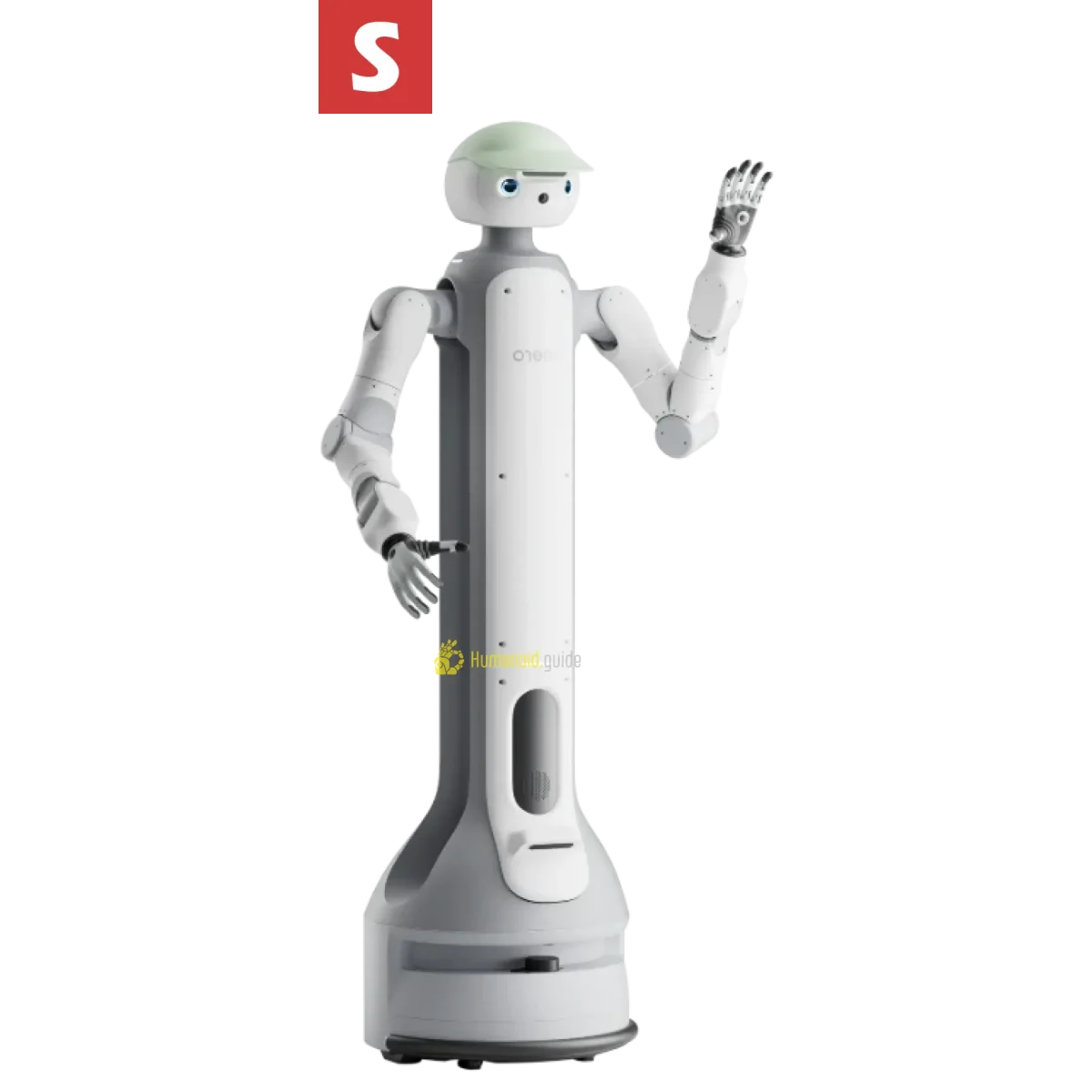
What is the Onero H1 Switchbot?
The SwitchBot Onero H1 is a wheeled humanoid robot for domestic assistance, made by Shenzhen-based SwitchBot (founded 2016). Standing 120 cm tall and weighing 35 kg, it has 32 degrees of freedom, including five-fingered hands, and moves on wheels at up to 3 km/h. Positioned as an affordable home helper, it can fold laundry, deliver objects, and integrate with smart home systems via Wi‑Fi and Bluetooth. An ARM-based onboard computer runs a Linux OS, with cloud connectivity for possible LLM integration. Unveiled at CES 2026 at a $1,500 price point, the Onero H1 marks SwitchBot's first humanoid robot.
Specifications
Here are the full technical specifications.
| Spec | Value |
|---|---|
| Height | 120 cm |
| Weight | 35 kg |
| Degrees of freedom | 32 |
| Battery life | 6 hours |
| Max speed | 3 km/h |
| Payload | 5 kg (est.) |
| Price (new) | $1,500 (pre-order) |
| Price (used range) | N/A (not yet shipped) |
Price & Value
New MSRP: $1,500
Used range: N/A (not yet shipped)
The Onero H1’s $1,500 price target makes it one of the most affordable full-body humanoid robots ever announced, undercutting even entry-level educational bots like the NAO ($8,000+) by a wide margin. For comparison, industrial humanoids start at $100,000+, so this consumer-friendly pricing could democratize home robotics. However, the low cost likely reflects limited payload (5 kg) and consumer-grade components — it’s not built for heavy-duty tasks. As a pre-order product, early adopters should expect potential price adjustments at launch and no used market initially. If it delivers on its promises, depreciation may be steep once newer models arrive, but its novelty could hold resale value in the first year. Total cost of ownership should be low, with swappable batteries and standard charging, but service and repair availability are unknown.
Who Is It For?
Best for: - Tech-savvy early adopters seeking an affordable humanoid for light home chores (e.g., laundry folding, package delivery within a single floor). - Smart home enthusiasts who want an embodied AI assistant that integrates with SwitchBot’s ecosystem (curtains, locks, sensors).
Not for: - Users needing bipedal locomotion or stair climbing — it’s wheeled only. - Heavy-lifting tasks (payload est. 5 kg) or professional/industrial applications requiring high reliability
Alternatives & Comparison
The Onero H1 enters a nascent market of consumer humanoid robots, where few competitors exist at its sub-$2,000 price. The closest alternatives are either far more expensive or less capable dexterous robots.
| Model | Price | Available | Key Difference |
|---|---|---|---|
| Unitree G1 | ~$16,000 (base) | preorder | Bipedal walking vs. wheeled; more DOF but 10× the price |
| Amazon Astro | $1,600 (discontinued for consumers) | no | Home monitoring/pet robot without arms; no manipulation tasks |
Verdict: For budget-conscious home users, the Onero H1 is the clear winner — offering humanoid manipulation at a fraction of the G1’s cost, with smart home integration. However, if bipedal mobility or heavier payload are must-haves, Unitree G1 justifies its premium. The Astro is a cheaper but far less capable option that can’t fold laundry or carry specific items.
Use Cases & Capabilities
Laundry Folding & Organization
The Onero H1 can use its 32 DOF arms and 5-fingered hands to grip and fold towels, t-shirts, and light garments. Its wheeled base allows it to move from a laundry basket to a folding table, though precise fabric manipulation is still a challenge for consumer robots. Users will likely need to pre-sort items, but the capability could save time in households. It may also organize folded clothes into drawers with voice commands.
Object Delivery Between Rooms
With a top speed of 3 km/h and Bluetooth/Wi‑Fi connectivity, the robot can be commanded to carry small items like drinks, books, or packages from one room to another. Its wheeled design is suited for hard floors, and it can navigate using onboard cameras (resolution unspecified). The 5 kg payload allows it to deliver a few groceries or a set of plates, though stairs are a limitation.
Smart Home Control Hub
As a SwitchBot product, the Onero H1 integrates with the existing ecosystem of smart curtains, locks, and sensors. It can act as a mobile assistant, responding to voice commands, checking home status, and operating IoT devices. Cloud-based LLM integration could enable natural conversation and task planning. Its presence might replace stationary smart speakers, offering a moving buddy that also monitors home conditions.
Companion/Toy for Tech Enthusiasts
For early adopters, the Onero H1 is a conversation piece — a real humanoid robot at a drone price. It can be programmed for simple reactive behaviors, wave, dance, and maybe play fetch with a ball. Its open Linux OS may allow hobbyist tinkering, though SwitchBot hasn’t advertised a developer kit. The low cost makes it accessible for makers, but reliability and software maturity remain unknown.
History & Background
SwitchBot was founded in 2016 in Shenzhen, China, initially focused on smart home gadgets like the SwitchBot Bot (a fingerbot for pressing buttons) and curtain robots. The company gained traction with its affordable retrofit automation products. In 2024, SwitchBot revealed the Onero H1 humanoid robot concept, signaling a strategic expansion beyond small gadgets into full-body home robotics. The robot was publicly shown at CES 2026 in January 2026, where the company announced a targeted retail price of $1,500 and demonstrated prototype capabilities like laundry folding and object delivery. As of 2026, the Onero H1 remains in pre-production, with no confirmed release date but pre-order listings appearing on SwitchBot’s store (with placeholder pricing). The company has a history of shipping products after CES announcements, suggesting the H1 could reach early adopters later in 2026.
Buying Used — What to Check
Wait for production units Early prototypes may not reflect final build quality or specs.
Verify payload and battery life The advertised 5 kg payload and 6-hr runtime are estimates; check independent reviews once available.
Check software ecosystem Third-party app support and cloud AI integration could define utility — ensure launch apps match your needs.