What is the Pal Reem B?
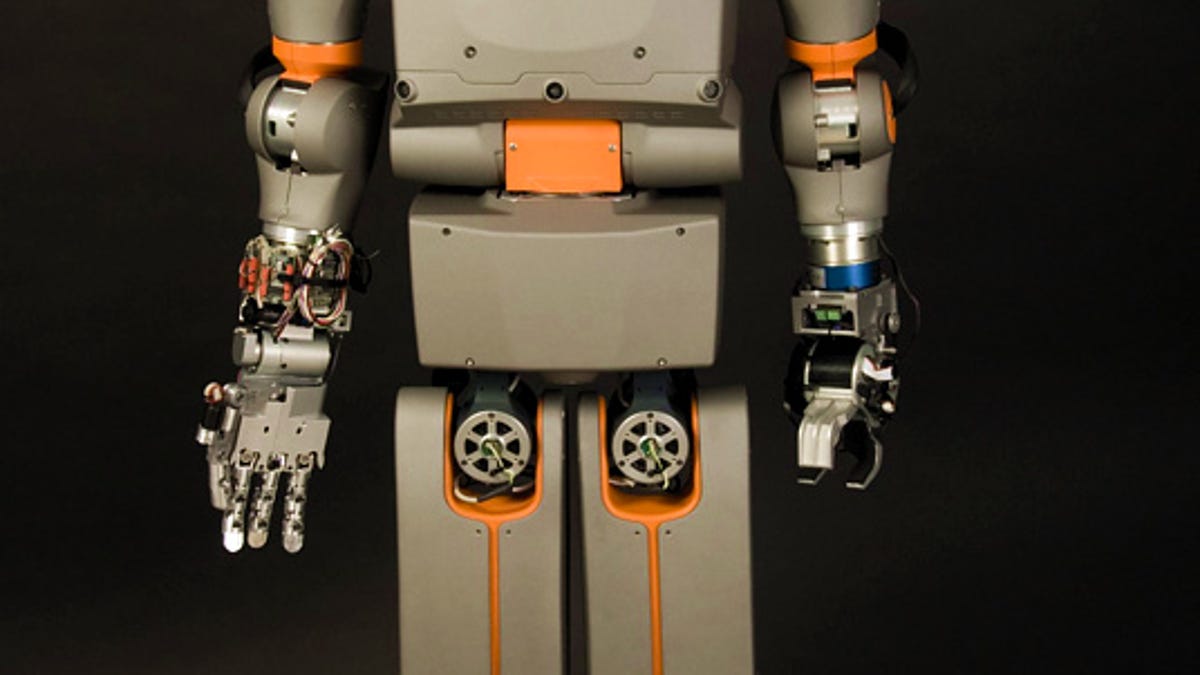
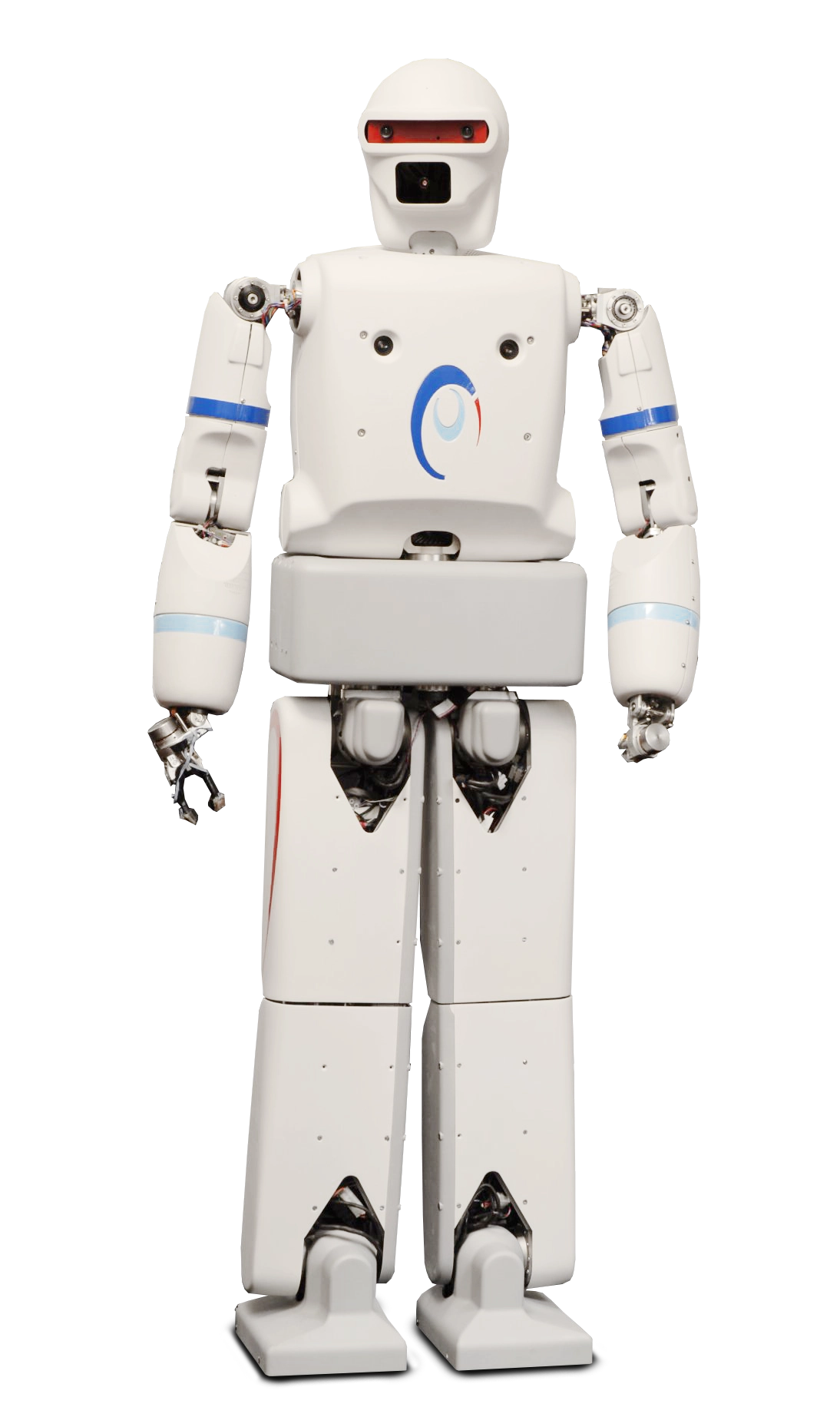
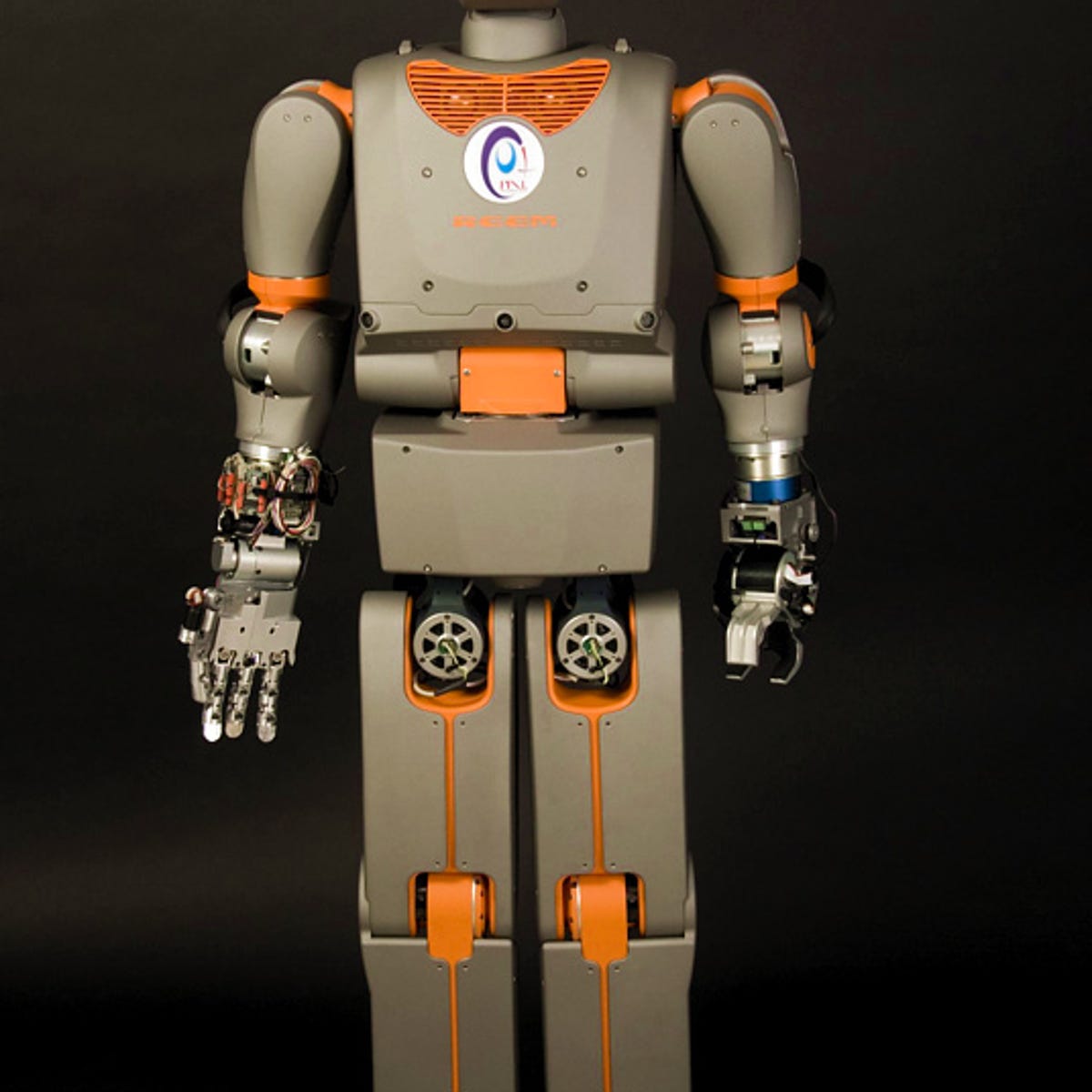
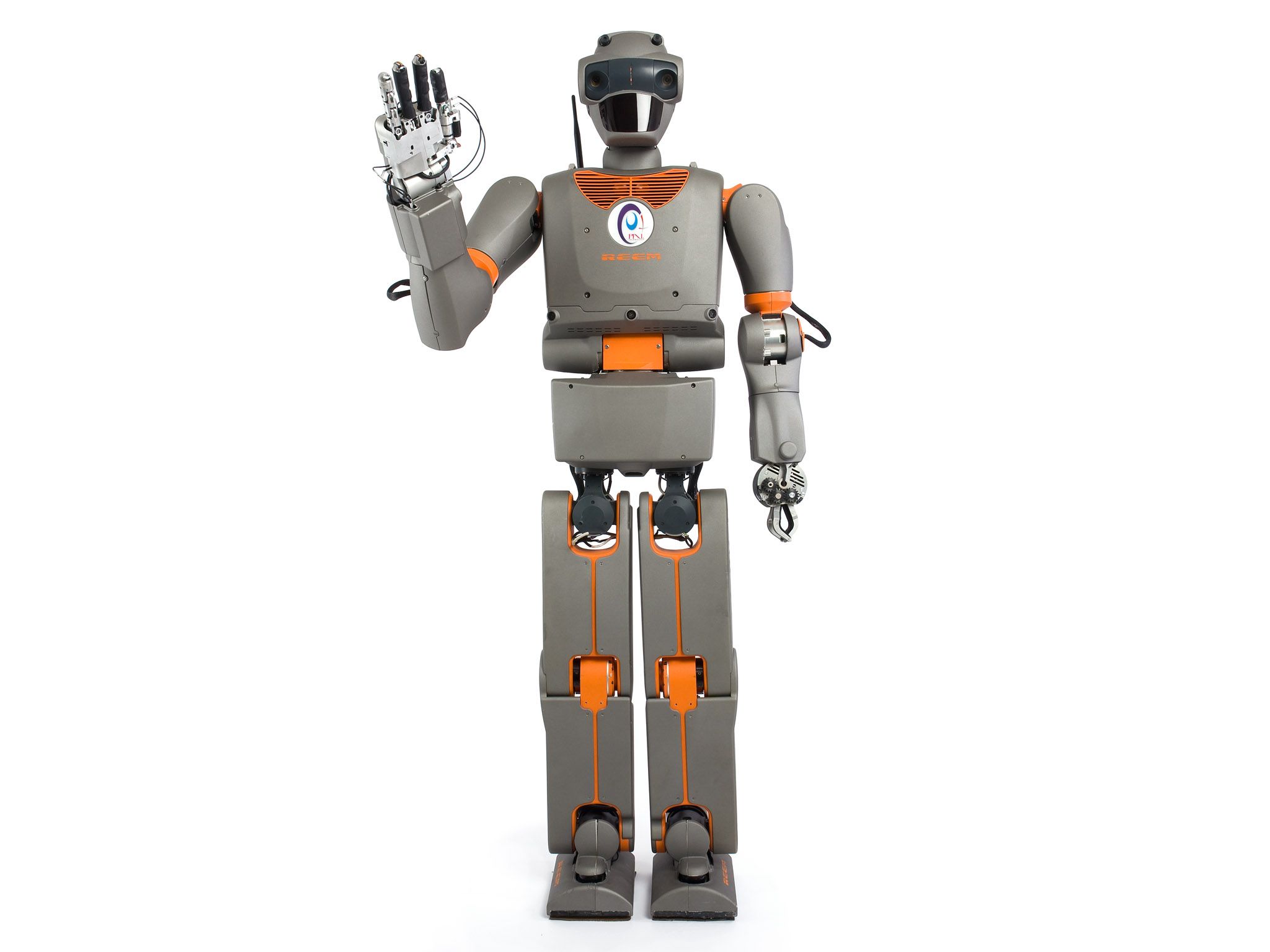
The PAL Robotics REEM-B is a full-sized bipedal humanoid robot developed as a research platform by PAL Robotics in Barcelona, Spain. Introduced in 2008, it was the second generation of the REEM series, designed for advanced bipedal locomotion, human-robot interaction, and autonomous navigation research. With 41 degrees of freedom driven by DC motors with harmonic drives, it featured an elaborate sensor suite including laser range finders in the feet, stereo cameras, an IMU, microphones, and force-torque sensors. The robot could manipulate payloads up to 12 kg in its arms and processed data through an on‑board dual‑core PC running Ubuntu Linux. Unlike later commercial platforms, REEM‑B was never sold; it remained a dedicated research testbed for walking algorithms, mapping, and collaborative tasks, laying the groundwork for PAL’s subsequent bipedal humanoids.
Specifications
Here are the full technical specifications.
| Spec | Value |
|---|---|
| Height | Not specified |
| Weight | Not specified |
| Degrees of freedom | 41 |
| Battery life | Up to 2 hours |
| Max speed | Not specified |
| Payload | 12 kg |
| Price (new) | Not sold commercially |
| Price (used range) | N/A |
Price & Value
Used range: N/A
REEM‑B was never offered for sale; it was strictly a research prototype built by PAL Robotics for internal use and collaborative projects. No retail price was ever published, and no external sales occurred. Consequently, there is no used market—any surviving units remain with original research partners or museums. For organizations seeking a bipedal humanoid platform today, modern alternatives like PAL’s own REEM‑C, Unitree H1, or Agility Robotics Digit offer commercial availability with far more mature walking capabilities. As a piece of robotics history, REEM‑B’s legacy lies in the knowledge it generated, not in any residual monetary value. The total cost of ownership is irrelevant because it was never a product; evaluating it purely as a research artifact, its influence on later development makes it significant but not purchasable.
Who Is It For?
Best for: - University robotics labs (historically used for bipedal walking and multi‑modal interaction research with a strong open‑source Linux environment) - Historians and museums of robotics (an early European humanoid with documented conference appearances)
Not for: - Commercial deployment (never sold, never intended for production tasks; lacks certifications) - Outdoor or rough‑terrain operation (limited walking speed and stability, especially on uneven ground)
Alternatives & Comparison
During its active years (2008–early 2010s), REEM‑B competed for research attention with other humanoid platforms like Honda’s ASIMO and Kawada’s HRP‑2. Today, all three are discontinued, but they serve as important historical comparisons.
| Model | Price | Available | Key Difference |
|---|---|---|---|
| Honda ASIMO | Not sold commercially | no | Smoother gait, higher walking speed, and more polished balancing; but heavier and completely closed to outside researchers. |
| Kawada HRP‑2 | Not sold commercially | no | Open architecture and widely used in the DARPA Robotics Challenge; later sold as a research platform by Kawada, providing a more walkable alternative for labs. |
Verdict: For researchers in 2008, REEM‑B offered a compelling European option with strong payload capacity and an open‑source Linux stack, but its walking performance lagged behind ASIMO. HRP‑2 won the openness competition, becoming the de facto standard for DRC participants. Today, all three are obsolete; if you need a bipedal research humanoid, the PAL REEM‑C or Unitree H1 are the modern successors. REEM‑B remains a respected historical milestone that paved the way for later commercialized bipeds.
Use Cases & Capabilities
Bipedal Locomotion Research
REEM‑B was built to test walking pattern generation, dynamic balance, and push recovery in a full‑scale humanoid. Its 41 DOF and DC motors with harmonic drives allowed researchers to implement and validate zero‑moment point (ZMP) algorithms. Although its walking speed was slower than ASIMO, the platform provided an accessible Linux‑based architecture for iterative algorithm testing. Labs could integrate additional foot‑mounted laser range finders to refine footstep planning on flat surfaces. The 12 kg payload capacity also meant researchers could evaluate walking while carrying loads, a rare capability at the time. Today, these experiments informed the locomotion stack of later PAL bipeds.
Human‑Robot Interaction Studies
Equipped with stereo cameras, microphones, and a full head DOF, REEM‑B was used to explore natural human‑robot communication and social cue recognition. Its human‑scale stature made it plausible for face‑to‑face interaction experiments. Researchers could program speech synthesis and gesture generation to study how people respond to a bipedal robot. The on‑board Ubuntu PC enabled rapid prototyping of interaction scripts without external compute clusters. While vision‑based person tracking was limited by the 2008‑era hardware, the platform provided valuable data on proxemics and engagement that influenced PAL’s later service robots like TIAGo. It remains a case study in designing interactive bipeds.
Navigation and Mapping Testing
With laser range finders in both feet and an IMU, REEM‑B supported simultaneous localization and mapping (SLAM) research in indoor environments. The dual‑core PC could run grid‑based SLAM algorithms in real time, and the bipedal gait introduced unique motion‑blur challenges for mapping. Researchers used the platform to develop foot‑odometry fusion techniques that compensated for drift during walking. The sensor suite also enabled 3D reconstruction of rooms, providing a mobile perception testbed. These experiments directly fed into the navigation capabilities of the later REEM‑C and the TIAGo mobile manipulator. Its legacy in bipedal SLAM is referenced in several conference papers.
Payload Manipulation Development
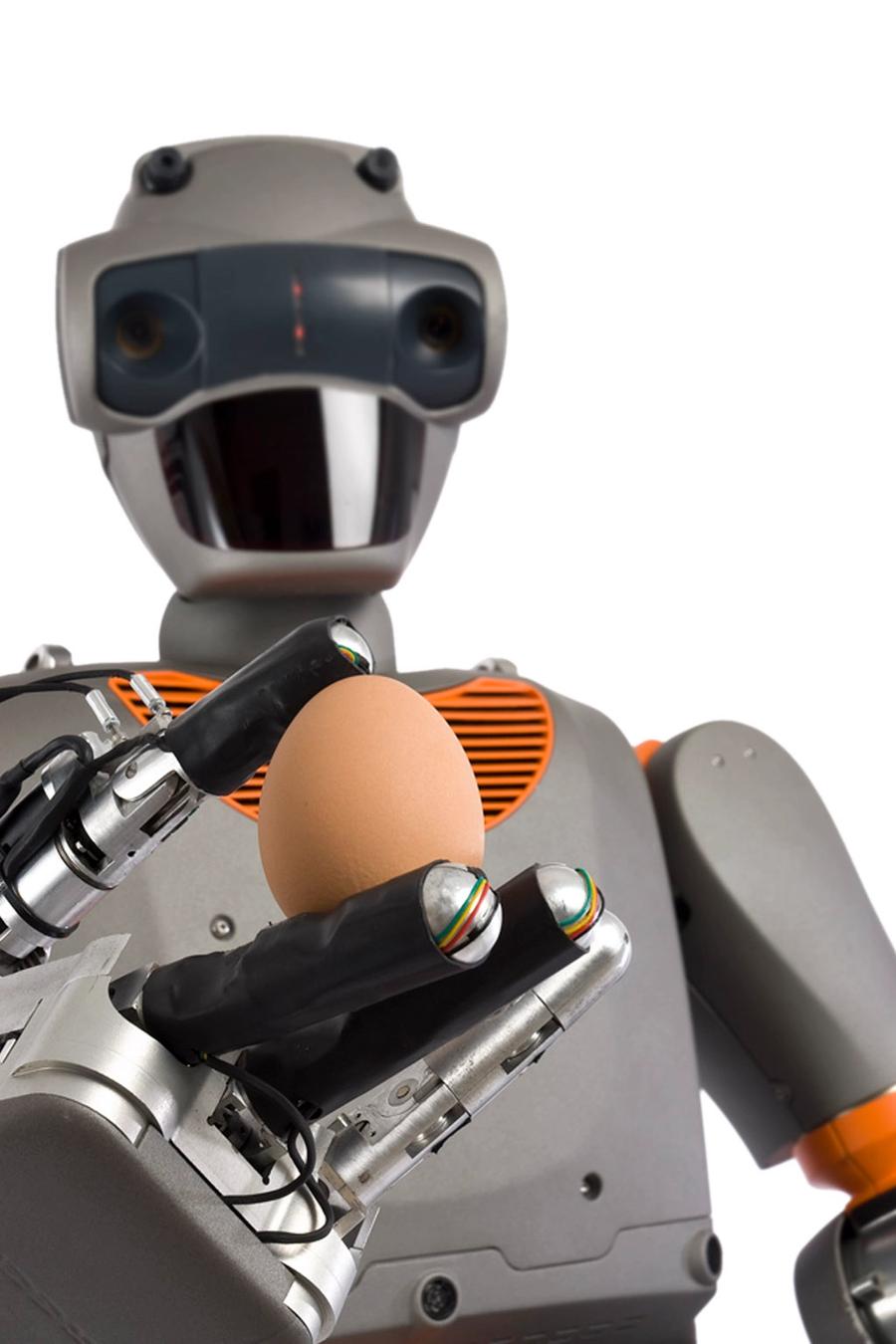
REEM‑B could grasp and carry objects up to 12 kg using its dexterous hands and force‑torque sensors, enabling research in whole‑body manipulation. Combined with bipedal walking, it allowed testing of coordinated arm‑leg motions for tasks like carrying a table or opening a door. The integrated force‑torque feedback helped evaluate compliance control strategies. Although its end‑effectors were not as advanced as modern grippers, the 12 kg payload was impressive for a 2008 biped and rivaled larger industrial platforms. This payload capability directly influenced the design goals of the subsequent REEM‑C, which maintained a similar arm payload. The work showcased early whole‑body teleoperation and autonomous pick‑and‑place.
History & Background
PAL Robotics was founded in 2004 in Barcelona, Spain, by a team of engineers inspired by the DARPA Grand Challenge to create human‑centered robots. After an initial wheeled platform (REEM‑A), the company unveiled REEM‑B in 2008 as its first full‑size bipedal humanoid. The robot was designed as a research platform to compete with Honda’s ASIMO by offering European researchers an open, programmable biped with a 12 kg arm payload and up to 2 hours of battery life. REEM‑B was demonstrated at major robotics conferences and served as a testbed for walking algorithms and autonomous navigation. However, its walking speed and stability on uneven terrain remained behind its competitors. The lessons learned directly fed into the REEM‑C, a more refined biped that later became PAL’s first commercially available humanoid. REEM‑B was retired in the early 2010s as PAL shifted focus to wheeled service robots (TIAGo) and eventually the TALOS biped. Today it is preserved as an important milestone in European humanoid robotics.
Buying Used — What to Check
Verify controller functionality After 15+ years, the on‑board dual‑core PC and motor controllers may have failed, and replacement parts are non‑existent since REEM‑B was never a commercial product.
Check sensor integrity Laser range finders, stereo cameras, and force‑torque sensors are likely degraded or missing; sourcing original spares is impossible.
Confirm documentation availability Without original manuals and source code, the platform’s research value is severely limited; surviving units often lack these.