What is the Pal Talos?
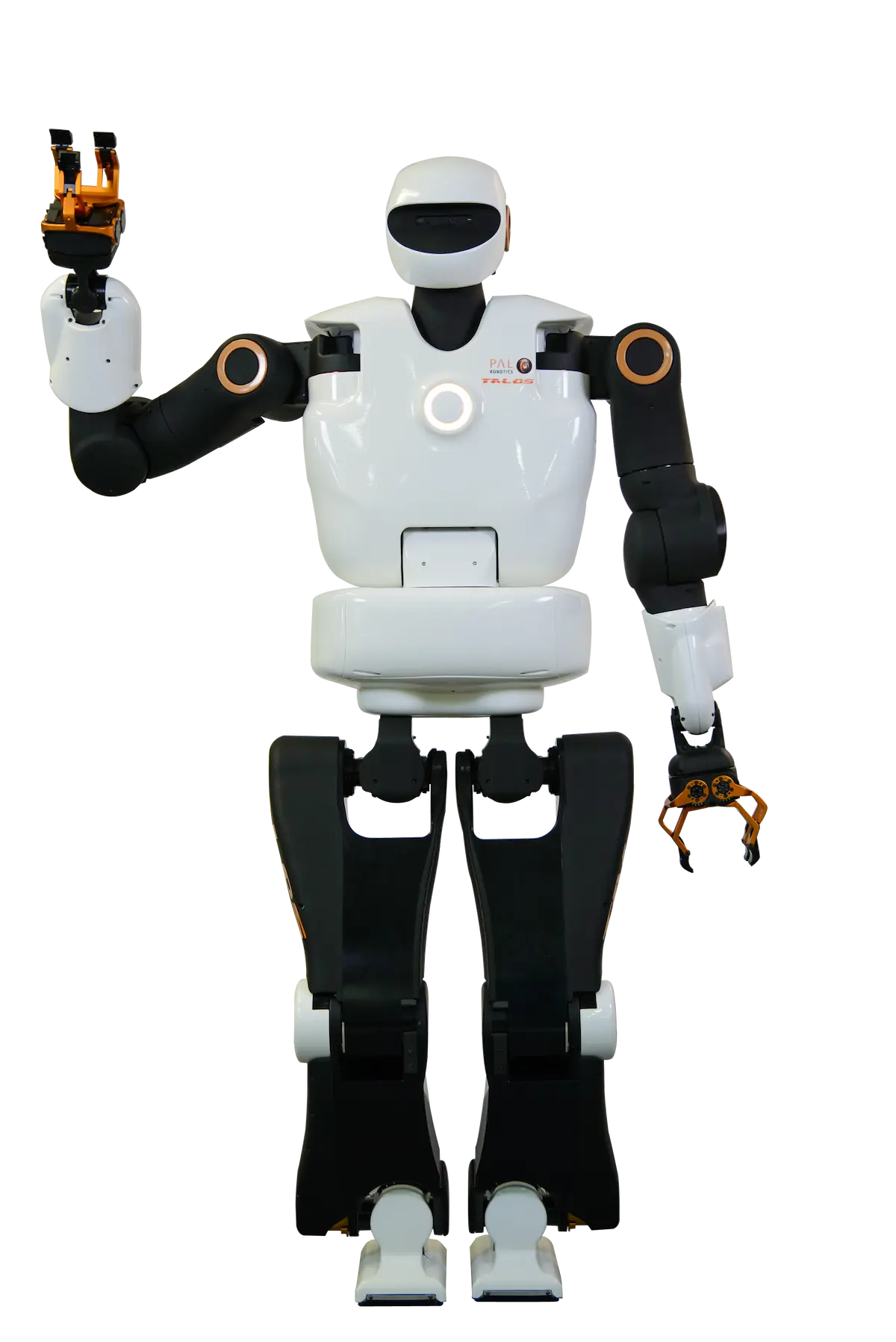
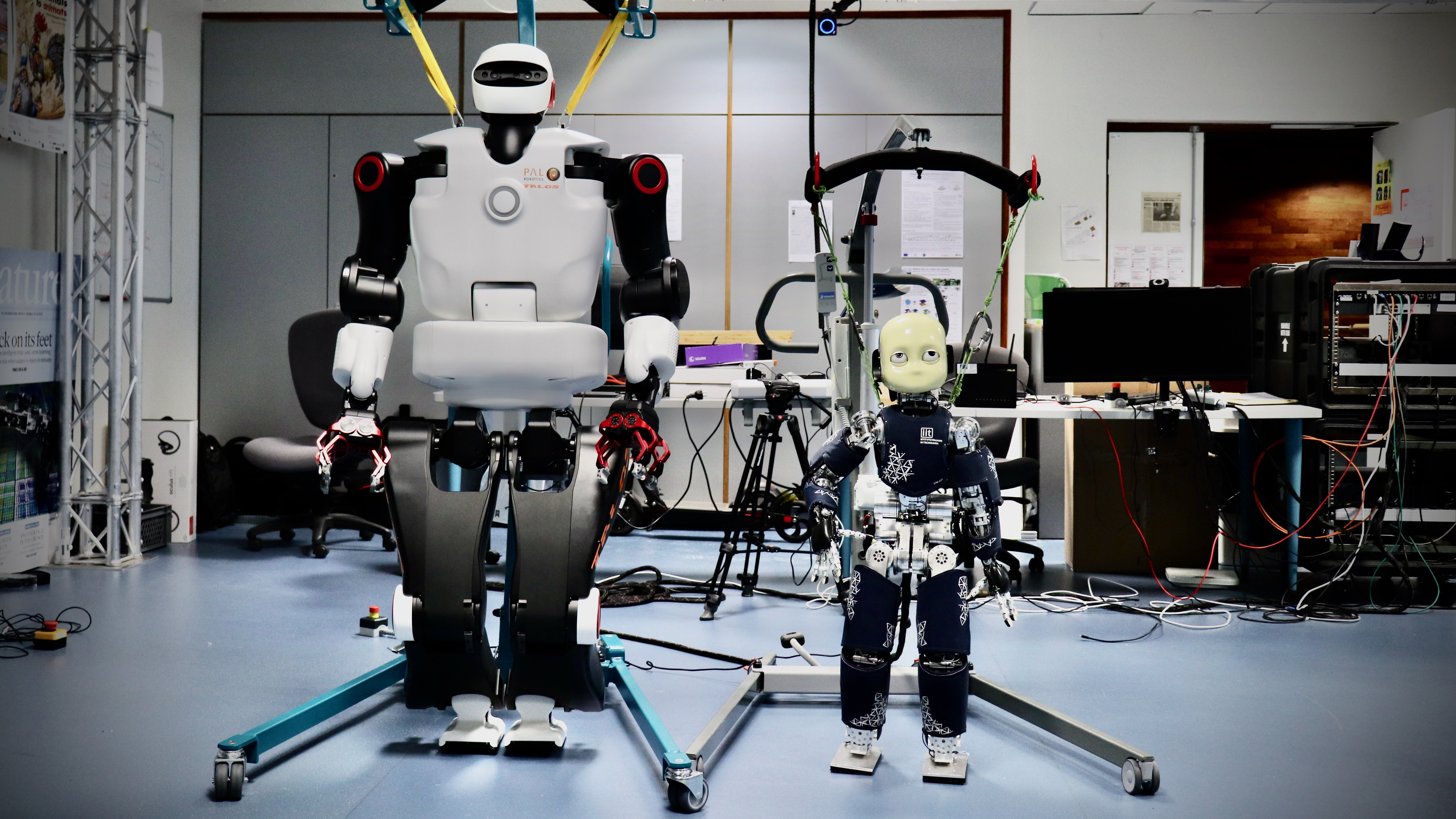
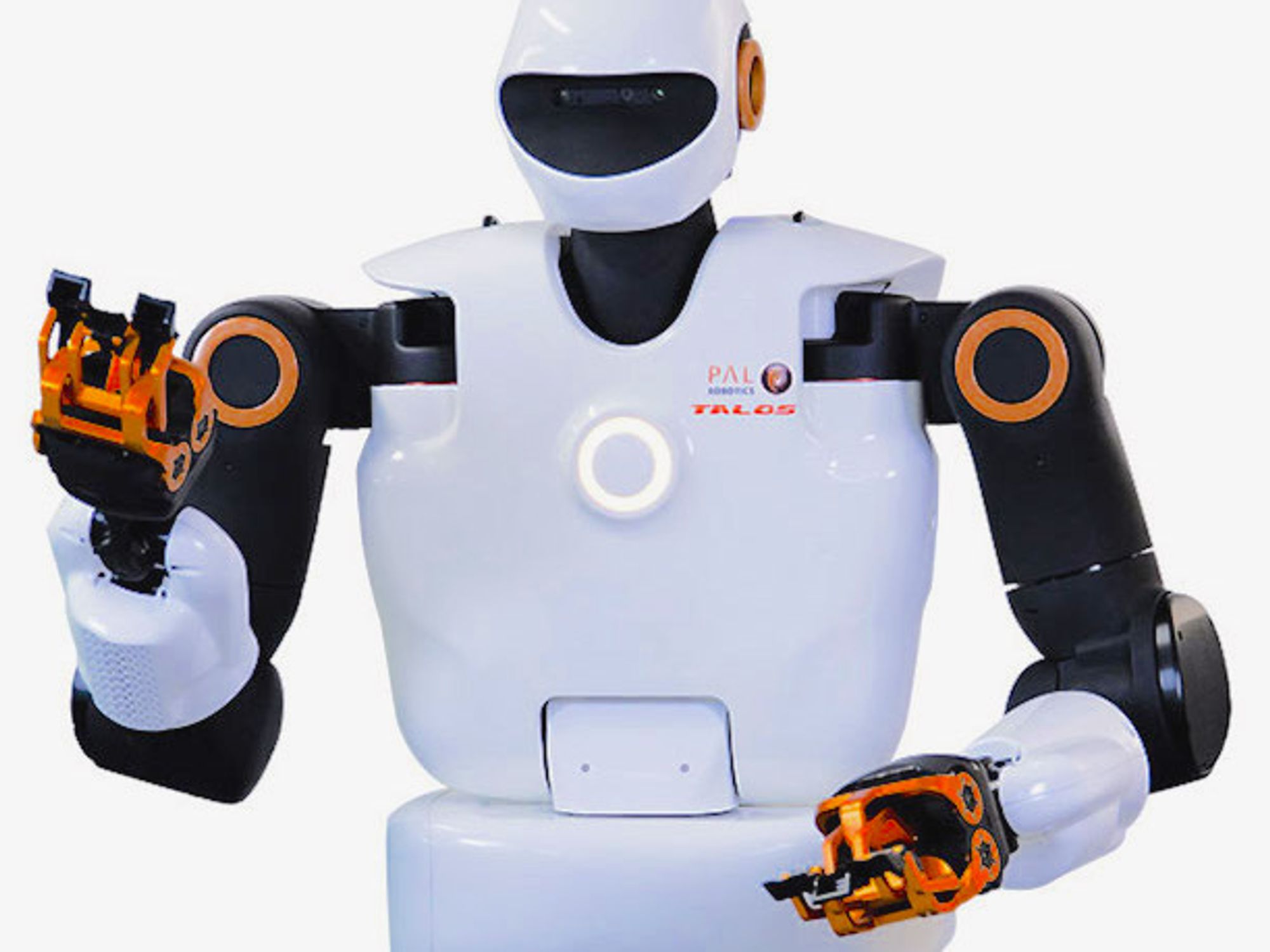
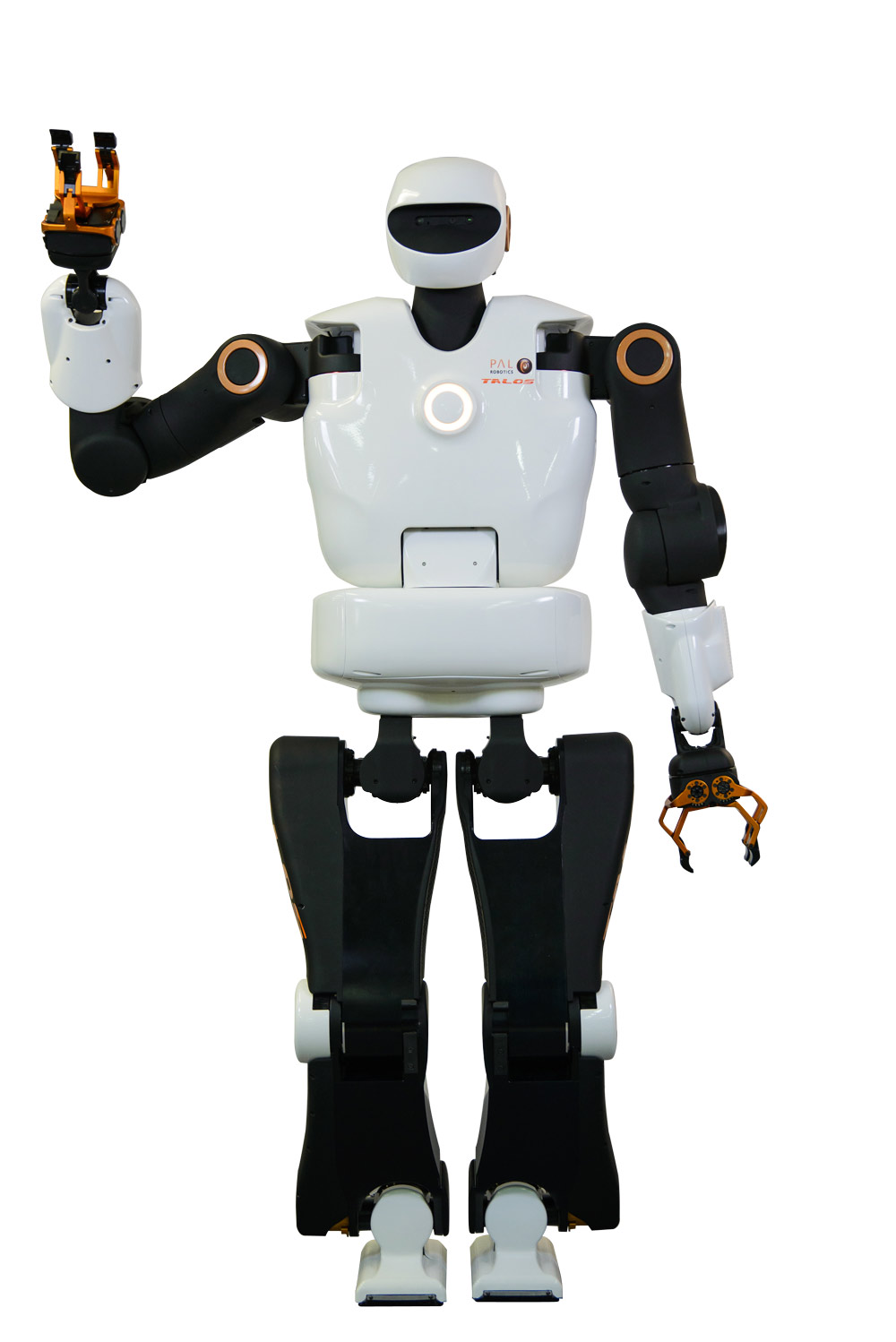
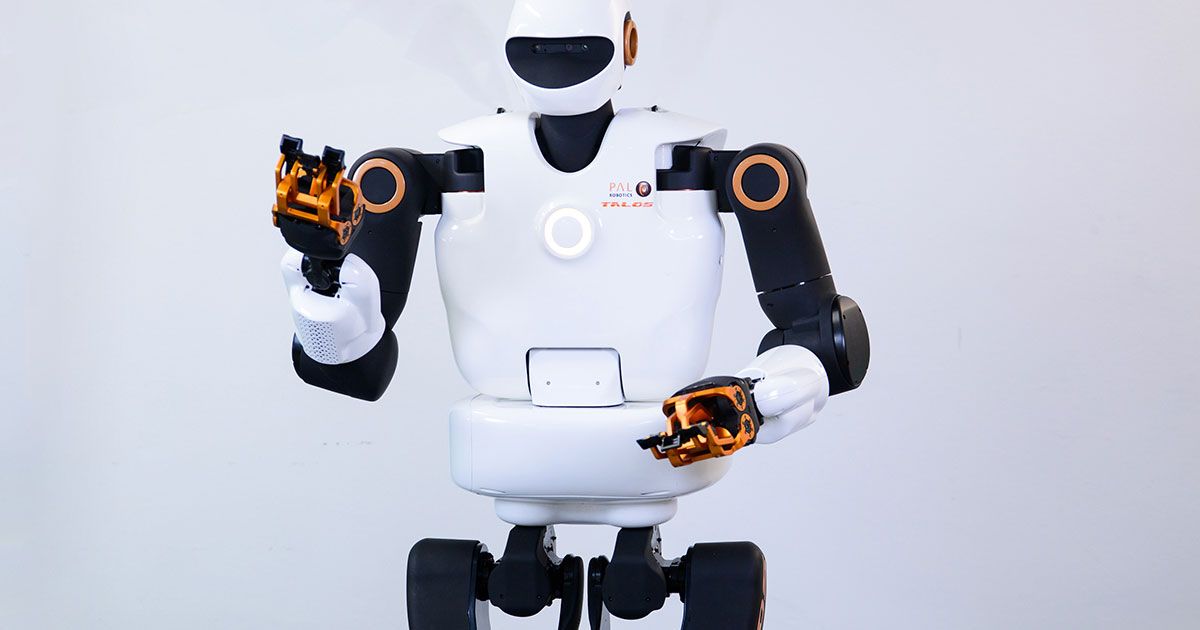
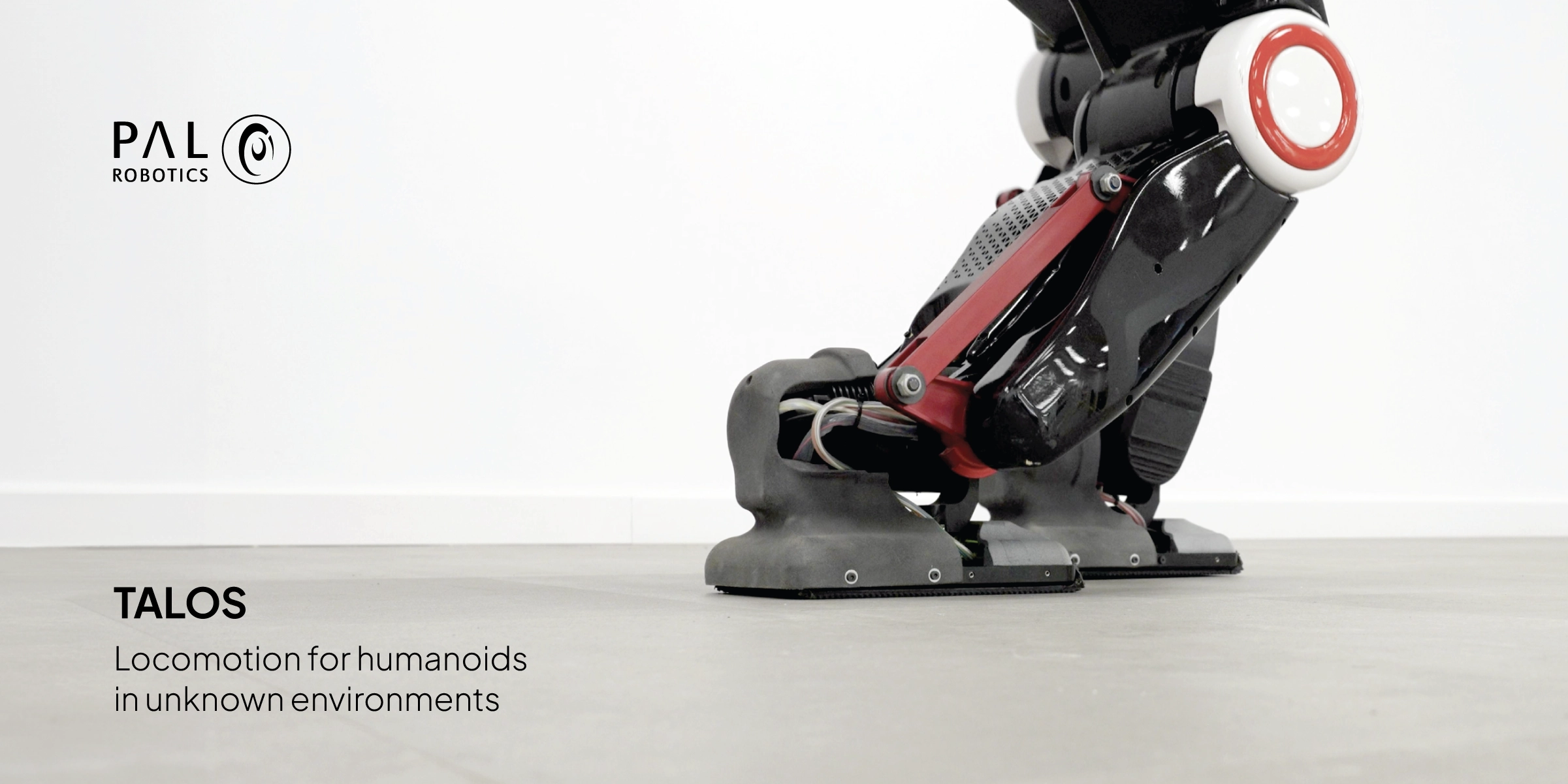
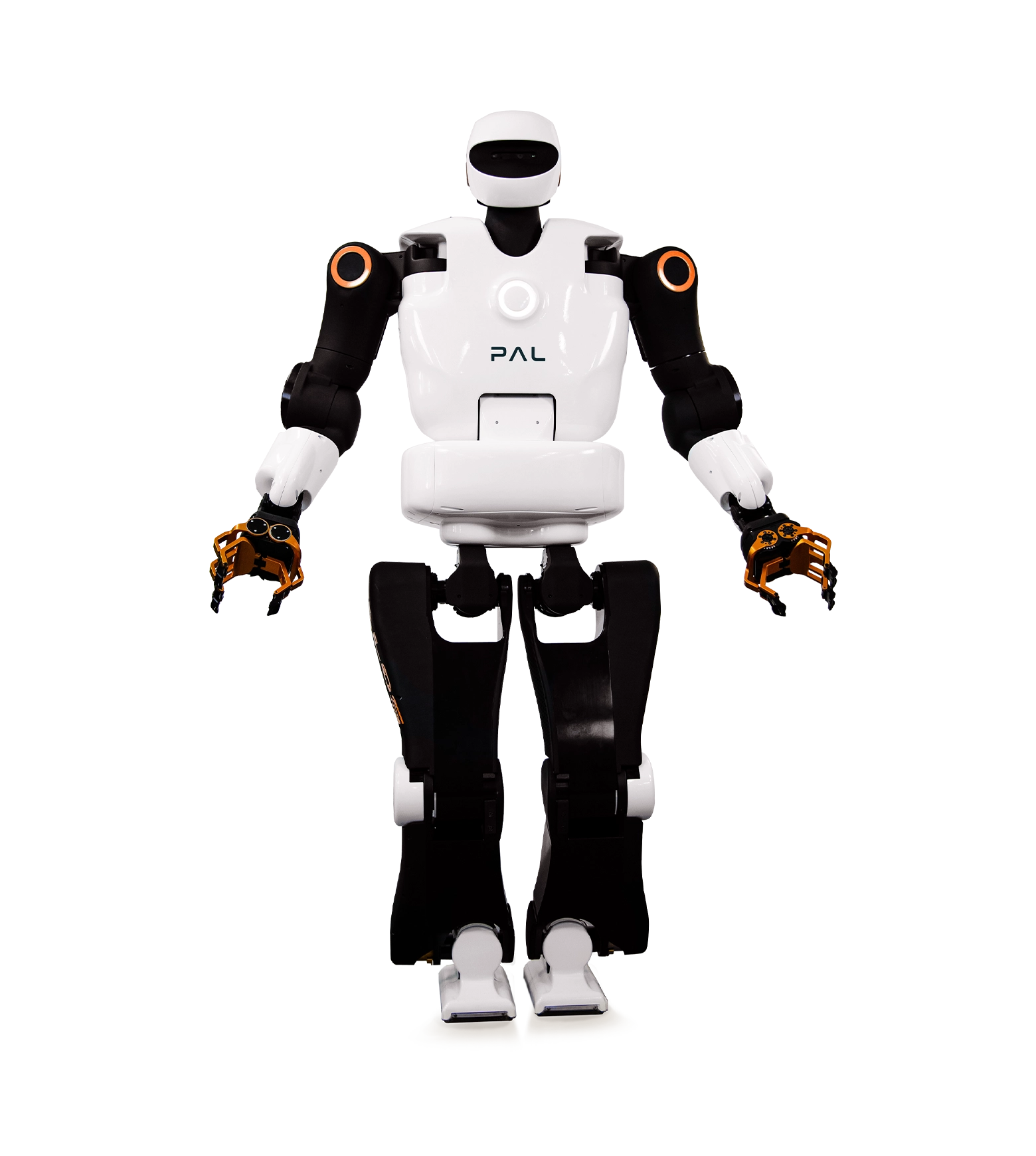
The TALOS is a full-size bipedal humanoid robot from PAL Robotics, based in Barcelona, Spain. Launched in 2017, it features 32 torque-controlled degrees of freedom, enabling advanced whole-body control, dynamic locomotion, and dexterous manipulation. Standing 1.75 m tall and weighing 95 kg, TALOS is built on a rugged aluminum and carbon-fiber frame, using custom actuation that delivers a 6 kg arm payload. It integrates dual Intel Core i7 computers running ROS on Ubuntu Linux, with a sensor suite including stereo cameras, LIDAR, IMU, and torque sensors in every joint. TALOS is designed as a research platform for whole-body control and industrial tool use, capable of walking at up to 3 km/h and operating standard tools such as power drills and screwdrivers. It remains a benchmark humanoid for university labs and industrial R&D teams testing next-generation manipulation and locomotion algorithms.
Specifications
Here are the full technical specifications.
| Spec | Value |
|---|---|
| Height | 1.75 m |
| Weight | 95 kg |
| Degrees of freedom | 32 |
| Battery life | 2 hours |
| Max speed | 3 km/h |
| Payload | 6 kg (arm) |
| Price (new) | Undisclosed (contact manufacturer) |
| Price (used range) | N/A (no used market yet) |
Price & Value
New MSRP: Undisclosed (contact manufacturer)
Used range: N/A (no used market yet)
PAL Robotics does not publicly disclose TALOS pricing; it is sold via private quotation to research institutions and industrial partners. Based on comparable high-end humanoid platforms, the estimated cost is between $500,000 and $1,000,000. This positions TALOS at the premium end of the market, alongside platforms like the HRP-5P and NASA Valkyrie. Despite the high upfront cost, the platform's torque-sensing and dual-compute architecture offer unique research capabilities, potentially justifying investment in whole-body control studies. Used units are extremely rare; any that appear will likely retain a high residual value due to limited production. Prospective buyers should budget for additional integration, software licensing, and maintenance contracts. Considering the specialized nature, TALOS is a long-term investment for labs focused on torque-controlled humanoid research.
Who Is It For?
Best for: - University robotics labs (32 DOF and torque sensing enable dexterous manipulation and locomotion research) - Industrial R&D departments testing humanoid-assisted assembly (6 kg arm payload allows tool use) - Federal research agencies requiring a humanoid platform for whole-body control experiments
Not for: - Small businesses or hobbyists (extremely high cost and complex maintenance) - Projects needing high walking speed (limited to 3 km/h) - Buyers seeking an off-the-shelf solution for concrete tasks (requires heavy customization and software development)
Alternatives & Comparison
The TALOS occupies a niche among high-end torque-controlled humanoid research platforms. Primary alternatives include the Unitree H1 and HRP-5P.
| Model | Price | Available | Key Difference |
|---|---|---|---|
| Unitree H1 | $90,000 | yes | Position-controlled actuators; lower cost but lacks whole-body torque sensing for advanced control research. |
| HRP-5P | Undisclosed (research platform, not commercial) | no | Similar torque-controlled humanoid from AIST Japan; not sold, only available for collaborative projects. |
Verdict: For budget-constrained labs focusing on locomotion, the Unitree H1 offers a far lower entry price, but it cannot replicate TALOS’s torque-based control experiments. TALOS remains the best available torque-controlled humanoid for research, albeit at a steep cost. If whole-body torque sensing and industrial manipulation are essential, TALOS is the clear winner.
Use Cases & Capabilities
Whole-Body Control & Locomotion Research
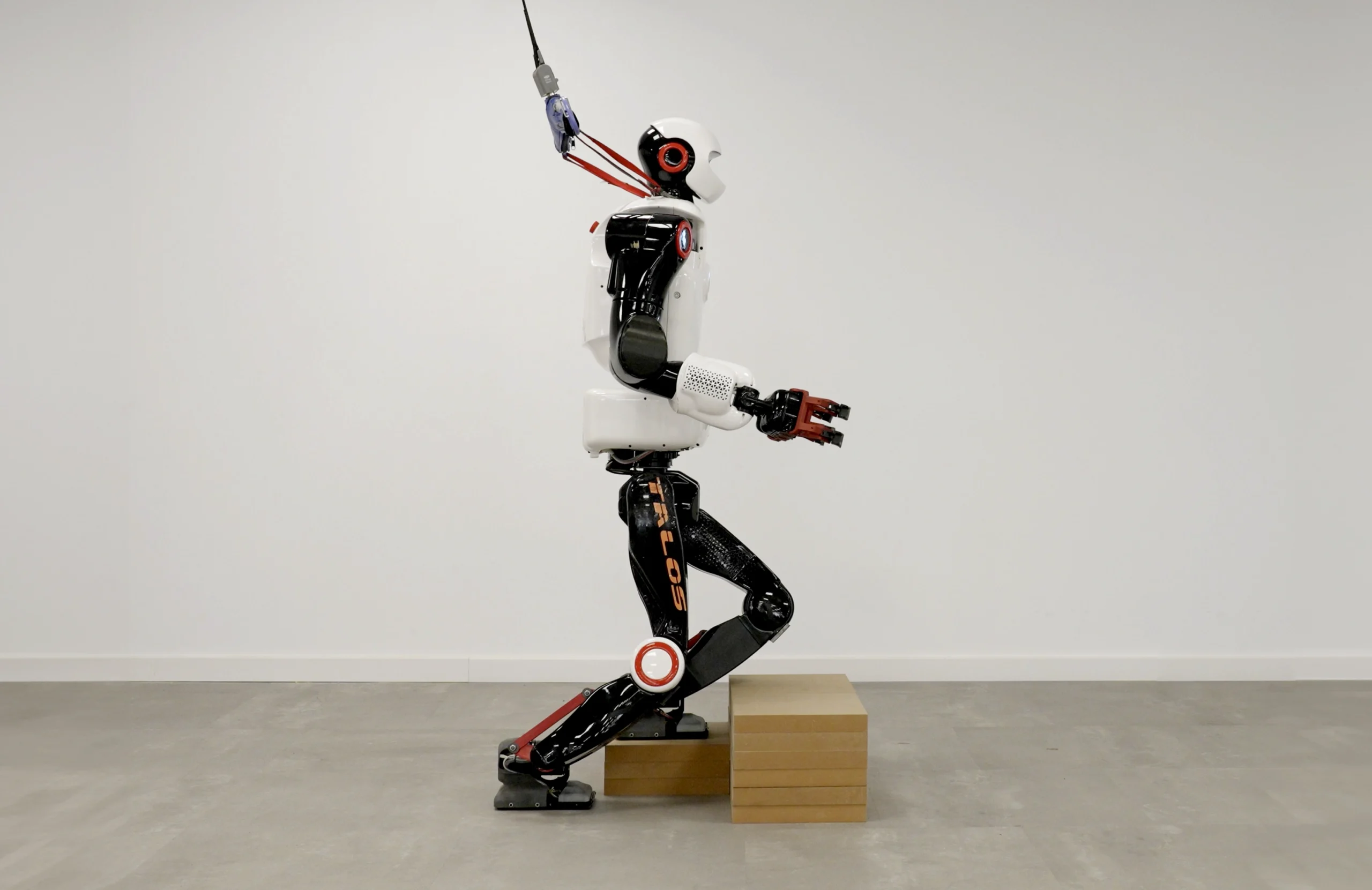
TALOS is a premier platform for whole-body control algorithms, thanks to its full torque sensing across all 32 joints. Researchers can explore dynamic walking, push recovery, and multi-contact locomotion. Its dual Intel i7 computers allow high-bandwidth control loops, enabling real-time balancing and gait optimization. The platform’s modular ROS-based software stack facilitates custom controller implementation. Studies often focus on bipedal locomotion over uneven terrain and stairs, with torque feedback guaranteeing compliant, safe motion.
Industrial Tool Use & Manipulation
TALOS’s 6 kg arm payload and torque-controlled gripper enable the use of standard industrial tools such as power drills and screwdrivers. Research labs program the robot to perform assembly sequences, tightening screws in hard-to-reach positions. The whole-body coordination allows leveraging the robot’s torso and legs for stable base during high-force tasks. PAL Robotics has demonstrated drilling and valve-turning operations, showing applicability for manufacturing and maintenance. This capability makes TALOS a testbed for future humanoid workers in construction and heavy industry.
Teleoperation & Hazardous Environment Training
TALOS can be teleoperated for applications in environments unsafe for humans, such as nuclear facilities or disaster sites. Its sensor suite, including stereo cameras and LIDAR, provides operators with full situational awareness. The torque-controlled joints enable compliant behavior, reducing risk of damage during unexpected collisions. Researchers integrate haptic feedback to improve operator dexterity for fine manipulation tasks. TALOS’s robustness and power make it a candidate for future deployments in extreme environments once autonomy improves.
Gait and Stability Benchmarking
Because TALOS is a full-size humanoid with torque control, it serves as a benchmarking platform for comparing walking controllers. The robot’s consistent hardware allows labs worldwide to reproduce results. Its torque sensors enable precise measurement of ground reaction forces and joint torques, aiding in gait analysis. Researchers use TALOS to evaluate energy efficiency, minimum jerk trajectories, and perturbation recovery. The platform has been used in Eurobench to standardize bipedal locomotion testing protocols.
History & Background
PAL Robotics was founded in 2004 in Barcelona, Spain, originally as PAL Technology, and has specialized in humanoid and service robots. The TALOS (Tactical Adaptive Locomotion Operating System) was developed as part of a collaboration with multiple European research institutions and first demonstrated in 2017. It was designed to be a high-torque, high-power humanoid capable of industrial tool use, building on earlier PAL platforms like REEM. The robot uses custom actuation and dual Intel i7 computers, running ROS on Ubuntu Linux. Since its launch, TALOS has been deployed in several research programs, including the European Union's RobMoSys and Eurobench projects. It remains in production and is actively used in labs worldwide for whole-body control and manipulation research.
Buying Used — What to Check
Verify torque sensor calibration Incorrect calibration undermines whole-body control research and safe human interaction.
Check battery health and cycle count Battery degradation directly impacts the 2-hour runtime; replacement batteries are expensive.
Inspect joint play and frame integrity Heavy use can cause wear in gearboxes and carbon fiber cracks, leading to costly repairs.