What is the Promobot V4?
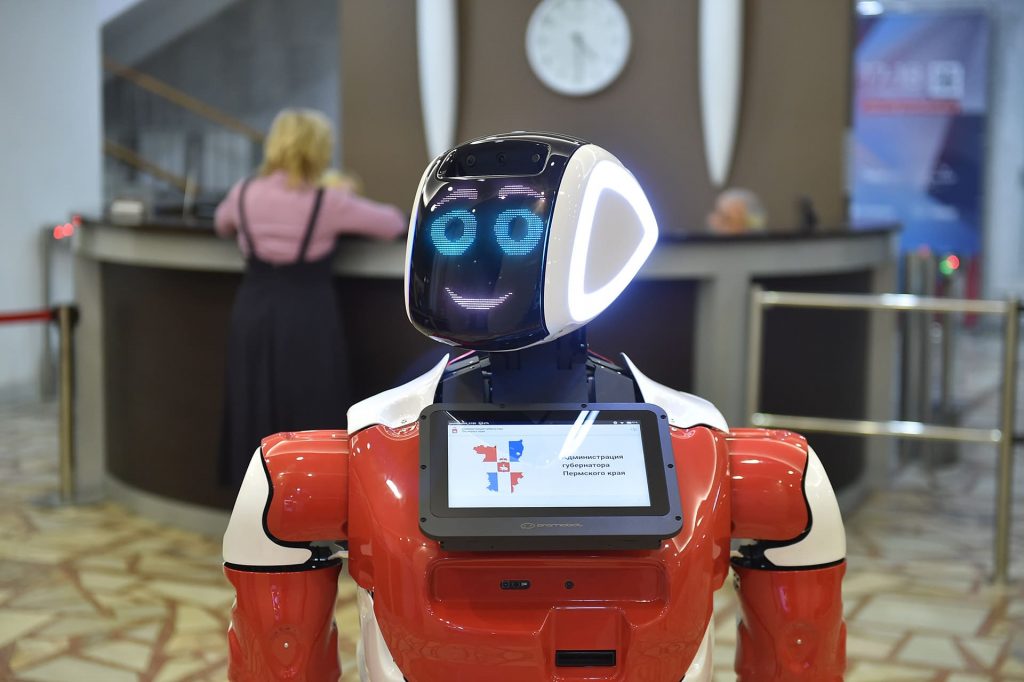
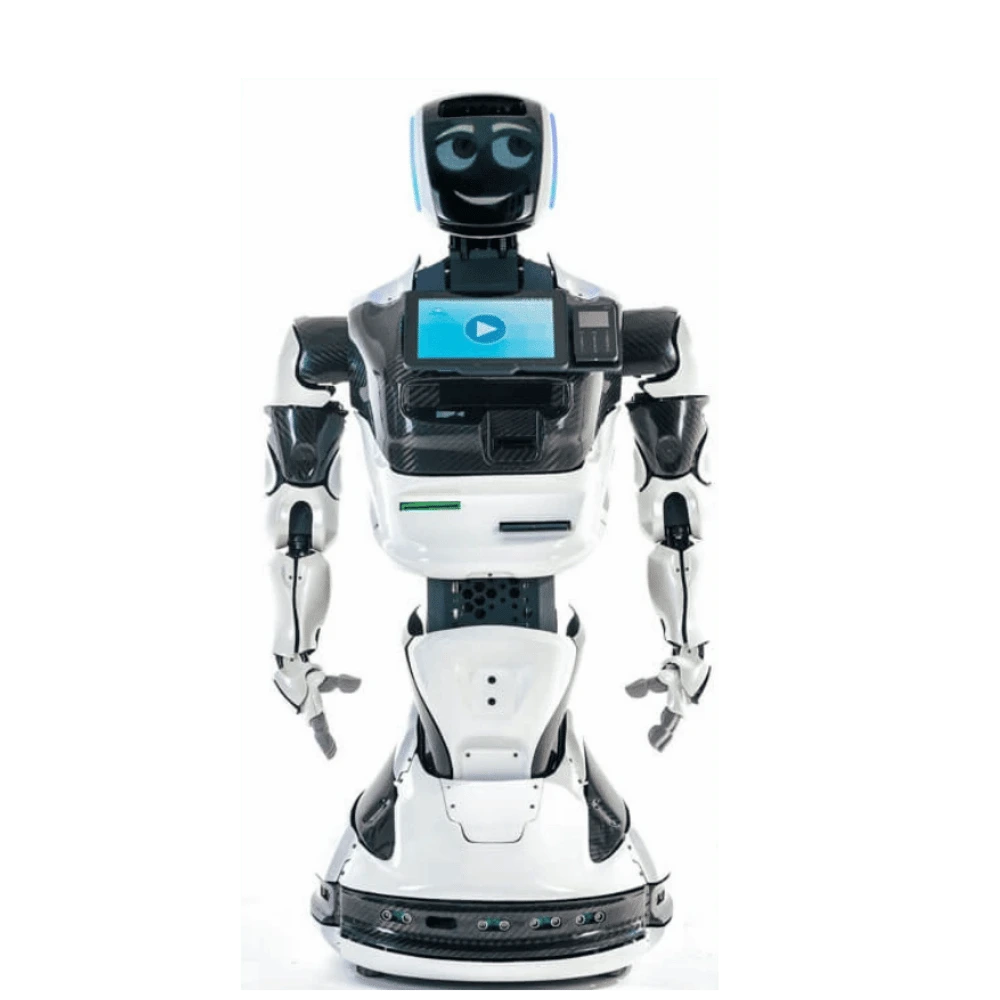
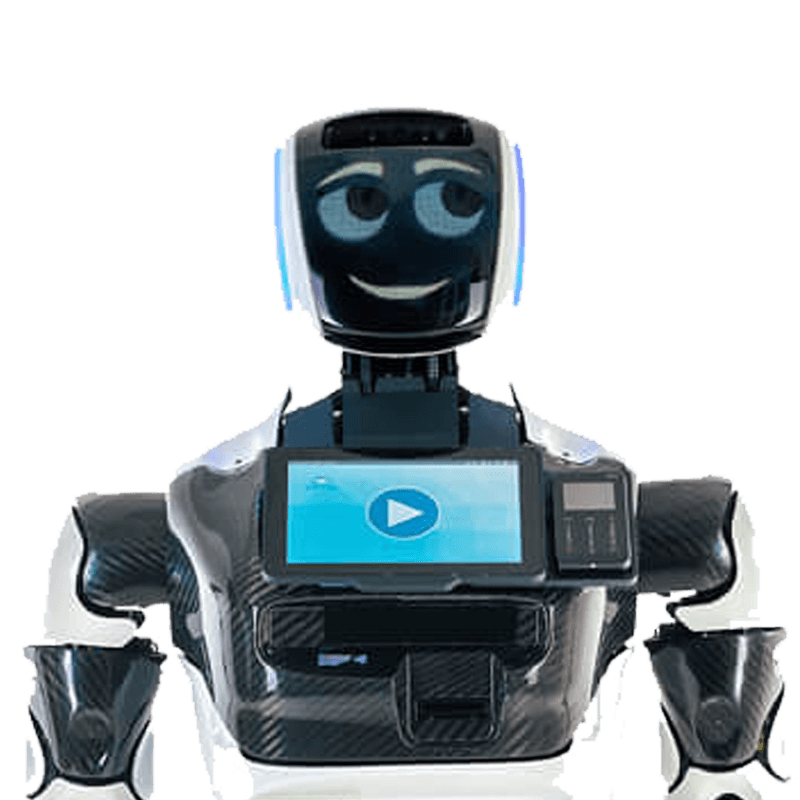
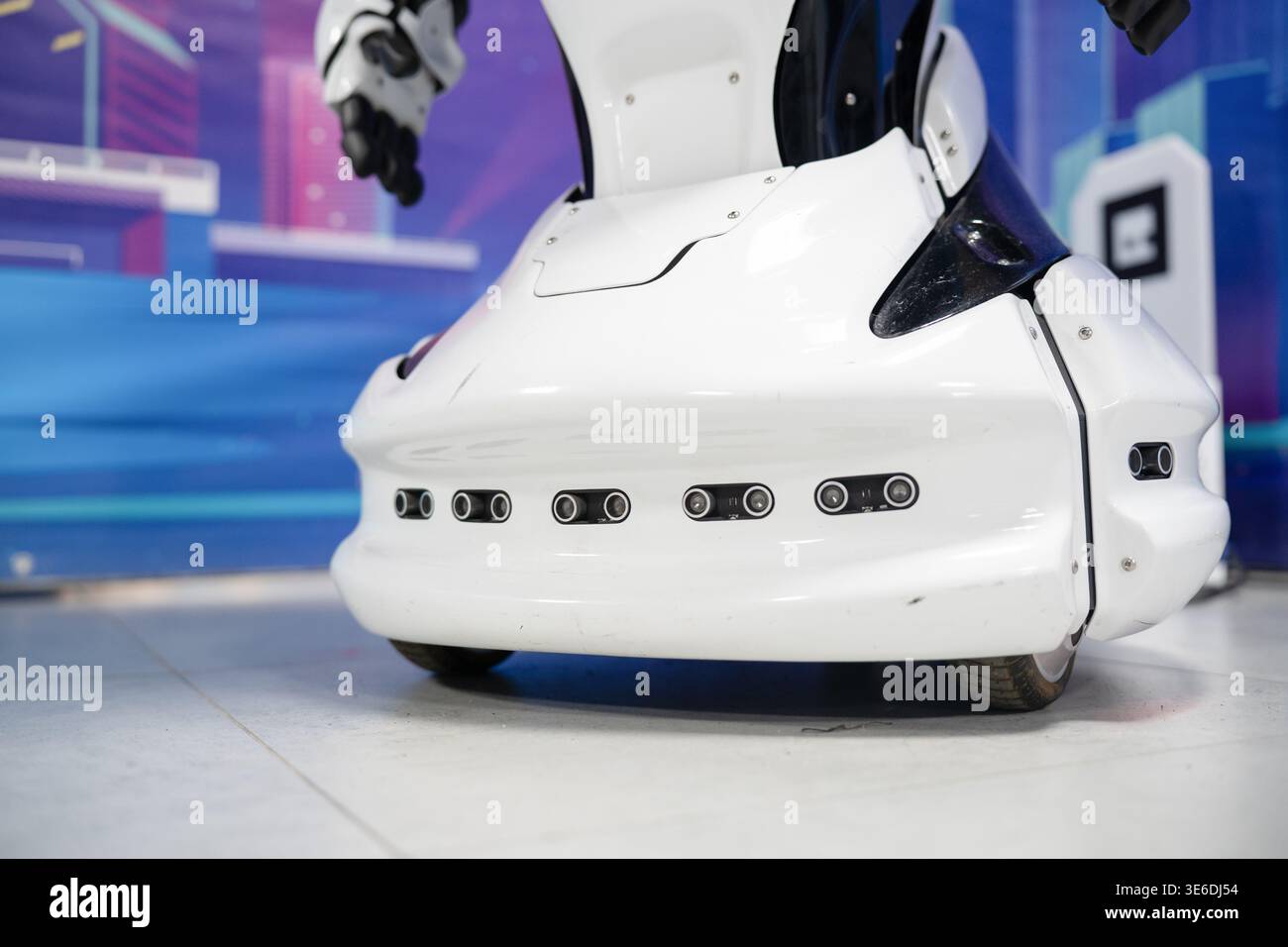
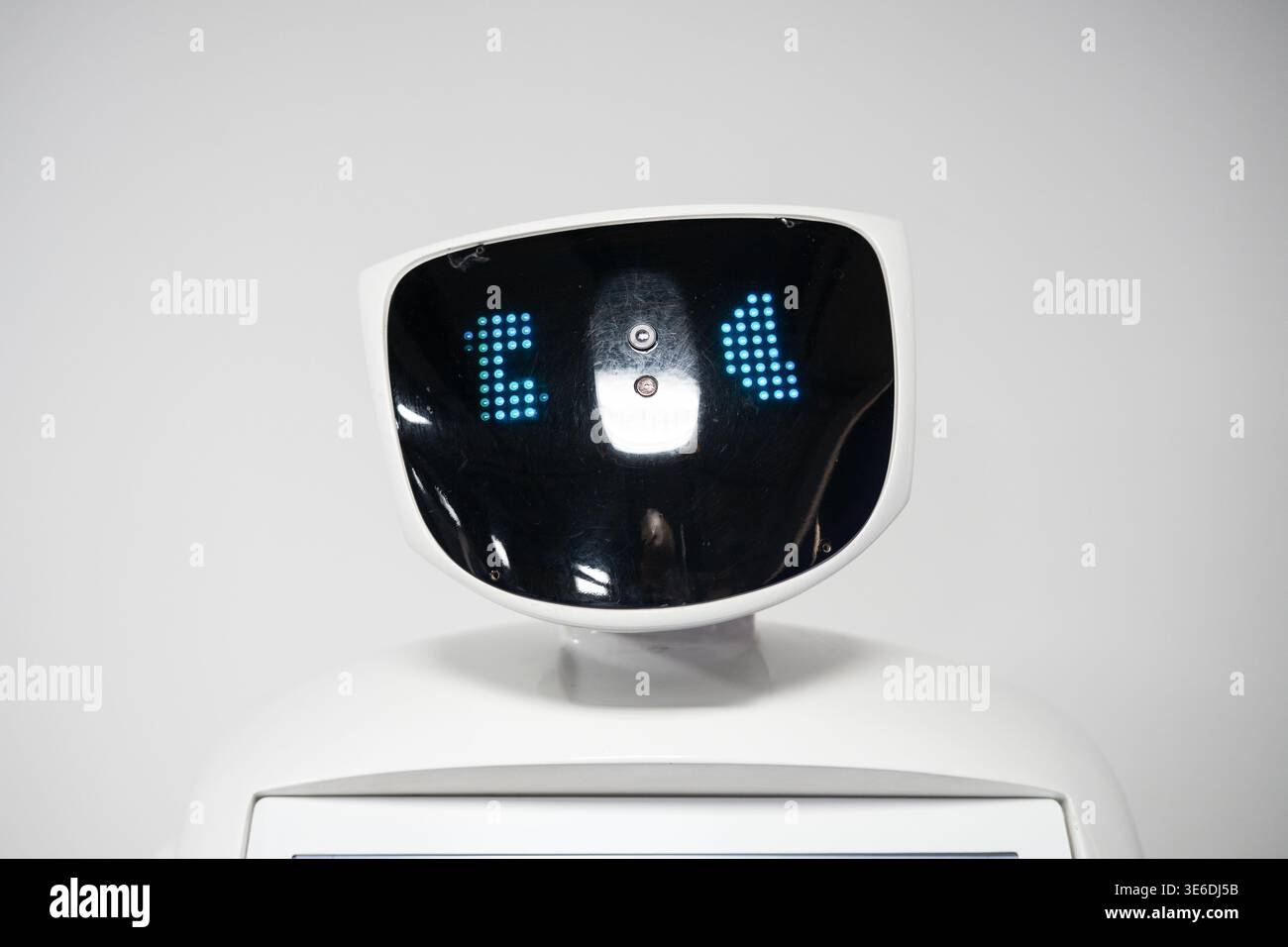
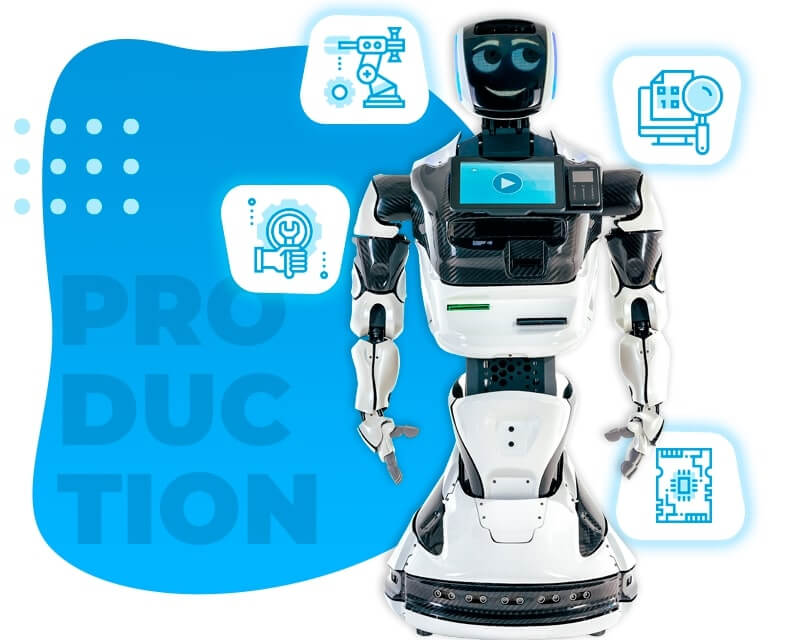
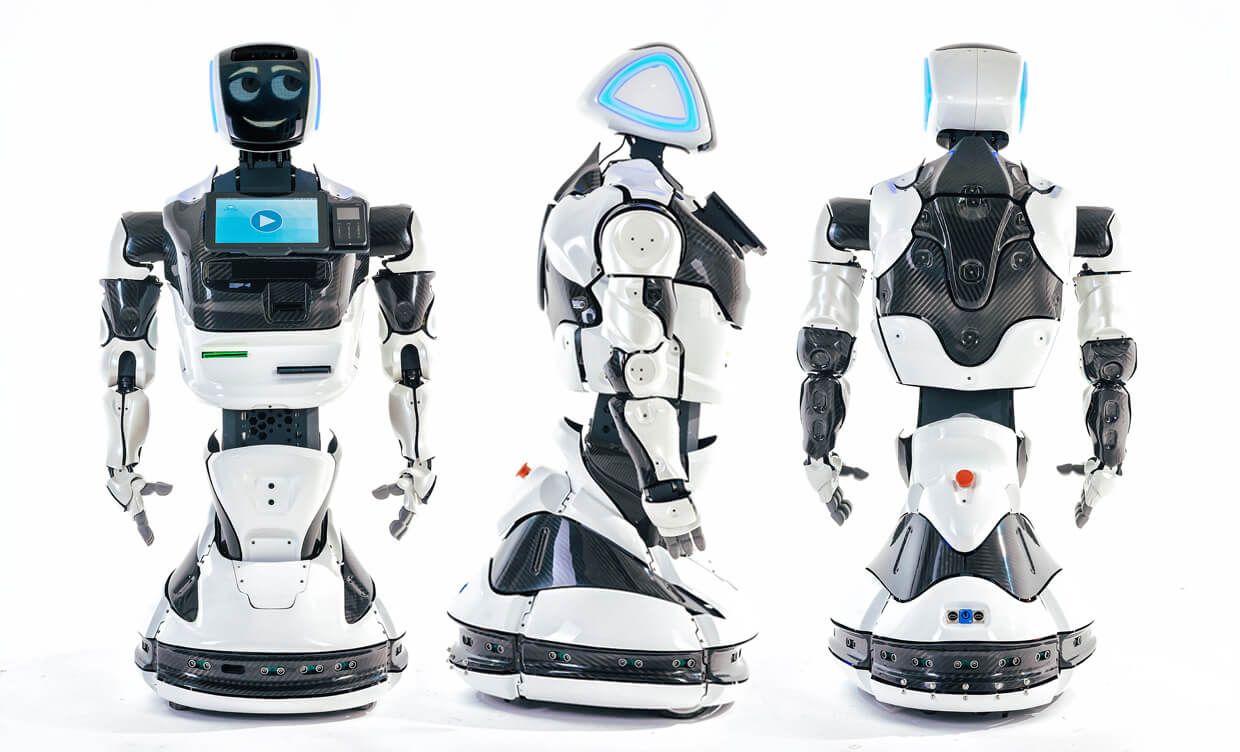
The Promobot V4 is a full-size service humanoid robot developed by Russian robotics company Promobot, headquartered in Perm, Russia. Standing 157 cm tall and weighing 70 kg, it is designed for customer-facing roles in retail, hospitality, healthcare, and corporate environments. The V4 features a 21.5-inch Full HD touchscreen on its chest for information display and interaction, while dual articulated arms with 3 degrees of freedom each enable expressive gesturing. Navigation relies on SLAM with a lidar sensor and stereo vision, and the robot includes speech recognition, voice output, and face recognition. First introduced in 2019, the V4 remains in production and is available for purchase or lease globally.
Specifications
Here are the full technical specifications.
| Spec | Value |
|---|---|
| Height | 157 cm |
| Weight | 70 kg |
| Degrees of freedom | 6 (arms, 3 per arm) |
| Battery life | 8 hours |
| Max speed | 3.6 km/h (1 m/s) |
| Payload | Not specified |
| Price (new) | $70,000 |
| Price (used range) | ~$45,000–$60,000 (est.) |
Price & Value
New MSRP: $70,000
Used range: ~$45,000–$60,000 (est.)
At $70,000, the Promobot V4 sits in the upper mid-range of service humanoids, delivering full-body presence with articulated arms — a feature missing in most competitors like SoftBank Pepper ($20,000) or Temi ($2,000). Lease and rental options lower the upfront barrier for short-term deployments, making it viable for events or seasonal promotion. Compared to similarly sized models like Sanbot Max ($10,000), the V4 justifies its premium with robust navigation (lidar + stereo vision), industrial-grade build (70 kg), and an open Linux-based OS for customization. Depreciation is moderate; units with over 1,000 operational hours typically see a 15–25% price drop. Total cost of ownership includes on-site integration services, which Promobot provides, and a spare parts network that keeps long-term maintenance manageable. For organizations needing a physically imposing, arm-gesturing humanoid, the V4’s value proposition is strong within the $100k budget bracket.
Who Is It For?
Best for: - Retail stores and shopping malls needing a high-impact greeter with gesture capabilities and interactive screen. - Corporate reception desks requiring multilingual guest greeting and wayfinding. - Event marketing teams that want a humanoid robot to attract attention and distribute digital content.
Not for: - Precision manipulation tasks — arms have only 3 DOF per arm and no end-effectors, not suitable for picking or handling objects. - Industrial or heavy-duty environments — no IP rating specified, and payload capacity is not rated for carrying loads.
Alternatives & Comparison
When evaluating the Promobot V4, buyers often consider other service humanoids and interactive kiosk robots in the $2,000–$100,000 range.
| Model | Price | Available | Key Difference |
|---|---|---|---|
| SoftBank Robotics Pepper | $20,000 | yes | More advanced conversational AI and expressive face, but lacks arm gesturing and has a smaller screen. |
| Temi | $2,000 | yes | Lower cost, voice-controlled mobility, no arms or expressive screen – works as a telepresence robot. |
| Sanbot Max | $10,000 | yes | Lower cost, smaller form factor, but lacks the full-body presence and arm animations of the V4. |
Verdict: For buyers who need a physically imposing, arm-gesturing humanoid with a large screen and robust navigation, the V4 is the most capable option under $100,000. However, if budget is tight and conversational AI or voice-controlled mobility is sufficient, Temi or Pepper deliver better value at a fraction of the cost. The V4 wins for branding impact and interactive touchscreen deployments where humanoid form factor matters most.
Use Cases & Capabilities
Retail Greeting and Information
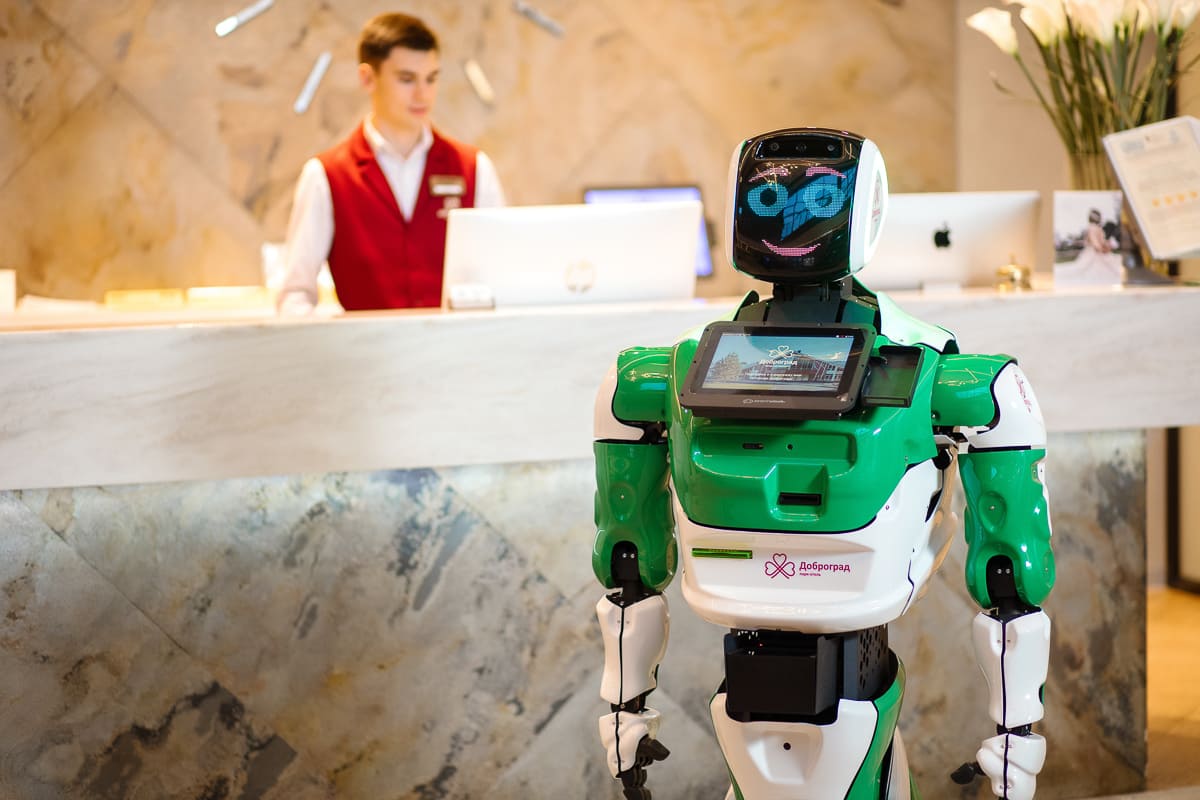
The Promobot V4 can be placed at mall entrances or store fronts to greet shoppers, provide directions, and promote special offers. Its 21.5-inch touchscreen displays catalogs and videos, while the arms can point or wave to draw attention. The robot’s face recognition can identify returning customers and tailor greetings. SLAM navigation lets it lead shoppers to specific aisles without bumping into obstacles. With an 8-hour battery, it covers full retail shifts on a single charge.
Event Promotion and Branding
Trade show booths and corporate events deploy the V4 to attract crowds and engage visitors with interactive content. The humanoid form factor creates a memorable photo opportunity, boosting social media visibility. Arm gestures can emphasize key messages while the chest screen loops presentations. Organizers can use the public API to schedule specific scripts for different times of day. Its ability to roam autonomously through event halls maximizes footfall conversion.
Healthcare Reception
In hospitals and clinics, the V4 can greet patients, check in appointments via the touchscreen, and guide visitors to departments. Face recognition helps identify returning patients for faster service. The microphone array enables voice queries in multiple languages, reducing strain on human receptionists. Privacy-conscious features like local processing ensure patient data stays on-premises. The robot’s gentle arm movements and calm voice output help soothe anxious patients in waiting areas.
Education and Training
Universities use the V4 as a platform for robotics programming courses, human-robot interaction research, and STEM outreach. Students can write new behaviors using the Linux-based OS and open API, learning SLAM navigation and computer vision. The robot’s screen is ideal for displaying educational content, while its human-like appearance engages younger audiences during campus tours. Because it is a full-size robot, students get realistic experience with real-world service robot constraints such as battery endurance and social navigation.
History & Background
Promobot was founded in 2015 in Perm, Russia, initially producing small service robots for malls and airports. The company gained attention with its Promobot III model, a wheeled kiosk robot. The V4, introduced in 2019, marked the company’s entry into full-size humanoid robots with articulated arms and an expressive torso. It evolved from earlier prototypes, incorporating feedback from deployments in Russian retail chains and international exhibitions. The robot uses a Linux-based OS (Promobot OS) and open API for developers. As of 2026, Promobot continues to manufacture and sell the V4, with units operating in over 20 countries. The company has also expanded into telepresence and android head technologies, but the V4 remains the flagship humanoid for customer service.
Buying Used — What to Check
Verify battery health After years of daily use, the 8-hour runtime can degrade significantly; a replacement battery pack costs around $2,500.
Inspect lidar and cameras Slam navigation depends on well-calibrated sensors; physical knocks can misalign the lidar or cause visual artifacts.
Test arm servos The 3-DOF arm joints are the most mechanically stressed components; listen for grinding or sluggish motion that indicates worn gears.