What is the Prowhite Pl?
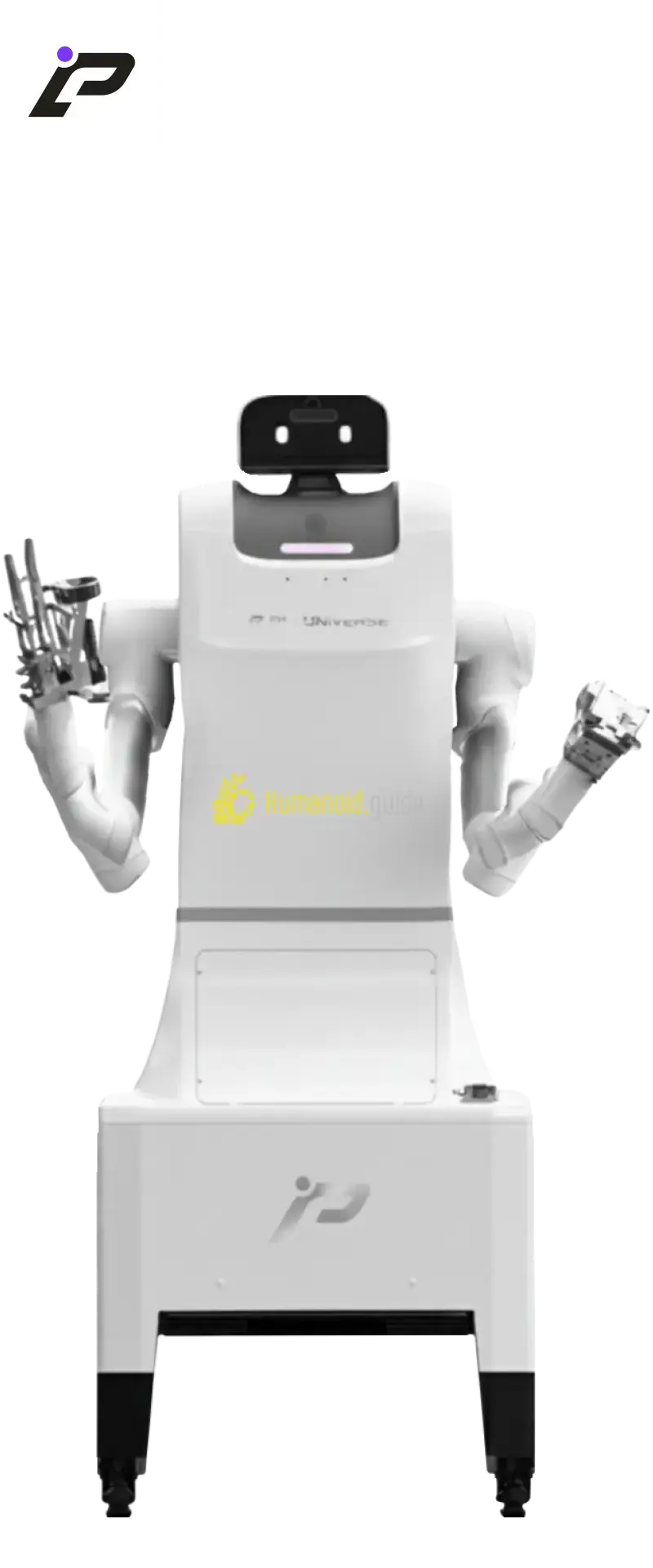
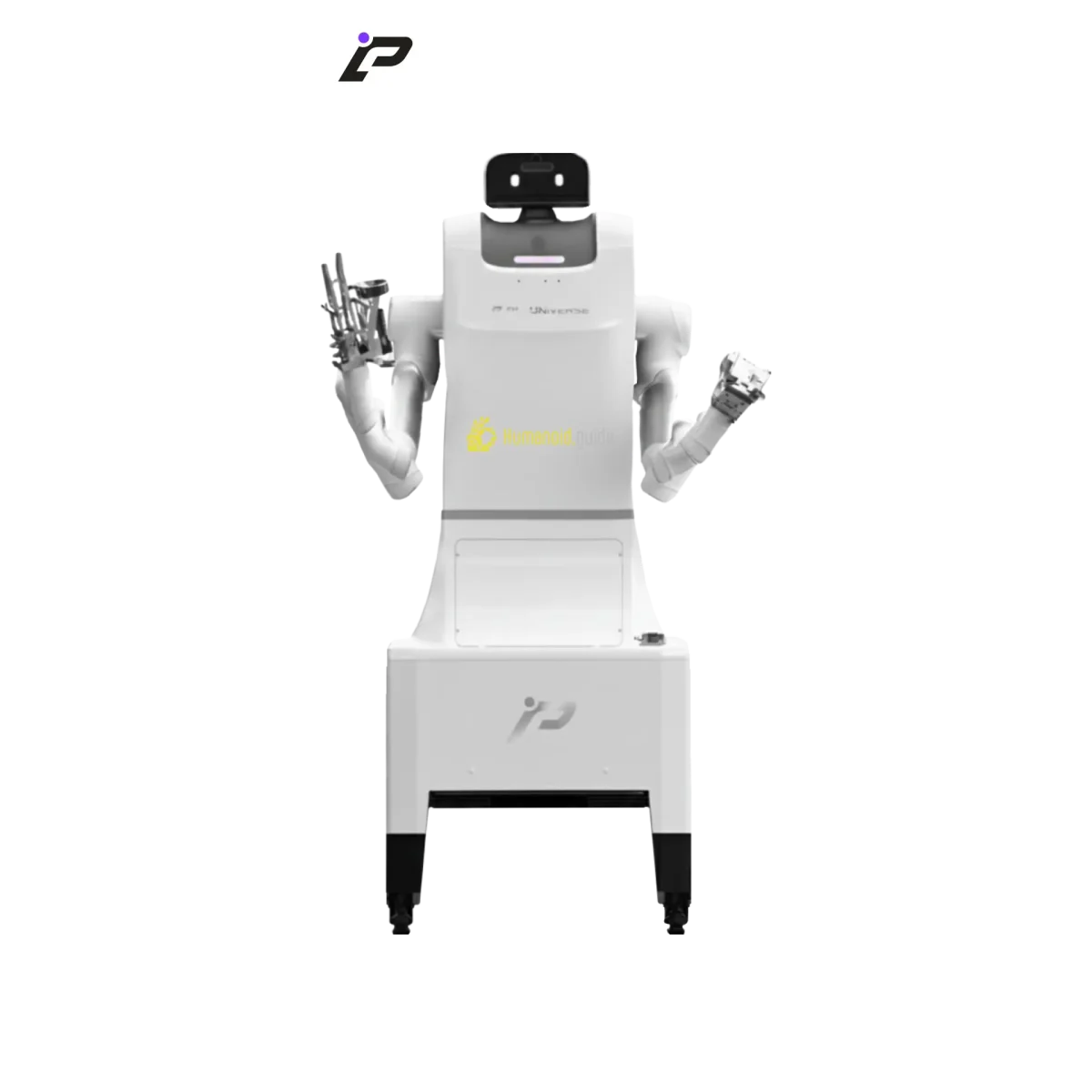
ProWhite is a stationary full‑body humanoid robot by PL‑Universe, a Chinese robotics firm specializing in white‑label service platforms. Revealed in 2024, it targets education, reception, and exhibition guidance. Unlike mobile humanoids, this robot has a max speed of 0 km/h, meaning it is designed for fixed installations. It offers 32 degrees of freedom for expressive gestures and facial movements, paired with RGB cameras and an embedded Linux‑based control system. The robot is clad in a white plastic shell over an aluminum frame, standing 155 cm tall and weighing 45 kg. Its primary role is to serve as a customizable receptionist or information guide, with optional external LLM integration. Currently, it is a prototype not yet available for purchase.
Specifications
Here are the full technical specifications.
| Spec | Value |
|---|---|
| Height | 155 cm |
| Weight | 45 kg |
| Degrees of freedom | 32 |
| Battery life | 8 hours |
| Max speed | 0 km/h |
| Payload | Not specified (service‑only platform) |
| Price (new) | Undisclosed (not commercially available) |
| Price (used range) | N/A |
Price & Value
New MSRP: Undisclosed (not commercially available)
Used range: N/A
ProWhite has no public price because it remains a prototype and is not sold. Comparable stationary humanoid service robots, like Engineered Arts Ameca, cost around $130,000, while mobile platforms from UBTECH or Fourier may exceed $150,000. Should ProWhite eventually launch, its white‑label model could position it as a lower‑cost alternative for integrators who want to brand their own reception solution. Without mobility and with minimal validated field data, its value proposition hinges entirely on the price‑to‑customization ratio that PL‑Universe might offer. Until real‑world deployments become public, no depreciation or total‑cost‑of‑ownership analysis is meaningful.
Who Is It For?
Best for: - Educational institutions needing a stationary interaction robot for human‑robot interaction research - Integrators building branded reception solutions on a white‑label platform - Exhibition organizers wanting a fixed guide robot with expressive arms and face - Hospitality venues that require a customizable information kiosk with a humanoid form factor
Not for: - Applications requiring mobility or navigation (0 km/h max speed) - Heavy‑duty tasks that require arm payload (no payload rating published) - Buyers who need an off‑the‑shelf product with warranty and support (still unavailable for purchase)
Alternatives & Comparison
ProWhite competes with other service humanoids designed for fixed or limited mobility roles. Its white‑label concept is unique, but established platforms already exist.
| Model | Price | Available | Key Difference |
|---|---|---|---|
| Engineered Arts Ameca | ~$130,000 (est.) | yes | Polished facial expression and mature software stack; proven in exhibitions |
| UBTECH Walker S | Undisclosed (~$150,000 est.) | preorder | Full bipedal mobility and advanced dexterous hands for industrial demos |
| Fourier GR‑2 | Undisclosed | preorder | High‑DOF full‑body walking; designed for rehabilitation and service research |
Verdict: If you need a stationary reception guide today, Ameca is the only commercially proven option, albeit expensive. ProWhite could become a budget‑friendly white‑label alternative if PL‑Universe prices it aggressively. For any role that demands mobility, ignore ProWhite and wait for Walker S or GR‑2 pre‑order availability.
Use Cases & Capabilities
Reception and Wayfinding
ProWhite can act as a static receptionist in lobbies, museums, or corporate offices. It can greet visitors, provide directions, and answer FAQs via an integrated LLM. Its expressive arms and head movements make interactions feel more engaging than a screen‑based kiosk. The robot’s zero‑speed design means it stays put, eliminating the cost and complexity of navigation. Installation simply requires Ethernet or Wi‑Fi connectivity. One limitation is that it cannot physically escort guests.
Educational Demonstrations
Universities and training centers could use ProWhite to teach humanoid robotics concepts. Its 32 DOF allow students to program gestures, facial expressions, and speech interactions. The embedded Linux ROS environment is standard for academic robotics labs. Compared to smaller educational robots like NAO, ProWhite offers a life‑size humanoid presence but at a probably higher cost and without mobility. As a prototype, it may lack the polished SDK and tutorials of established educational platforms.
Exhibition and Event Guide
Trade show booths or museum exhibits can deploy ProWhite as a static information point. Its white exterior can be wrapped with the event’s branding, and the robot can deliver scripted product pitches or answer attendee questions. Because it cannot move, multiple units may be needed to cover large spaces. The long 8‑hour battery life allows all‑day operation without recharging breaks. Low‑resolution RGB cameras are sufficient for basic face detection but may not support advanced audience analytics.
White‑Label Integration Platform
PL‑Universe markets ProWhite as a white‑label system, meaning integrators can purchase the hardware and load their own software or brand it as their own product. This model is appealing for companies that want to enter the humanoid service robot market without building a robot from scratch. The aluminum frame and plastic shell are cost‑effective to customize, and the Linux‑based OS allows full control over the software stack. However, the success of this model depends on technical documentation, spare parts availability, and after‑sale support, all of which are still unproven.
History & Background
PL‑Universe is a Chinese robotics company that first showed the ProWhite humanoid service robot in 2024. Little is known about the firm’s founding date or previous products, suggesting it may be a startup focused on white‑label robotics. ProWhite’s design emphasizes a stationary, expressive form factor for hospitality and education, rather than mobility or heavy lifting. The robot was first built in 2024 and is listed as “in production” on humanoid.guide, but it is not yet available for purchase; the manufacturer’s website (pl‑universe.com) contains only limited information. No subsequent generations or variants have been announced. As of 2026, ProWhite remains a pre‑commercial prototype waiting for integrator partners.
Buying Used — What to Check
Verify software maturity A used prototype may lack stable software or updated development tools, making deployment difficult.
Confirm hardware completeness Early units may have missing sensors or non‑standard wiring; ensure all DOF and cameras are present.
Check manufacturer support Without official contracts, obtaining spare parts or documentation could be impossible for a pre‑commercial robot.