What is the Psi R1?
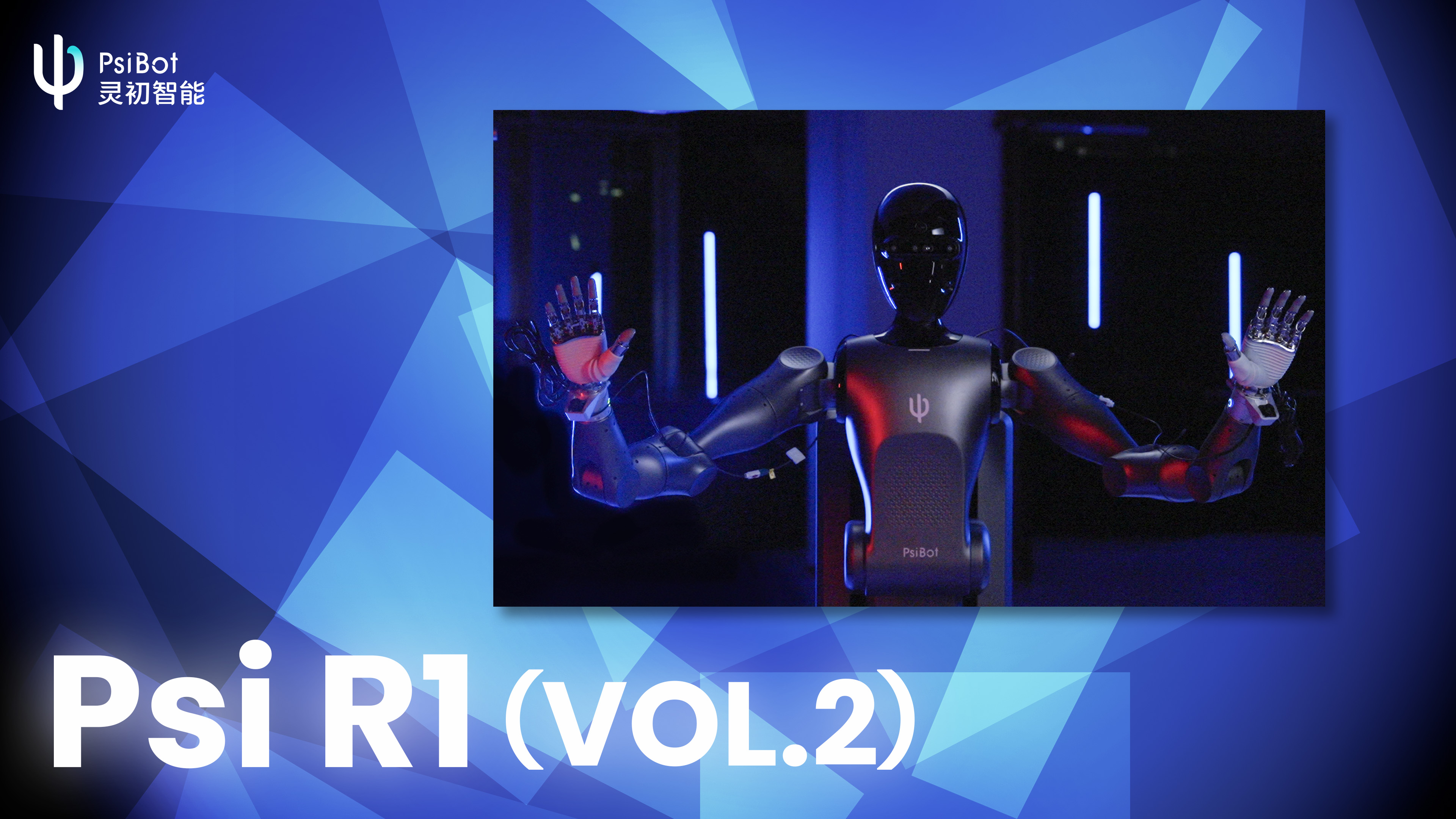
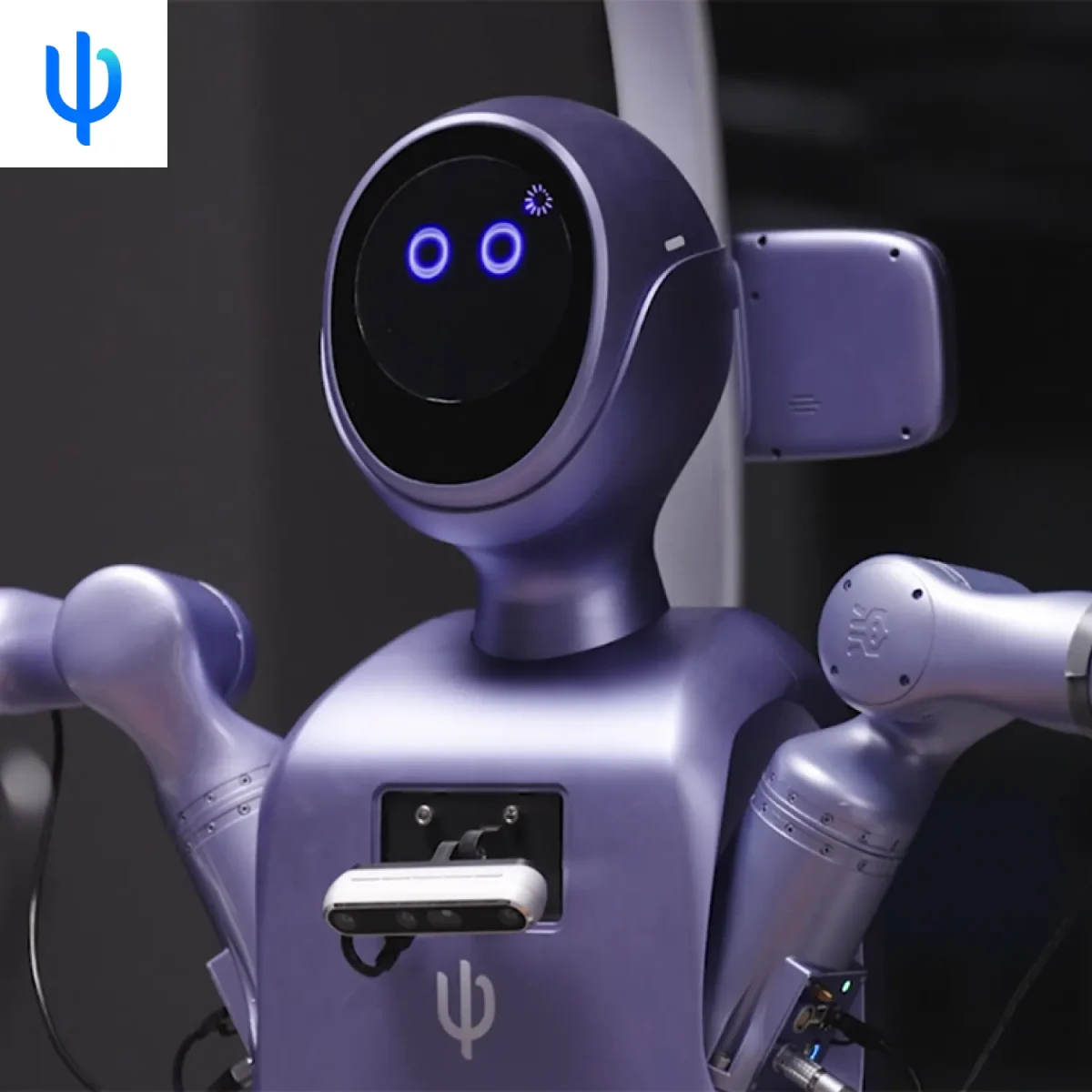
The PsiBot Psi-R1 is a humanoid robot platform developed by PsiBot, a Chinese robotics company. It is primarily a testbed for the company's advanced VLA (Vision-Language-Action) foundation model, which enables the robot to understand natural language instructions and execute complex manipulation tasks. The Psi-R1 was publicly demonstrated in 2025 performing tasks like playing Mahjong, showcasing its dual-system brain architecture. While full hardware specifications remain undisclosed, the robot is expected to target service roles in hospitality, kitchens, and tourism.
Specifications
Here are the full technical specifications.
| Spec | Value |
|---|---|
| Height | Not specified |
| Weight | Not specified |
| Degrees of freedom | Not specified |
| Battery life | Not specified |
| Max speed | Not specified |
| Payload | Not specified |
| Price (new) | Undisclosed (contact manufacturer) |
| Price (used range) | N/A (pre-commercial) |
Price & Value
New MSRP: Undisclosed
Used range: N/A
Pricing for the Psi-R1 has not been officially announced. Unverified sources have circulated a figure around $28,000, but due to the pre-production nature of the robot, this cannot be confirmed. Given the cost of comparable humanoid research platforms, a commercial unit could eventually fall in the $50,000–$150,000 range depending on configuration and volume. At an estimated $28,000, if accurate, the Psi-R1 would be price-competitive with emerging humanoids like the Fourier GR-2, but the lack of confirmed specs makes value assessment speculative. Total cost of ownership will likely include subscription fees for VLA model updates and cloud connectivity, typical for AI-driven robots.
Who Is It For?
Best for: - AI research labs exploring vision-language-action models for real-world manipulation - Robotics startups needing a bipedal platform for human-robot interaction demos - Hospitality businesses experimenting with autonomous service robots (once commercially available)
Not for: - Manufacturing lines requiring certified safety and high payload (>5kg) – no confirmed payload rating - Enterprises needing immediate commercial deployment with service level agreements – still pre-commercial - Cost-conscious buyers who require transparent, fixed pricing – MSRP is unknown
Alternatives & Comparison
The Psi-R1 competes in the emerging space of AI-driven humanoids targeting service and light industrial roles. It differentiates itself through its proprietary VLA foundation model and dual-system brain architecture, promising more intuitive natural language task execution.
| Model | Price | Available | Key Difference |
|---|---|---|---|
| Fourier GR-2 | ~$150,000 (est.) | preorder | Proven hardware with 40+ DOF and 5 kg payload; less advanced built-in AI |
| Figure 02 | Undisclosed | no | General-purpose humanoid with integrated AI; still in early commercial testing |
| 1X NEO | Undisclosed | preorder | Wheeled bipedal design for logistics and service; not a full humanoid with dexterous hands |
Verdict: For researchers and AI developers who want to experiment with an embodied VLA model, the Psi-R1 offers a unique software stack once the hardware is finalized. However, for industrial deployment with known safety certs and support contracts, the Fourier GR-2 or Figure robots are currently more realistic choices. The Psi-R1 remains a speculative platform until full specs and pricing are released.
Use Cases & Capabilities
Embodied AI Research
The Psi-R1 is designed as a testbed for vision-language-action (VLA) models, allowing researchers to bridge the gap between natural language instructions and physical manipulation. Its dual-system brain architecture supports real-time reactive control alongside high-level deliberative AI, making it ideal for exploring task planning, multi-modal perception, and human-robot interaction. Labs can deploy custom large language models on the edge AI platform, testing scenarios from tabletop object sorting to dexterous hand movements. The 2025 Mahjong-playing demo highlighted its potential for research into fine motor skills and adaptive reasoning. As a pre-commercial platform, early adopters may need to collaborate directly with PsiBot for software APIs and hardware access.
Kitchen and Hospitality Assistance
Kitchens and hospitality environments demand a robot that can handle varied objects and follow verbal instructions with minimal supervision. The Psi-R1’s VLA model promises to understand commands like “set the table for two” or “clean this countertop,” adapting to new tools and layouts through AI. Although payload and speed specs are unknown, a humanoid form factor is well-suited for navigating tight restaurant aisles and interacting with kitchen equipment. This use case has been cited by PsiBot as a target, and the 2025 demo showed the robot manipulating small objects that would be common in food prep. Until battery life and safety certifications are confirmed, deployment would be limited to controlled R&D pilots.
Museum Tours and Public Engagement
With a humanoid appearance and advanced language capabilities, the Psi-R1 could serve as an interactive museum guide, delivering tours, answering questions, and even performing small demonstrations. Its VLA model enables it to generate context-aware responses and engage visitors in multiple languages, a significant advantage over pre-scripted robots. The 2025 demonstration of playing Mahjong also suggests it can provide entertaining, culturally relevant interactions that capture audience interest. Height is estimated at 1.6 meters, making it approachable for children and adults. As a prototype, it would first need robust safety measures to operate in public crowds, which are not yet disclosed.
Light Industrial Support
In light industrial settings such as electronics assembly or quality inspection, a humanoid with dexterous hands and AI-driven task execution could augment human workers. The Psi-R1’s dual-system brain allows it to perform repetitive tasks with high precision while also handling exceptions through on-the-fly re-planning. Though payload rating is not specified, the robot’s design suggests it may handle up to a few kilograms in each arm, suitable for small parts handling. Its 2025 demo showed careful manipulation of game tiles, indicating enough dexterity for precise pick-and-place. Until hardware specifications like speed, runtime, and environmental protection are clarified, its use will remain in controlled pilot projects rather than full-scale factory floors.
History & Background
PsiBot (possibly stylized as PsiBot) is a Chinese robotics startup focused on embodied AI. The company’s public presence emerged around 2024-2025, with the Psi-R1 being its first known humanoid platform. The robot was built to showcase the company’s VLA (Vision-Language-Action) foundation model and a dual‑system brain architecture that combines fast reactive control with deliberative AI. In May 2025, a demo showed the Psi-R1 playing Mahjong, requiring fine manipulation and real-time reasoning. The Psi-R1 is likely still in the prototype phase, with the company concurrently developing a more industrial-focused humanoid, the Psi-V1, which has more disclosed hardware specs. No mass production or commercial sales of the Psi-R1 have been confirmed as of 2026.
Buying Used — What to Check
Verify VLA model version and update history The AI model determines task performance; early versions may be obsolete or unsupported.
Check sensor calibration and motor wear on a low-hour unit Demonstration units may have been used intensively; recalibration could be costly.
Confirm battery health and runtime after charge Battery specifications are unknown; real-world endurance may differ from design estimates.