What is the Pudu D7?
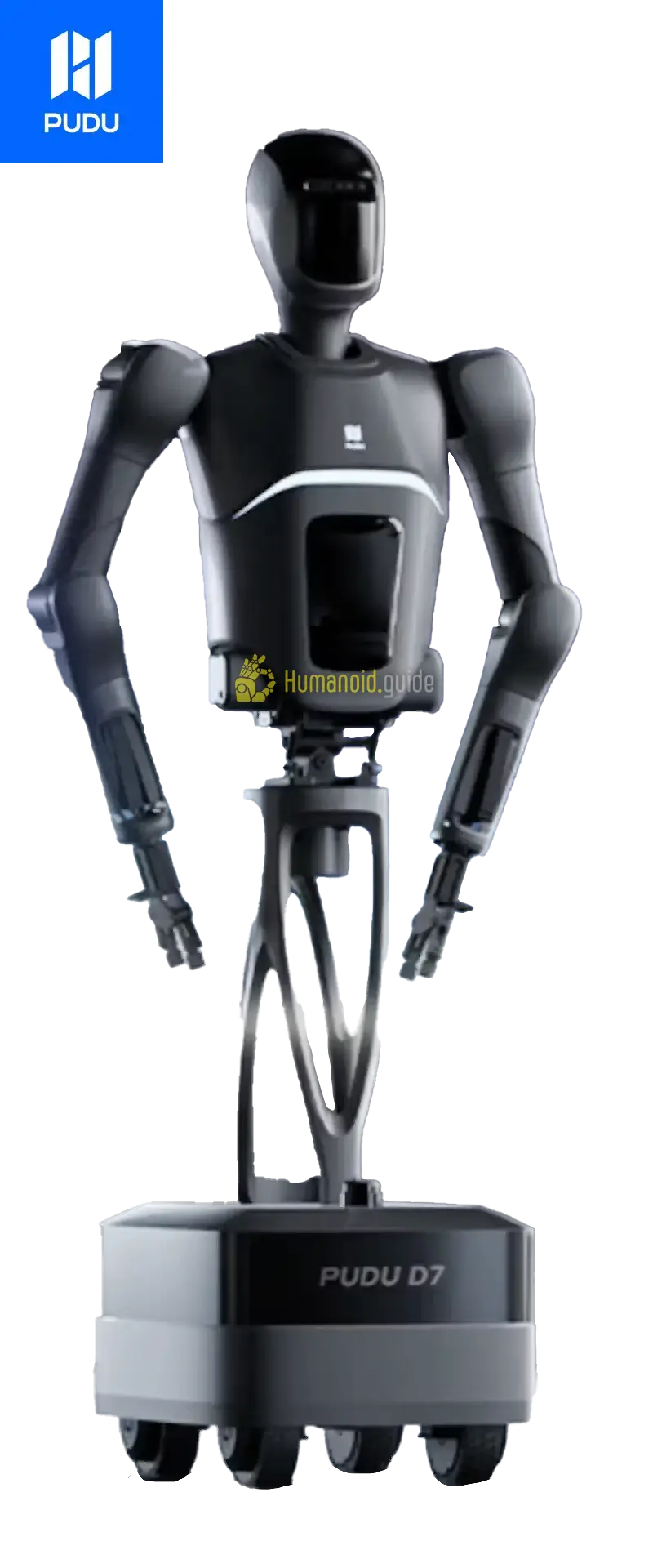
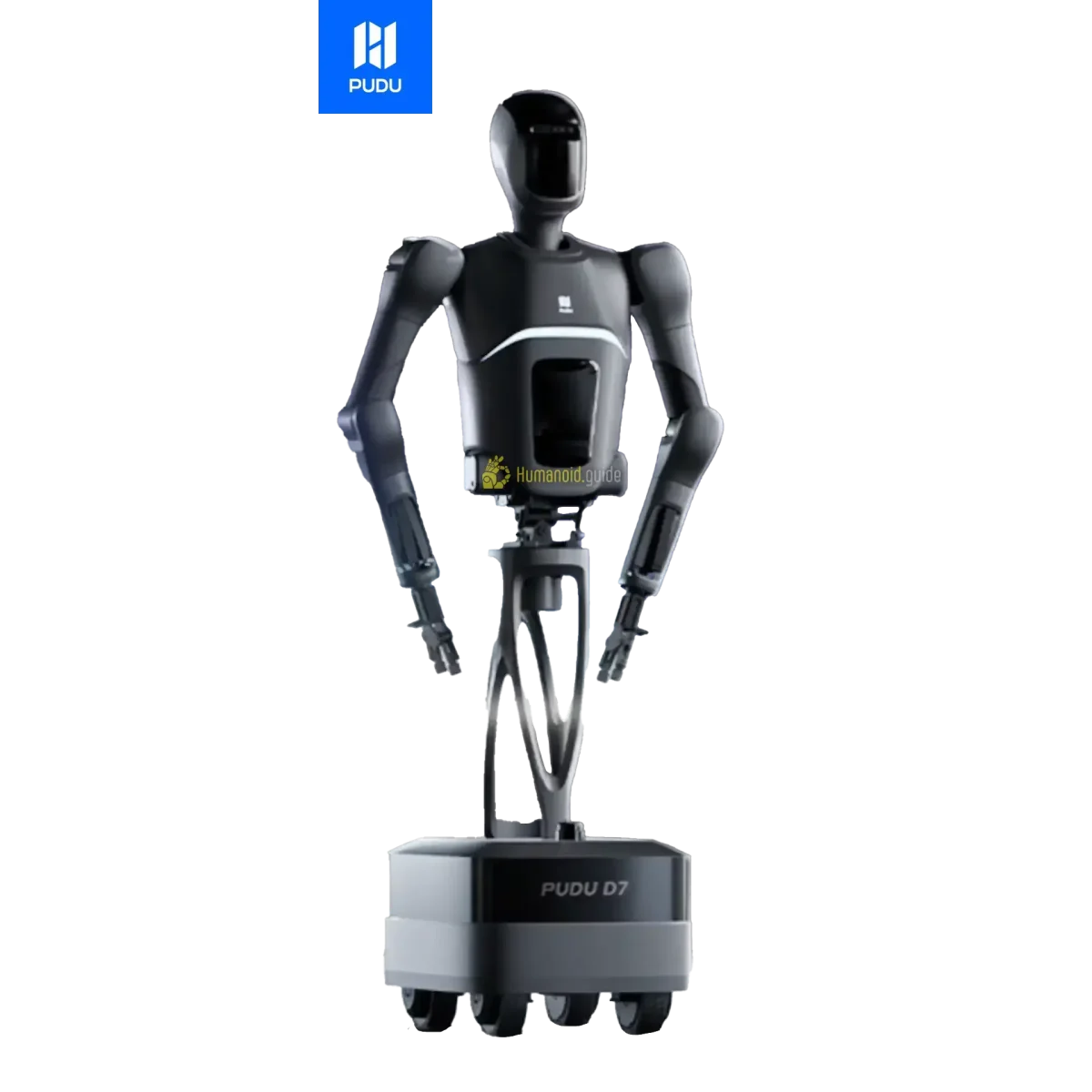
The Pudu D7 is a semi-humanoid service robot developed by Pudu Robotics, a Shenzhen-based company best known for its delivery robots used in hospitality and healthcare. Standing 165 cm tall and weighing 55 kg, the D7 features a wheeled base for omnidirectional movement, a torso-mounted head with display, and two articulated arms with grippers. It offers 30 degrees of freedom across the upper body and can manipulate objects up to 10 kg arm payload. Designed for customer-facing roles such as reception, guided tours, and light delivery, the D7 leverages Pudu’s experience in autonomous navigation and fleet management software. It was announced in 2024 as a prototype, marking Pudu’s entry into the semi-humanoid robot space.
Specifications
Here are the full technical specifications.
| Spec | Value |
|---|---|
| Height | 165 cm |
| Weight | 55 kg |
| Degrees of freedom | 30 |
| Battery life | 8 hours |
| Max speed | 7.2 km/h |
| Payload | 10 kg (arm payload) |
| Price (new) | Undisclosed (contact manufacturer) |
| Price (used range) | N/A (pre-commercial) |
Price & Value
New MSRP: Undisclosed (contact manufacturer)
Used range: N/A
Pudu Robotics has not publicly disclosed pricing for the D7. Unofficial estimates from industry observers placed the target cost around $70,000 per unit, but this remains unconfirmed. If priced at this level, the D7 would compete with other semi-humanoid service robots like the Keenon Dinbot T8 and Bear Robotics Servi, which are available from roughly $15,000 to $30,000, lacking the D7’s arm manipulation. The D7’s value thus hinges on its dexterity and advanced interaction features. Until formal pricing and availability are announced, potential buyers should budget conservatively and anticipate that early production units may carry a premium. Part procurement, software licensing, and ongoing maintenance costs will further shape the total cost of ownership. Buyers are advised to contact Pudu Robotics directly for quote requests and volume pricing.
Who Is It For?
Best for: - Hotels and corporate lobbies needing a semi-humanoid greeter and indoor delivery assistant (D7 has wheeled base and arms for light tasks) - Research institutions exploring human-robot interaction with a commercially-backed platform that integrates with Pudu’s fleet management - Museums or retail stores looking for an engaging, mobile information guide with object-handling capability
Not for: - Heavy industrial tasks or outdoor operations (no published IP rating, limited to 10 kg arm payload) - Operations that require fully autonomous bipedal locomotion (D7 is wheeled, not bipedal)
Alternatives & Comparison
While the D7 is unique as a semi-humanoid with arms from a delivery-robot leader, it faces competition from both simpler wheeled service robots and more advanced full humanoids.
| Model | Price | Available | Key Difference |
|---|---|---|---|
| Keenon Dinbot T8 | ~$15,000 (est.) | yes | Delivery-only design; no arms or upper-body dexterity |
| Bear Robotics Servi | ~$15,000 (est.) | yes | Popular restaurant delivery robot; no manipulation capability |
| UBTECH Walker S | Undisclosed (prototype) | no | Full humanoid with bipedal walking, higher DOF, but larger and experimental |
Verdict: For cost-sensitive buyers needing reliable indoor delivery and basic guest interaction, the Keenon T8 or Bear Servi are proven choices today. For organizations that require arm manipulation and intend to be early adopters, the Pudu D7 presents a compelling future option once it reaches production, benefiting from Pudu’s established service network. UBTECH’s Walker S targets a different segment of full bipedal humanoids and is not a direct competitor in the hospitality/light service space.
Use Cases & Capabilities
Reception and wayfinding
In hotel lobbies, corporate offices, or hospitals, the D7 can greet visitors, display information on its screen, and guide them to destinations. Its wheeled base enables smooth navigation through corridors and elevators, while arms allow it to gesture, pass brochures, or accept small items. Pudu’s autonomous fleet software ensures it can work alongside other Pudu delivery bots. This reduces staff repetitive load and adds a memorable tech-forward touch. As a prototype, integration with existing property management systems remains to be validated.
Light object delivery
Equipped with grippers, the D7 can deliver small parcels, documents, or meals (up to 10 kg) directly to a recipient’s desk or room. Unlike tray-based delivery robots, the D7 can hand over items using its arms, creating a more personalized interaction. Its omnidirectional drive allows it to operate in tight spaces like offices or hospital wards. Fleet management allows multiple units to coordinate efficiently. However, the prototype’s real-world reliability for fragile item handling is still unproven.
Automated guided tours
Museums, showrooms, and educational centers can deploy the D7 to lead groups through exhibits, using its display and speakers to provide commentary. Its arms can point at objects or operate simple demos, enhancing the guided tour experience. The robot’s 8-hour battery life allows full-day operation with recharging during off-hours. Customization of route and narrative can likely be programmed via Pudu’s software platform. This use case leverages both the D7’s mobility and its expressive upper body.
History & Background
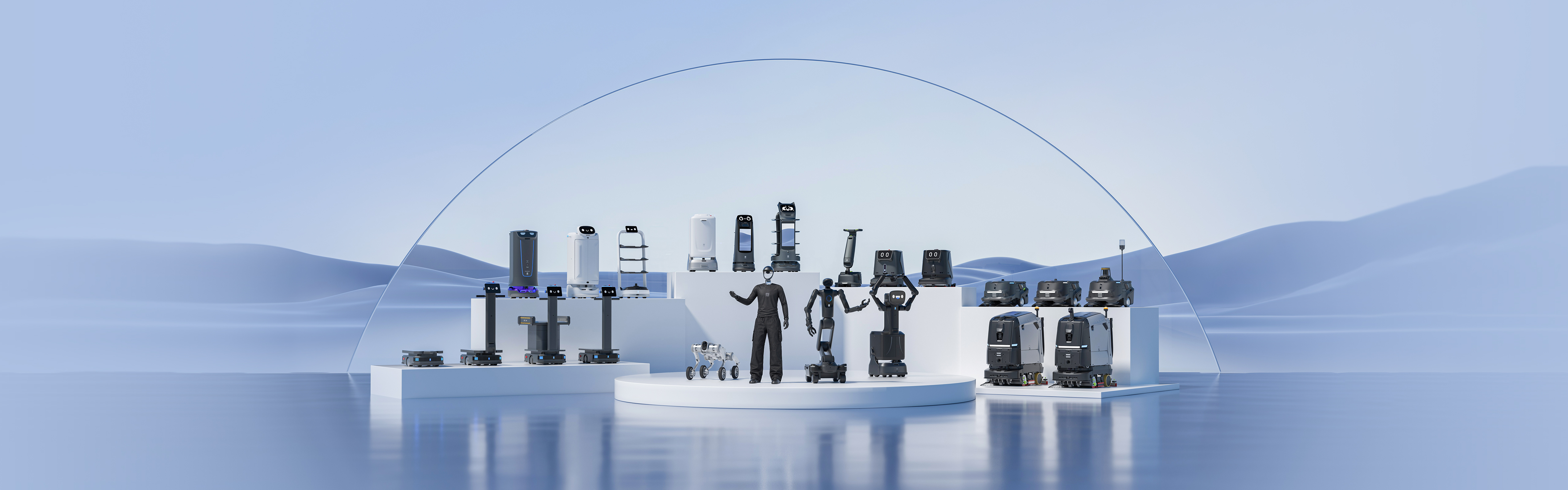
Pudu Robotics was founded in 2016 in Shenzhen, China, initially focusing on autonomous delivery robots for restaurants and hospitals. Its product line includes the BellaBot, KettyBot, and SwiftBot, which have been deployed globally. In 2024, the company announced the D7, a semi-humanoid robot that represents a significant expansion beyond pure delivery. The D7 combines a wheeled mobile platform with a humanoid upper body and dual arms, targeting customer service and light manipulation tasks. Although detailed specifications were limited at launch, early prototypes demonstrated 30 degrees of freedom and an 8-hour runtime. As of 2026, the D7 remains at the prototype stage, with Pudu not yet confirming commercial release dates or pricing. The D7 is part of Pudu’s X-Lab innovation program, which explores next-generation robotics for service industries.
Buying Used — What to Check
Verify arm payload Actual sustained payload and duty cycle may differ from published 10 kg, affecting deployment planning.
Check software maturity The D7’s ability to integrate with existing facility management or IoT systems is unproven; confirm API availability and support.
Confirm service availability As a prototype from China, local support and spare parts may be limited initially; verify warranty and training terms.