What is the Rainbow Drc Hubo?
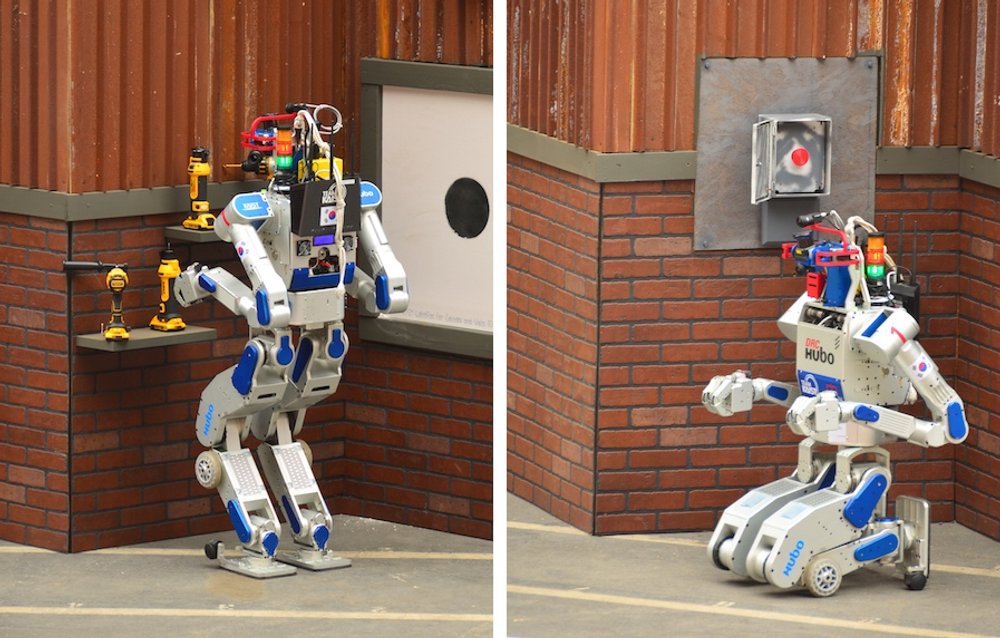
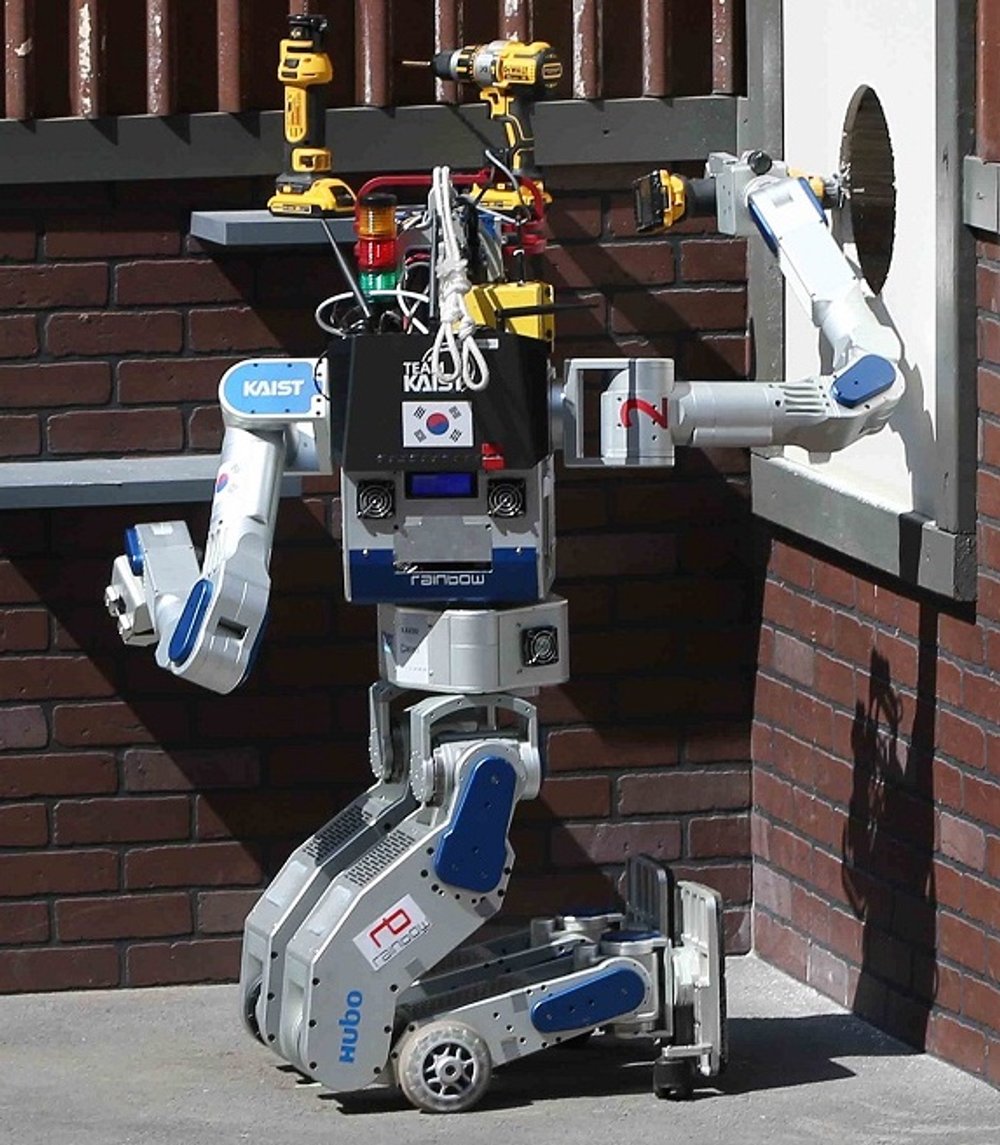
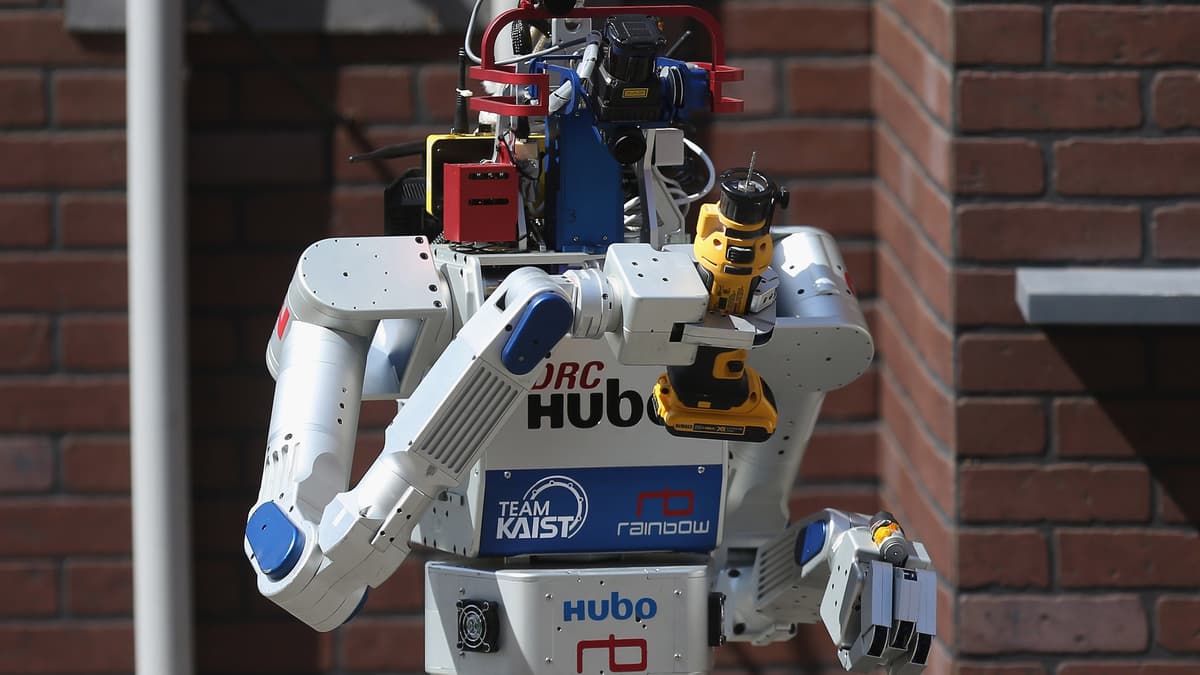
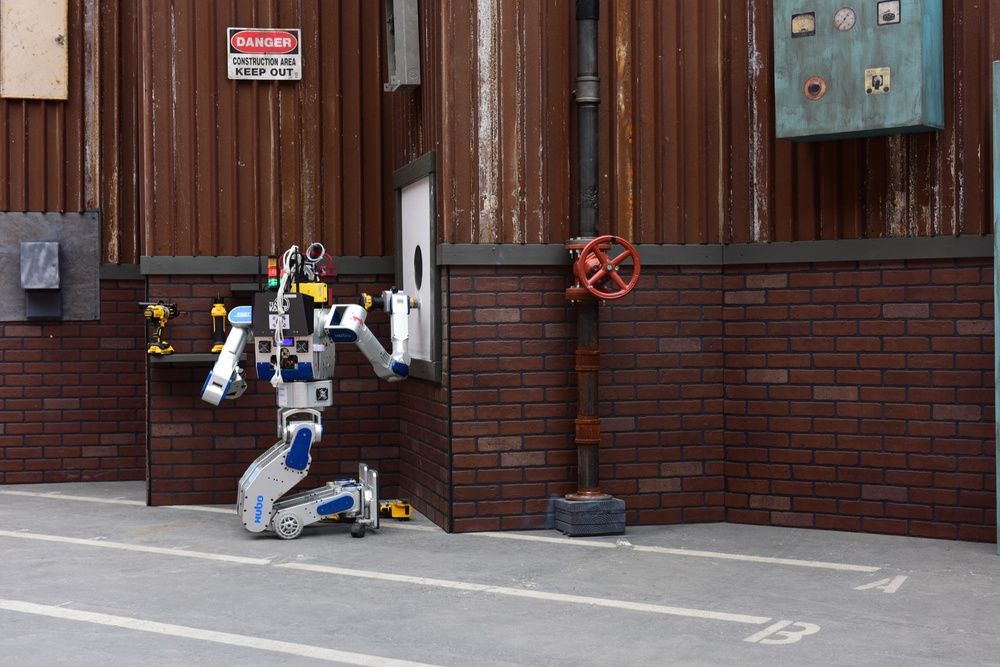
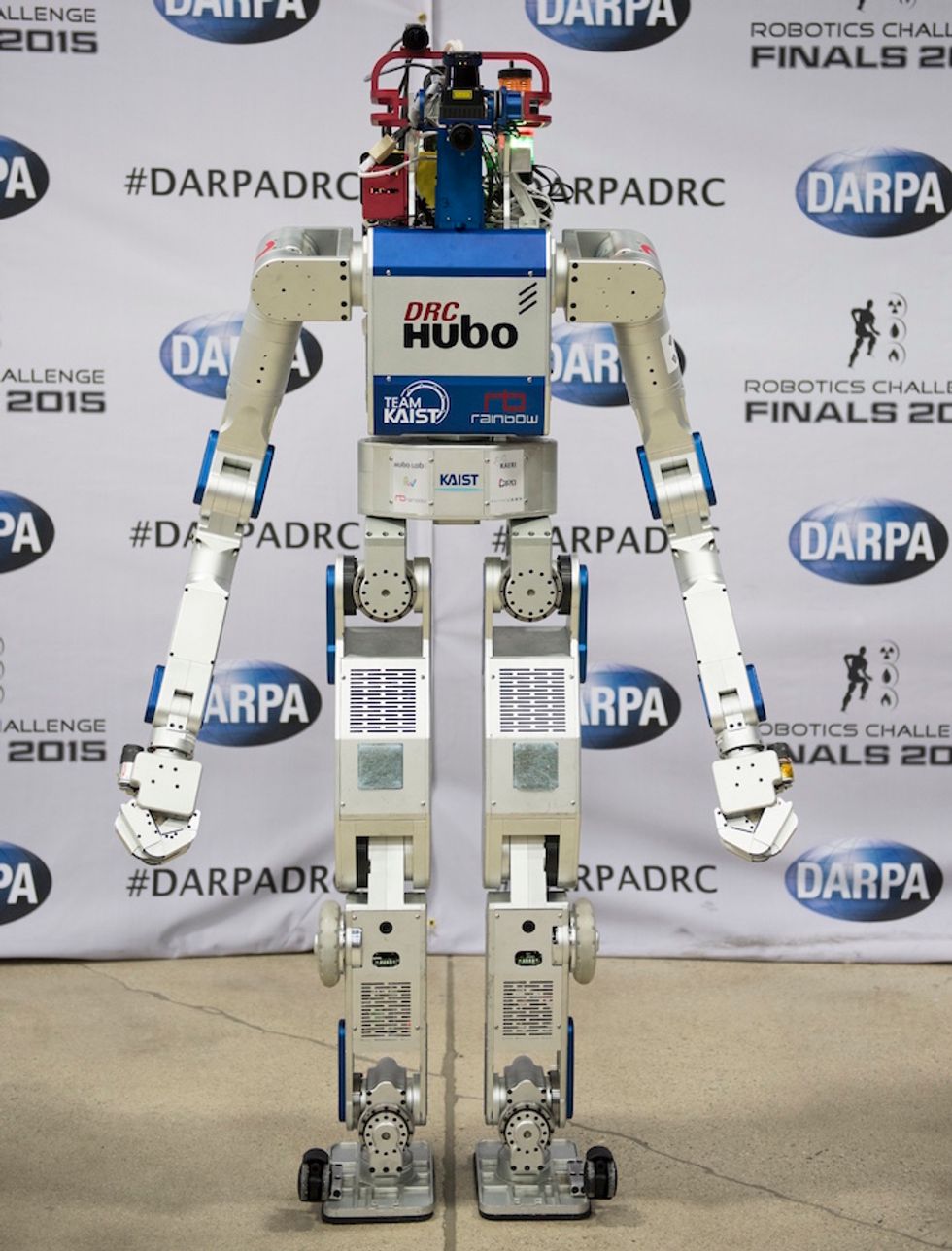
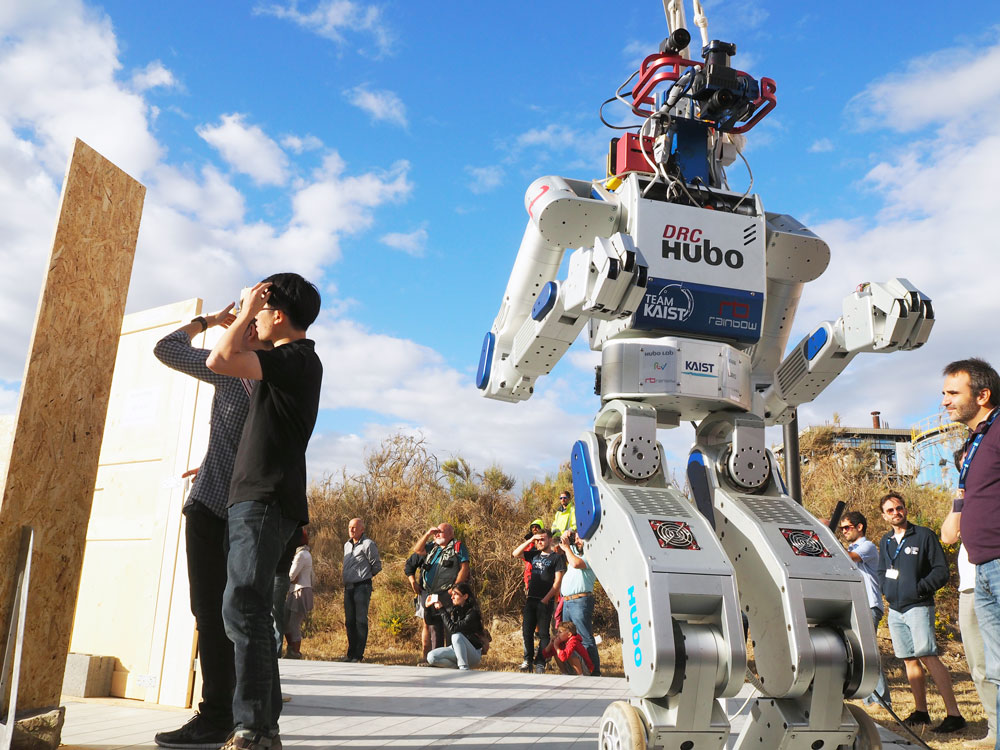
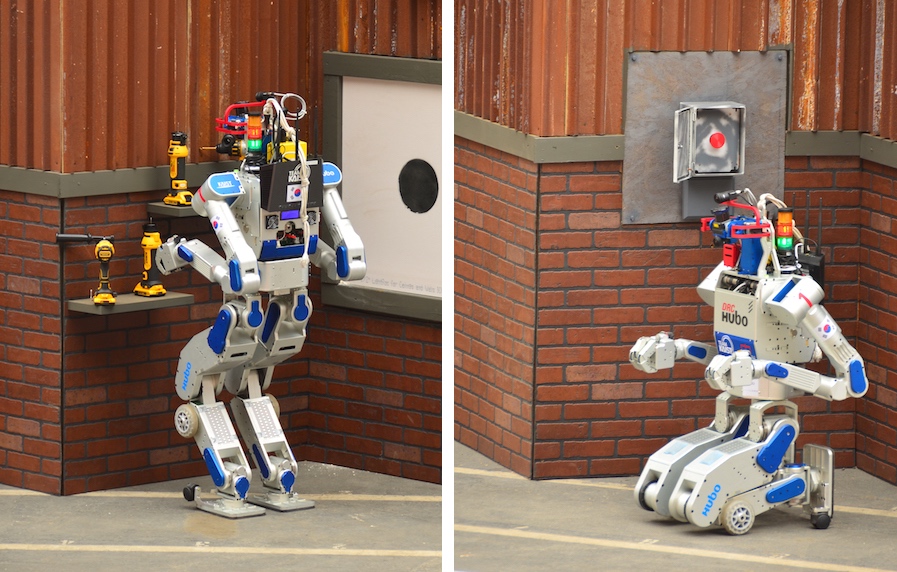
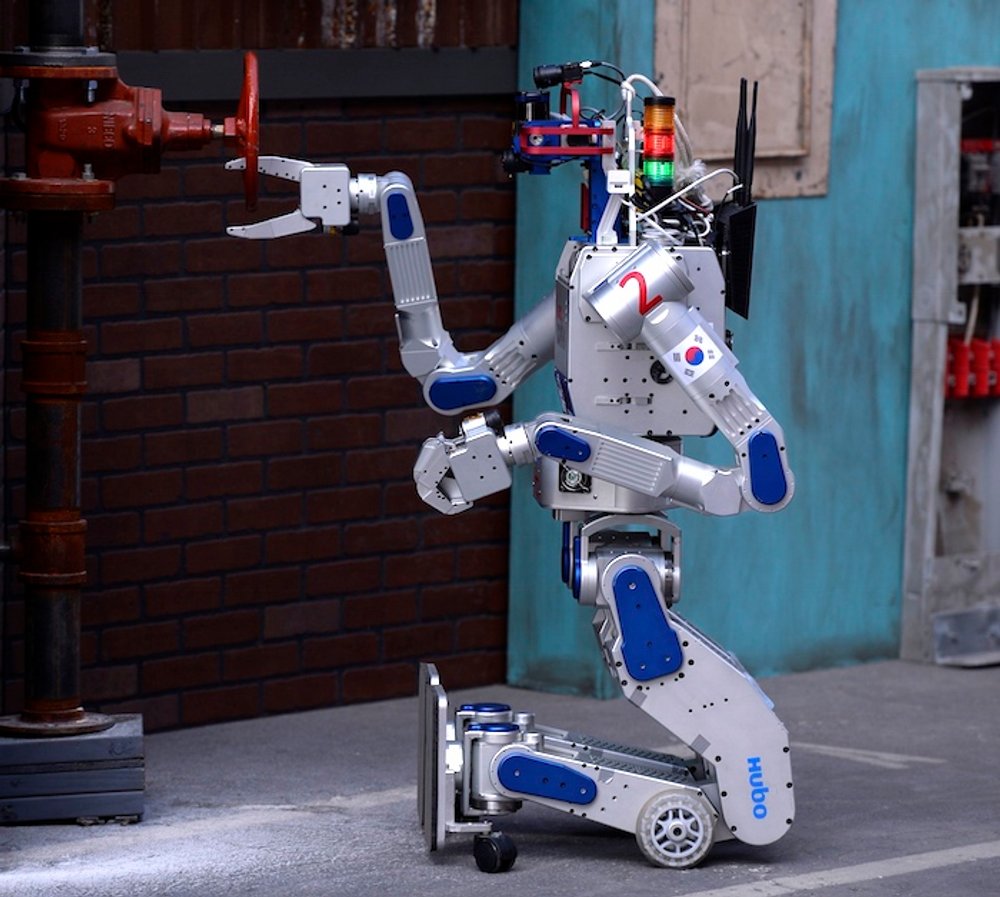
The KAIST DRC-HUBO is a humanoid robot designed by Team KAIST at the Korea Advanced Institute of Science and Technology (Daejeon, South Korea) for the 2015 DARPA Robotics Challenge. It combines bipedal walking with motorized wheels on both knees, allowing a fast, stable wheeled mode by dropping onto the knee wheels. With 41 degrees of freedom and onboard stereo cameras, LIDAR, and force/torque sensors, it performed manipulation and mobility tasks in a simulated disaster environment. Its key innovation — seamless transformation between walking and rolling — earned first place and made DRC-HUBO a landmark in humanoid robotics. It is a research prototype, not a commercial product.
Specifications
Here are the full technical specifications.
| Spec | Value |
|---|---|
| Height | 147 cm |
| Weight | 60 kg |
| Degrees of freedom | 41 |
| Battery life | Not disclosed |
| Max speed | Not disclosed |
| Payload (arm) | Not specified |
| Price (new) | Not sold commercially |
| Price (used range) | N/A |
Price & Value
New MSRP: Not sold commercially
Used range: N/A
DRC-HUBO was never sold as a product; it was a bespoke competition platform with an estimated multi‑million‑dollar development cost funded by DARPA and KAIST. No new or used units change hands on the open market — all known copies reside at KAIST and partner universities. Value is purely as a research artifact, not as a commercial investment. Compared to other DRC bots like Atlas (also not sold), DRC‑HUBO’s unique wheel‑knee locomotion solved the speed/reliability trade‑off. For any organization considering a similar capability, building a custom derivative would require comparable funding; no off‑the‑shelf price exists. Total cost of ownership is limited to maintenance of legacy hardware and software by academic teams.
Who Is It For?
Best for: - University robotics labs researching bipedal‑wheeled hybrid locomotion (41 DOF, transformation mechanism provides a rich experimental platform)
Not for: - Commercial disaster response deployments (discontinued, no supply chain, limited battery endurance typical of 2015 hardware, no industrial payload rating for arm manipulation)
Alternatives & Comparison
DRC‑HUBO competed against other top DARPA Robotics Challenge finalists that tackled the same disaster‑response tasks. All were research prototypes with no commercial pricing.
| Model | Price | Available | Key Difference |
|---|---|---|---|
| Atlas (Boston Dynamics) | Undisclosed | no | Hydraulically actuated biped; no wheels, high dynamic mobility but less speed on flat ground |
| CHIMP (CMU) | Undisclosed | no | Tank‑track limbs; climbs and traverses rough terrain without bipedal stability risk |
| RoboSimian (JPL) | Undisclosed | no | Four‑limbed wheeled climber; ape‑like stability and deliberate movements, no walking |
Verdict: DRC‑HUBO won the 2015 DARPA Robotics Challenge because its knee‑wheel transformation delivered exceptional speed on cleared floors while retaining bipedal flexibility for stairs and manipulation. For research into hybrid locomotion or rapid disaster‑zone traversal, it remains unmatched. However, Atlas’s hydraulic power is superior for heavy‑duty manipulation, and CHIMP’s tracked design is more fail‑safe in chaotic terrain. No alternative is commercially available.
Use Cases & Capabilities
Disaster Response Operations
In the DARPA Robotics Challenge, DRC‑HUBO performed tasks like driving a vehicle, opening a door, turning a valve, cutting a hole in a wall, and walking over rubble. Its wheeled mode allowed it to finish tasks faster than any biped, while its arms and hands (6 DOF hands) provided dexterous manipulation under teleoperation. The platform’s stereo cameras and LIDAR enabled semi‑autonomous navigation in unknown indoor environments. However, battery endurance was limited and the transformation mechanism added mechanical complexity that could be vulnerable in dirty, unstructured settings.
Research Platform for Humanoid Locomotion
DRC‑HUBO remains an influential platform for studying wheel‑legged locomotion and whole‑body control. Researchers used its 41 DOF to explore dynamic transitions between walking and rolling, real‑time trajectory planning, and force‑compliant interaction. The open ROS‑based software stack facilitated algorithm development across partner universities. Its sensor suite — IMU, joint torque sensing, and dense vision — supports advanced perception research. Limitations include older Dynamixel/ harmonic‑drive actuators that require careful maintenance and a compute architecture that is no longer state‑of‑the‑art.
History & Background
KAIST’s HUBO humanoid program began in 2002 under Prof. Jun‑Ho Oh. The DRC‑HUBO was specifically built for the DARPA Robotics Challenge finals in June 2015, where Team KAIST won first place and the $2 million prize. It introduced motorized wheel hubs on both knees and casters on the feet, allowing the robot to kneel and roll rapidly while keeping hands free for manipulation. An improved variant, DRC-HUBO+, later added enhancements to the upper body and control software. After the challenge, the platform was used by Drexel University, UNLV, and other labs for quadrupedal‑bipedal transformation research. No commercial version was ever released; development efforts shifted to newer HUBO models like the PIBOT for cockpit automation.
Buying Used — What to Check
Verification of authenticity Only a handful of DRC‑HUBO units were built; ensure any offered system is genuinely from KAIST or a partner lab, not a replica.
Actuator condition Dynamixel servos and harmonic drives may have wear from competition use; replacement parts are custom and difficult to source.
Software stack availability DRC‑HUBO relies on a specialized ROS‑based codebase that may not be maintained; confirm access to control libraries and model files.