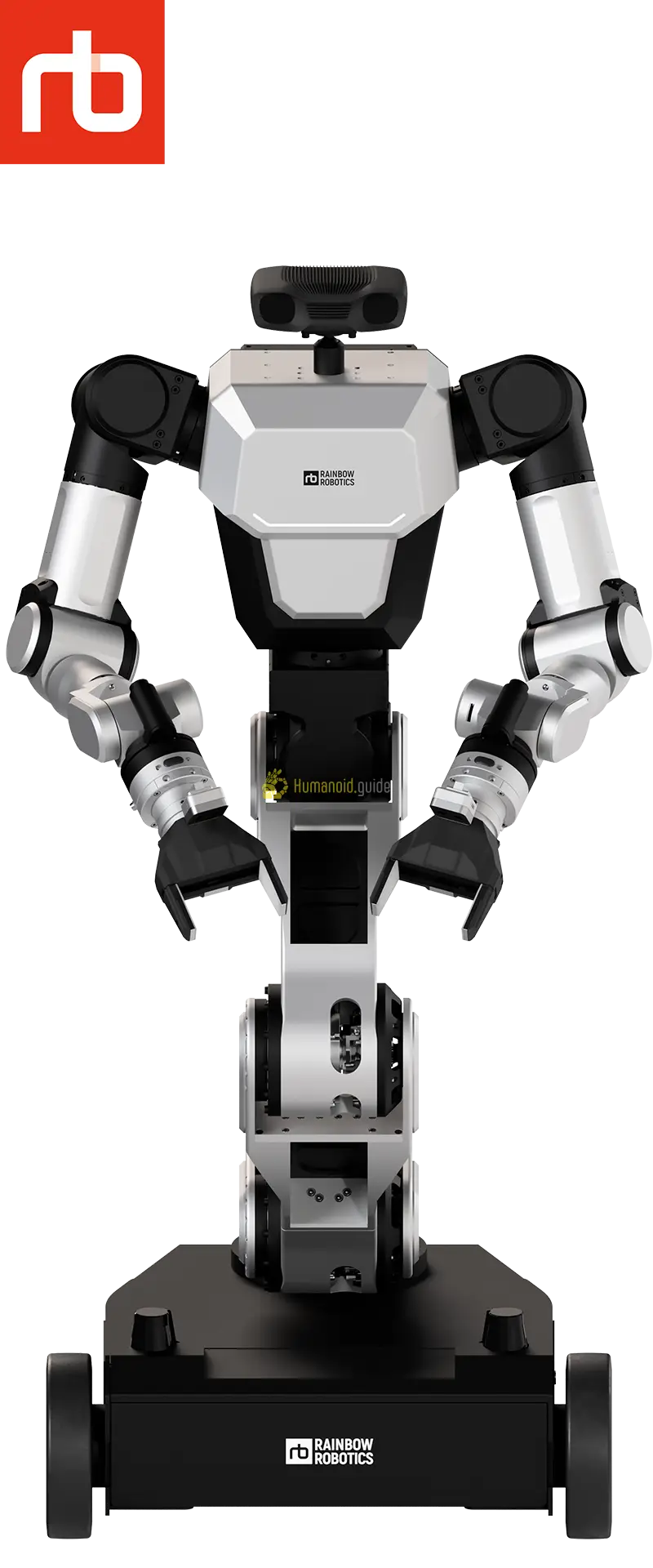
What is the Rainbow Rb Y1?
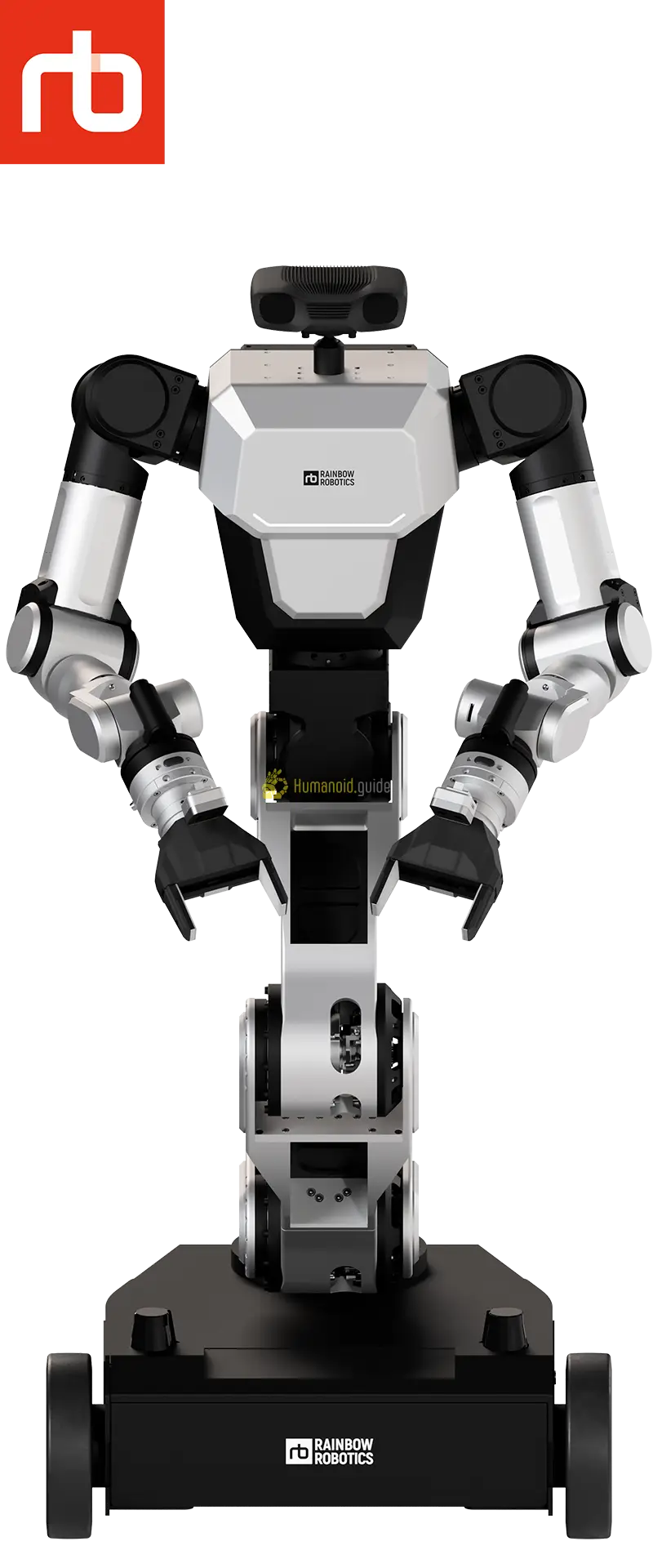
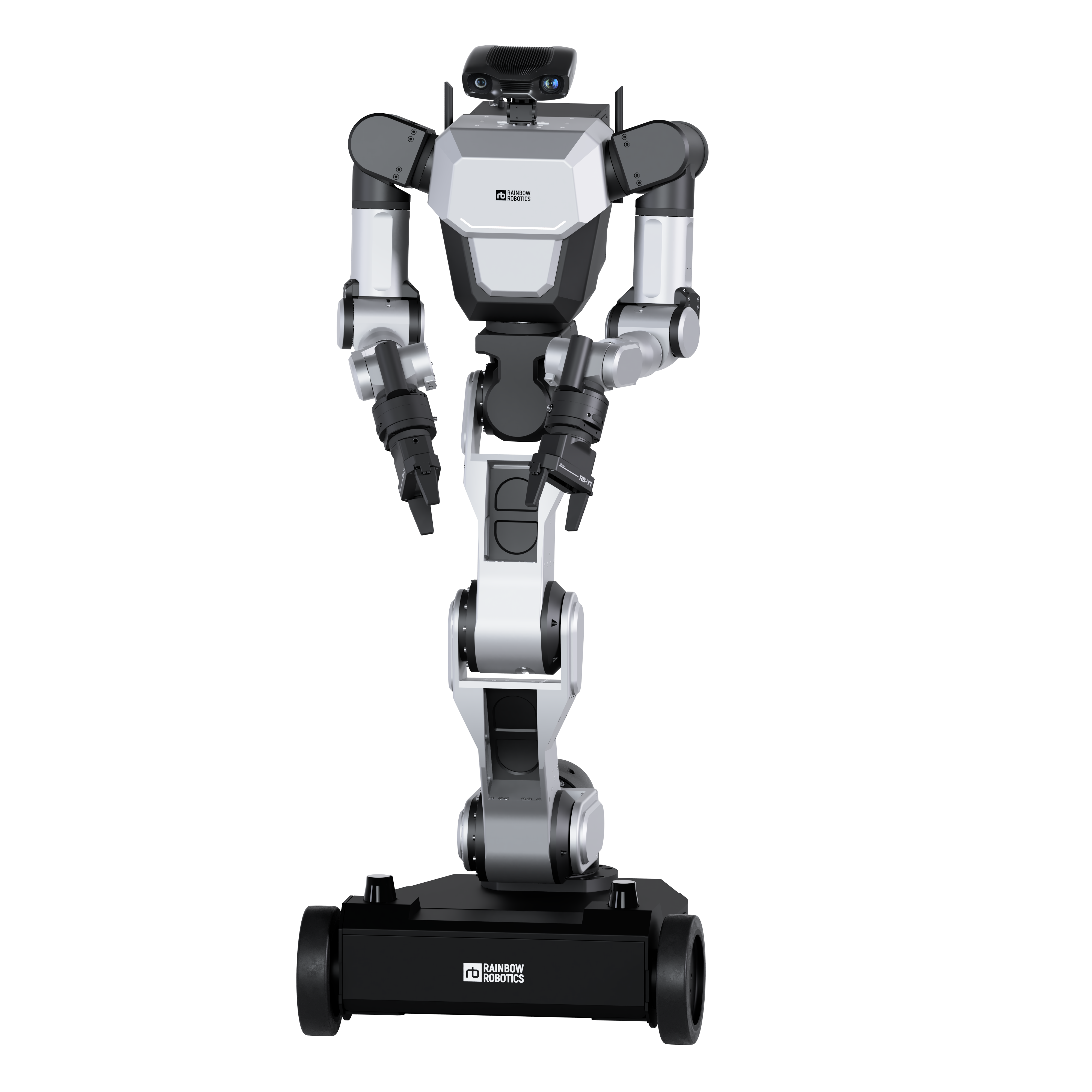
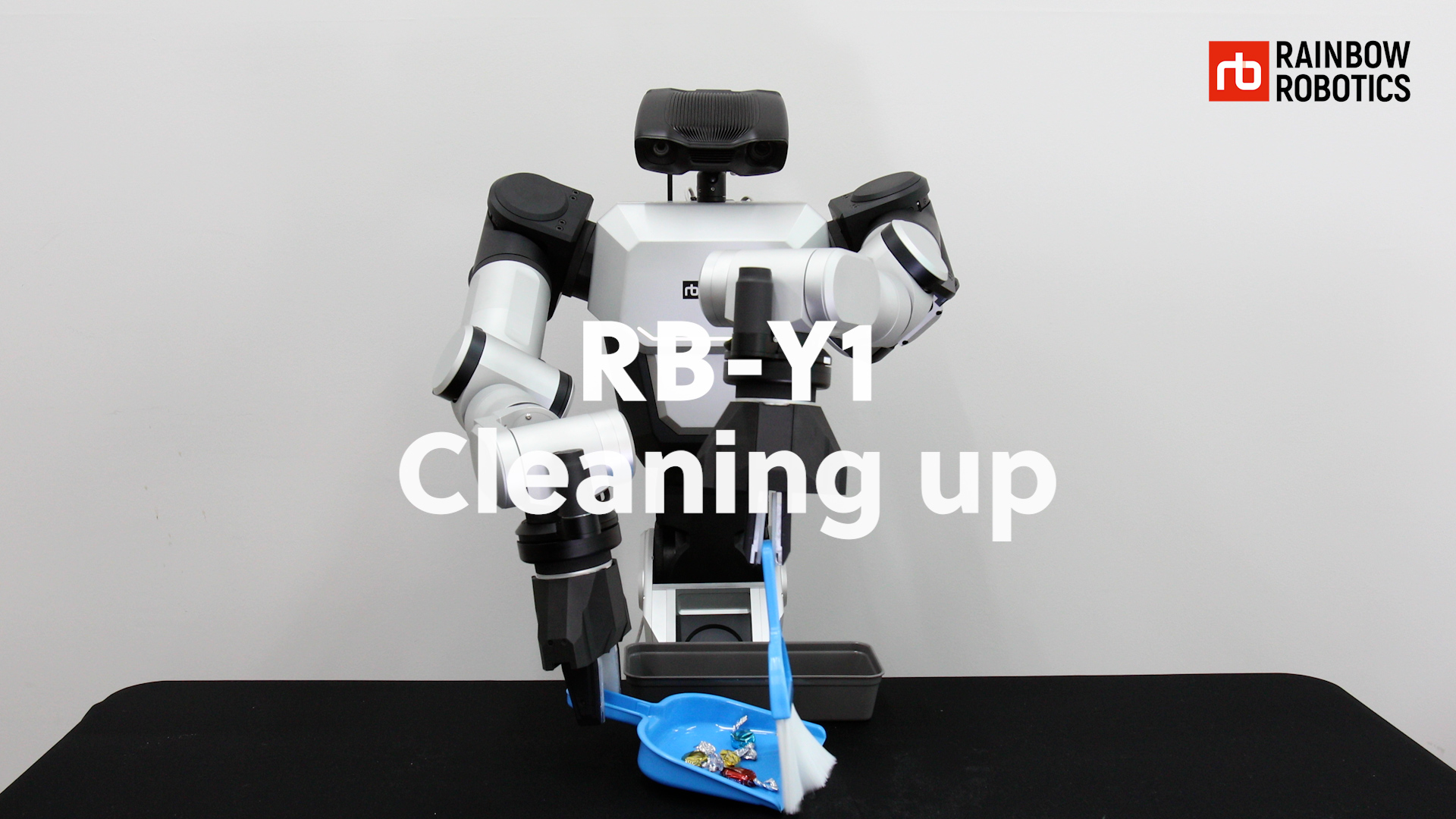
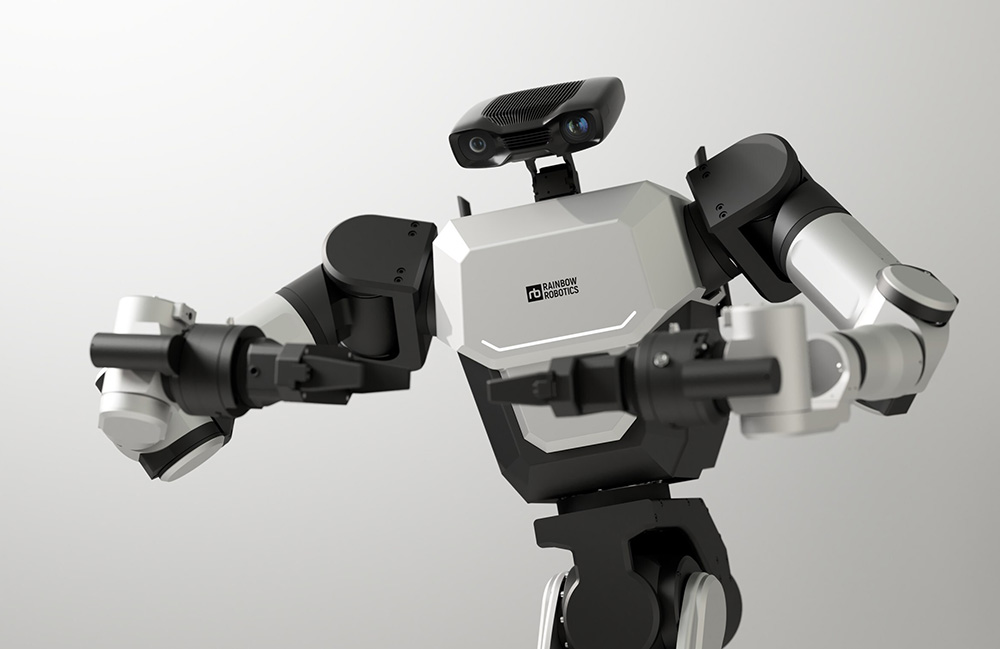
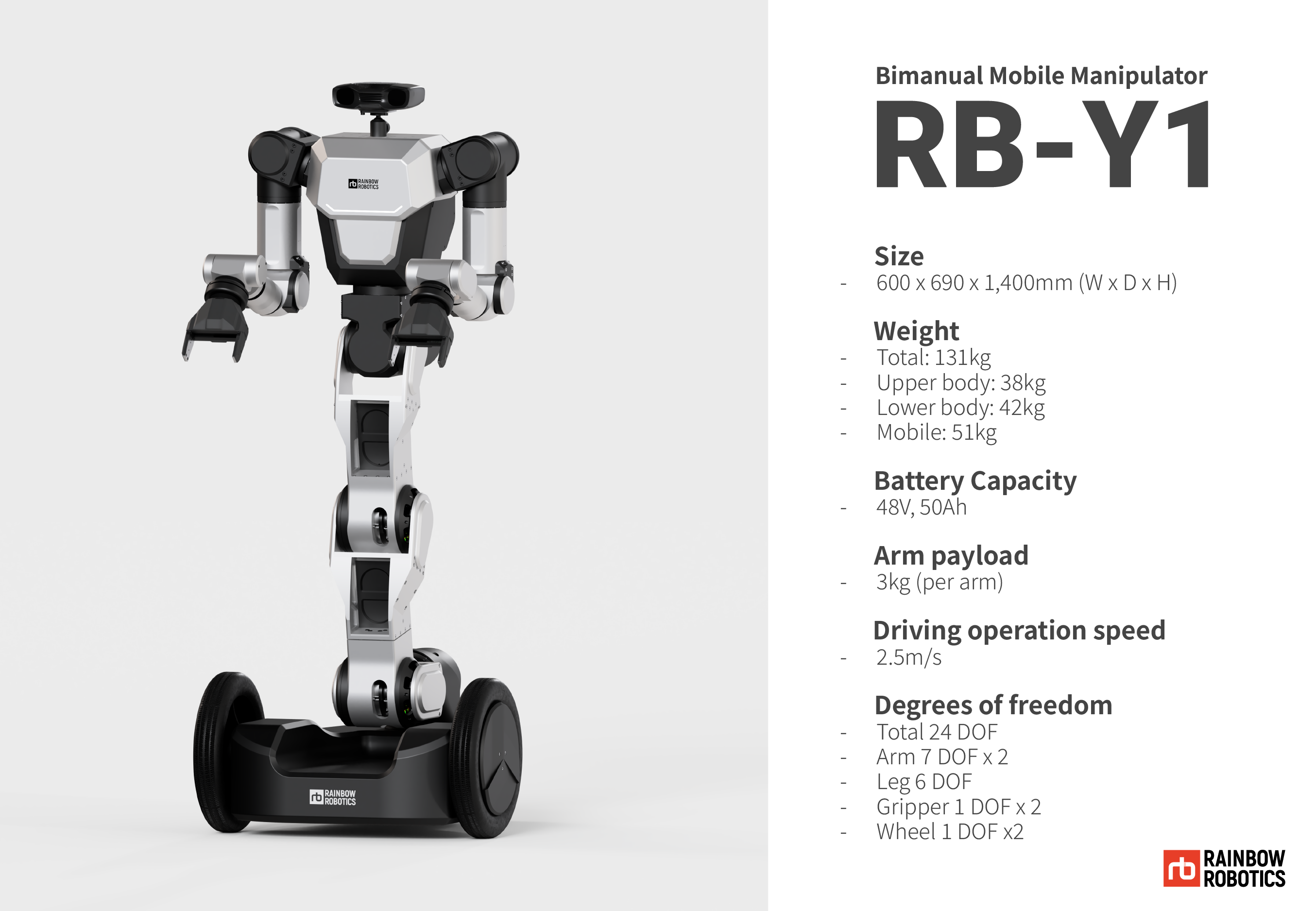
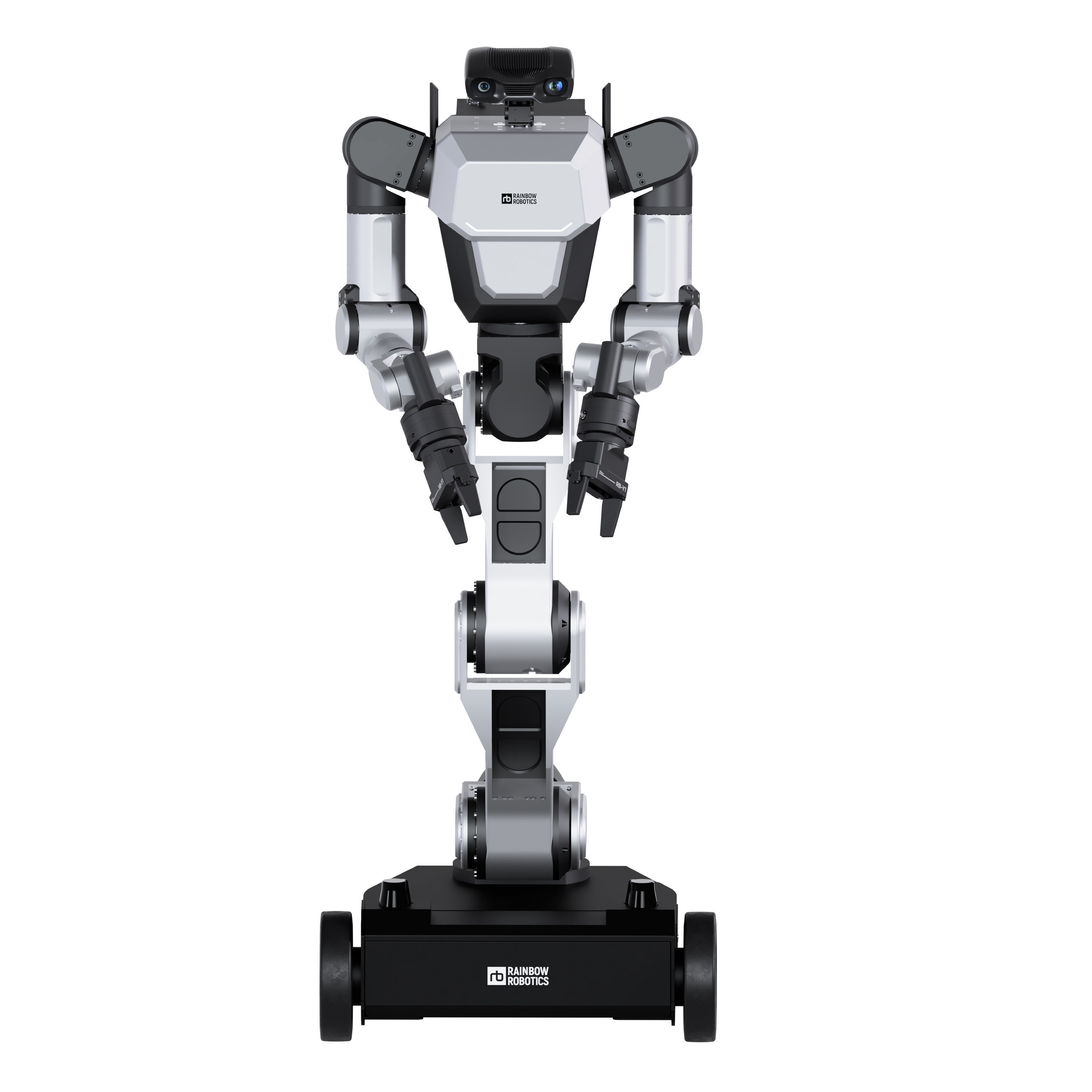
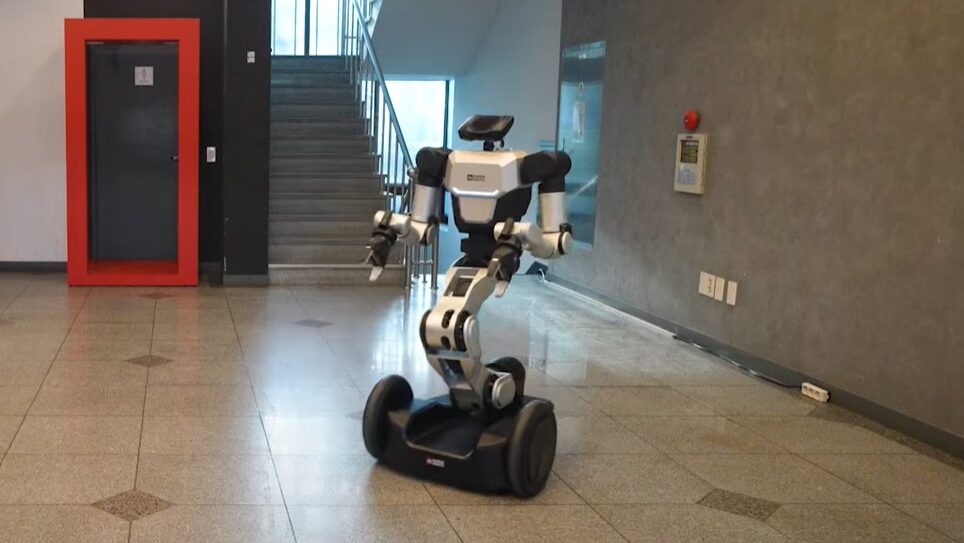
The Rainbow Robotics RB-Y1 is a dual-arm, wheeled humanoid robot developed by Rainbow Robotics, a South Korean collaborative robot manufacturer founded in 2011. Standing 161 cm tall and weighing 131 kg, it combines an omnidirectional Mecanum wheel base with a humanoid-shaped upper body featuring two 7-DOF arms. Designed for AI-driven mobile manipulation, it targets use cases in manufacturing, logistics, and research labs. Its key differentiation is the integration of generative AI for task planning, allowing it to adapt to dynamic environments. Unlike fixed-tabletop cobots, the RB-Y1 can move freely while performing dexterous manipulation, making it a versatile platform for next-generation automation.
Specifications
Here are the full technical specifications.
| Spec | Value |
|---|---|
| Height | 161 cm |
| Weight | 131 kg |
| Degrees of freedom | 24 |
| Battery life | 3 hours |
| Max speed | 5.4 km/h |
| Payload | 3 kg |
| Price (new) | $120,000 |
| Price (used range) | N/A |
Price & Value
New MSRP: $120,000
Used range: N/A
Priced at $120,000, the RB-Y1 occupies a middle ground in the mobile manipulator market. It is more affordable than the KUKA KMR iiwa ($170,000) while offering dual arms, unlike the single-arm PAL TIAGo ($80,000). The dual-arm configuration and AI integration justify its premium over simpler cobots, but the 3-kg payload per arm limits heavy industrial tasks. As a relatively new product from an established cobot maker, early adopters may face higher depreciation until a secondary market emerges. Total cost of ownership will depend on software licensing, training, and service contracts, which Rainbow Robotics has not publicly detailed. For budget-conscious buyers, the TIAGo or a fixed YuMi system may offer better value if dual mobility isn’t critical.
Who Is It For?
Best for: - AI research labs requiring a mobile dual-arm platform with generative AI integration (24 DOF, wheeled humanoid) - Manufacturing pilots for light assembly and kitting (dual arms, 3 kg payload)
Not for: - Heavy industrial lifting (arm payload only 3 kg, far below gantry robots or AMRs with lifts) - Outdoor or uneven terrain (wheeled base not designed for non-smooth floors)
Alternatives & Comparison
The RB-Y1 sits in a competitive space where mobile bimanual robots are both established and nascent. Key alternatives include wheeled single-arm platforms, fixed dual-arm cobots, and higher-end industrial mobile manipulators.
| Model | Price | Available | Key Difference |
|---|---|---|---|
| PAL Robotics TIAGo | $80,000 | yes | Single-arm wheeled base; RB-Y1 has dual arms and humanoid-shaped torso. |
| ABB YuMi | $50,000 | yes | Dual-arm cobot without mobility; RB-Y1 adds omnidirectional mobile base. |
| KUKA KMR iiwa | $170,000 | yes | Single-arm industrial platform with higher payload; RB-Y1 offers dual arms for collaborative tasks at lower price. |
Verdict: For companies that need a dual-arm, AI-capable mobile robot without the cost of an industrial KUKA system, the RB-Y1 is a compelling choice at $120,000. However, if payload or proven reliability are paramount, the KUKA KMR iiwa offers 7 kg per arm and deep industrial certifications. Budget-focused R&D teams may prefer the TIAGo and pair it with a second arm retrofitted separately. The RB-Y1’s sweet spot is research labs and pilot lines exploring human-robot collaboration with generative AI.
Use Cases & Capabilities
AI-Driven Mobile Manipulation Research
The RB-Y1 excels as a platform for universities and corporate labs developing AI-powered robotic assistants. Its 24 DOF and dual arms enable experiments in bimanual coordination, task planning via natural language, and real-time adaptation. The Mecanum wheel base allows omnidirectional navigation in cluttered indoor spaces. Researchers can leverage the integrated AI compute (undisclosed) to run large models directly on the robot. However, the limited sensor transparency (camera and lidar specifics unpublished) may require adding external sensors for advanced perception tasks.
Flexible Manufacturing and Assembly
In electronics or small-parts manufacturing, the RB-Y1 can roll between workstations to perform light assembly, inspection, or kitting. Its dual arms allow it to handle two components simultaneously or use one arm as a fixture. The 3 kg payload is sufficient for small tools and parts, but not for heavy assembly. The humanoid upper body allows it to work alongside humans at ergonomic heights. However, safety certifications for collaborative operation have not been disclosed, which may limit direct human-robot interaction in some jurisdictions.
Warehouse and Logistics Support
With its mobile base and 3-hour runtime, the RB-Y1 can navigate warehouse aisles for picking, sorting, and inventory management. The dual arms can pick from bins and place onto carts or conveyors, while the Mecanum wheels allow tight maneuvering. It can be integrated with warehouse management systems via AI-driven scheduling. The low payload precludes moving heavy boxes, but it can handle totes up to 3 kg each. The robot's tall stance (161 cm) makes it suitable for reach at standard shelf heights, and its omnidirectional movement is faster than many autonomous mobile robots in tight spaces.
Collaborative Humanoid Pilot Deployments
Enterprises exploring humanoid robotics for future automation can use the RB-Y1 as a pilot unit to evaluate humanoid form-factor acceptance. Its wheeled design is inherently safe (no falling) compared to legged humanoids, making it more suitable for mixed environments. The AI integration allows workers to task the robot using voice commands, bridging the skill gap. Companies like logistics providers and automotive parts suppliers in South Korea have reportedly begun pilot programs. Long-term viability depends on Rainbow Robotics’ support, which is less established globally than competitors like KUKA or ABB.
History & Background
Rainbow Robotics was founded in 2011 in South Korea, initially focusing on collaborative robot arms. The company gained recognition for its RB series cobots used in light assembly and quality inspection. In 2024, Rainbow unveiled the RB-Y1, its first humanoid-inspired platform, integrating two 7-DOF arms on a wheeled omnidirectional base. The robot was built to showcase generative-AI capabilities for autonomous task planning. Early demonstrations highlighted its ability to pick and place objects using voice commands and AI vision. By 2025, the RB-Y1 was listed for pre-order through select distributors, with initial shipments expected in late 2025 or early 2026. Rainbow Robotics operates independently from its headquarters in Daejeon, South Korea, and has attracted investment from major Korean corporations like Samsung.
Buying Used — What to Check
Verify payload rating The 3 kg rating is critical; check that the robot’s arms can consistently lift that weight without stalling or overheating.
Battery cycle count Runtime drops as lithium batteries age. Confirm the unit still achieves close to 3 hours under normal use.
Mecanum wheel condition Omnidirectional wheels wear quickly on rough floors; inspect rollers for flat spots that impair motion.