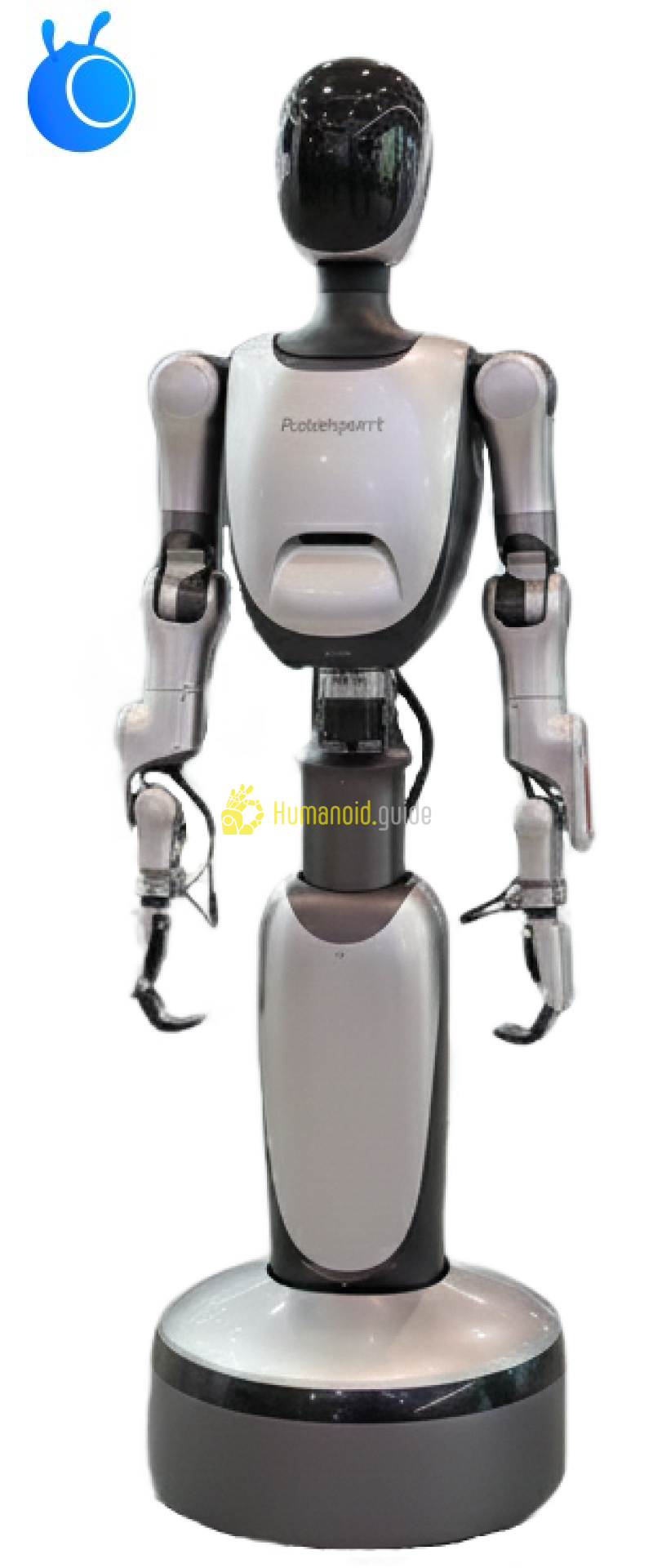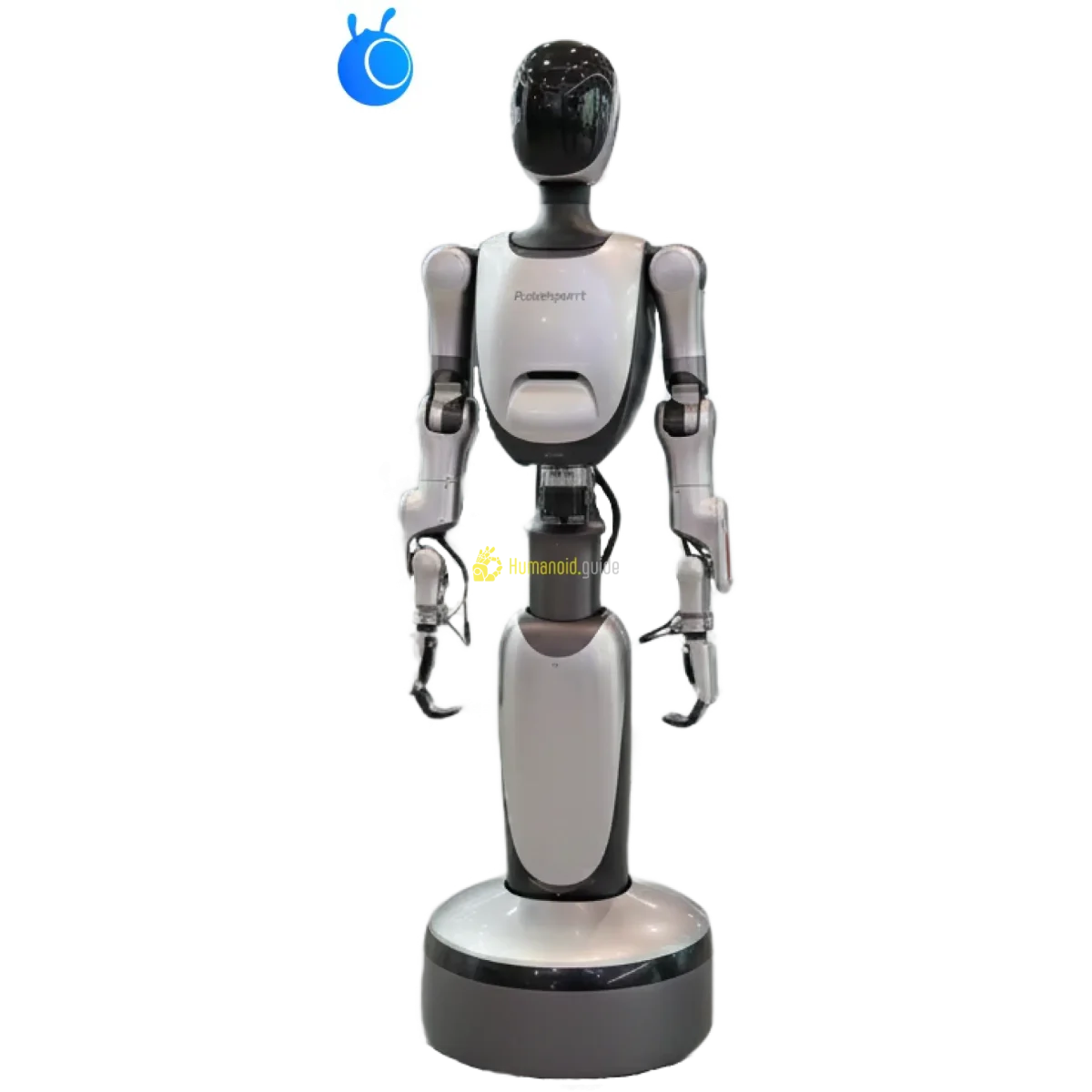
What is the Robbyant R1 Antgroup?
The RobbyAnt R1 is a wheeled humanoid service robot developed by Ant Group (Alibaba’s fintech affiliate) through its subsidiary Ant Lingbo Technology. First announced in 2024, it stands 160 cm tall and weighs 110 kg, using a wheeled base that allows speeds up to 5.4 km/h indoors. With 34 degrees of freedom, it combines articulated insect-inspired legs for stability with an upper body designed for gestures and interaction. Its main differentiator is integration with Ant Group’s Bailing large language model (LLM), enabling natural conversations and embodied AI for tasks like delivery, customer service, and guiding in hospitality, retail, office, and healthcare settings. The R1 is pre-commercial and not sold as a standalone unit; it is bundled into custom scenario solutions.
Specifications
Here are the full technical specifications.
| Spec | Value |
|---|---|
| Height | 160 cm |
| Weight | 110 kg |
| Degrees of freedom | 34 |
| Battery life | Not specified |
| Max speed | 5.4 km/h |
| Payload | Not specified |
| Price (new) | Undisclosed (contact manufacturer) |
| Price (used range) | N/A (pre-commercial) |
Price & Value
New MSRP: Undisclosed (contact manufacturer)
Used range: N/A
Ant Group has not disclosed official pricing for the RobbyAnt R1. Third-party estimates suggest a per-unit cost around $55,000, but the robot is only available as part of tailored ‘scenario solutions’ — a bundled service that includes integration, software, and support. This approach makes direct price comparison difficult. For an organization evaluating deployment, the total cost of ownership will depend heavily on the scope of the solution; pure hardware acquisition may not be possible. As a pre-commercial robot, depreciation and used market values are unknown. Potential buyers should contact Robbyant (Ant Lingbo Technology) for a custom quote.
Who Is It For?
Best for: - Hospitality chains needing indoor delivery and customer interaction (wheeled humanoid with LLM) - Retail stores wanting an interactive service robot for guiding customers - Healthcare facilities requiring non-critical delivery and patient greeting tasks
Not for: - Outdoor or rough-terrain logistics (wheeled only, indoor only) - Heavy payload handling (no published payload rating; likely under 10 kg) - Budget-constrained small businesses (bundled solution pricing likely high)
Alternatives & Comparison
The RobbyAnt R1 enters a growing field of service robots that combine mobility with human-robot interaction. Competitors like the Savioke Relay, temi, and SoftBank Pepper target similar hospitality and retail use cases, though they differ in form factor and autonomy.
| Model | Price | Available | Key Difference |
|---|---|---|---|
| Savioke Relay | Undisclosed | yes | Purpose-built hotel delivery robot; no humanoid form |
| temi | Undisclosed | yes | Tablet-based telepresence robot with autonomous navigation; not humanoid |
| SoftBank Pepper | Undisclosed | yes (limited) | Humanoid interaction robot with emotional AI; no wheeled mobility for heavy tasks |
Verdict: For organizations that value a humanoid presence with embodied AI and are willing to invest in a bundled solution, the R1 could be a forward-looking choice once it becomes available. However, for immediate hotel delivery needs, the proven Savioke Relay offers a more focused, reliable option. The temi excels in telepresence flexibility, while Pepper's humanoid form is better suited for pure interaction without delivery.
Use Cases & Capabilities
Hotel Delivery and Concierge
The R1's wheeled base and moderate size make it ideal for navigating hotel corridors to deliver room service items, towels, or amenities. Its embodied AI and Bailing LLM allow it to interact naturally with guests, providing directions or local recommendations. The insect-inspired leg joints give it stability even on slightly uneven carpets. However, its undisclosed payload likely limits it to lightweight items, not full luggage handling. Integration with hotel management systems would be necessary for autonomous task queueing.
Retail Customer Assistance
In a retail setting, the R1 can greet customers, answer product questions, and guide shoppers to specific aisles. Its humanoid form creates a more engaging experience than a kiosk or tablet robot. The 34 DOF enable gesturing and pointing, enhancing communication. As a wheeled robot, it can cover large store floors without fatigue. Without published battery life, however, store operators would need to plan for recharging stations during long shifts.
Healthcare Non-Clinical Support
Hospitals could deploy the R1 for delivering lab samples, meal trays, or supplies between departments, reducing staff workload. Its LLM-powered voice interface can be used to check on patients in non-emergency situations or guide visitors. The wheeled design is quieter than legged robots, important in care environments. Still, the lack of certified medical-grade payload handling and unknown IP rating limit it to non-sterile areas. Hospital IT teams would need to ensure data privacy with the onboard AI system.
Office Logistics and Reception
The R1 can act as an autonomous office runner, transporting documents or small packages between floors using its wheeled capability. At a reception desk, it could welcome visitors and escort them to meeting rooms. Its integration with Bailing LLM means it can handle complex, context-aware conversations. However, the 110 kg weight may preclude use in buildings with weight-sensitive floors, and its speed of 5.4 km/h is suitable for pedestrian environments but not rapid delivery.
History & Background
Ant Group, founded in 2014 as Alibaba's fintech arm, ventured into robotics through its subsidiary Ant Lingbo Technology. In 2024, they unveiled the RobbyAnt R1, a wheeled humanoid designed for service roles, first shown at a technology conference. The robot is the first generation of RobbyAnt, built with a novel insect-inspired leg mechanism that combines wheeled motion with articulated legs for stability. As of 2026, the R1 remains in development, with no official commercial launch; it is promoted as part of Ant Group's broader push into embodied AI, leveraging their Bailing large language model. The company has indicated plans for hospitality and healthcare deployment but has not released units for independent purchase.
Buying Used — What to Check
Verify official payload rating Payload is critical for service tasks; no rating published yet can lead to overloading.
Confirm battery runtime Battery life directly affects shift length and charging logistics.
Check software maturity The Bailing LLM integration and autonomous navigation performance in real-world conditions are unproven.