What is the Robee Oversonic?
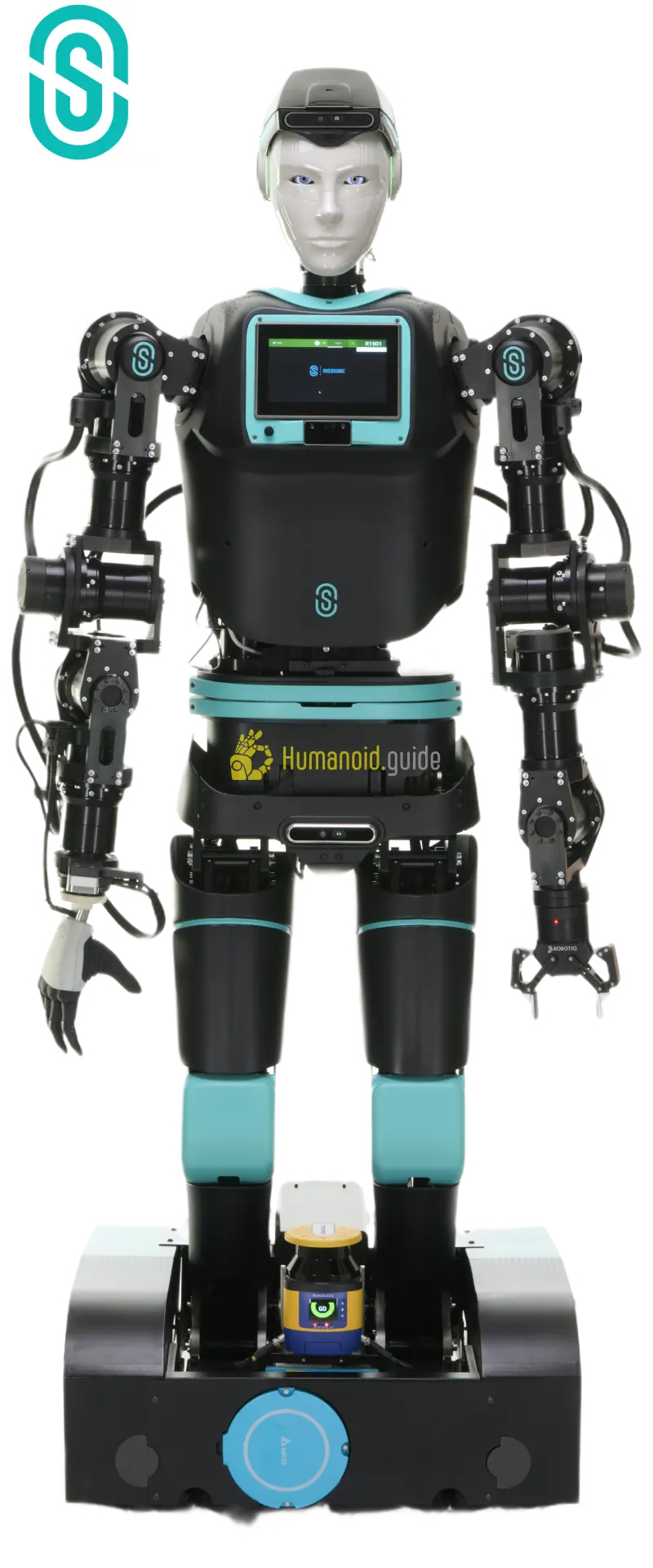
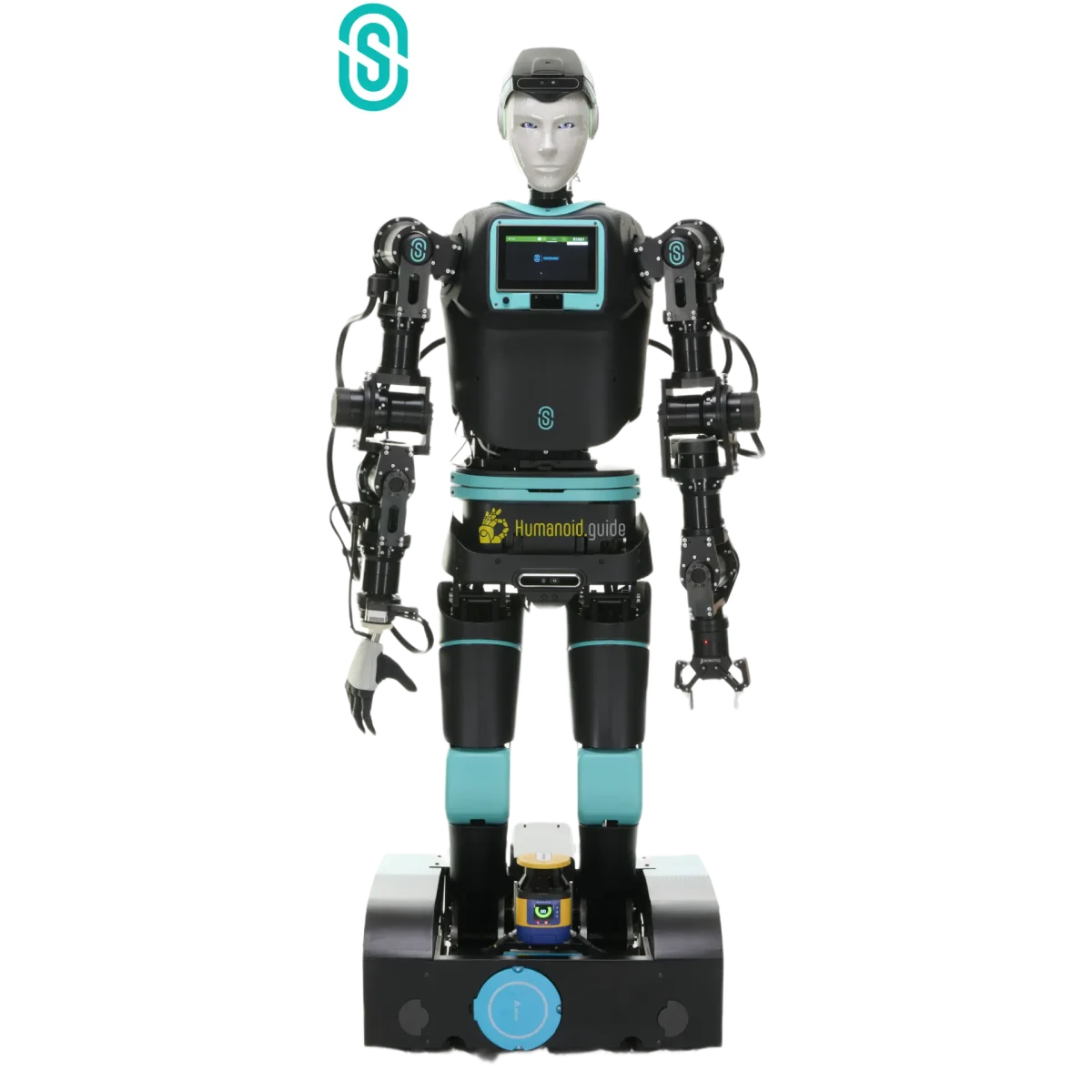
The OverSonic RoBee is a full-size industrial humanoid robot developed by Oversonic Robotics in Cesena, Italy. Standing 190 cm tall and weighing 180 kg, it is built on a steel frame with 40 degrees of freedom, including 18-DOF hands. Designed for cognitive human-robot collaboration, it integrates NVIDIA compute, an LLM-based AI system, and 120 ms glass-to-action latency. Certified IP64 and safe for human-close operations, RoBee has been deployed at STMicroelectronics’ semiconductor fab in Malta for production and logistics tasks. It targets manufacturing, assembly, and inspection applications where a 16 kg payload capability and 8-hour battery life are essential.
Specifications
Here are the full technical specifications.
| Spec | Value |
|---|---|
| Height | 1900 mm |
| Weight | 180 kg |
| Degrees of freedom | 40 |
| Battery life | 8 hours |
| Max speed | 9 km/h (2.5 m/s) |
| Payload | 16 kg (unofficial) |
| Price (new) | Undisclosed (contact manufacturer) |
| Price (used range) | N/A (no used market) |
Price & Value
New MSRP: Undisclosed (contact manufacturer)
Used range: N/A
Oversonic does not publish pricing for RoBee, which is sold directly to industrial partners on a project basis. Comparable large humanoids like Tesla Optimus and Figure 02 are also undisclosed, but industry estimates place full-scale humanoids in the $100,000–$500,000 range. Given its 8-hour battery, IP64 rating, and steel construction, RoBee is positioned as a durable workhorse with lower long‑term maintenance costs than some competitors. No used units have appeared on secondary markets, so depreciation curves are speculative. For now, total cost of ownership must account for custom integration, software licenses, and support agreements.
Who Is It For?
Best for: - Large manufacturing plants needing heavy-payload humanoid collaboration (16 kg per arm, 8-hour shifts) with cognitive AI and IP64 reliability - Logistics centres requiring a bipedal robot that can navigate dynamic environments and carry parts or tools - Safety-critical production lines where certified human‑robot collaboration (IP64, CE‑marked) is mandatory
Not for: - Academic research labs with tight budgets (pricing is undisclosed and likely very high) - Retail or hospitality settings (its 180 kg weight and industrial design are unsuited for public‑facing roles) - Hobbyists or STEM education (no open SDK or affordable entry point)
Alternatives & Comparison
RoBee competes with other full‑scale enterprise‑only humanoids targeting manufacturing and logistics. All players in this space have undisclosed pricing and limited public availability.
| Model | Price | Available | Key Difference |
|---|---|---|---|
| Tesla Optimus | Undisclosed | preorder | Still in development, no known industrial deployment; relies on Tesla’s AI ecosystem. |
| Figure 02 | Undisclosed | preorder | General‑purpose humanoid with few units outside Figure’s own trials; lighter at ~60 kg. |
| Agility Digit | Undisclosed | enterprise-only | Wheeled legs for efficiency; not a full biped, no LLM‑based cognitive AI. |
| Fourier GR‑2 | Undisclosed | preorder | Latest Chinese entry with 40 kg payload but mostly demo videos, no verified 8‑hour runtime. |
Verdict: RoBee stands out as one of the few humanoids actually deployed in a real semiconductor fab, with an 8‑hour battery and IP64 certification that suggest industrial readiness. If you need a proven manufacturing collaborator today, RoBee is a safer bet than pre‑production alternatives. However, if your tasks don’t demand a bipedal platform, Agility Digit’s wheeled mobility may offer lower cost and higher reliability for pure logistics.
Use Cases & Capabilities
Production Line Assembly
RoBee can pick, place, and fasten components on automotive or electronics assembly lines, leveraging its 16 kg arm payload and 190 cm reach to operate at human‑equivalent heights. The built‑in LLM enables conversational task instruction and error reporting, while IP64 sealing means it can work in dusty or wash‑down environments. Because it runs for a full 8‑hour shift, it can replace one operator per post without breaks, though its 180 kg mass requires a reinforced floor and safety fencing is recommended despite its collaborative certifications.
Warehouse Logistics
In a warehouse setting, RoBee can transport totes, load pallets, and navigate dynamic aisles using its stereo vision and ultrasonic sensors. Its 5G and Wi‑Fi connectivity ensures seamless integration with warehouse management systems, receiving real‑time pick lists. The humanoid form factor allows it to use standard forklift‑free aisles and reach high shelves without additional automation. However, its 2.5 m/s walking speed is slower than automated guided vehicles, so it is best suited for mixed human‑robot workflows rather than high‑throughput sortation.
Inspection & Quality Control
RoBee’s NVIDIA‑powered computer vision and optional RGB‑D camera can inspect welds, surface defects, or assembly errors on moving production lines. Its 120 ms latency enables real‑time defect classification, triggering alerts or halting the line. The robot can document findings with on‑board logging and integrate with statistical process control software. Because it is human‑safe, it can work alongside inspectors without cages, but the lack of published camera resolution limits confidence in fine‑detail inspection without additional sensors.
Hazardous Environment Operation
Thanks to its IP64 rating and steel construction, RoBee can operate in hot, humid, or dusty areas of a factory where human exposure is restricted. It can handle hot parts, work near presses, or enter paint booths without special enclosures. The robot’s cognitive AI allows it to adapt to changing conditions and request human assistance if needed. While it is not intrinsically explosion‑proof, its rugged design makes it one of the few humanoids suited for heavy industrial environments.
Human‑Robot Collaboration Research
Though aimed at industry, RoBee is also used by corporate R&D labs and universities for studying advanced human‑robot interaction, trust, and safety protocols with a full‑scale humanoid. The built‑in LLM and microphone array facilitate natural language studies, while the 18‑DOF hands allow dexterous manipulation experiments. Access to the robot is limited to institutional partnerships, so researchers must secure a collaboration agreement with Oversonic, restricting its use to well‑funded programs.
History & Background
Oversonic Robotics was founded in 2019 in Cesena, Italy, with the mission of creating cognitive humanoids for industrial collaboration. The first RoBee prototype was built that year and publicly demonstrated in 2020, showcasing a steel‑framed, NVIDIA‑powered platform running Linux with ROS. By 2024, Oversonic gained international attention for deploying RoBee at STMicroelectronics’ semiconductor fab in Malta, performing production and logistics tasks—one of the first European humanoid deployments in a real factory. As of 2026, RoBee remains an enterprise-only product with ongoing software updates, including large language model integration and improved connectivity, but no second‑generation hardware has been announced. The company maintains a closed sales model, releasing specifications only to qualified industrial buyers.
Buying Used — What to Check
Verify payload and battery health The 16 kg payload figure is unofficial and 8‑hour battery may degrade; test under load before purchase.
Confirm software licenses transfer Enterprise robots often have subscription‑based AI services that must be renewed, adding hidden costs.
Check IP64 integrity Seals can deteriorate over time; water/dust ingress could damage internal electronics.