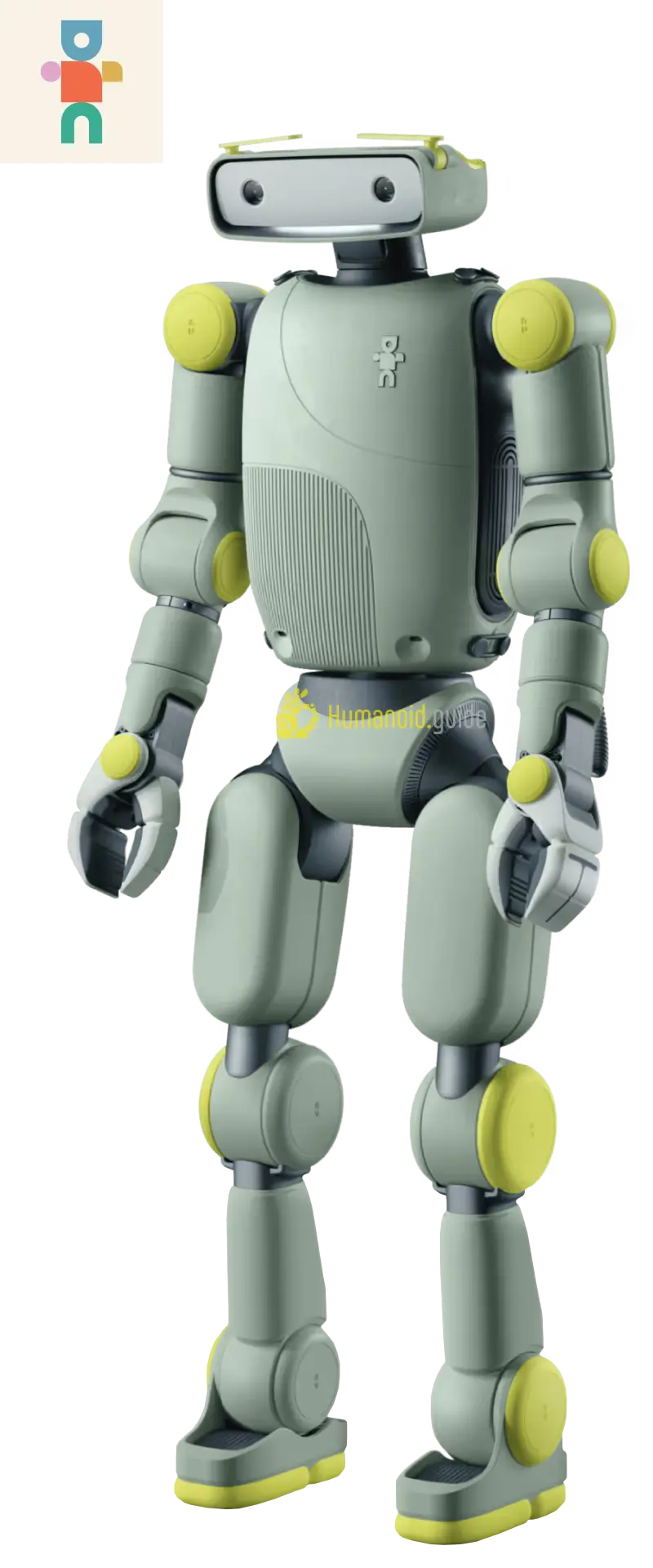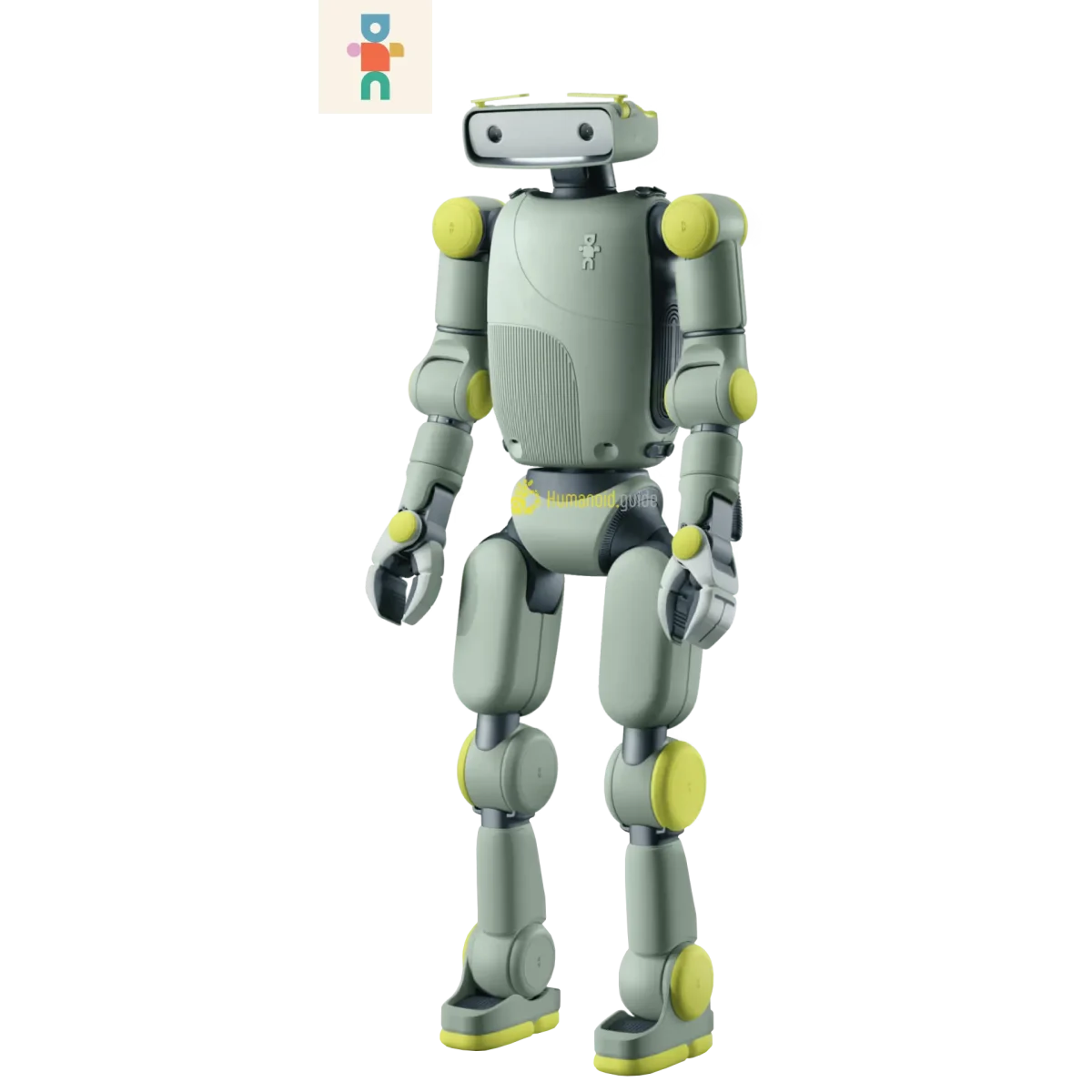
What is the Sprout?
The Fauna Robotics Sprout is a compact collaborative humanoid robot designed for safe interaction in care, education, and research environments. Manufactured by Fauna Robotics, a US-based company, Sprout stands 107 cm tall and weighs 22.7 kg, featuring a soft foam exterior and compliant motors for inherent safety. It integrates a NVIDIA Jetson AGX Orin 64 GB module, ZED 2i stereo camera, and a modular AI stack that supports developer-integrated LLMs. With 29 degrees of freedom and 3-finger grippers (1 DoF each), Sprout is optimized for gentle manipulation and social interaction rather than industrial tasks. Target applications include elderly care, educational outreach, and cognitive robotics research.
Specifications
Here are the full technical specifications.
| Spec | Value |
|---|---|
| Height | 107 cm |
| Weight | 22.7 kg |
| Degrees of freedom | 29 |
| Battery life | 3 hours |
| Max speed | 2 km/h |
| Payload | 2 kg |
| Price (new) | $50,000 |
| Price (used range) | Estimated $30,000–$40,000 |
Price & Value
New MSRP: $50,000
Used range: Estimated $30,000–$40,000
At $50,000, the Sprout occupies a mid-range price point for research humanoids—below premium platforms like the UBTECH Walker S (~$150,000) but above toy-grade bots like NAO ($8,000). With its NVIDIA Jetson AGX Orin compute and 29 DOF, it offers strong value for universities and care facilities seeking a customizable AI platform. Depreciation is expected to be moderate given the specialized hardware and low production volumes; used units may appear at 20–30% discount once initial deployments are refreshed. Buyers should budget for accessories and potential battery replacements, as with any service robot. Compared to the Fourier GR-2 (around $100,000), the Sprout undercuts on price while providing similar degrees of freedom and a safer interaction design, making it a compelling choice for non-heavy-payload tasks.
Who Is It For?
Best for: - University robotics and HRI labs requiring a safe humanoid for interaction studies and AI development - Care facilities testing gentle-assistance robots with soft exteriors and compliant motion
Not for: - Industrial material handling or manufacturing tasks (payload limited to 2 kg) - High-speed logistics applications (top speed 2 km/h)
Alternatives & Comparison
The Sprout competes in the niche of gentle, collaborative humanoids designed for care and research. Its main alternatives range from expressive but stationary platforms to heavier-duty walkers.
| Model | Price | Available | Key Difference |
|---|---|---|---|
| Fourier GR-2 | ~$100,000 (est.) | preorder | Heavier payload and larger form factor but less gentle interaction |
| UBTECH Walker S | ~$150,000 (est.) | preorder | Larger and more powerful, designed for industrial tasks rather than care |
| Engineered Arts Ameca | ~$133,000 (est.) | yes | Extremely expressive face, stationary, no walking ability |
Verdict: For labs and care environments that prioritize safety, affordability, and AI customizability, the Sprout is the best pick. If you need heavy payloads or longer reach, the GR-2 or Walker S are more suitable; for purely social interaction without locomotion, Ameca excels. The Sprout uniquely combines walkability, soft exterior, and a sub-$50k price, making it a top choice for HRI research and pilot care deployments.
Use Cases & Capabilities
Elderly Care Assistance
Sprout's small stature, soft exterior, and gentle movements make it ideal for companion robots in assisted living facilities. It can engage residents with simple conversation powered by LLMs, remind them of medication schedules, and lead light exercise sessions. The 2 kg payload is sufficient to carry small items like pill organizers or reading glasses. However, it cannot assist with mobility or heavy lifting, limiting its role to social and light physical tasks.
Human-Robot Interaction Research
With its 29 DOF and NVIDIA Jetson, researchers can implement novel emotion models, gesture generation, and safe physical interaction studies. The ZED 2i stereo camera provides depth perception for proxemics experiments, and the modular software allows testing of custom AI stacks. Because it stands only 107 cm, it is less intimidating for participants, especially children or elderly. Researchers can also swap in their own LLM integrations to study verbal interaction.
STEM Education Outreach
Schools and universities can use Sprout to teach robotics, programming, and AI. Its pre-integrated NVIDIA platform simplifies deploying computer vision and reinforcement learning coursework. The robot's safety features allow student hands-on without risk of injury, and the lower price point (compared to research-grade platforms) makes it feasible for department budgets. However, its lack of industrial robustness means it's not suited for a factory automation curriculum.
Cognitive Robotics Development
Sprout's compliant actuators and force-limited joints enable investigation of embodied cognition through real-world interaction. Its 3-finger grippers with 1 DoF each are ideal for grasping soft objects without complex dexterous control, focusing research on vision-guided manipulation. The robot's runtime of 3 hours is adequate for experimental sessions, though battery swaps are not available, so experiments must be scheduled around charging. The modular AI stack also allows integration of cognitive architectures.
History & Background
Fauna Robotics, a US-based startup, announced the Sprout humanoid in early 2025 as their debut product focused on gentle human-robot interaction. The robot was designed to fill a gap between entertainment robots and industrial humanoids, targeting care and research. First deliveries are believed to have commenced later that year. As of 2026, the Sprout remains in production with no generational updates announced. The company's website highlights an emphasis on safe collaboration, with soft materials and software torque limiting. Fauna Robotics has not disclosed round funding details or founder background publicly.
Buying Used — What to Check
Check battery cycle count Three-hour runtime per charge may degrade with frequent use; ensure battery health for expected duty cycles.
Inspect soft exterior for damage The foam covering is integral to human-safe contact, and damaged areas could expose harder materials.
Verify software license transfer The modular AI stack may be tied to original purchaser, necessitating license fees for updates.