What is the Syntro?
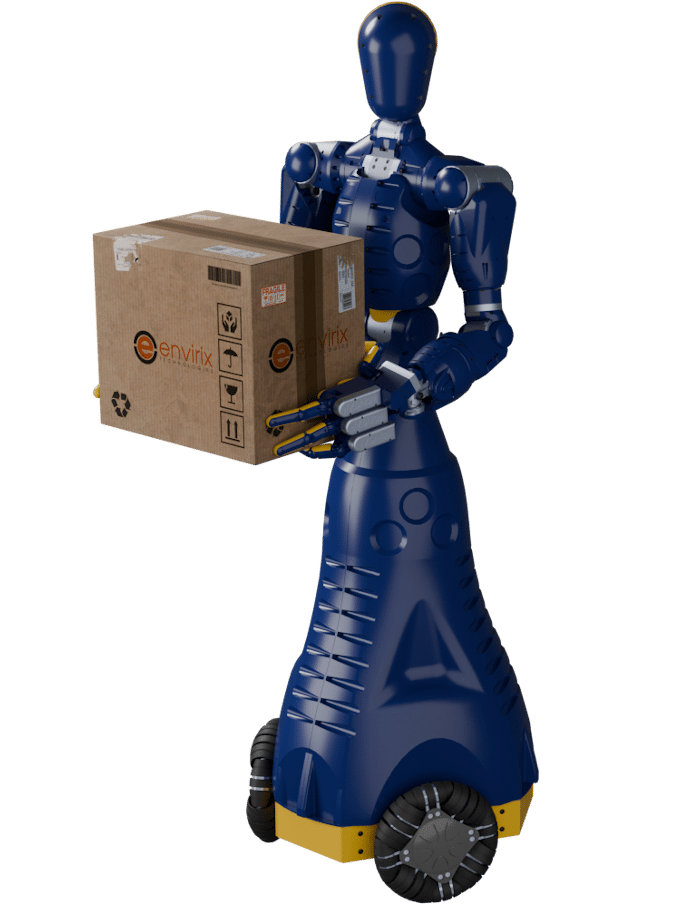
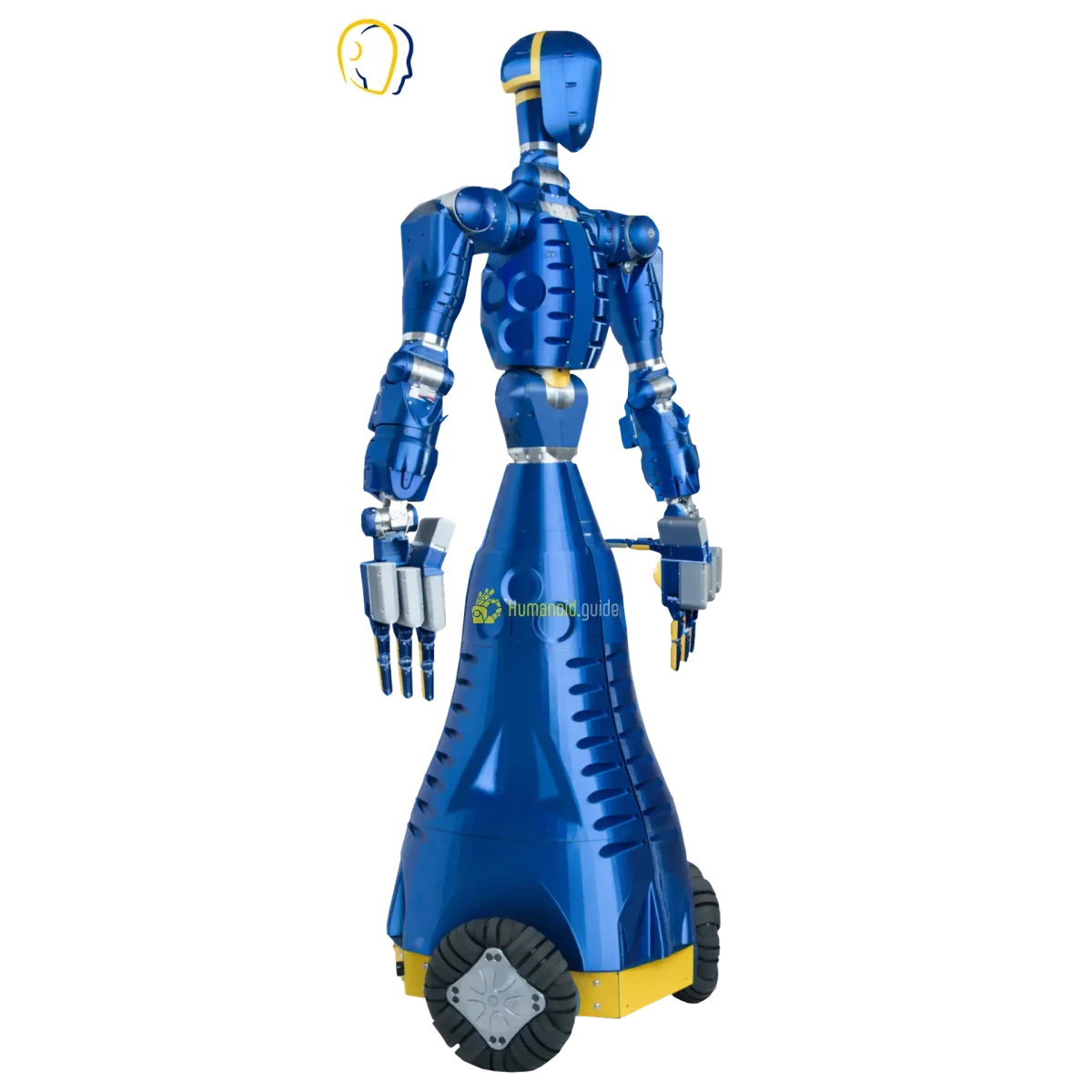
The WorkFar Syntro is an industrial-grade humanoid robot developed by WorkFar Robotics, a US-based company. Designed for heavy lifting and repetitive tasks in manufacturing, logistics, and warehousing, the Syntro combines humanoid form with teleoperation capabilities. It stands approximately 178 cm tall and weighs 108 kg, featuring 45 degrees of freedom (12 per hand) for dexterous manipulation. The robot runs on a Linux + ROS2 platform with Intel multicore processors, utilising Maxon motors and harmonic drives. Its swappable 1.2 kWh batteries provide up to 10 hours of runtime, and connectivity includes 5G LTE and Wi-Fi 6. The base model starts at $29,999, with 'Telepresence' and 'Intelligent' variants available at higher price points and longer lead times.
Specifications
Here are the full technical specifications.
| Spec | Value |
|---|---|
| Height | 178 cm |
| Weight | 108 kg |
| Degrees of freedom | 45 |
| Battery life | 10 hours |
| Max speed | Not officially published |
| Payload | Not officially published |
| Price (new) | $29,999 |
| Price (used range) | N/A (too new) |
Price & Value
New MSRP: $29,999
Used range: N/A (too new)
At $29,999, the Syntro undercuts many industrial humanoids, making it a candidate for small-to-medium enterprises. The base model includes essential mobility and manipulation capabilities, while teleoperation variants may double the cost. Given the early stage, depreciation is difficult to estimate, but used units could emerge at $25,000–$29,000 once first deliveries complete later in 2026. Total cost of ownership includes batteries and potential subscription fees for teleoperation software. Financing options like lease and lending reduce upfront capital expenditure. Buyers should verify payload ratings and runtime consistency before committing, as official specifications are not fully disclosed.
Who Is It For?
Best for: - Small-to-medium manufacturers seeking a low-cost humanoid for repetitive lifting and sorting tasks in controlled environments. - Logistics warehouses wanting a teleoperation-capable robot for remote management of inventory movement. - Industrial automation pilots exploring humanoid deployment without large capital outlay.
Not for: - Heavy industrial tasks requiring high payload (official payload not published, likely limited). - Outdoor or unstructured environments (no ingress protection rating). - Applications demanding high walking speed (max speed not officially published, likely slow).
Alternatives & Comparison
The WorkFar Syntro occupies an unusual spot — a professional industrial humanoid at a price close to research platforms like the Unitree G1.
| Model | Price | Available | Key Difference |
|---|---|---|---|
| Unitree G1 | $16,000 | yes | Primarily research-focused, lacking industrial payload ratings or teleoperation. |
| Fourier GR-2 | ~$50,000 (est.) | preorder | Higher payload (5 kg) and more proven industrial integration, but nearly double the cost. |
Verdict: For budget-conscious buyers who need a general-purpose humanoid with teleoperation, the Syntro’s $29,999 price is unmatched. However, if payload is critical, the Fourier GR-2’s 5 kg arm payload (official) offers a safer bet. Research labs may prefer the Unitree G1 for its development ecosystem and lower price.
Use Cases & Capabilities
Light Manufacturing Assembly
The Syntro can handle repetitive pick-and-place operations on assembly lines, working alongside human operators. Its 45 DOF and dexterous hands allow it to manipulate components weighing up to its payload limit (not officially disclosed, but industry estimates suggest at least 10–15 kg). Teleoperation enables remote oversight and intervention when automation fails. Swappable batteries support round-the-clock shifts with minimal downtime. The low entry price makes it viable for pilot programs before full-scale automation.
Warehouse Logistics and Sorting
In fulfillment centers, the Syntro can move boxes, sort parcels, and load pallets. Its 178 cm height and bipedal mobility allow it to navigate aisles designed for humans. The 10-hour battery life and swappable packs enable continuous operation. 2D LiDAR and computer vision provide navigation and object detection in controlled environments. However, its lack of a published payload rating means heavy palletizing may require a higher-capacity cobot instead.
Teleoperated Remote Inspection
With the Telepresence variant, operators can remotely pilot the Syntro through hazardous or hard-to-reach areas of a factory or warehouse. This is useful for quality control checks, security patrols, and troubleshooting without putting humans at risk. 5G LTE and Wi-Fi 6 ensure low-latency video and control signals. The humanoid form factor allows it to use standard tools and open doors. Lead time for this variant is 12 months, so early adopters should plan accordingly.
History & Background
WorkFar Robotics, based in the United States, entered the humanoid robot market with the Syntro platform. The company has been actively posting development updates since at least 2024, with the Syntro V17 being the current revision as of April 2026. The robot was designed from the ground up for industrial tasks, combining teleoperation with autonomous mobility. WorkFar positions the Syntro as a bridge between labour shortages and automation, offering flexible acquisition models including purchase, lease, and rental. While exact first-build dates are not publicly disclosed, the platform appears to have undergone multiple generations of refinement, with a focus on robust mechanics, simple maintenance, and swappable batteries to minimise downtime. The company’s decision to sell at $29,999 signals an intent to disrupt the mid-range humanoid segment.
Buying Used — What to Check
Verify payload and runtime These specs are not officially published; ensure they meet your task requirements.
Inspect battery condition Swappable batteries degrade over cycles; capacity may be reduced in used units.
Confirm lead time and variant Telepresence and Intelligent variants have different lead times and software subscriptions.