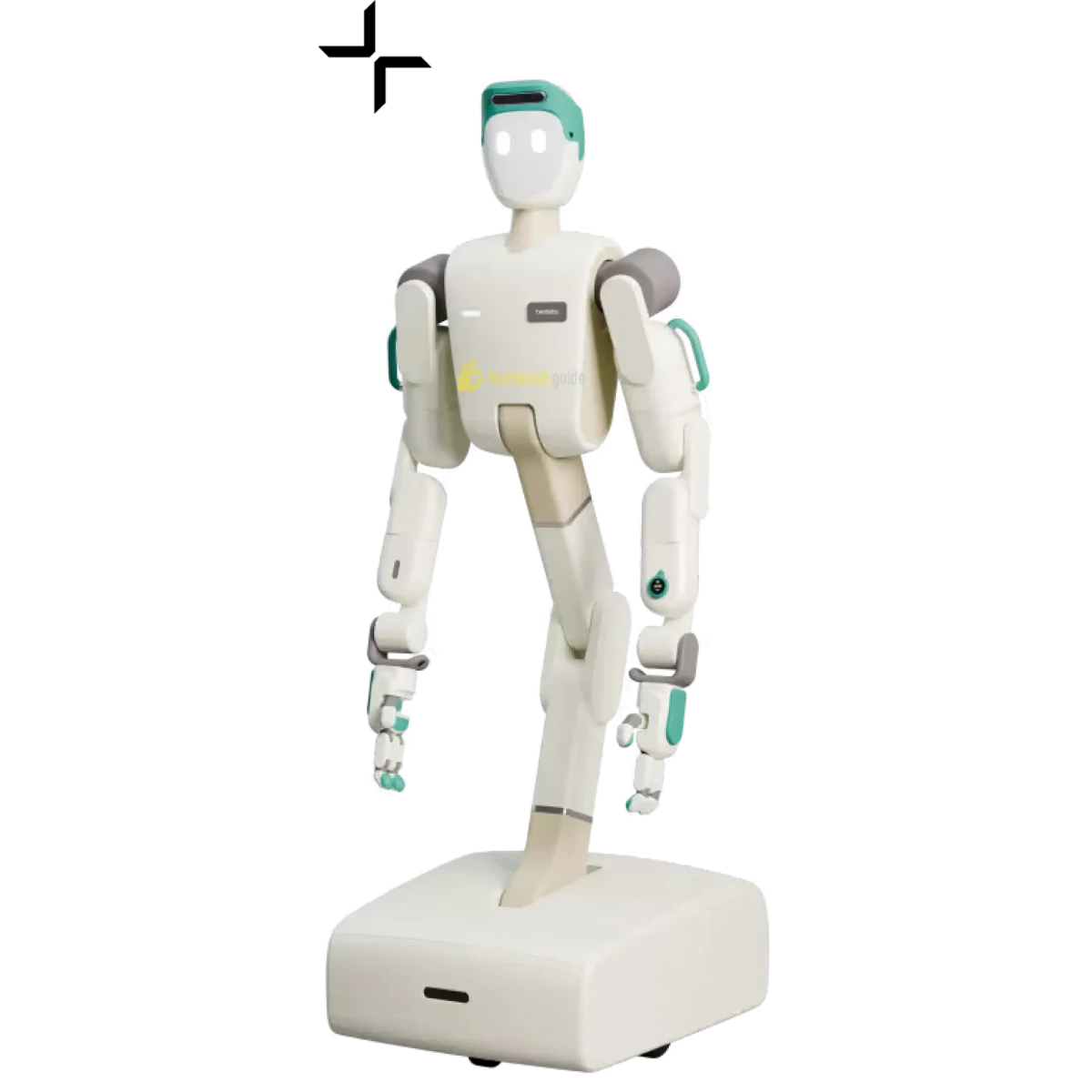
What is the Tobi?
The Two Labs Tobi is a socially intelligent semi-humanoid robot designed specifically for nursing homes, senior living, and assisted care facilities. Manufactured by San Francisco-based startup Two Labs, Tobi combines physical manipulation capabilities (arms with 6-DOF hands) with voice interaction and facility integration. Its primary tasks include feeding assistance, dressing help, medication reminders, and fetching objects, all delivered through a modular platform that care facilities can adapt. Standing 150 cm tall and weighing 60 kg, Tobi moves at a safe walking pace of 4 km/h and operates for up to 5 hours per charge. It represents a new class of affordable caregiving robots that handle both social and physical tasks, differentiating itself from purely conversational companions.
Specifications
Here are the full technical specifications.
| Spec | Value |
|---|---|
| Height | 150 cm |
| Weight | 60 kg |
| Degrees of freedom | 16 |
| Battery life | 5 hours |
| Max speed | 4 km/h |
| Payload | 5 kg |
| Price (new) | ~$50,000 (est.) |
| Price (used range) | Not yet established |
Price & Value
New MSRP: ~$50,000 (est.)
Used range: Not yet established
Two Labs has not released an official MSRP, so the ~$50,000 figure circulating on humanoid.guide should be treated as an early estimate. At this price point, Tobi would be one of the most affordable physically assistive humanoid robots, undercutting research-grade humanoids like PAL Robotics' ARI ($60k–80k) and drastically cheaper than general-purpose humanoids like UBTECH Walker S ($150k+). However, the lack of formal pricing or commercial rollout means buyers should expect final pricing to change. For elder care facilities facing severe staffing shortages, a $50k robot that can handle 2–3 shifts of non-clinical tasks daily could deliver a strong return on investment within 18–24 months compared to hiring additional aides. Total cost of ownership will include maintenance contracts, staff training, and facility connectivity upgrades, which Two Labs has not detailed. Early adopters will likely be part of a pilot program with bundled support. A used market doesn't exist yet, but as pre-orders are fulfilled, secondary sales could see prices drop to $30k–40k for lightly used units, making Tobi accessible to smaller assisted living homes.
Who Is It For?
Best for: - Elder care facilities—nursing homes or assisted living—seeking a physically assistive robot for feeding, dressing, and mobility tasks alongside social interaction. - Pilot programs in senior living communities evaluating affordable humanoid caregiving technology with modular, data-collecting capabilities. - Robotics builders and researchers using Two Labs' modular platform to develop and train autonomous caregiving skills in real-world environments.
Not for: - Heavy industrial or warehouse settings (payload limited to 5 kg, no IP rating for water/dust). - Facilities requiring 24/7 uptime without charging breaks—5-hour runtime is insufficient for continuous multi-shift work without swapping batteries. - Buyers expecting immediate plug-and-play deployment; Tobi is a platform that requires integration and training, not a turnkey consumer product.
Alternatives & Comparison
Tobi enters a niche where social robots like Pepper lack physical capabilities, while full humanoids like Walker S are too expensive for widespread elder care deployment. The comparison below pits Tobi against the most relevant service robots that could address staffing gaps in senior living.
| Model | Price | Available | Key Difference |
|---|---|---|---|
| PAL Robotics ARI | ~$60,000–80,000 | yes | ARI is social-only with no manipulation arms, limiting it to verbal interactions and reminders, whereas Tobi can physically assist residents. |
| UBTECH Cruzr | ~$20,000 | yes | Cruzr is a cost-effective social robot for navigation and info delivery, but it lacks any arms or physical caregiving functions. |
| Toyota HSR | Undisclosed (research lease) | no | HSR has a single arm for object retrieval in home-like settings, but it is not humanoid-shaped and lacks the social presence and dual-arm dexterity of Tobi. |
Verdict: For elder care facilities that solely need conversational companionship or wayfinding, cheaper social robots like Cruzr or ARI are sufficient. But when physical assistance—feeding, dressing, fetching—is the requirement, Tobi is the only robot in this price bracket that offers dexterous arms. HSR comes close in function but is research-only and not commercially sold. Therefore, facilities with moderate budgets and a focus on reducing caregiver physical strain should consider Tobi as the most balanced caregiving humanoid available for pre-order in 2026.
Use Cases & Capabilities
Mealtime Assistance
Tobi can use its 6-DOF hands to hold utensils, cut soft foods, and bring spoonfuls to a resident's mouth under caregiver supervision. Its LLM-integrated voice system can converse to maintain dignity and comfort during meals. The robot's moderate speed and safe-touch covers ensure it works safely inches from a person. Limitations include dependence on pre-programmed food textures and the need for a caregiver to load the plate initially, but it reduces the physical demands on staff during busy mealtimes.
Dressing and Grooming Help
With a 5 kg payload capacity in each arm, Tobi can hold and position clothing items like jackets, assist with socks, or support a resident's arm while a caregiver does the detailed dressing. The aluminum frame with soft-touch covers makes it safe for close physical contact. Its built-in Bluetooth and Wi-Fi let it alert staff when extra help is needed. Because dressing tasks vary widely, Tobi's modular software allows facilities to train specific motions, though it won't handle complex dressing autonomously without human oversight.
Medication Reminders and Delivery
Tobi integrates into a facility's network to receive schedules, then navigates to residents to deliver verbal reminders and present pre-prepared medication cups on its tray or hand. It can log compliance via its onboard sensors and alert nursing stations if a resident refuses or needs attention. The robot's walking speed of 4 km/h lets it cover a typical 100-bed facility in under 15 minutes per round. Its lack of a secured medication drawer is a current limitation—pills must be loaded by staff.
Fetching and Carrying Tasks
Caregivers frequently leave residents to retrieve water, blankets, or equipment. Tobi can be summoned via app or voice to bring lightweight items within its 5 kg grasp. Its 150 cm height allows it to reach bedside tables and low shelves. While it cannot climb stairs or open heavy doors, it can navigate level corridors and use Wi-Fi-enabled automatic doors in modern facilities. This use case offloads non-care tasks from aides, letting them focus on direct resident care.
Social Engagement and Cognitive Stimulation
Beyond physical tasks, Tobi's LLM integration enables natural conversation, trivia games, and reminiscence therapy sessions tailored to residents with mild cognitive impairment. Its humanoid form and gentle movements are designed to be non-threatening, promoting acceptance among elderly users. The robot can lead group activities or provide one-on-one companionship during quiet hours. However, it cannot replace human emotional connection and is intended to augment—not substitute—social interaction from staff and family.
History & Background
Two Labs, a San Francisco-based robotics startup, emerged quietly around 2023–2024 with the mission of building modular humanoid platforms for caregivers. The company initially positioned itself as a platform for builders—offering a base humanoid that developers could customize for data collection and skill training. Tobi, its first product, was first shown in early-stage prototype form on the company's website and through third-party databases like humanoid.guide by early 2025. Two Labs has remained low-profile, with no major press releases or conference appearances found. Tobi's pre-order status suggests the company has moved beyond a single prototype and is engaging early adopter care facilities for pilot programs. The modular, LLM-integrated design places Tobi as a pioneer in combining physical assistance with social intelligence at a price accessible to mid-sized senior living chains. As of 2026, the company is believed to be refining the robot based on field trials and preparing for a broader commercial launch.
Buying Used — What to Check
Verify actual payload rating Payload and runtime are critical for caregiving tasks. Early Tobi units may have lower real-world capacity than the 5 kg listed, so test lifting ability with typical care items.
Inspect battery health and swappability A 5-hour battery life is marginal for a full shift. Used units may have degraded batteries. Confirm whether the battery is field-swappable and if spare packs are available.
Check software and LLM integration status Tobi's value lies in its modular, AI-driven platform. Ensure the unit comes with updated caregiving skill libraries and that facility network integration (Wi-Fi, Bluetooth) works, as these may require licensing from Two Labs.