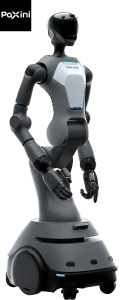
What is the Toraone?
The ToraOne is a full-size humanoid robot developed by Tora, a Chinese robotics firm. It stands 186 cm tall with 47 degrees of freedom, enabling both bipedal locomotion and dexterous manipulation. The robot walks at 3.6 km/h and can carry payloads up to 6 kg, with a battery life of 8 hours. Designed as a research platform, it combines mobility and manipulation in a single integrated system. First built in 2024, the ToraOne remains in the prototype stage, with limited public demonstrations and technical details. The manufacturer’s website (paxini.com/robot) provides a basic overview but no commercial pricing or purchase options.
Specifications
Here are the full technical specifications.
| Spec | Value |
|---|---|
| Height | 186 cm |
| Weight | Not specified |
| Degrees of freedom | 47 |
| Battery life | 8 hours |
| Max speed | 3.6 km/h |
| Payload | 6 kg |
| Price (new) | Undisclosed |
| Price (used range) | N/A |
Price & Value
New MSRP: Undisclosed (contact manufacturer)
Used range: N/A
Tora has not publicly announced pricing for the ToraOne, reflecting its early-stage development status. As a prototype, no used market exists, and resale value is hypothetical. If eventually commercialized, the robot would likely be priced similarly to other research humanoids in the $50,000–$150,000 range, based on its specifications. Without a confirmed price, potential buyers must inquire directly with the manufacturer. Financing or leasing options are not known. It is important to budget for additional costs such as software licenses, maintenance, and integration support that are typical for advanced robotics platforms.
Who Is It For?
Best for: - University robotics research labs needing a full-size humanoid platform for locomotion and manipulation studies (47 DOF, 6 kg payload) - Companies exploring humanoid automation prototypes for indoor logistics or service tasks
Not for: - Heavy industrial tasks (only 6 kg payload, no rugged certifications) - Production deployment requiring commercial support and proven uptime (prototype stage)
Alternatives & Comparison
The ToraOne competes in the emerging full-size humanoid market, where several manufacturers are developing platforms for research and future commercial use.
| Model | Price | Available | Key Difference |
|---|---|---|---|
| Unitree H1 | ~$90,000 (est.) | yes | Lighter than ToraOne, 50 kg vs unknown weight, but longer battery life 12 hours |
| Fourier GR-2 | Undisclosed (est. $100,000+) | preorder | More advanced manipulation with 12 DOF hands, compared to unknown hand dexterity of ToraOne |
| UBTECH Walker S | Undisclosed (est. $150,000) | preorder | Designed for industrial deployment with higher payload (10 kg) and enterprise software, vs ToraOne's research focus |
Verdict: For research labs prioritizing open architecture and customizability, the ToraOne may appeal if full documentation and developer support are provided. However, the Unitree H1 offers a more proven, available platform at a known price, while Fourier GR-2 delivers superior dexterity. Until Tora releases concrete pricing and specs, the ToraOne remains a speculative choice.
Use Cases & Capabilities
Humanoid Robotics Research
The ToraOne serves as a versatile testbed for locomotion algorithms, whole-body control, and human-robot interaction studies. Its 47 DOF and full-size frame allow researchers to explore dynamic walking, stair climbing, and manipulation in a single platform. The open design may facilitate custom sensor integration and software development, which is critical for advancing bipedal robotics. However, the lack of published weight and actuator details could complicate physics-based simulations.
Service Robotics Prototyping
With a 6 kg payload and 8-hour battery, the ToraOne can be used to prototype indoor service tasks such as object retrieval, light assembly, or delivery in controlled environments. Its 186 cm stature is suitable for interacting with human-scale workspaces. The robot’s development status means it is best suited for experimental deployments rather than production use. Researchers can evaluate its potential for future commercial service applications like hospitality or retail assistance.
Academic Training and Education
The ToraOne could become a valuable teaching tool for graduate-level robotics courses covering humanoid kinematics, dynamics, and programming. Students would gain hands-on experience with a real bipedal platform, reinforcing theoretical concepts. The robot’s modularity, if confirmed, would allow incremental upgrades and experimentation. Until commercial availability, however, access is limited to early-stage research partnerships with the manufacturer.
History & Background
Tora is a relatively new entrant in the humanoid robotics space, based in China. The company first revealed the ToraOne in 2024, positioning it as a full-size research platform. Prior to the ToraOne, the firm may have been involved in component-level robotics but little has been disclosed. The robot shares its name with the Torobo arm in some listings, but the ToraOne is a distinct full-body humanoid. As of 2026, the ToraOne remains in the prototype phase, with no public timeline for commercial release. The ToraOne was developed to advance bipedal locomotion and manipulation in a single integrated platform. It has been shown in limited demonstrations, emphasizing its 47 degrees of freedom for dexterous tasks. The company’s website at paxini.com provides a product page but lacks detailed technical specifications or purchase information. Observers note the project appears to be a long-term research initiative rather than an imminent product launch.
Buying Used — What to Check
Verify payload rating Payload and runtime are critical for research tasks; prototypes may deviate from the published 6 kg and 8-hour specs.
Check for complete SDK and documentation Early units may lack mature software support, hindering integration and development.
Assess structural integrity and joint wear Unknown build quality and unknown hours of use on a prototype could affect long-term reliability.