What is the Toyota Punyo?
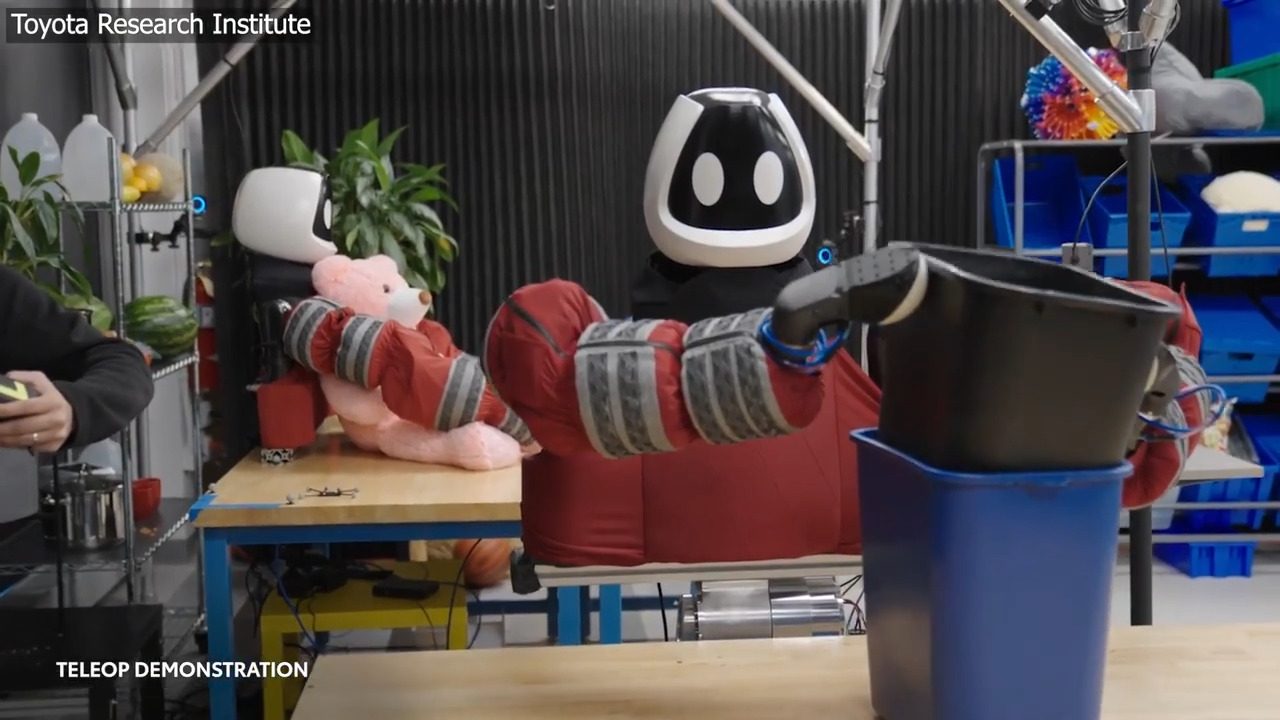
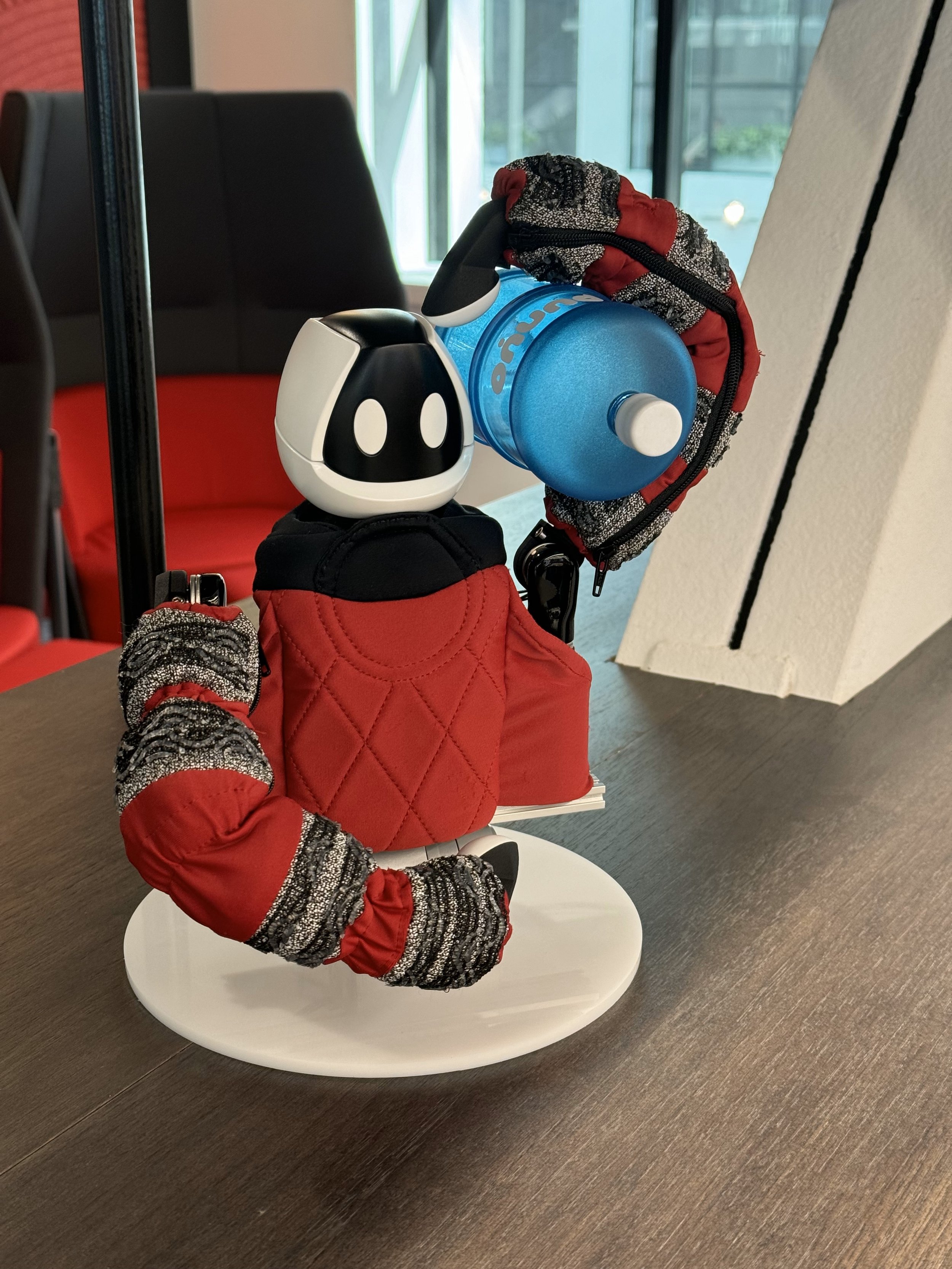
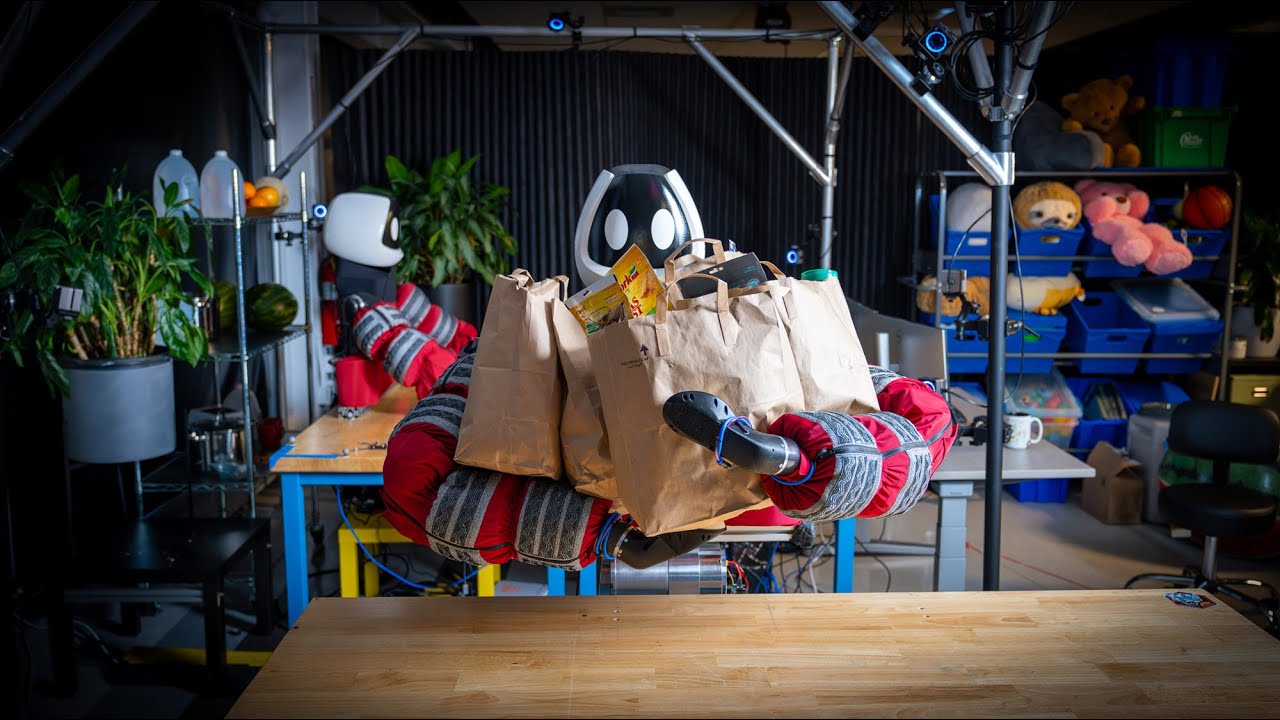
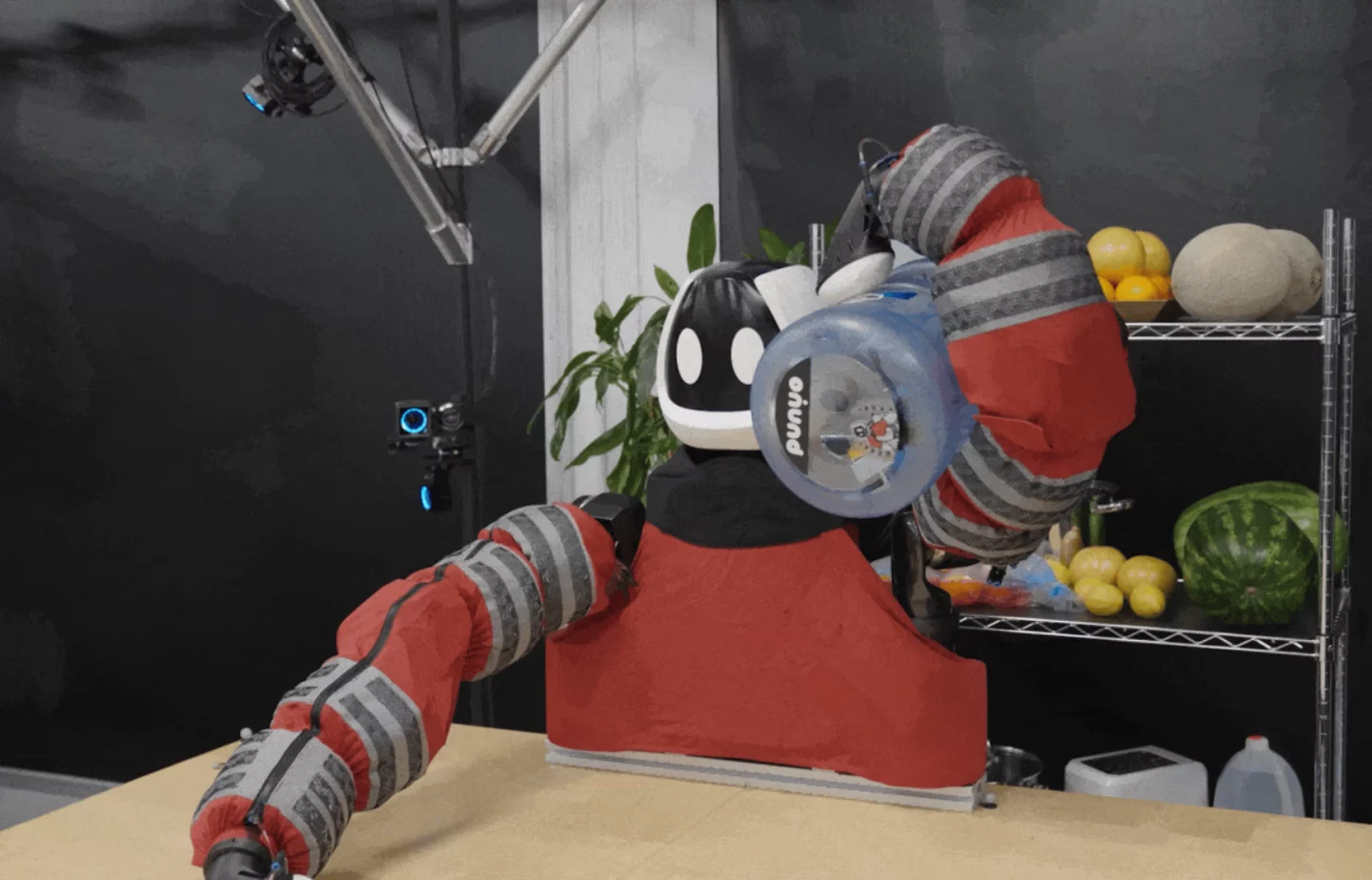
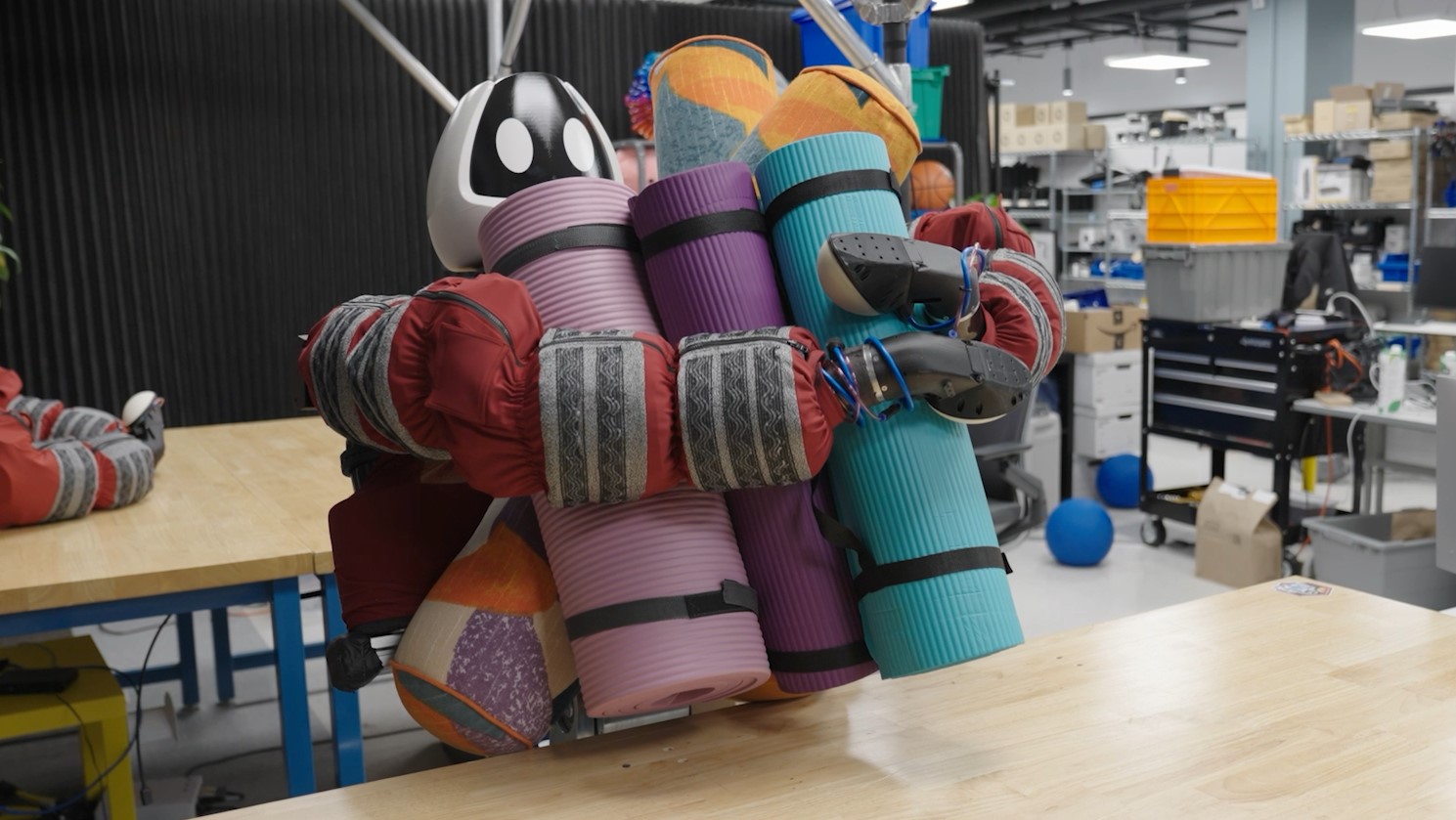
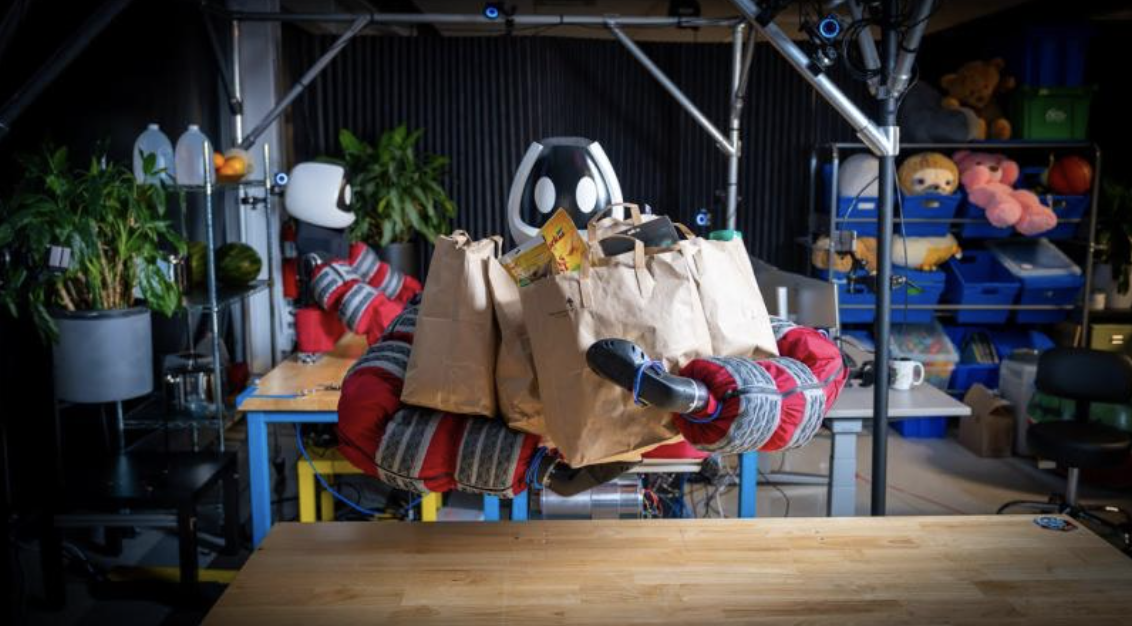
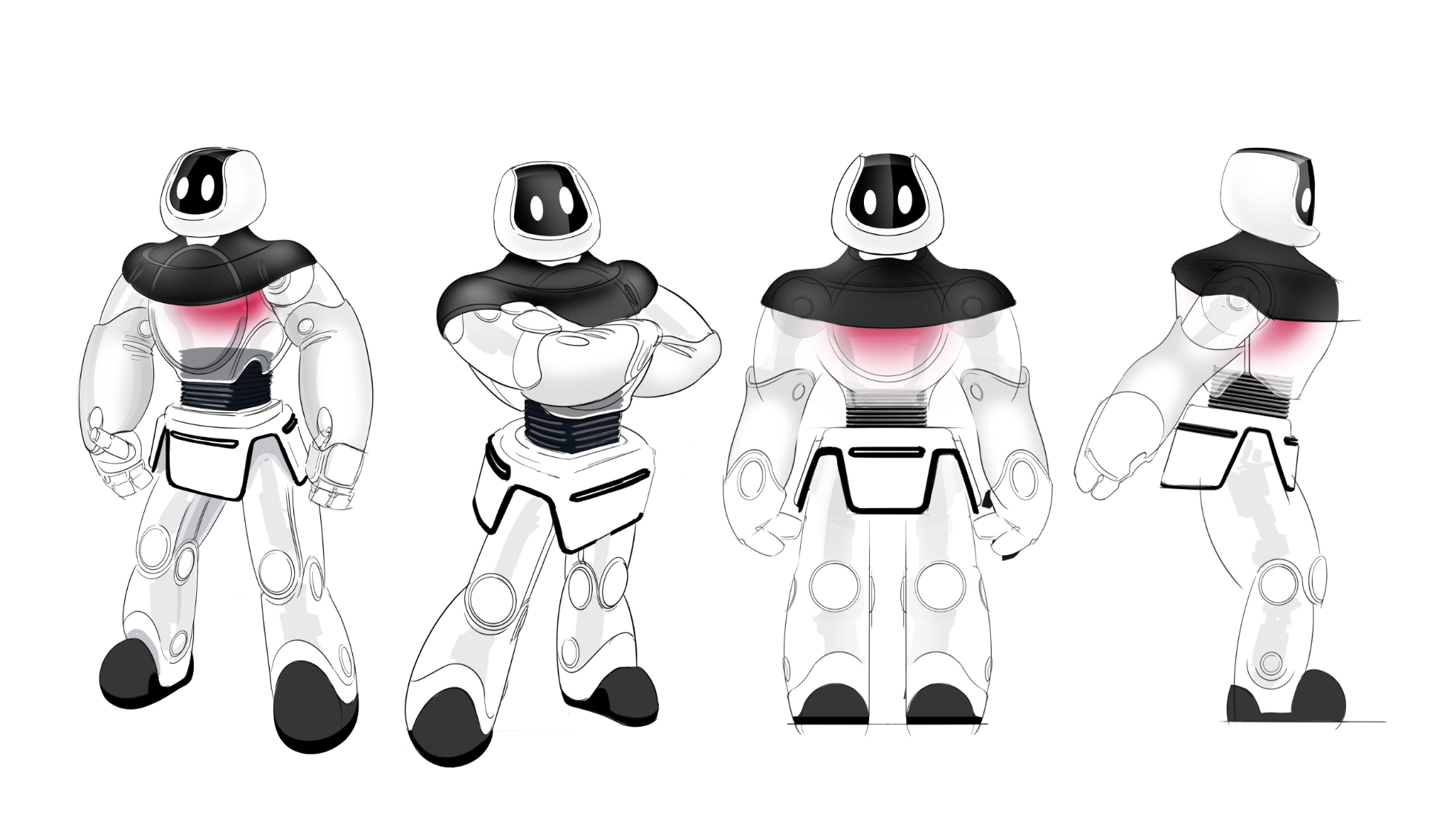
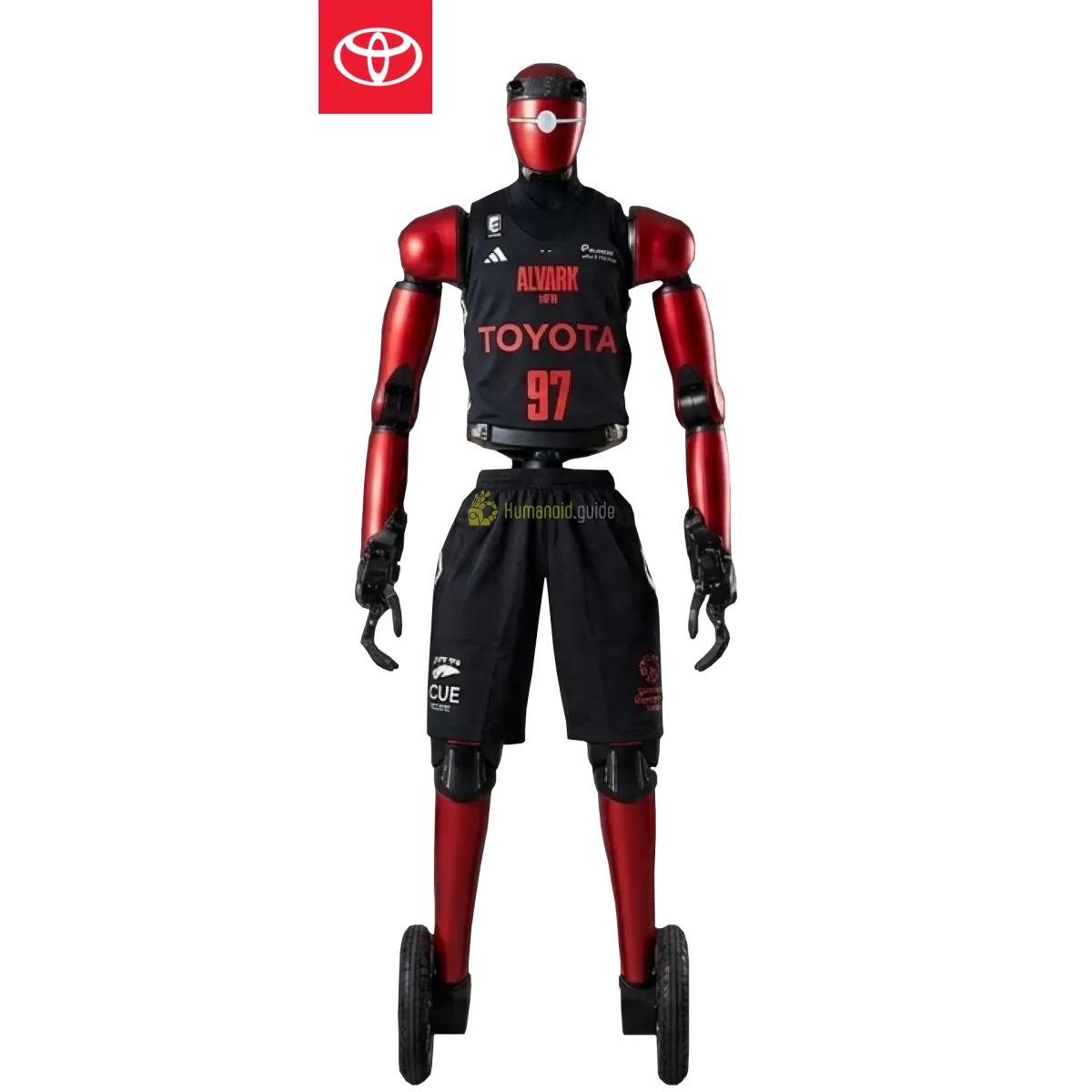
The Toyota Punyo is a torso-up humanoid research robot developed by the Toyota Research Institute (TRI) in Toyota City, Japan. First revealed in January 2024, Punyo is designed to perform whole-body manipulation — using its arms, torso, and soft grippers to lift and carry large, irregular objects. Its most distinctive feature is a soft, inflatable air-bladder covering over a rigid frame, providing passive compliance that makes accidental human contact safe. The robot has 53 degrees of freedom distributed across its torso, arms, and head, and is equipped with RGB-D cameras and tactile sensors for environment perception. Punyo does not have legs; it is a stationary upper-body platform intended to prove out soft robotics principles for future Toyota service robots. Research applications focus on household assistance, elderly care, and general safe human-robot interaction. The name “Punyo” reflects the squishy sensation of its skin.
Specifications
Here are the full technical specifications.
| Spec | Value |
|---|---|
| Height | 2000 mm |
| Weight | Not specified |
| Degrees of freedom | 53 |
| Battery life | Not specified |
| Max speed | N/A (stationary) |
| Payload | Not specified |
| Price (new) | Undisclosed (research platform) |
| Price (used range) | N/A |
Price & Value
New MSRP: Undisclosed (research platform)
Used range: N/A
As a research prototype, the Toyota Punyo has no retail price and is not available for commercial purchase. TRI develops such platforms to advance internal research and may license technologies later. Unlike industrial robots, Punyo’s value lies in validating soft-body safety for future home service robots. Because it is not a product, there is no depreciation or resale market. Potential adopters in academia should seek collaboration opportunities directly with TRI rather than expecting to buy a unit. In the broader landscape, compliant research platforms like Rethink Baxter have sold for $30,000–$40,000 USD, but Punyo’s whole-body softness and higher DOF set it apart, though at an undisclosed cost. Given its experimental nature, total cost of ownership would include research integration labor rather than purchase price.
Who Is It For?
Best for: - Academic robotics labs focusing on whole-body manipulation and soft robotic compliance. - Research teams developing safe human-robot interaction strategies for home environments. - Engineers testing principles of inflatable air-bladder actuation for future product integration.
Not for: - Commercial deployment or production use (no manufacturing readiness or certifications). - Operations requiring mobility (no legs, static platform). - Buyers expecting standard warranty, spare parts, or enterprise support (research-only).
Alternatives & Comparison
For researchers seeking a compliant manipulation platform, Punyo sits at the intersection of soft robotics and high-DOF humanoids. Unlike mainstream research arms or mobile manipulators, its whole-body soft exterior is unique. However, other platforms offer more proven, purchasable alternatives for similar research goals.
| Model | Price | Available | Key Difference |
|---|---|---|---|
| Toyota HSR | ~$100,000 (est.) | yes | Mobile base vs Punyo's stationary torso‑up design |
| Rethink Baxter | ~$30,000 (used, est.) | no | Dual soft arms but lacks whole-body compliance and high DOF |
| PAL Robotics TIAGo++ | ~€100,000 | yes | Mobile research platform with manipulation but not soft body |
Verdict: Punyo stands alone for studies requiring embodied compliance across the entire upper body—no commercial alternative matches its combination of softness and 53 DOF. Yet, for labs needing mobility, the Toyota HSR or PAL TIAGo++ deliver proven mobile manipulation out of the box. Rethink Baxter, though discontinued, offers a lower-cost entry into compliant manipulation. Choose Punyo if soft interaction and pioneering whole-body research are paramount and you can collaborate with TRI; otherwise, a purchasable platform may better suit your timeline and budget.
Use Cases & Capabilities
Whole-body manipulation research
Punyo’s primary purpose is to investigate how a humanoid can use its entire body—torso, arms, and soft hands—to manipulate large and irregular objects, such as bedding, cushions, and boxes. Its inflatable exterior and high DOF allow for cradling and pushing motions impossible with rigid robots. Researchers can explore control algorithms that exploit the passive compliance for secure, jamming-free grasps. This use case directly supports Toyota’s vision for home robots that can clear clutter or make beds. Because it lacks legs, tests are limited to static, table-height tasks.
Safe human-robot collaboration studies
Punyo’s air bladders provide a forgiving surface that minimizes injury risk during accidental contacts, making it ideal for studying close-proximity human-robot collaboration. Researchers can measure contact forces and test emergency stop strategies with less fear of damage. The tactile skin gives feedback on contact location and pressure, enabling reactive motions. This is essential for applications where robots and humans share workspace, like assistive living facilities. The stationary base simplifies safety protocols but limits spatial interaction.
Elderly care assistance prototyping
Designed with an eye toward aging societies, Punyo can prototype tasks like helping a person sit up, passing heavy items, or supporting limbs. Its soft body reduces the psychological barrier for elderly users who may be wary of rigid machines. The ability to gently wrap around a person’s arm or torso could enable non-intrusive lifting aids. However, without legs, it cannot assist with mobility, and payload limitations are still unknown. Nevertheless, it serves as a valuable testbed for user experience studies.
Soft robotics component testing
Researchers can use Punyo to evaluate different air-bladder materials, shapes, and pressure control systems. Its modular skin may be swapped or reconfigured to test durability and compliance levels. This helps advance soft actuation technologies beyond just grippers. Because the robot’s internal rigid structure provides repeatable positioning, experiments can isolate the effects of the soft cover. Findings feed into Toyota’s broader materials science research.
History & Background
Toyota Motor Corporation, founded in 1937 by Kiichiro Toyoda, began robotics research in the 1970s with industrial arms for its assembly lines. The company later developed partner robots like the trumpet-playing Partner Robot and the Human Support Robot (HSR) for domestic assistance. Toyota Research Institute (TRI) was established in 2015 in Palo Alto, California, with a focus on AI and robotics. Punyo, first shown in January 2024, marks a departure from rigid mechanics by introducing soft, inflatable air bladders for whole-body compliance. The name derives from a Japanese onomatopoeia for a soft, springy texture. As of 2026, Punyo is a single-generation research prototype with no commercial availability; TRI uses it to gather data for future service robots, potentially integrating learnings into products like a next-gen HSR.
Buying Used — What to Check
Verify soft bladder integrity The inflatable air bladders can degrade over time, risking leaks that compromise safety and performance.
Check internal actuator condition No spare parts are available, so hidden wear or damage could render the robot irreparable.
Confirm sensor calibration RGB-D cameras and tactile sensors may drift; recalibration could be costly without manufacturer support.