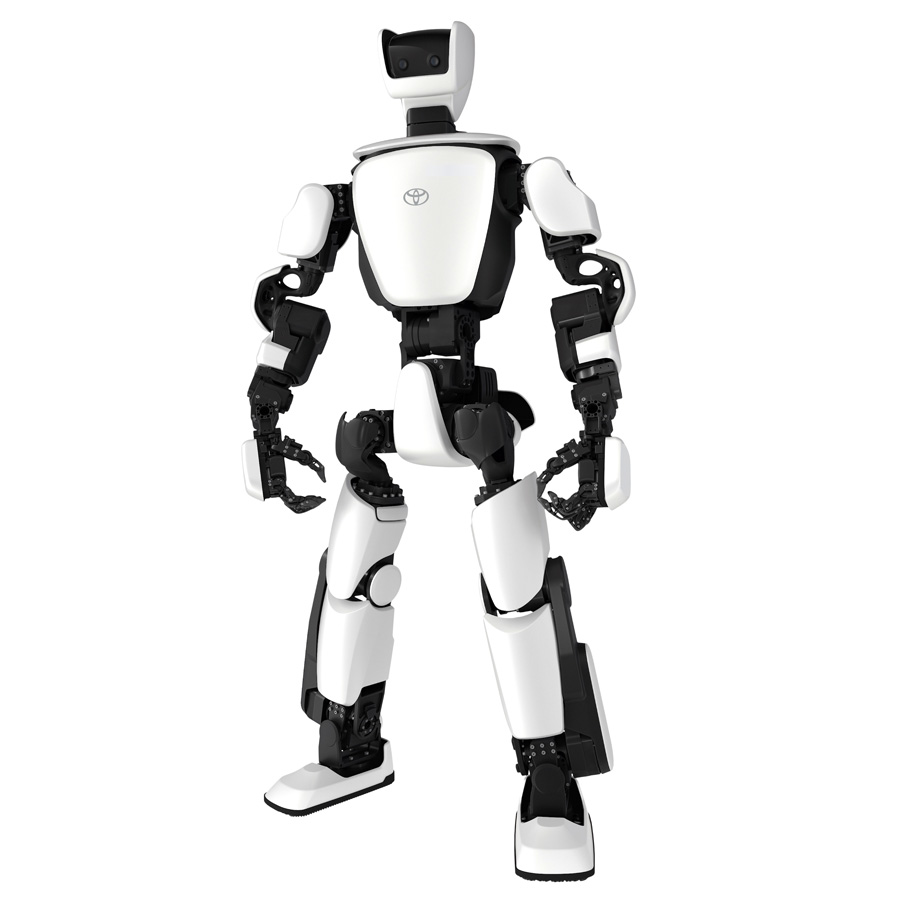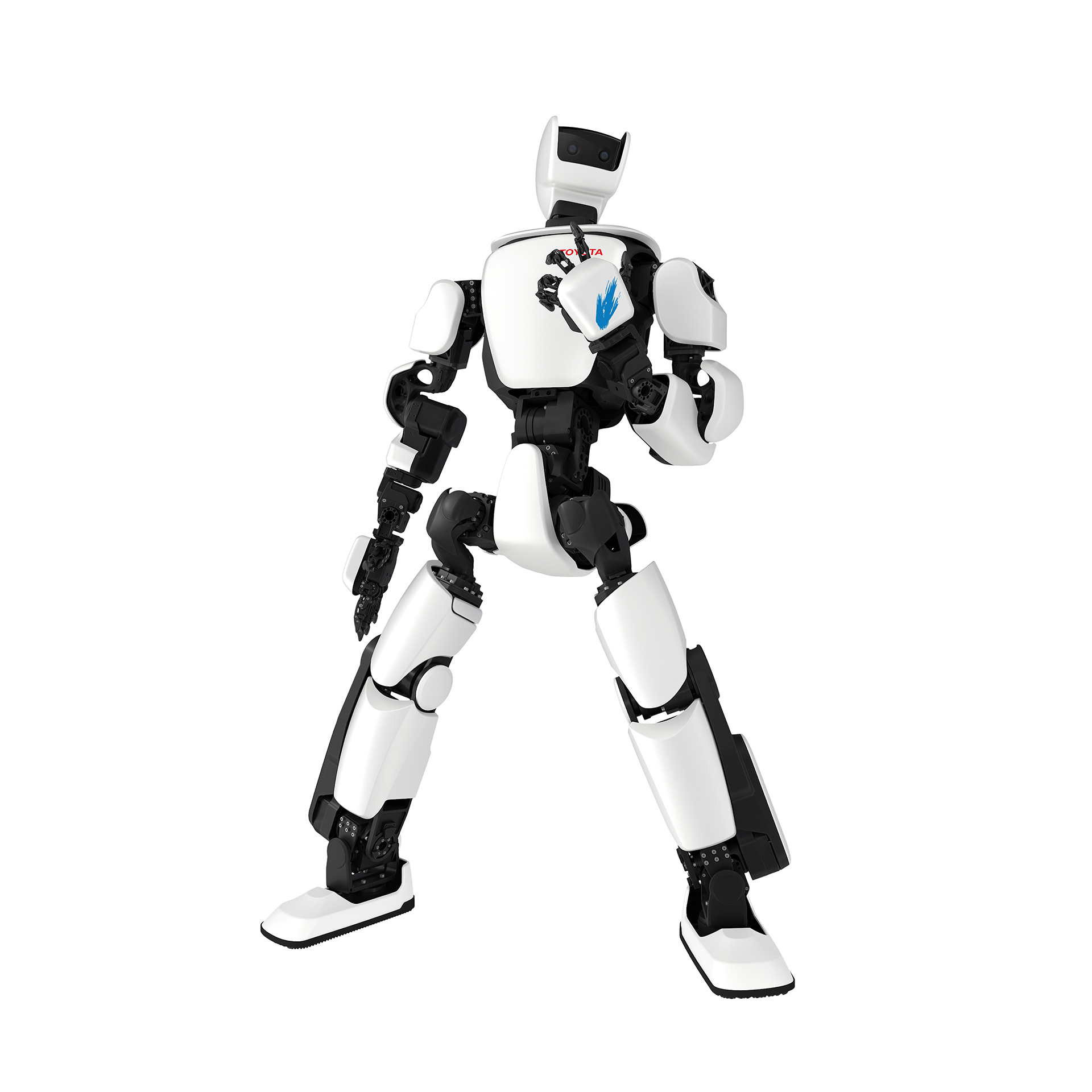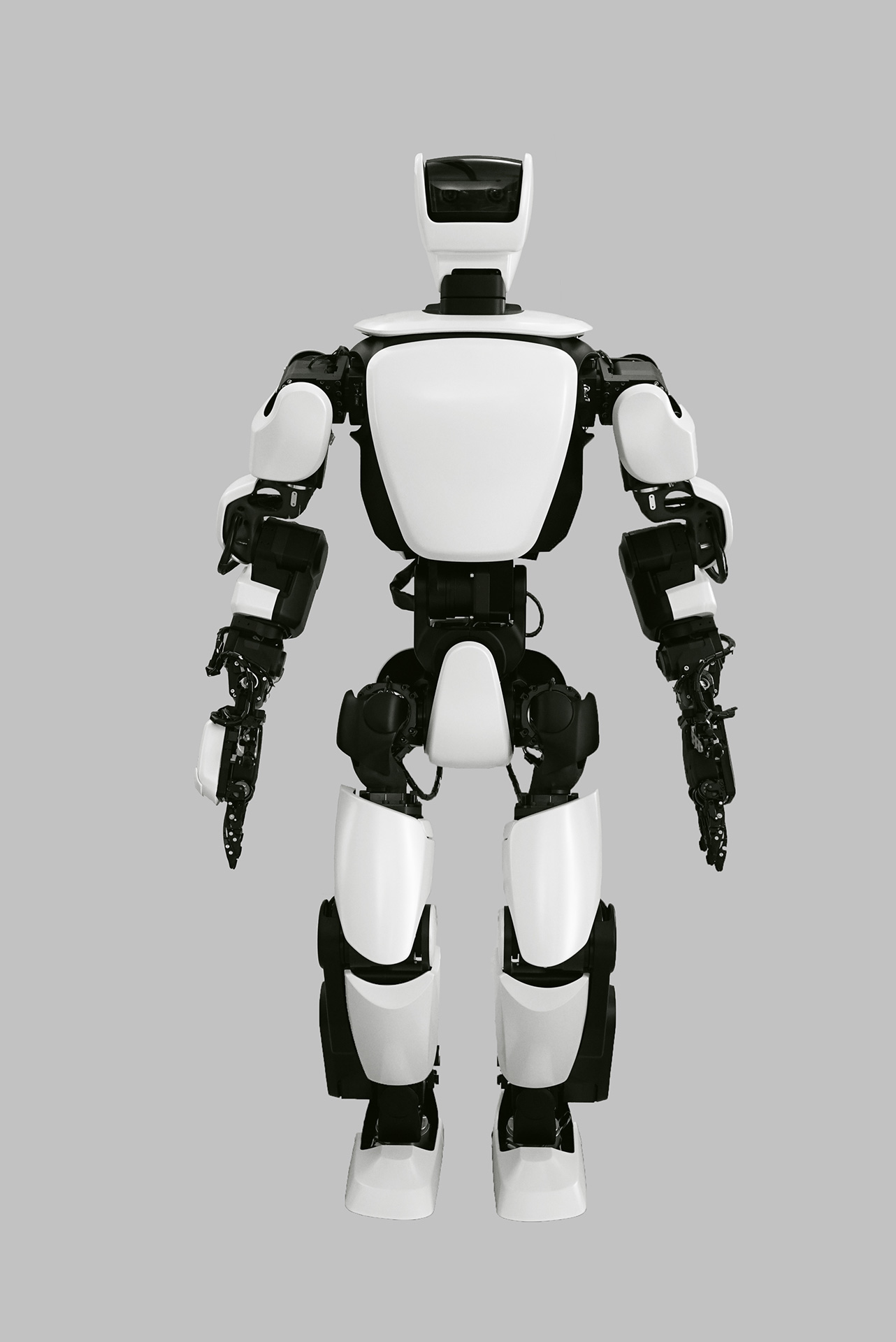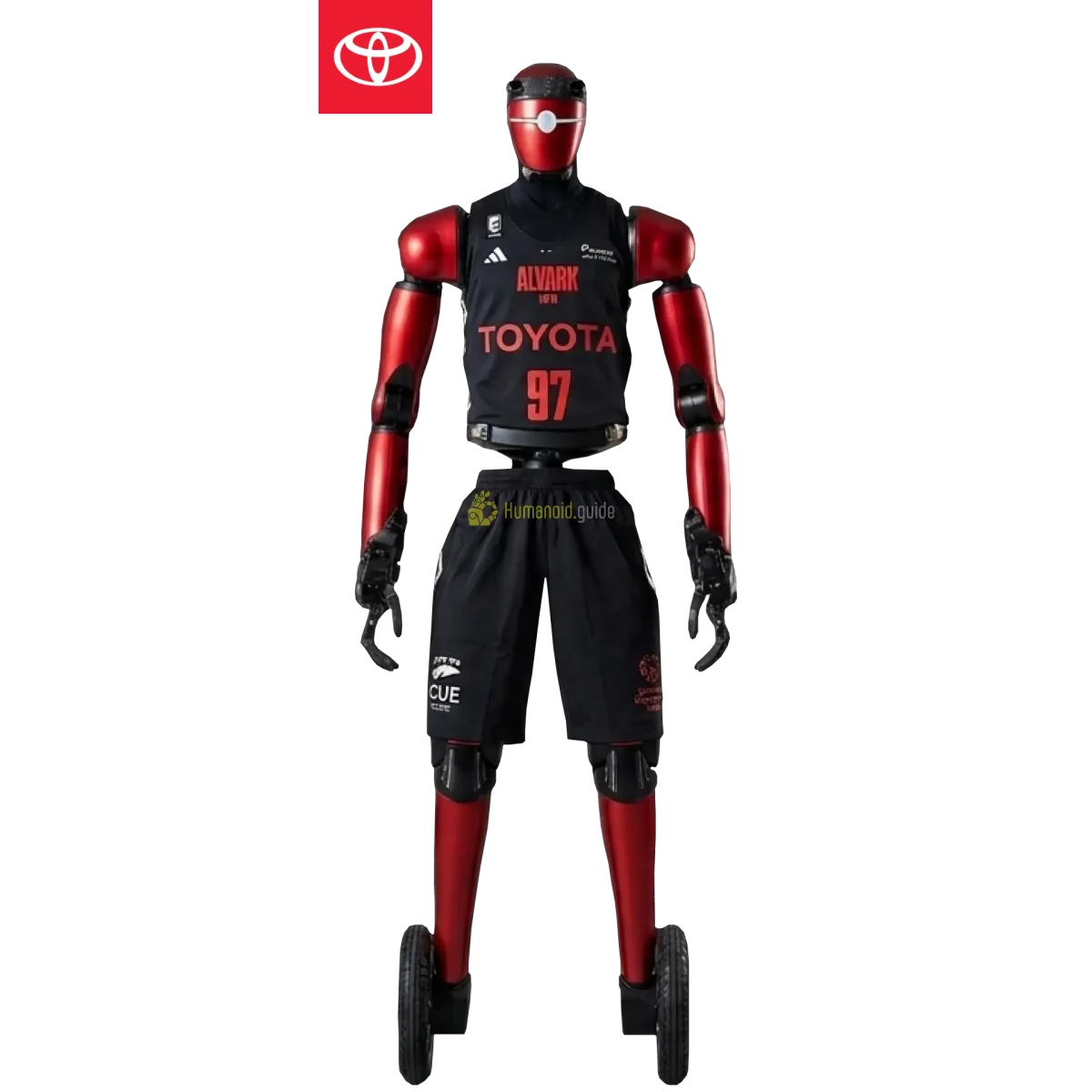
What is the Toyota T Hr3?
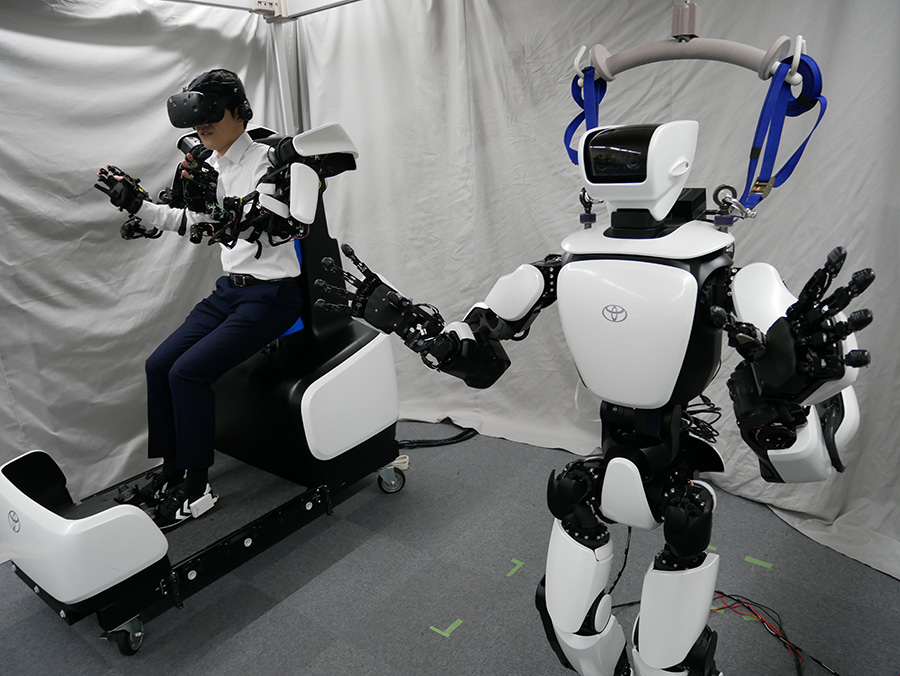
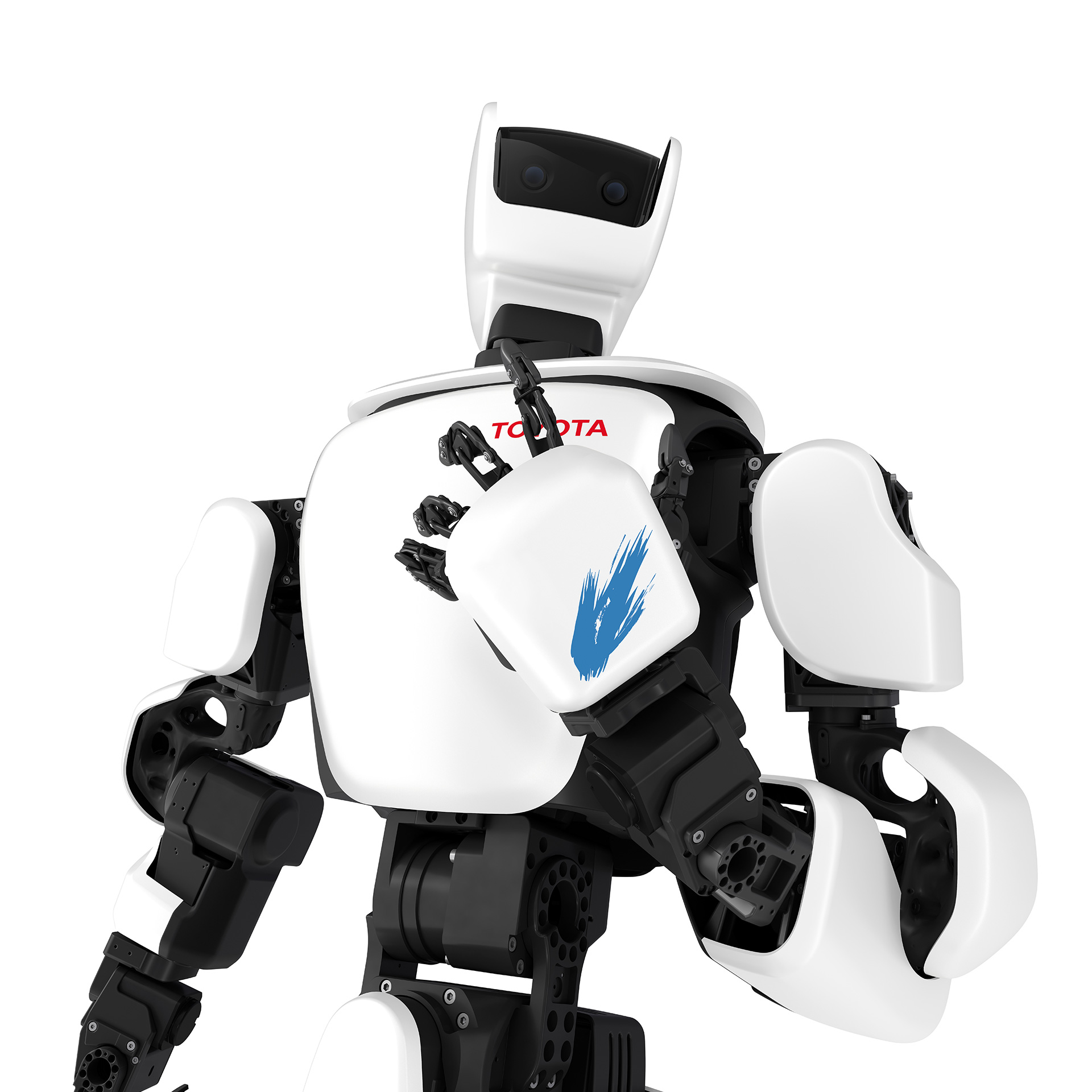
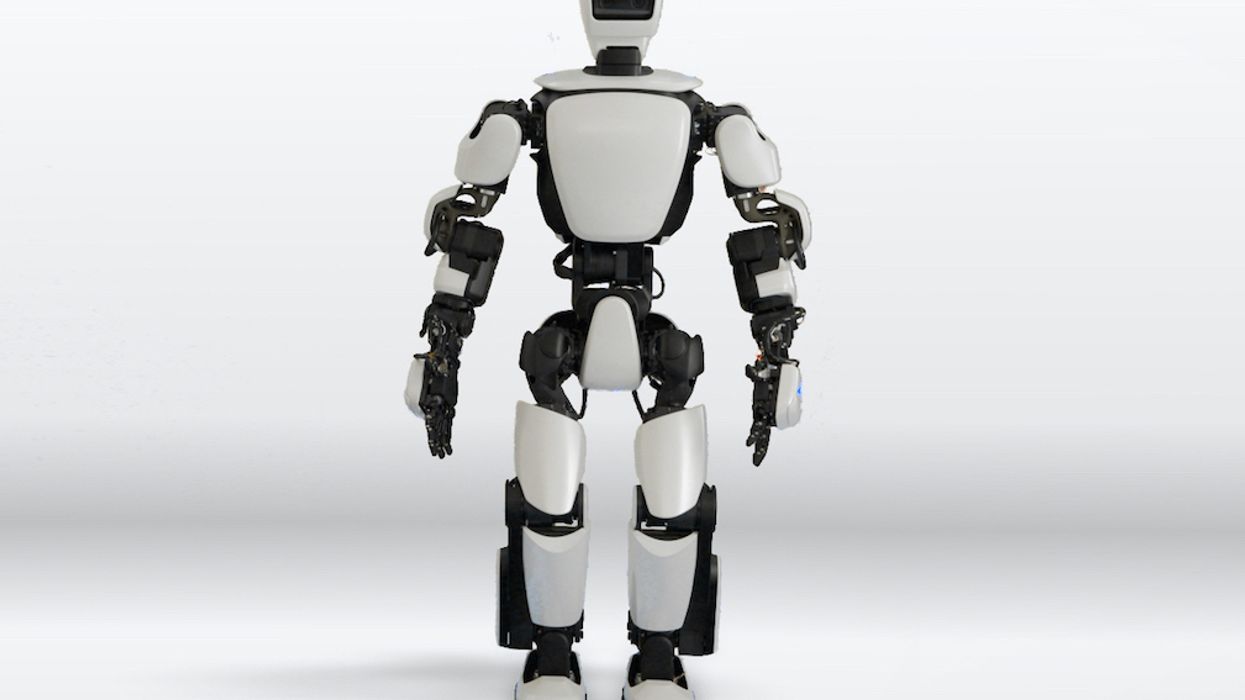
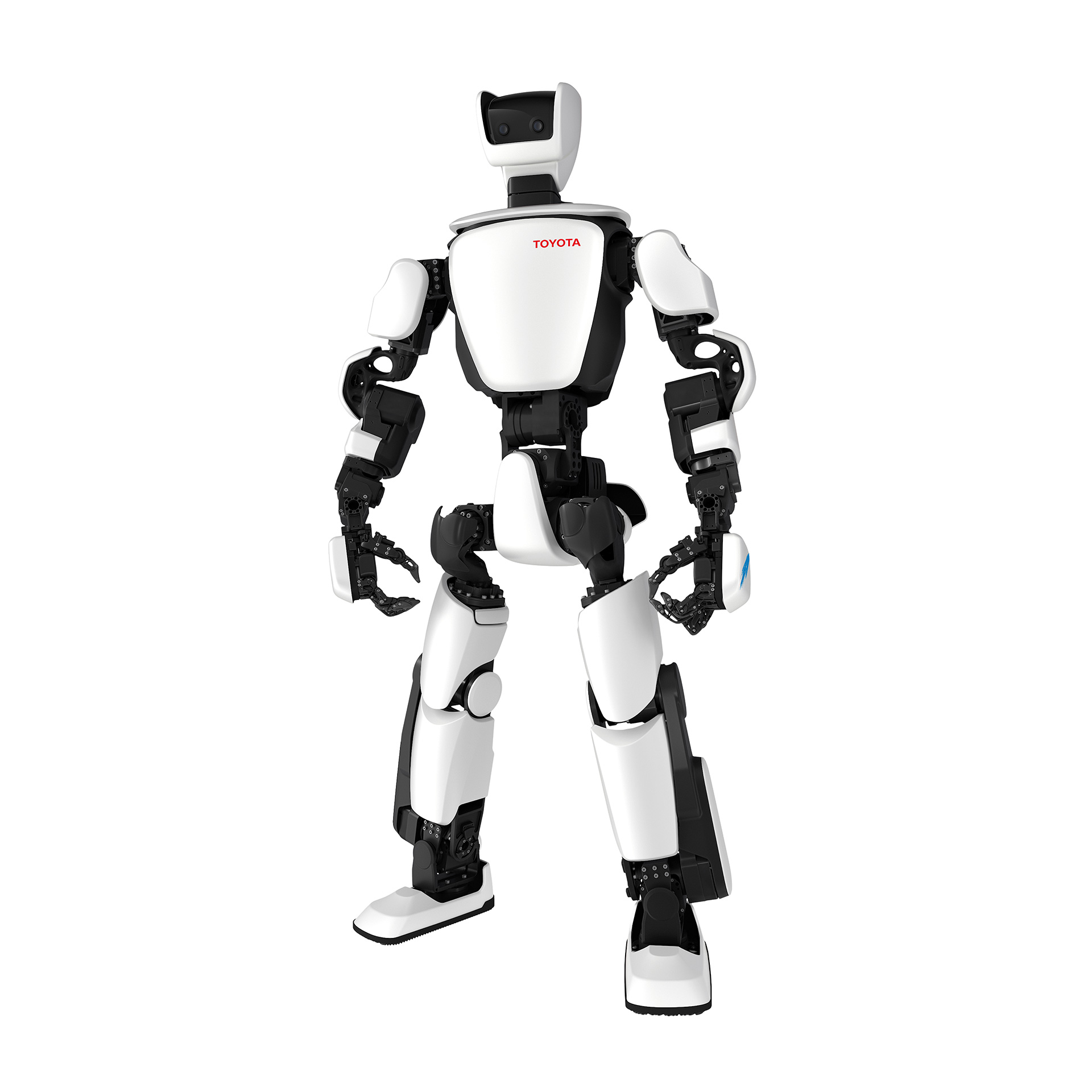
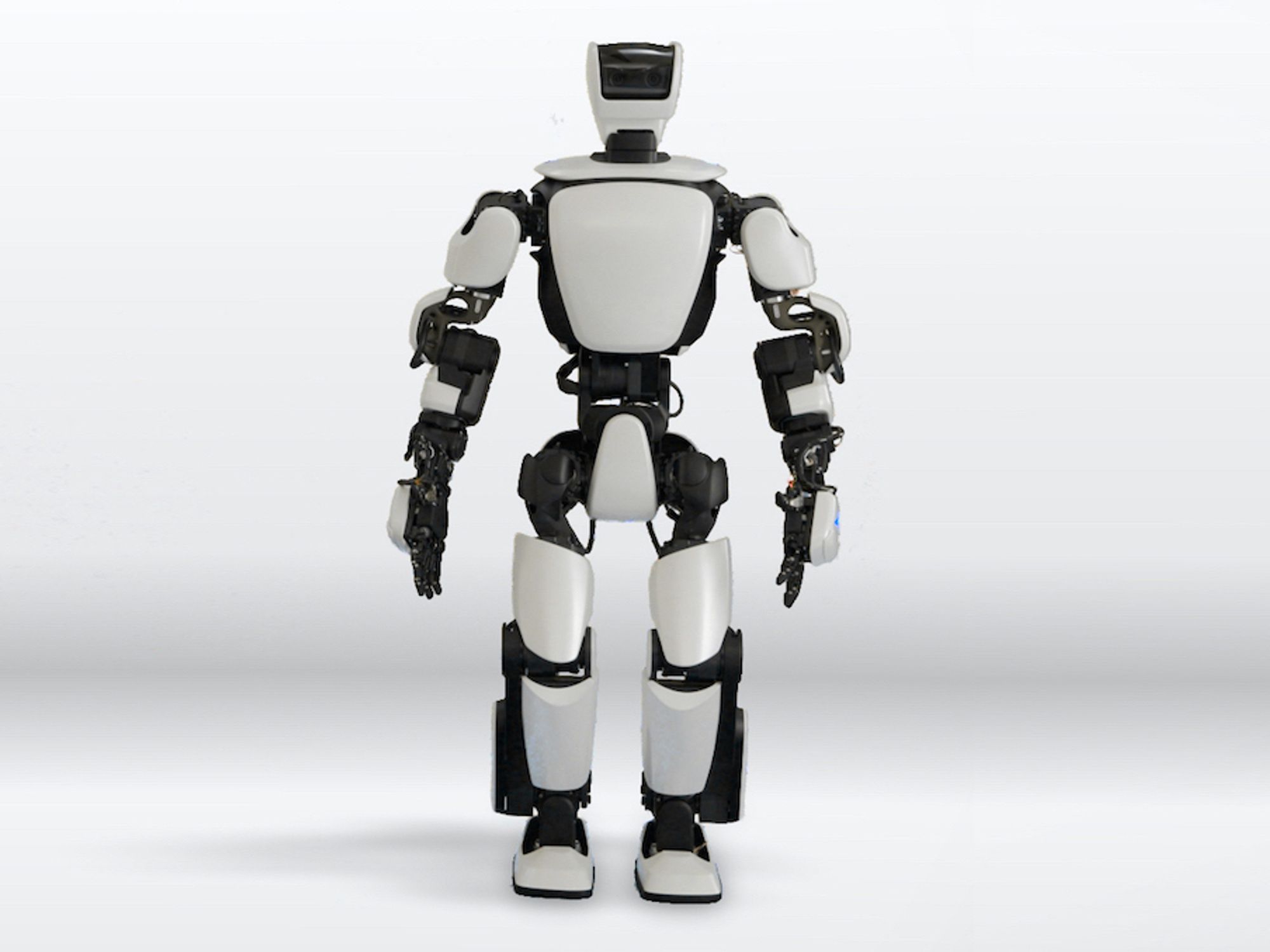
The Toyota T-HR3 is a third-generation humanoid robot developed by Toyota Motor Corporation at its headquarters in Toyota City, Aichi, Japan. First unveiled in November 2017, the T-HR3 is designed as a master-slave teleoperation platform: an operator wears an exoskeleton-like master control system that captures body movements and feeds forces back, allowing the robot to mirror actions in real time. Unlike autonomous humanoids, the T-HR3 is built to be an avatar, giving a human operator a physical presence in remote environments. It integrates torque servo units, stereo cameras, force/torque sensors, and an inertial measurement unit (IMU) to achieve precise, torque-controlled motion. Toyota has used the T-HR3 to explore applications in healthcare, construction, and disaster response, but the robot has never been commercialized.
Specifications
Here are the full technical specifications.
| Spec | Value |
|---|---|
| Height | 1540 mm |
| Weight | 75 kg |
| Degrees of freedom | 29 |
| Battery life | Not specified |
| Max speed | N/A |
| Payload | Not specified |
| Price (new) | Not for sale (research-only) |
| Price (used range) | N/A |
Price & Value
New MSRP: Not for sale (research-only)
Used range: N/A
The T-HR3 is not offered for sale; it is a proprietary research platform developed solely for internal R&D and academic collaboration. There is no MSRP, leasing, or rental option. For context, comparable full-body teleoperation systems, if built as custom one-offs, could cost well into the high six figures, but the T-HR3’s hardware and software are not available on the open market. Its value lies in advancing telepresence technology rather than direct commercial return. Organizations seeking similar capabilities would likely need to invest in their own custom engineering, as no turnkey alternative exists at any price. While the robot demonstrates impressive dexterity, the lack of a product roadmap means no depreciation or total-cost-of-ownership metrics apply.
Who Is It For?
Best for: - Research institutions focused on teleoperation and human-robot interaction (the T-HR3’s master-slave system with force feedback is unique for studying remote manipulation). - Universities partnering with Toyota that can access the platform through collaborative research agreements (no public licensing program exists).
Not for: - Industrial deployment for heavy payload tasks (no payload rating published, and the torque servo units are optimized for precision, not high-force manipulation). - Buyers seeking an off-the-shelf commercial robot (the T-HR3 is not available for purchase, lacks a support ecosystem, and lacks essential documentation for independent operation).
Alternatives & Comparison
While the T-HR3 is a dedicated teleoperation avatar, most commercially visible humanoids target either autonomous mobility or social interaction. The following comparison highlights how fundamentally different design goals lead to wildly different capabilities.
| Model | Price | Available | Key Difference |
|---|---|---|---|
| Boston Dynamics Atlas | Undisclosed | no | Fully autonomous, acrobatic humanoid designed for agility and dynamic motion; not a teleoperation platform. |
| Kawasaki Kaleido | Undisclosed | no | Heavy-duty industrial humanoid built for assembly and logistics tasks, with substantial payload capability. |
| SoftBank Pepper | ~$20,000 (when available) | no (discontinued) | Social humanoid focused on dialogue, emotion recognition, and customer interaction; minimal manipulation ability. |
Verdict: If your project demands master-slave teleoperation with force feedback, no other robot on this list can do it — the T-HR3 is the only avatar-style humanoid here, and it is not purchasable. For any practical deployment that requires autonomy, payload, or social skills, Atlas, Kaleido, or Pepper win by default because the T-HR3 cannot operate without a human pilot. Researchers building teleoperated systems should view the T-HR3 as a technology demonstrator rather than a competitor; you’ll need to engineer a custom solution that captures its core principles.
Use Cases & Capabilities
Teleoperation Research
The T-HR3 is purpose-built for teleoperation studies, allowing researchers to explore the full pipeline from master motion capture to slave robot execution. Its 29 torque-controlled degrees of freedom and force feedback give operators a vivid sense of remote touch and resistance, making it ideal for psychophysical experiments on human-robot embodiment. Toyota has demonstrated tasks like moving objects, handling tools, and performing precise bi-manual tasks from a distance. The platform’s low-latency control loop and high-fidelity sensors provide a testbed for algorithms that combine visual and haptic feedback. Researchers can map operator intention into joint-level commands while collecting data on human motion patterns, a capability that few other humanoid platforms offer. However, the system is closed; modifying the control stack requires direct collaboration with Toyota.
Healthcare Assistance
In healthcare, the T-HR3’s remote manipulation capabilities could enable a specialist to perform delicate procedures from another room or even another city. Toyota has envisioned using the robot as a physical avatar for doctors, nurses, or therapists, providing a way to reduce infection risk and expand access to care. With force-sensing joints, the robot can apply gentle, precise force suitable for tasks like repositioning a patient or handling sensitive instruments. The master control system gives the operator intuitive body-scale control, which is more natural than joystick-based surgical robots for many tasks. While the T-HR3 is not FDA-cleared for medical use and remains strictly experimental, its dexterity in grasping and manipulation suggests potential for future assistive nursing roles. Proof-of-concept videos show the robot handling everyday objects with the delicacy of a human hand.
Disaster Response
The ability to project a human-like body into hazardous environments is one of the T-HR3’s most compelling promises. In a nuclear cleanup, chemical spill, or collapsed building, a teleoperator could control the robot to traverse rubble, turn valves, and manipulate tools without risking a human life. The force feedback feature is critical: it lets the operator feel contact forces, preventing damage to delicate equipment and enabling safe handling of unstable objects. The robot’s stereo vision and IMU provide situational awareness, while the master system’s haptic feedback closes the loop for complex manipulation. Toyota has showcased the T-HR3 in disaster-response scenarios, emphasizing that full-body teleoperation could outperform wheeled or tracked robots in confined spaces. However, the current prototype’s lack of published battery life and environmental ruggedness ratings mean it is not yet field-deployable without significant infrastructure.
Construction and Remote Inspection
In construction and infrastructure inspection, the T-HR3 could allow a single skilled operator to work on multiple remote sites in one day. The robot’s two arms and dexterous hands, coupled with its human-like size, let it use standard tools and move through structures designed for people. Force feedback prevents over-tightening bolts or dropping materials, and the operator’s muscle memory translates directly to the robot’s movements. Toyota’s demonstrations include the T-HR3 picking up and assembling components while the operator sits in a chair kilometers away. This concept aligns with the industry’s goal of using telepresence to address skilled-labor shortages and dangerous working conditions. As with other use cases, the lack of commercial availability and limited payload capacity restrict immediate use, but the T-HR3 proves the viability of avatar-based construction work. Challenges include maintaining reliable low-latency communication over long distances and ensuring the robot can operate in dusty, vibrating environments.
History & Background
Toyota Motor Corporation, founded in 1937 in Japan, began humanoid robot development in the early 2000s with its Partner Robot series. The T-HR3, unveiled in November 2017, is the third-generation humanoid and Toyota’s first teleoperation-focused platform. It introduced a master-slave system with force feedback, allowing an operator to feel the robot’s interactions — a step beyond earlier bipedal walking robots. Over the years, Toyota has refined the platform, though all T-HR3 variants share the core 29-DOF torque-controlled design. The robot has appeared at events like the International Robot Exhibition and been used in collaborative research, but has never been commercialized. As of 2026, it remains an active R&D asset, with Toyota continuing to explore avatar applications for an aging society.
Buying Used — What to Check
Verify teleoperation latency and force feedback fidelity These are the core features differentiating the T-HR3; any degradation or calibration errors would render the robot unusable for research.
Inspect torque servo units for wear As a high-precision research tool with no spare parts market, worn actuators could lead to costly and irreparable damage — careful inspection is essential.
Confirm sensor calibration The stereo camera, force/torque sensors, and IMU must be precisely calibrated for accurate teleoperation; factory calibration might not persist after transport.