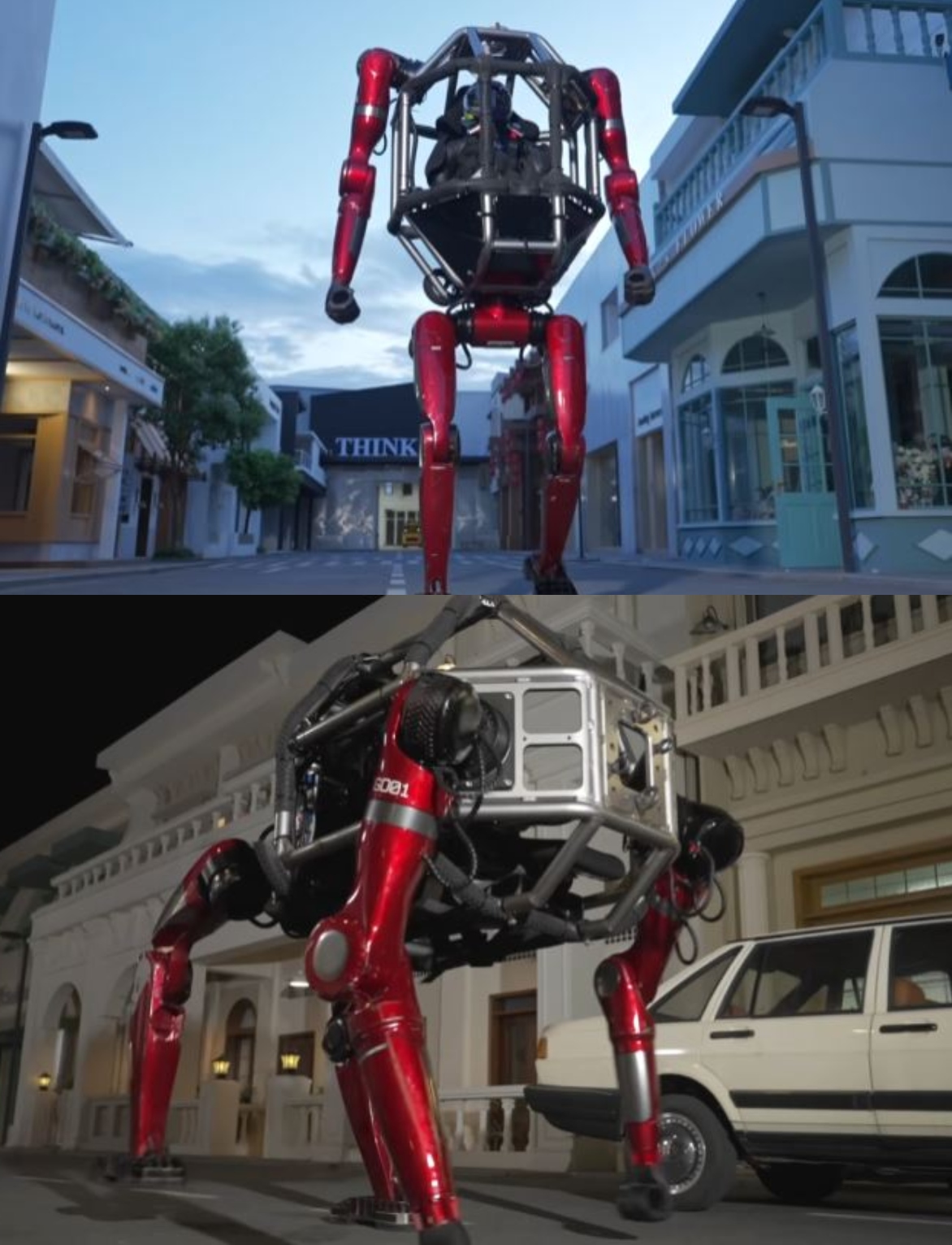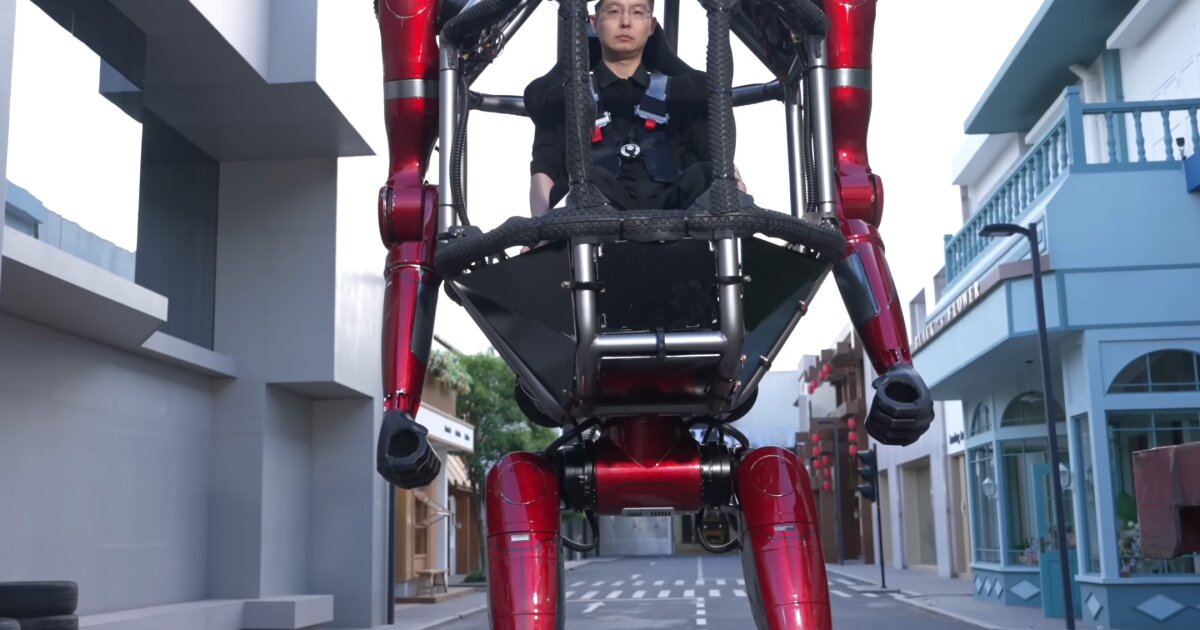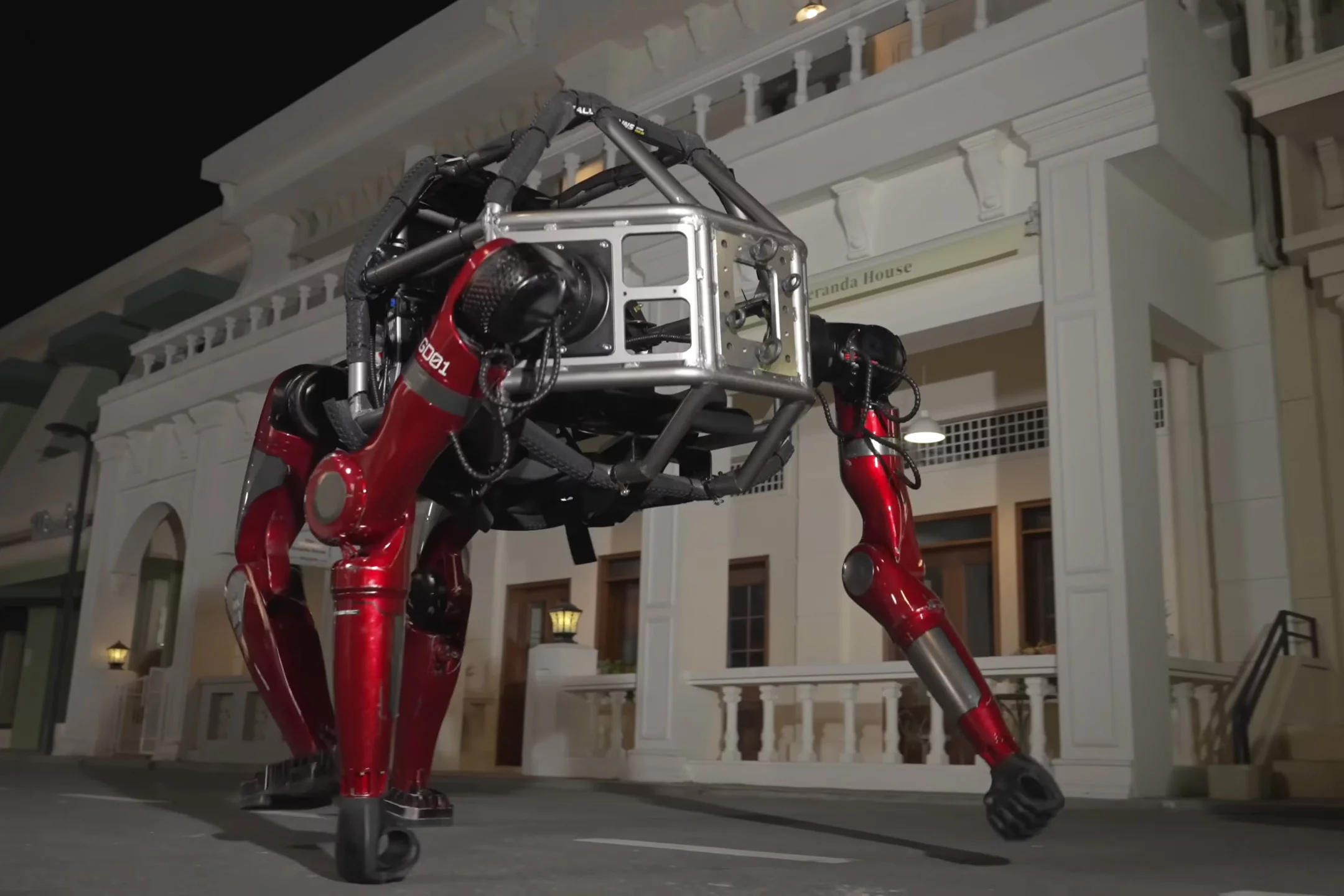
What is the Unitree Gd01?
Unitree GD01 is an unprecedented giant humanoid robot concept by Unitree Robotics, headquartered in Hangzhou, China. Standing approximately 2.7 meters tall and weighing about 500 kilograms when including the pilot, it is more than twice the height of an average human, potentially positioning it as a manned exoskeleton or telepresence avatar. The robot’s exact degrees of freedom, battery life, and operational speed remain undisclosed, and the $3,900,000 price point reflects its experimental, likely non-production nature. As of 2026, the GD01 is a pre-commercial prototype and not available for general purchase, with no verified deployments. This extreme-scale robot showcases Unitree’s ambition beyond typical humanoids, though its market viability is unproven.
Specifications
Here are the full technical specifications.
| Spec | Value |
|---|---|
| Height | ~2.7 m |
| Weight | ~500 kg (including pilot) |
| Degrees of freedom | Not published |
| Battery life | Not specified |
| Max speed | Not specified |
| Payload | Not specified |
| Price (new) | $3,900,000 |
| Price (used range) | N/A (pre-commercial; no used units) |
Price & Value
New MSRP: $3,900,000
Used range: N/A
At $3,900,000, the Unitree GD01 is a research-oriented outlier with no clear commercial rival at this scale. The price likely reflects the bespoke engineering of a giant, pilot-carrying frame rather than mass production. Given no published performance metrics (speed, runtime, payload), the value proposition is speculative; buyers would be funding experimental R&D. Compared to smaller humanoids like Unitree G1 ($13,500–$73,900), the GD01’s cost is astronomical, making it only viable for well-funded research institutions or industrial demonstration projects. For practical deployment, more affordable alternatives exist.
Who Is It For?
Best for: - Experimental robotics research programs exploring giant-scale humanoid mechanics and pilot-in-the-loop control.
Not for: - Commercial deployment, light industrial tasks, or any scenario requiring measurable productivity — no operational specs published.
Alternatives & Comparison
The Unitree GD01 enters a high-stakes humanoid market alongside established players, but its price point and undisclosed availability set it apart from more accessible or discontinued competitors.
| Model | Price | Available | Key Difference |
|---|---|---|---|
| Apptronik Apollo | $50,000 – $935,000,000 | yes | Vastly broader price range and confirmed availability make Apollo a more flexible option for various budgets |
| Fourier GR-2 | $150,000 – $193,000,000 | enterprise only | Lower entry price but restricted to enterprise customers, limiting buyer reach compared to GD01’s unstated availability |
| Boston Dynamics Atlas | $420,000 | discontinued | Significantly cheaper but no longer purchasable, leaving GD01 as a potential option for those needing a currently available humanoid |
Verdict: For buyers with a massive budget (approaching $4M) who need a cutting-edge humanoid and aren’t deterred by unclear availability, the Unitree GD01 is the only game in town. However, for anyone wanting a proven, available, and far more affordable humanoid, the Apptronik Apollo wins outright for its massive price range and confirmed supply. The discontinued Atlas is only relevant for nostalgia or legacy support. ## Use Cases & Capabilities
Experimental Pilot-Carried Platform
Researchers can study human-machine integration in a larger-than-life avatar. The 2.7-m height and 500 kg weight allow testing of advanced balance and power-train systems. However, the lack of published speed or endurance specs limits realistic deployment. Ideal for universities exploring giant-scale teleoperation.
Industrial Exhibition Piece
The GD01 can serve as a showpiece at trade fairs or corporate events, demonstrating cutting-edge robotics. Its visually striking size generates attention. Without operational specs, it would likely remain a static display rather than an interactive demo.
Telepresence Avatar Research
In a pilot-carried configuration, the GD01 could act as an immersive telepresence robot, placing the operator at a towering height. This concept offers potential for remote inspection or entertainment, but safety and communication latency are unaddressed in public data.
History & Background
Unitree Robotics was founded in 2016 in Hangzhou, China, and gained fame for its affordable quadrupeds (Go1, Go2) before entering humanoids with the H1 (2023) and G1 (2024). The GD01 emerged in 2025 as a dramatic departure: a 2.7-m tall pilot-carrying prototype. Revealed via teaser videos and limited media, it is a pre-commercial concept under active development. No production timeline or deliveries have been announced as of 2026, and the robot appears to be an engineering one-off at this stage.
Buying Used — What to Check
Verify any public demo or operational proof of concept, as no production units exist. Without evidence of functionality, a $3.9M purchase is extremely speculative.
Confirm pilot safety systems and fail-safes if the robot is intended for manned operation. A 500 kg giant robot carrying a person warrants rigorous safety protocols that should be documented.
Ask for detailed technical specifications including degrees of freedom, battery life, and payload. These are currently undisclosed and essential to assess the platform’s research utility.