What is the Unitree H1?
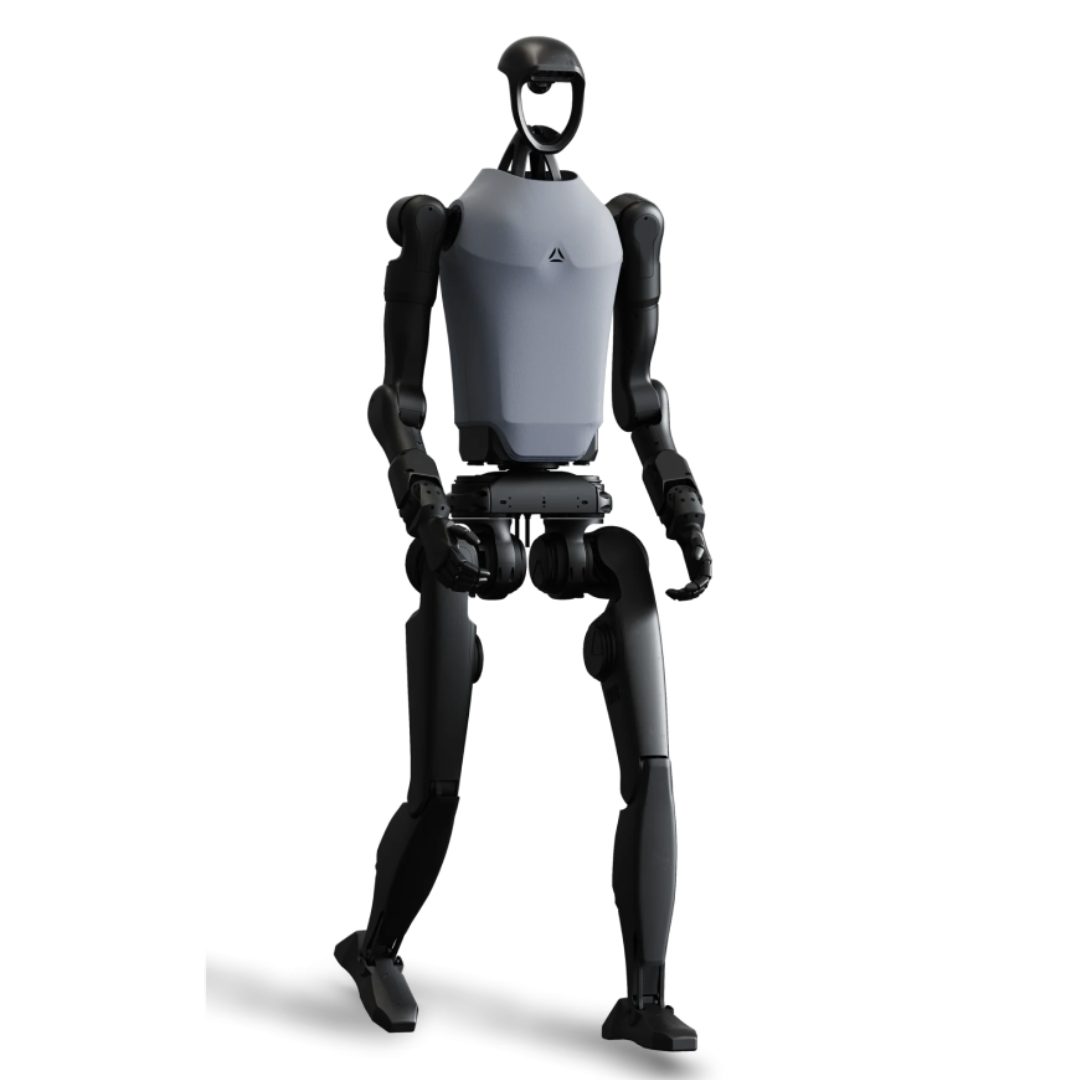
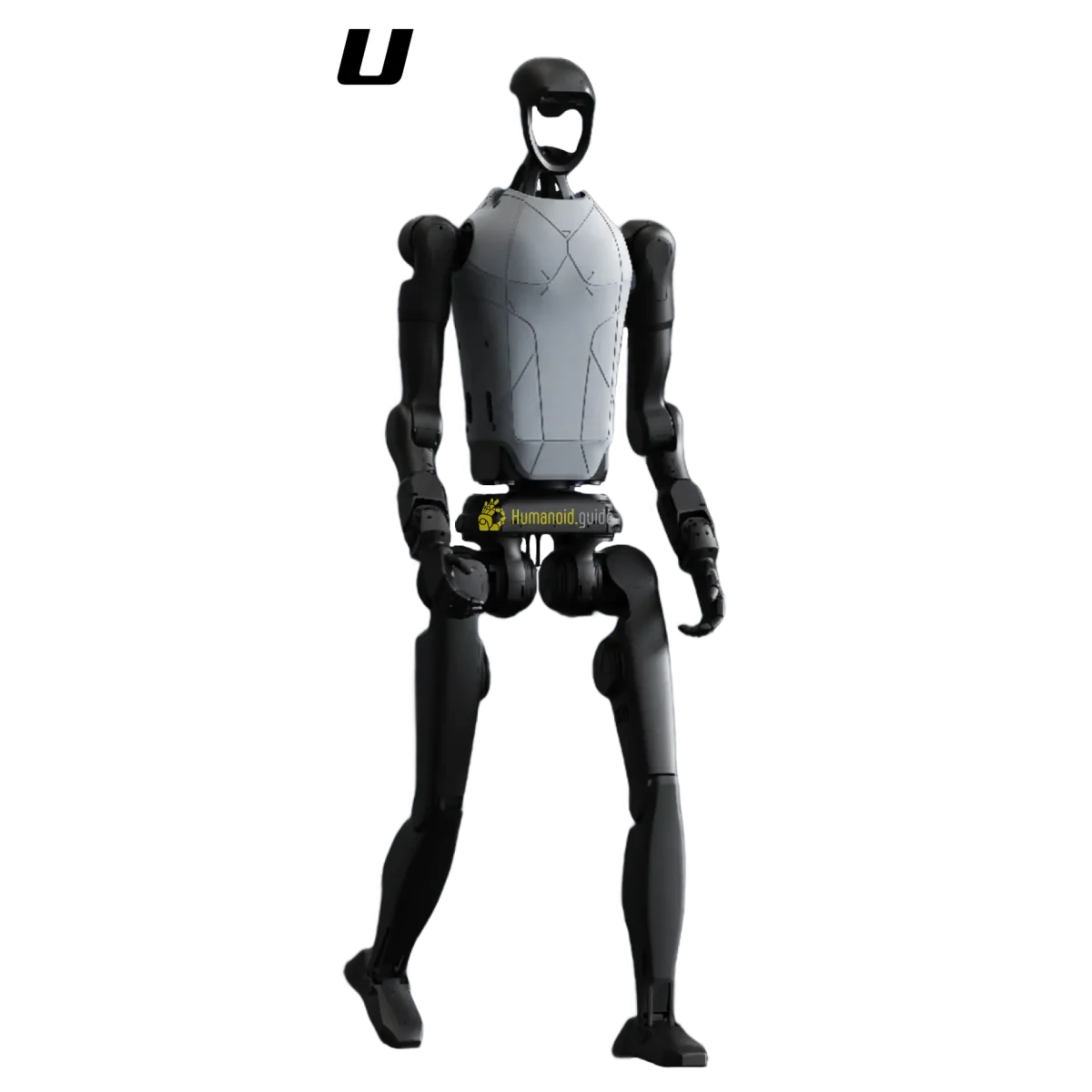
The Unitree H1 is a full-size bipedal humanoid robot developed by Unitree Robotics (Hangzhou, China). Standing 180 cm tall and weighing 47 kg (base configuration), it is the fastest commercially available full-size humanoid, achieving 3.3 m/s walking speed and capable of running, backflips, and push recovery. Powered by a hot‑swappable 864 Wh lithium battery, it runs 1.5–2 hours depending on load. The base model has 19 degrees of freedom, while the H1‑2 variant adds 7‑DOF arms for a total of 27 DOF and a 7 kg nominal arm payload. Built for research and embodied AI, it includes a Livox MID‑360 3D LiDAR, Intel RealSense D435i depth camera, and options for Intel Core i7 or NVIDIA Jetson Orin NX compute upgrades.
Specifications
Here are the full technical specifications.
| Spec | Value |
|---|---|
| Height | 180 cm |
| Weight | 47 kg |
| Degrees of freedom | 19 |
| Battery life | 2 hours |
| Max speed | 11.9 km/h |
| Payload | 7 kg (H1‑2 variant) |
| Price (new) | $90,000 – $150,000 |
| Price (used range) | $64,000 – $120,000 (est.) |
Price & Value
New MSRP: $90,000 – $150,000
Used range: $64,000 – $120,000 (est.)
At a starting price of $90,000, the Unitree H1 base model is the most affordable full‑size humanoid capable of dynamic running and backflips. The H1‑2 variant, at $128,900, introduces 7‑DOF arms and higher‑torque joints, bringing its manipulation capability in line with entry‑level service robots. Optional compute packages—an Intel Core i7 upgrade or a NVIDIA Jetson Orin NX with 100 TOPS—can push the total past $150,000, but these are essential for onboard AI workloads. Compared to the Fourier GR‑1 ($150,000) and Agility Digit ($250,000), the H1 undercuts them on price while offering superior gait speed and agility. On the secondary market, early H1 units have traded at approximately 70–80% of retail, translating to an expected used range of $64,000–$120,000. Depreciation is tempered by Unitree’s growing aftermarket for parts and software updates. Total cost of ownership over three years, factoring in battery replacements and occasional joint service, remains modest for an R&D‑class humanoid. Buyers should budget an additional 15–20% for shipping, import duties, and optional training, which Unitree provides on‑site.
Who Is It For?
Best for: - University locomotion and reinforcement learning research labs that need a fast, agile bipedal platform (3.3 m/s running, backflips, push recovery) for dynamic motion studies and sim‑to‑real transfer. - Embodied AI developers requiring a full‑size humanoid with ROS 2, Python/C++ SDK, and optional NVIDIA Jetson Orin NX (100 TOPS) to run on‑board machine learning models for navigation and interaction. - Industrial R&D teams evaluating bipedal mobility and sensor integration (360° depth perception via LiDAR and depth camera) for security patrols, outdoor logistics, or warehouse proof‑of‑concepts.
Not for: - Manipulation‑intensive tasks — the base H1 has no dexterous hands, and even the H1‑2’s 7 kg arm payload may be insufficient for heavy tool use or high‑precision assembly. - 24/7 production environments — battery life of 1.5–2 hours and lack of IP rating limit continuous, unattended operation in dusty or wet conditions. - Budget‑constrained education programs — starting price of $90,000 puts it far above typical teaching lab budgets, and full utilization requires robotics engineering expertise.
Alternatives & Comparison
The Unitree H1 competes in the sub‑$200,000 full‑size humanoid segment alongside other locomotion‑focused platforms from Fourier and Agility Robotics.
| Model | Price | Available | Key Difference |
|---|---|---|---|
| Fourier GR‑1 | $150,000 | preorder | 40 DOF and higher arm payload (8 kg per arm), but lower top speed (~1.5 m/s). |
| Agility Digit | ~$250,000 | yes | Back‑facing knees optimized for logistics; higher payload (16 kg), but slower walking (1.5 m/s) and non‑humanoid proportions. |
Verdict: For pure locomotion research that demands record‑breaking speed and dynamic acrobatics, the H1 is unmatched. The H1‑2 variant adds moderate manipulation capability, making it a compelling middle ground between budget research platforms and high‑payload logistics robots like Digit. Choose the H1 if gait speed and agility are the priority; opt for the Fourier GR‑1 if dexterous manipulation is the primary research focus, though at the cost of walking speed.
Use Cases & Capabilities
Reinforcement Learning & Locomotion Research
The H1 is purpose‑built for gait research, offering true bipedal running at 3.3 m/s and dynamic maneuvers like backflips. Its 19‑DOF lower body (27 with H1‑2 arms) provides ample kinematic complexity for sim‑to‑real transfer. Researchers can tap into ROS 2, Python, and C++ APIs to implement proprioceptive controllers and legged locomotion policies. The onboard Intel i7 and optional Jetson Orin NX allow real‑time on‑board policy inference. Benchmarks include push recovery and rough‑terrain traversal, making it a favorite for DRL labs comparing performance to quadruped platforms. Ongoing firmware updates ensure compatibility with the latest RL frameworks.
Embodied AI & Sensor Fusion Development
Equipped with a Livox MID‑360 3D LiDAR and Intel RealSense D435i depth camera, the H1 offers 360° depth perception suitable for SLAM and navigation research. Developers can mount additional sensors via the robot’s modular payload mounts. The H1‑2’s 7‑DOF arms enable whole‑body motion planning and AI‑driven object interaction experiments. Optional NVIDIA Jetson Orin NX (100 TOPS) accelerates on‑edge vision and transformer models. Universities have used the H1 to prototype home‑service robots, testing vision‑language models for fetch‑and‑carry tasks, though payload limits constrain the size of grasped objects.
Industrial R&D and Proof‑of‑Concept Pilots
Companies evaluating bipedal robots for warehouse or security patrols can leverage the H1’s robust outdoor mobility and long‑range perception. The hot‑swappable battery supports multi‑shift testing with minimal downtime. While the base H1 lacks arms, the H1‑2 version can demonstrate light conveyor‑to‑cart transfer tasks. The platform’s torque‑dense motors and crossed‑roller joints promise durability for thousands of cycles. However, the lack of IP rating means dusty or wet environments require protective shrouds. Early adopters report that integration with existing fleet management software is straightforward thanks to ROS 2 compatibility.
STEM Outreach and Public Showcase
With its ability to run and flip, the H1 is a crowd‑puller at tech expos and university open days. Its 180‑cm humanoid stature creates an imposing presence that sparks conversation about robotics. The SDK allows non‑experts to script simple walking patterns and gestures, though deployment requires robotics engineering oversight. Used units are occasionally repurposed for promotional campaigns, where the robot’s reliability and hot‑swap battery ensure all‑day appearance. For permanent installations, custom behavior packs can be developed by Unitree’s partner network.
Multi‑Robot Coordination & Cloud Integration
Research groups exploring heterogeneous multi‑robot systems can integrate multiple H1 units via Wi‑Fi/Ethernet and ROS 2 middleware. The onboard compute options support cloud‑offloaded processing for collaborative mapping and task allocation. Combined with Unitree’s SDK, labs can simulate warehouse replenishment scenarios where several H1‑2 robots coordinate object handovers. This use case is still emerging, with publications focusing on decentralized gait synchronization, but the platform’s open architecture makes it a promising testbed for future studies.
History & Background
Unitree Robotics was founded in 2016 in Hangzhou, China, originally gaining fame with its quadruped robots (Laikago, A1, B1, Go1, B2). The company announced the H1 humanoid in August 2023 as its first full‑size biped. The public debut video showed the H1 walking outdoors, running at a world‑record 3.3 m/s, and performing a backflip — all unprecedented for a commercially available humanoid. In early 2024, Unitree revealed the H1‑2 variant with fully articulated 7‑DOF arms, higher joint torques, and a 7 kg nominal arm payload, extending utility to light manipulation tasks. By 2025, the H1 had been shipped to research labs worldwide, and in 2026 it remains the fastest full‑size humanoid available for purchase, with continued firmware and SDK updates from Unitree. The company also offers a dexterous hand accessory and fast charger, further expanding the platform’s ecosystem.
Buying Used — What to Check
Verify battery health The 864 Wh lithium pack degrades over cycles; a heavily used unit may need immediate replacement, adding $2,000–$3,000 to the cost.
Check compute configuration Base models ship with an Intel Core i5; confirm whether the seller upgraded to i7 or Jetson Orin NX, as these compute options significantly affect performance.
Inspect arm joints (H1‑2) On H1‑2 variants, a history of high‑dynamic manipulation can wear crossed‑roller bearings or M107 actuators; request usage logs if possible.