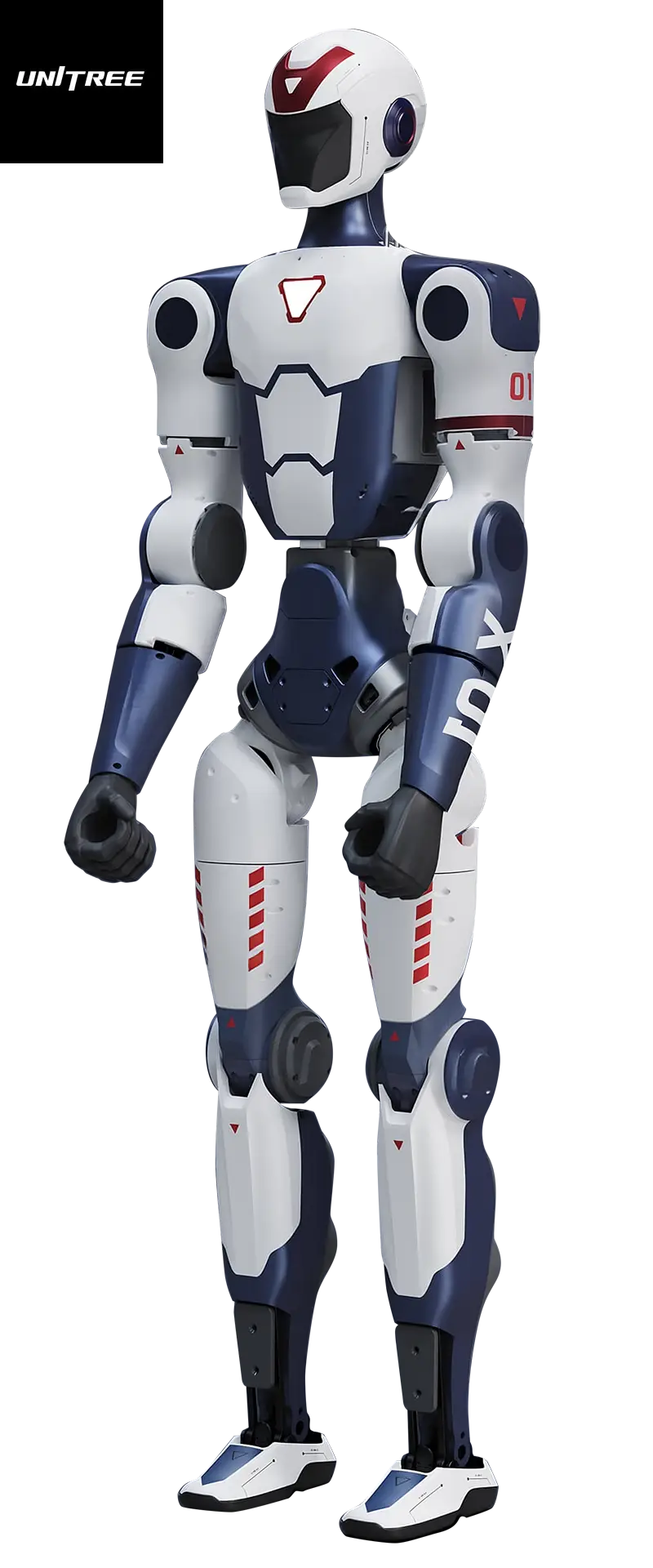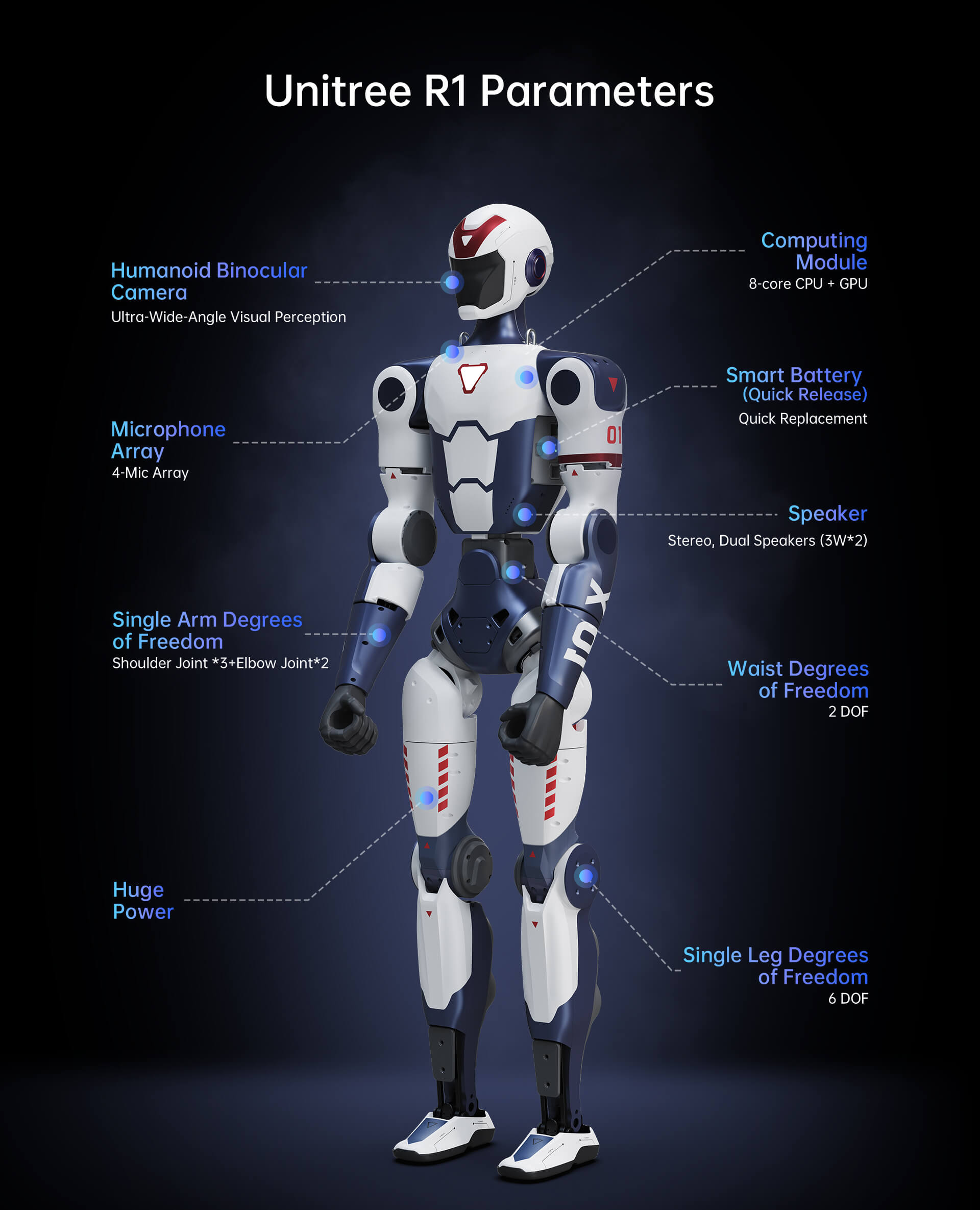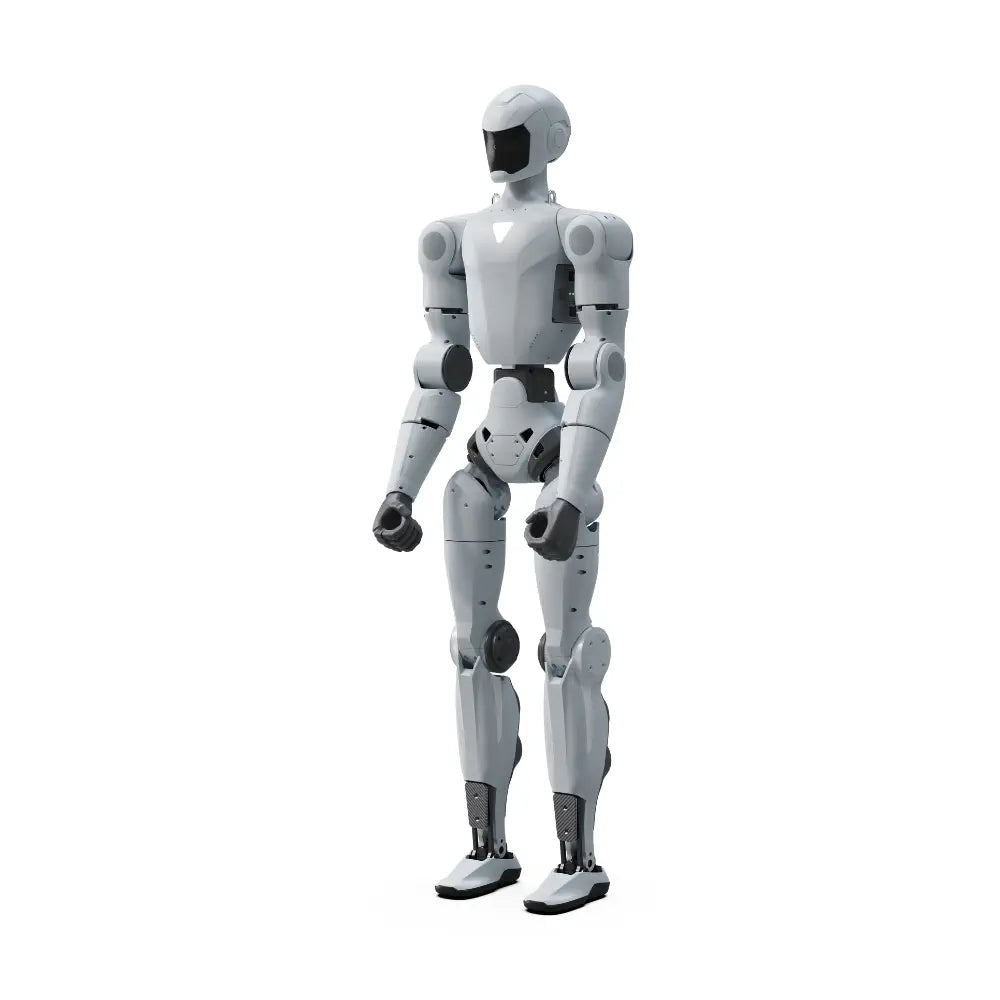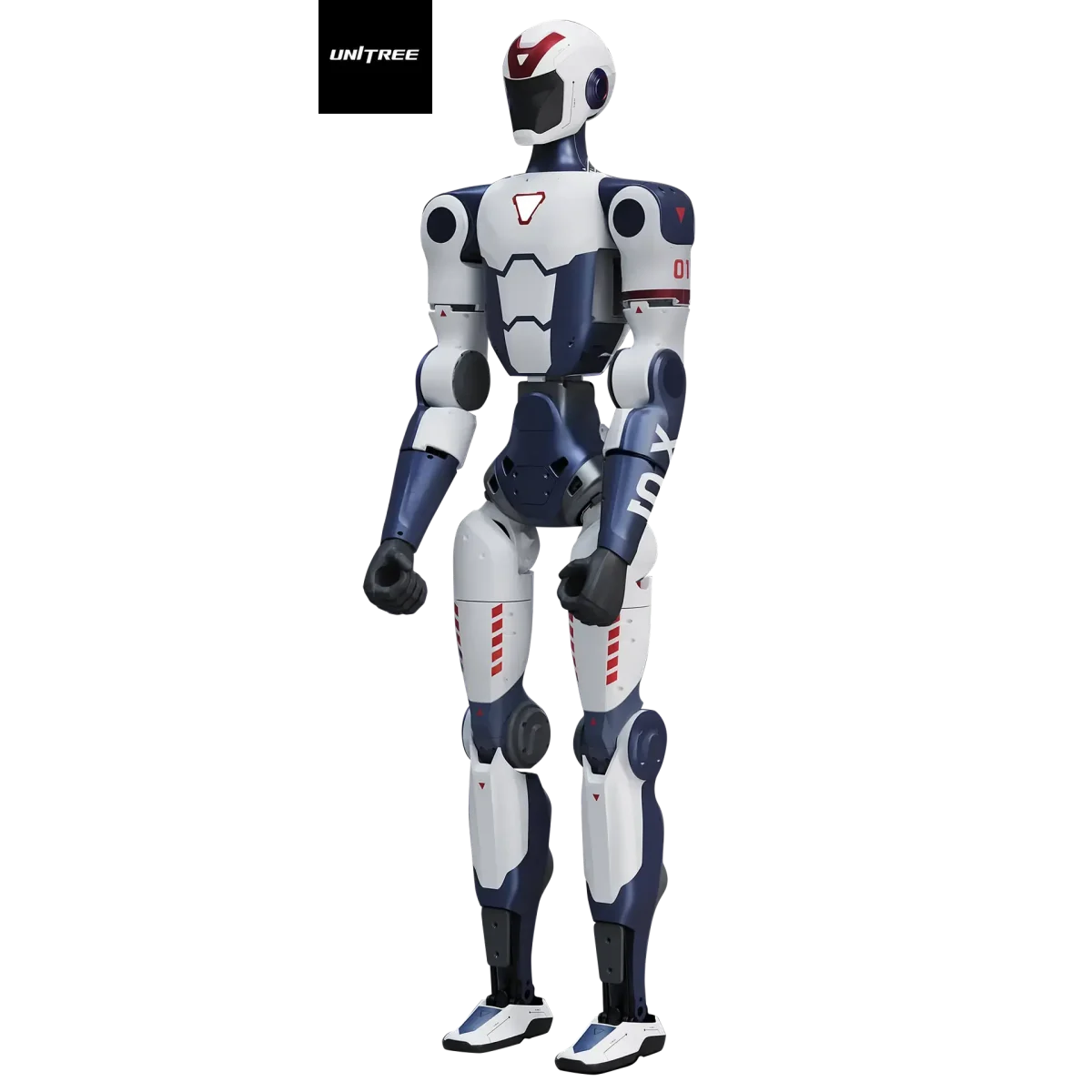
What is the Unitree R1?
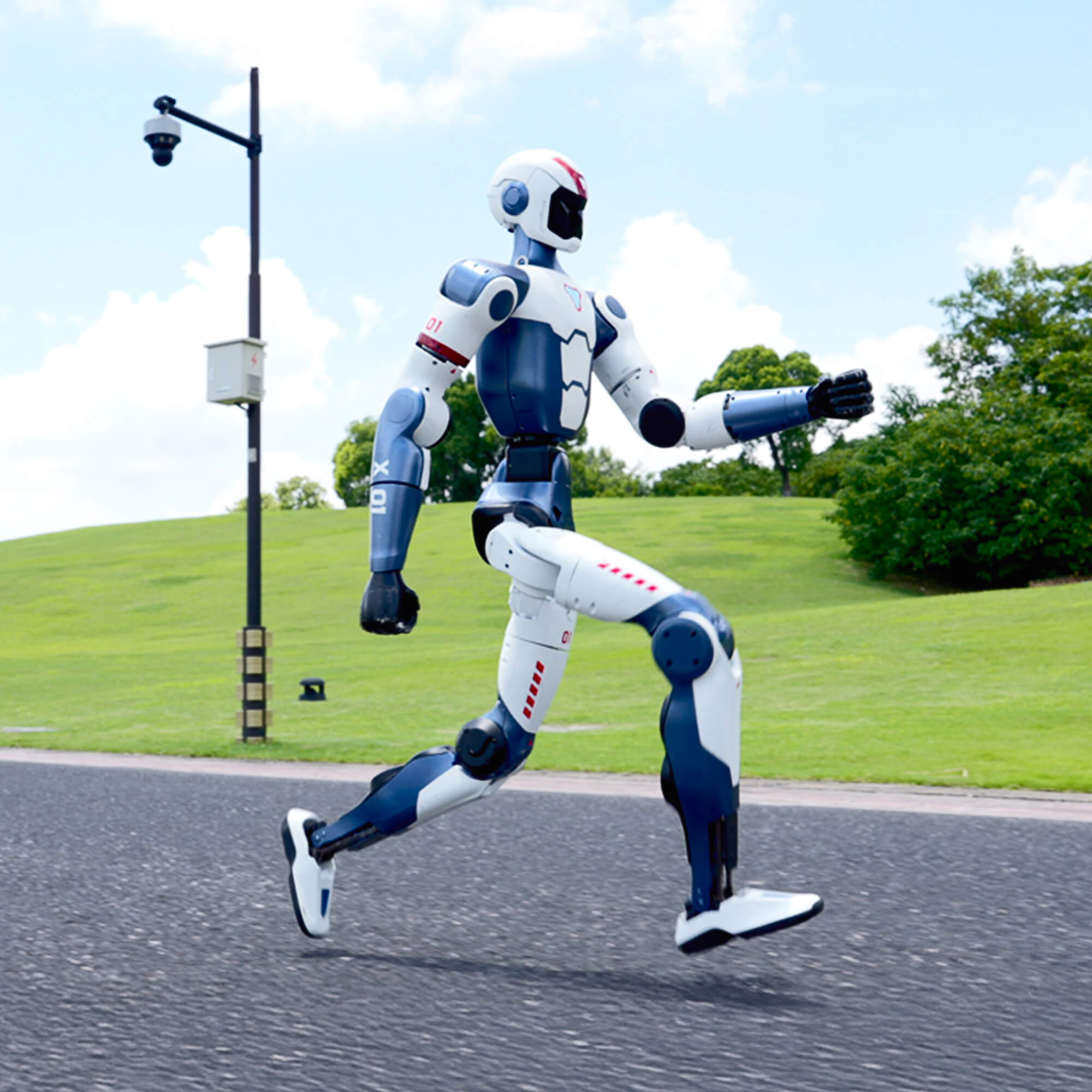
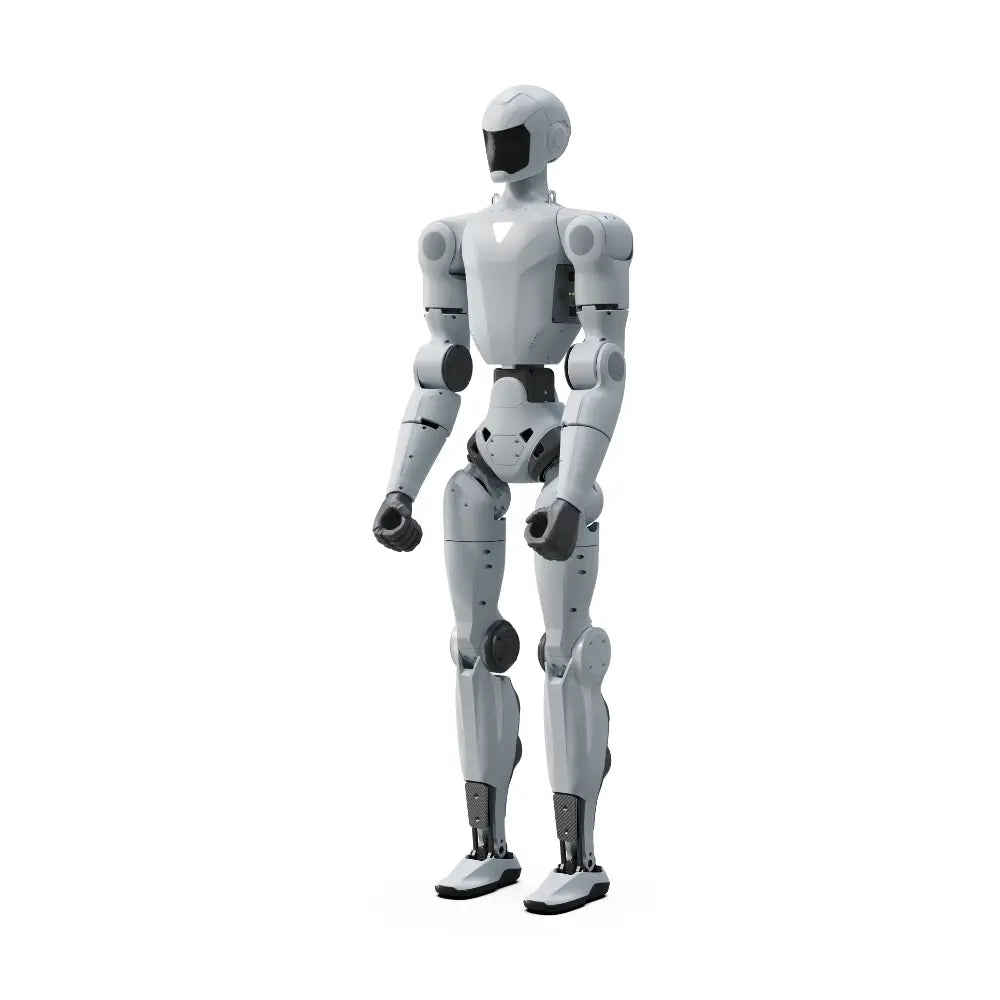
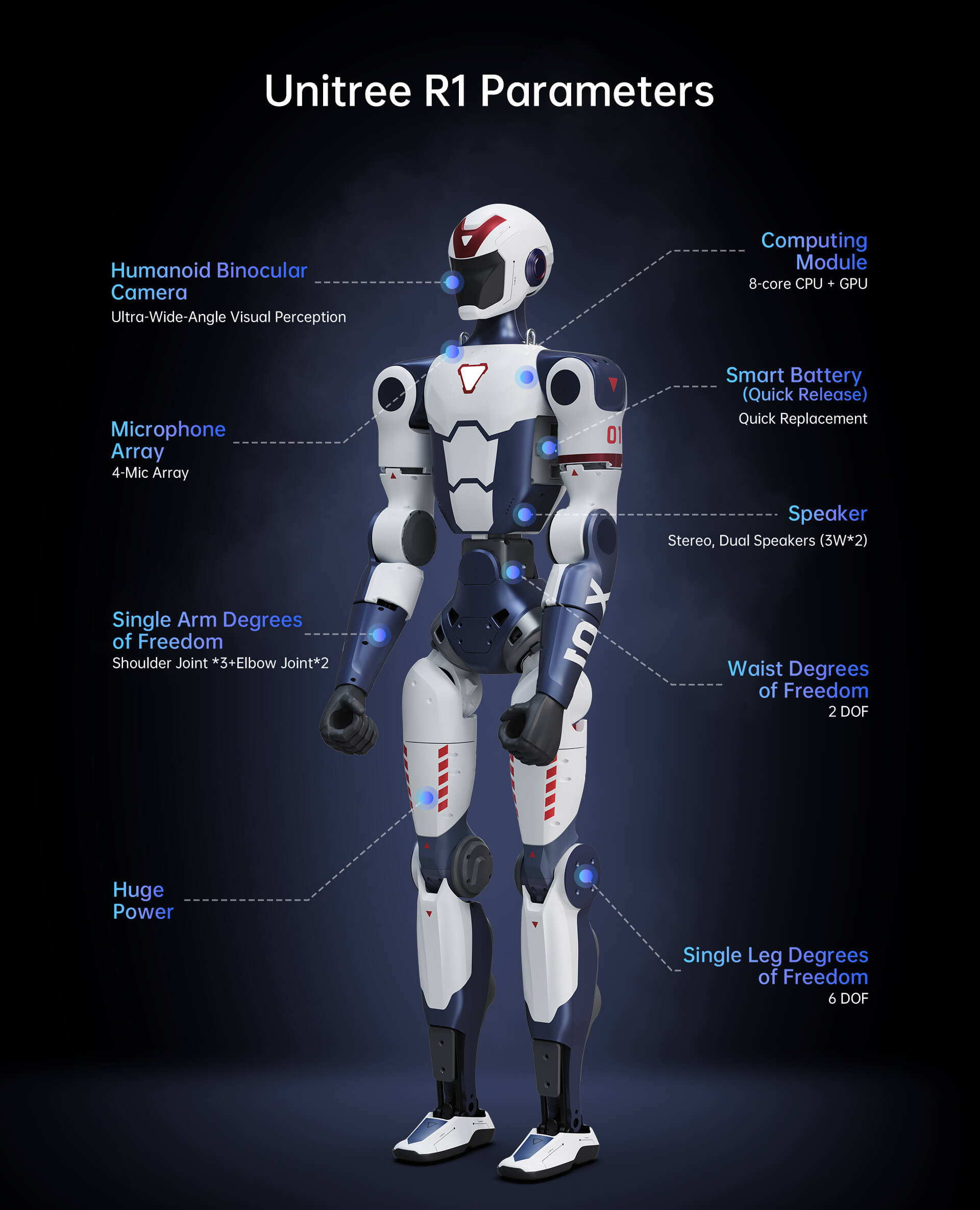
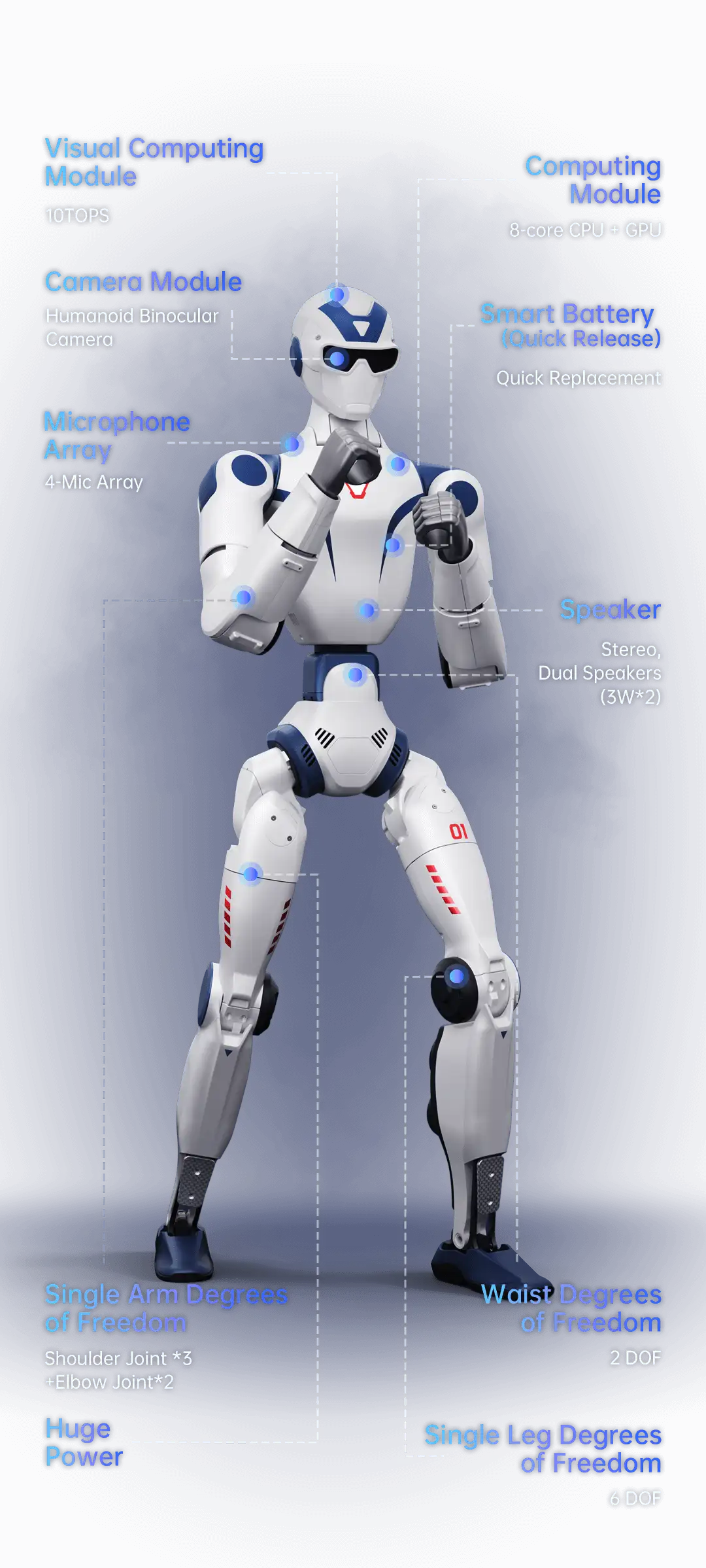
The Unitree R1 is a wheeled humanoid robot that combines a stable rolling base with a highly agile 7+7 degree-of-freedom arm system and a multimodal AI core. Manufactured by Unitree Robotics in Hangzhou, China, it targets education, research, entertainment, and service tasks in constrained spaces. The R1 departs from legged designs, embracing a 'movement first' philosophy that yielded cartwheels, handstands, front flips, and autonomous fall recovery. Configurations range from the ultra-affordable R1 Air (20 DOF) to the EDU Pro with dexterous five-finger hands (38 DOF), all powered by low-inertia internal rotor PMSMs and a smart lithium-ion battery with quick‑swap capability. At a starting price of $4,900, it redefines entry‑level humanoid robotics.
Specifications
Here are the full technical specifications.
| Spec | Value |
|---|---|
| Height | 1230 mm |
| Weight | 25 kg |
| Degrees of freedom | 26 |
| Battery life | 1 hour |
| Max speed | 9 km/h |
| Payload | 10 kg |
| Price (new) | $4,900–$35,000 |
| Price (used range) | N/A |
Price & Value
New MSRP: $4,900–$35,000
Used range: N/A
The R1 Air at $4,900 undercuts every other humanoid on the market, including Unitree’s own G1. Moving up the stack, the $5,900–$8,990 Standard adds a 2‑DOF head and more computation, while EDU configurations ($10,000–$35,000) unlock dexterous hands, enhanced AI, and research‑grade sensors. Value for money is exceptional in the sub‑$10k band if dynamic mobility is the priority, though total cost of ownership climbs with required spares and optional quick‑swap batteries. Depreciation is likely sharp given the rapid pace of humanoid development, but the low initial outlay limits downside risk. For a wheeled humanoid with this acrobatic repertoire, no competitor comes close at anywhere near this price.
Who Is It For?
Best for: - University robotics labs needing an affordable, high‑agility platform for locomotion and manipulation research – 26+ DOF and full‑body motion planning library included. - Entertainment and public‑facing exhibits requiring a stable, repeatable robot that can perform cartwheels, flips, and interactive AI conversations without tethering. - AI developers and startups looking for a multimodal embodied agent (voice + vision) to deploy large language models in the physical world. - STEM educators seeking a durable humanoid that ships with SDKs and a large demo codebase, allowing students to go from unboxing to custom behaviors in days.
Not for: - Heavy industrial lifting or factory logistics – the arm payload is limited to 10 kg and the wheeled base cannot negotiate stairs. - Outdoor terrain navigation – the R1 is designed for smooth indoor surfaces; rough‑terrain capability is restricted to its legged siblings like the G1. - Long‑duration autonomous patrol – with a 1‑hour battery life and fixed‑base design, runtime extensions require frequent battery swaps or tethered power.
Alternatives & Comparison
The Unitree R1 occupies a unique wheeled‑humanoid niche at a price previously reserved for hobbyist kits. Its main competition comes from Unitree’s own legged platforms and from larger, far more expensive research humanoids.
| Model | Price | Available | Key Difference |
|---|---|---|---|
| Unitree G1 | $16,000 | preorder | Larger legged humanoid (1.27 m, 35 kg) with 23–43 DOF; walks, runs, and climbs stairs but costs 3–4× more. |
| Tesla Optimus | Undisclosed (~$20,000 expected) | no | Full‑size legged humanoid integrated with Tesla AI stack; not yet publicly available, expected no earlier than 2027. |
| Fourier GR-1 | $150,000 | yes | Full‑size (1.65 m, 55 kg) research‑grade legged humanoid; offers higher payload and academic support but at 10× the price. |
Verdict: If your budget is under $10,000 and you need a stable, acrobatic platform for indoors, the R1 Air or Standard has no equal. For those who require bipedal locomotion and larger payloads, the Unitree G1 is a more versatile but pricier step up. Tesla Optimus remains an aspirational bet with no firm delivery date; the Fourier GR-1 is overkill unless you need industrial‑grade research hardware and have $150k to spend. In short: budget wheeled humanoid → R1; legged mobility → G1; wait‑and‑see → Optimus; heavy‑duty research → GR-1.
Use Cases & Capabilities
Dynamic Movement Research
Researchers can exploit the R1’s wheeled base and high‑torque actuators to study dynamic balancing, fall recovery, and whole‑body motion planning. The robot’s ability to perform cartwheels, handstands, and autonomous fall recovery provides a rich dataset for reinforcement learning and model‑predictive control. Because the lower body is fixed, experiments can isolate arm and torso dynamics without the complexity of leg control, accelerating algorithm iteration. The open SDK and OTA update pipeline allow labs to push new controllers to the robot within hours, making it an ideal testbed for advanced mobility research at a fraction of the cost of legged alternatives.
AI Interaction and Service Demonstrations
Equipped with a stereo binocular camera, microphones, speakers, and an on‑board multimodal large language model, the R1 excels as a conversational service agent. It can recognize speech, understand visual scenes, and respond with natural dialog while gesturing with its arms. Retail stores, hotel lobbies, and museums can deploy it to guide visitors, answer questions, and even perform short choreographed routines. The wheeled stability ensures consistent positioning, and the quick‑swap battery means it can run continuously through a full‑day event with minimal downtime.
Education and Robotics Curriculum
At $4,900, the R1 Air brings humanoid robotics within reach of high‑school and university programs that previously could only afford basic kits. Students can immediately program the robot using the provided Linux‑based SDK and a rich set of example behaviors. The 26‑DOF configuration in the Standard model offers enough complexity to teach kinematics, inverse kinematics, path planning, and computer vision. Moreover, the large multimodal model integration introduces undergraduates to cutting‑edge AI‑to‑robot interfaces, preparing them for careers in intelligent systems. The robust aluminium‑alloy frame withstands frequent student handling and minor collisions.
Entertainment and Public Performance
Theatres, theme parks, and live events can leverage the R1’s show‑stopping acrobatics – front flips, downhill sprints, and handstands – to draw crowds. Because the robot recovers autonomously from falls, performances remain safe and uninterrupted. The compact footprint (357 × 190 mm) allows it to navigate tight backstage areas, while the OTA updates let choreographers modify routines remotely. Paired with the integrated audio system, it can deliver scripted dialogue and sound effects in sync with motion, creating a fully automated, repeatable show that rivals far more expensive animatronics.
Prototyping and Customization Platform
Startups and R&D teams can use the R1 as a base for rapid prototyping of new grippers, sensors, or AI modules. The modular arm architecture and open mounting points on the chassis facilitate custom end‑effectors or additional cameras. Unitree’s smart actuator ecosystem means third‑party developers can replace or augment joints with minimal redesign. The EDU Pro configuration with 5‑finger hands provides a complete dexterous manipulation baseline, while the lower‑cost Air variant offers a stripped‑down core for custom builds. This flexibility reduces time‑to‑market for experimental service‑robot concepts.
History & Background
Unitree Robotics was founded in 2016 in Hangzhou, China, by Wang Xingxing. The company first gained international attention with affordable quadruped robots like the Go1 and B2. In 2023, Unitree entered the humanoid market with the full‑size bipedal H1 and later the general‑purpose G1. The R1, introduced in late 2025 and named to TIME’s Best Inventions list that year, represents Unitree’s first wheeled humanoid – a deliberate departure from legged designs to maximize dynamic upper‑body agility. Pre‑orders opened shortly after the September 2025 reveal, with customer shipments slated for April 2026. It is a first‑generation platform built entirely on Unitree’s in‑house actuator technology and the same multimodal AI framework used in its other robots.
Buying Used — What to Check
Verify battery health Li‑ion packs degrade over cycles; a 1‑hour runtime is heavily dependent on battery condition. Pre‑order units will be new, but future used deals must include cycle‑count data.
Confirm configuration and DOF EDU and Air variants look similar; a used Standard could be advertised as an EDU Pro. Always request the original order invoice or check the joint count on the arms and head.
Inspect for structural damage Acrobatic stunts like front flips and handstands stress the aluminium‑alloy frame and actuators. Look for hairline cracks around the waist and hip joints.