What is the Xiaomi Cyberdog2?
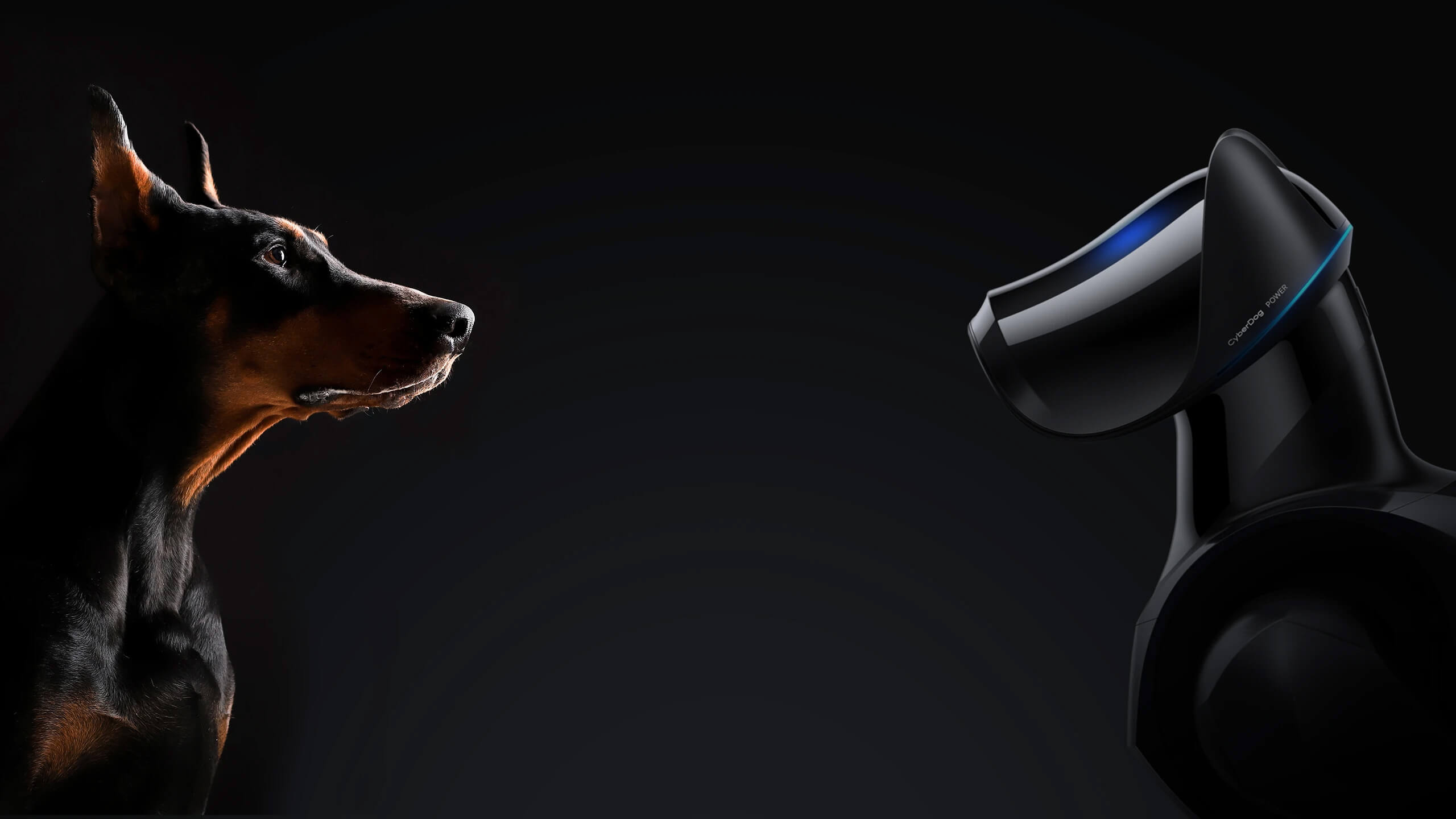
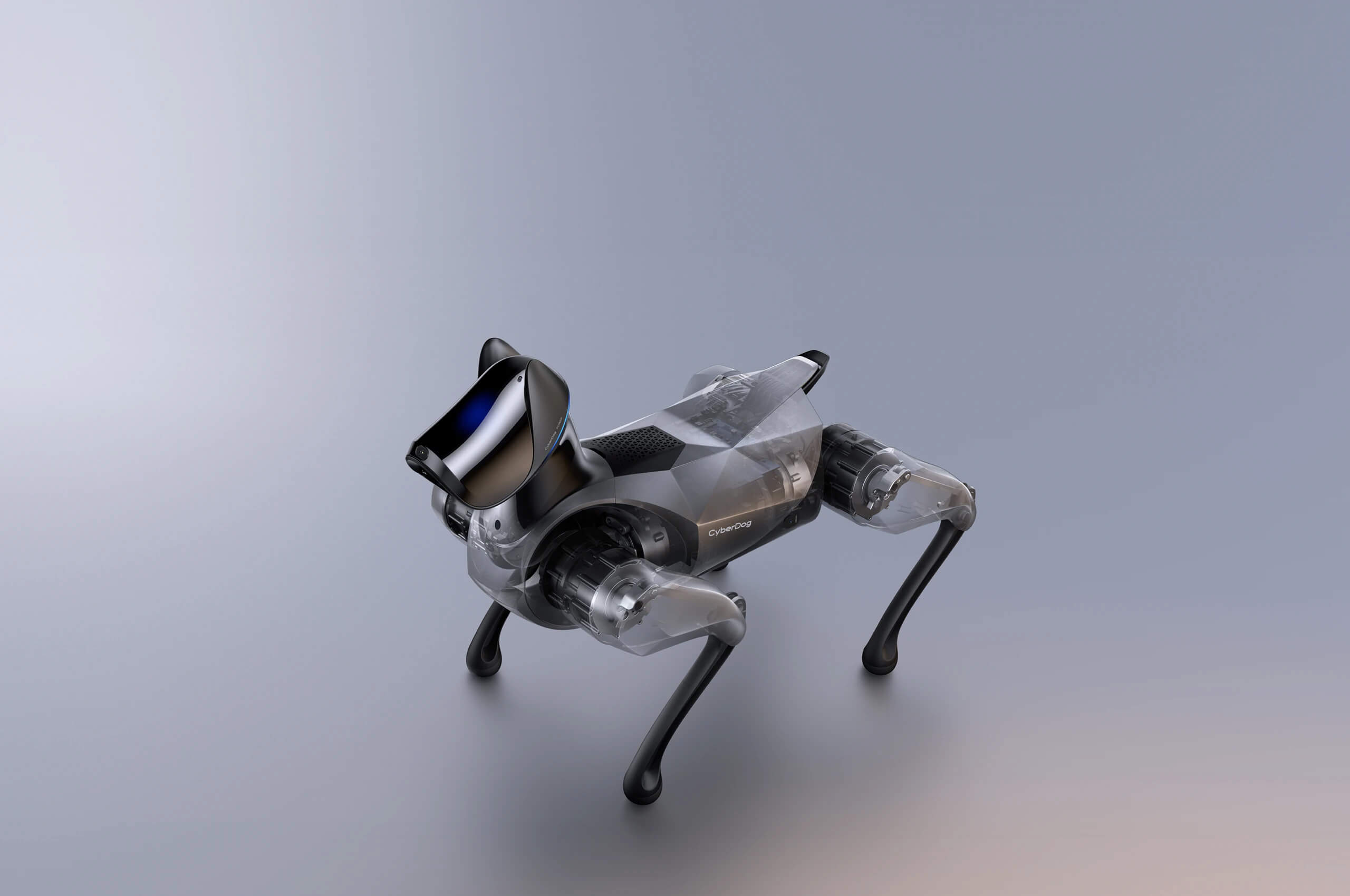
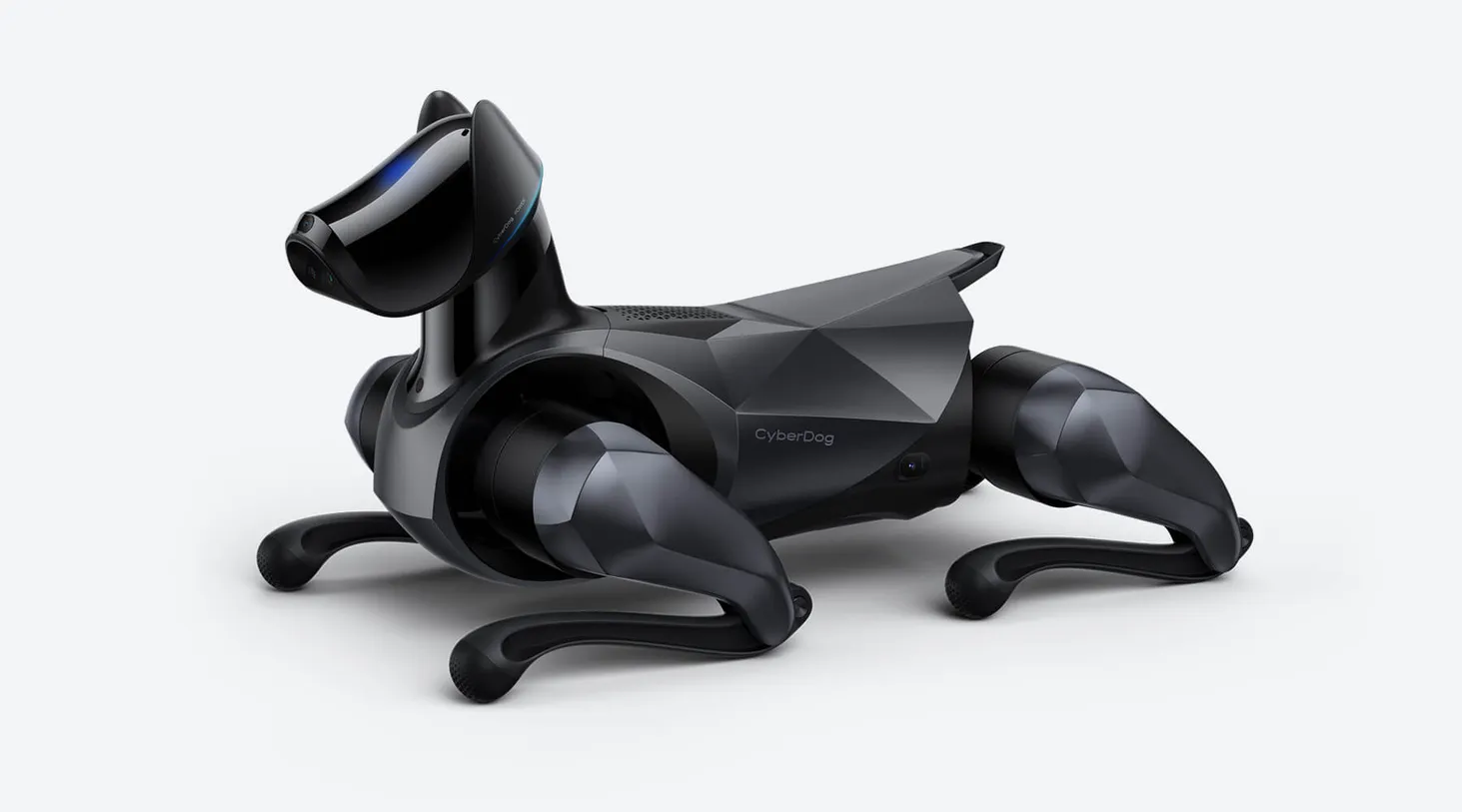
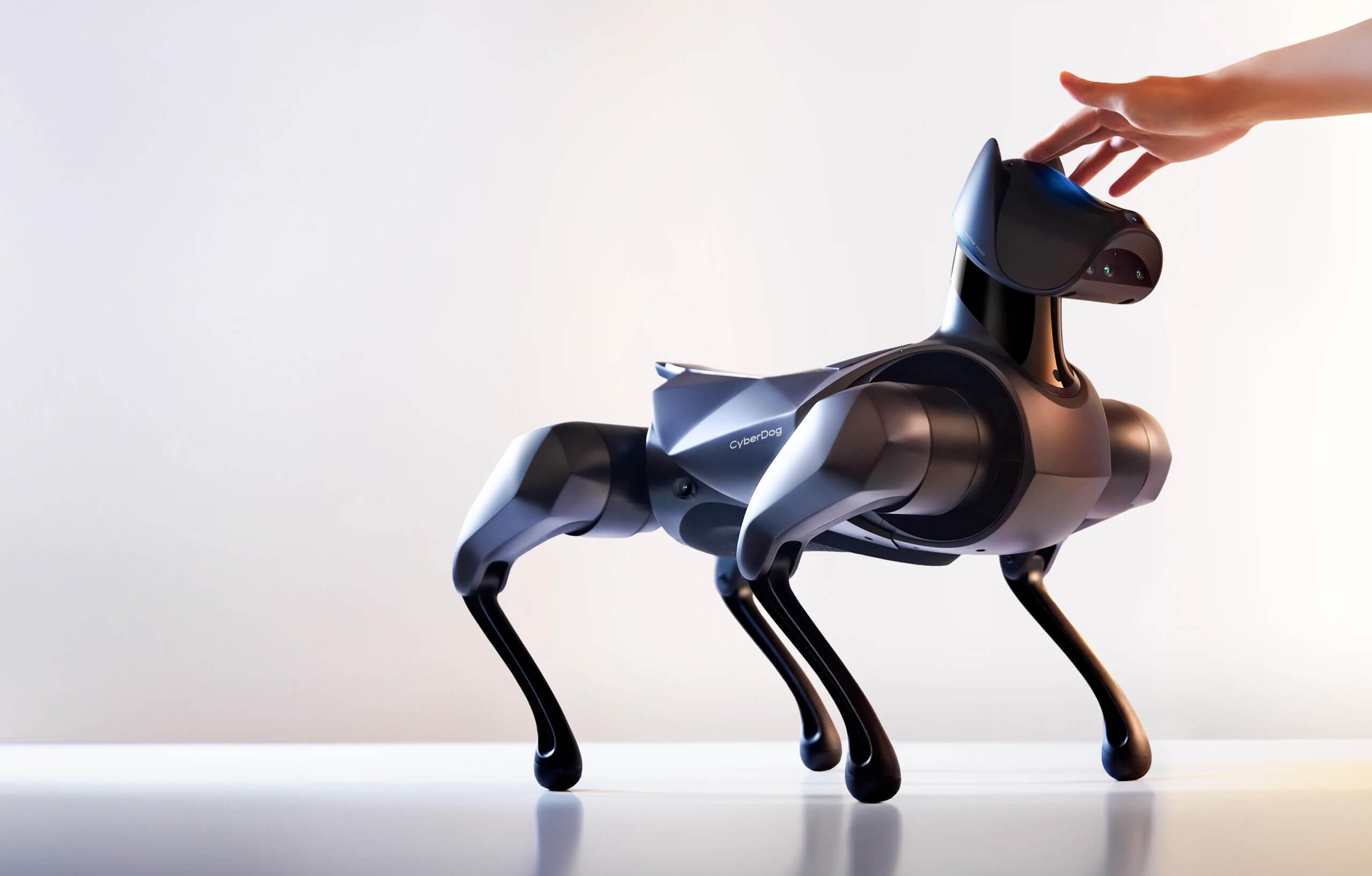
Xiaomi CyberDog 2 is an agile, open-source quadruped robot dog built for hobbyists, researchers, and educators. Developed by Xiaomi in Beijing, China, it shrinks the original CyberDog by 16% and trims weight by 40% to 8.9 kg. Its bio-inspired Doberman design features nine removable shell panels for 3D-printable customization. Powered by an NVIDIA Jetson Xavier NX (Ubuntu 18.04 + ROS2), it delivers a full developer toolkit. A sensor suite of 19 components includes Intel RealSense depth, YDLIDAR TG30 LiDAR, a 146° fisheye, a four-mic array, and force-sensitive feet. Proprietary CyberGear micro-actuators generate 32 N·m torque per leg joint, enabling backflips, front flips, and a walking/run speed of 1.6 m/s.
Specifications
Here are the full technical specifications.
| Spec | Value |
|---|---|
| Height | 367 mm |
| Weight | 8.9 kg |
| Degrees of freedom | 12 |
| Battery life | 1.5 hours |
| Max speed | 5.76 km/h |
| Payload | 1 kg |
| Price (new) | $1,800 – $3,000 |
| Price (used range) | $1,200 – $2,500 (estimated, rare) |
Price & Value
New MSRP: $1,800 (China) / $1,800–$3,000 (international)
Used range: $1,200–$2,500 (estimated, limited market)
Xiaomi prices the CyberDog 2 at ¥12,999 in China (~$1,800), making it one of the cheapest high-spec quadrupeds. International resellers typically charge $1,800–$3,000 after import duties, still undercutting the Unitree Go2’s $1,600 base but with a richer sensor loadout. Compared to the $74,500 Boston Dynamics Spot, the CyberDog 2 is purely a consumer/research device — it lacks IP rating and enterprise support, but its open ROS2 environment and 3D-printable shells give it a unique maker appeal. Because it entered the market only recently (first built 2025), used units are scarce and depreciation is likely steep in the first two years. Buyers should budget for accessories (extra LiDAR, custom payloads) and factor in the difficulty of sourcing proprietary CyberGear actuators outside China.
Who Is It For?
Best for: - Hobbyist roboticists and university labs — open-source ROS2 and 3D-printable shells enable endless tinkering and gait research - Makers who want a customizable pet/performance bot with 19 sensors and voice interaction
Not for: - Industrial inspection or outdoor fieldwork — no IP rating and no weather resistance - Heavy payload tasks — payload limited to 1 kg, and torque-rich but not for heavy lifting
Alternatives & Comparison
The CyberDog 2 competes in the growing consumer/research quadruped market against Unitree’s Go series and, at the high end, Boston Dynamics Spot. It occupies a middle ground: more capable sensors than a $1,600 Go2 but far cheaper than a $74,500 Spot.
| Model | Price | Available | Key Difference |
|---|---|---|---|
| Unitree Go2 | $1,600 | yes | Lower payload (0.5 kg), no electrochromic glass, but built‑in tracking camera and slightly longer battery life (2 h) |
| Boston Dynamics Spot | $74,500 | yes | IP54, 14 kg payload, industrial SDK, 40× the cost |
Verdict: For makers, students, and research labs that want an open‑source quadruped with advanced sensors and flashy moves, the CyberDog 2’s $1,800 entry price and ROS2 stack beat the Unitree Go2’s slightly lower cost. If you need a robot that can handle rain, dust, and real industrial payloads, the Spot remains the only serious choice, but its price excludes all but enterprise buyers.
Use Cases & Capabilities
Robotic Pet Companion
With its lifelike Doberman stance, 12-DOF dynamic movement, and integrated touch sensors, the CyberDog 2 makes an engaging robot pet. Owners can train it via the AI gait platform to walk, run, and perform backflips or moonwalks. The 13 MP AI camera supports face and object recognition, while Xiaomi’s AI voice algorithm enables natural voice commands. Nine replaceable shell panels let users personalize its look with 3D‑printed designs. Its 1.5‑hour battery limits extended play, but the robot automatically returns for charging.
STEM Education & University Research
CyberDog 2 runs Ubuntu 18.04 and ROS2 out of the box, giving students a real‑world robotics platform for computer vision, motion planning, and reinforcement learning. The NVIDIA Jetson Xavier NX provides ample compute for deep neural networks, while LiDAR, depth, and fisheye sensors create rich datasets. Universities can equip labs at a fraction of the cost of enterprise quadrupeds; the open‑source codebase and available SDK mean students can modify gait controllers and add custom nodes. 3D‑printable shells also encourage mechanical design projects.
Developer & Maker Playground
With three USB‑C ports, HDMI output, and mounting points, makers can easily attach searchlights, 360° cameras, or even a small robot arm. Xiaomi’s official developer SDK exposes actuator control and sensor streams for custom ROS2 packages. The robot’s ability to do continuous backflips and skateboard routines makes it a crowd‑pleaser at hackathons and demo days. A payload of 1 kg is enough for a compact sensor payload or an extra battery, but torque limits prevent heavy add‑ons.
Entertainment & Live Performance
CyberDog 2’s acrobatic repertoire — moonwalking, ballet steps, flips, and standing on hind legs — transforms it into a stage performer. The optional electrochromic glass special edition shifts colors on command, adding visual drama. Event producers can pre‑program ROS2 sequences and trigger them via Bluetooth. Its 1.6 m/s top speed is adequate for a stage, but for large venues, careful choreography is needed to keep the dog within range of the audience. Battery swaps are not possible mid‑show, so 90‑minute runtimes must be planned around.
AI & Gait Research
Researchers can exploit the built‑in reinforcement learning platform to develop novel locomotion algorithms. The 12-DOF leg design with onboard rotary encoders and foot force sensors provides rich feedback for sim‑to‑real transfer. NVIDIA Jetson Xavier NX runs neural network models locally, enabling real‑time decision‑making. Because Xiaomi supports ROS2, it integrates easily with popular motion planning and control stacks. The main research limitation is the robot’s lack of arm or manipulator, so studies focus purely on legged locomotion.
History & Background
Xiaomi, founded in 2010 in Beijing, first entered the quadruped space with CyberDog in August 2021. That initial model, priced at ¥9,999, was released as a limited beta to 1,000 makers and established Xiaomi’s CyberGear actuator platform. Its open‑source philosophy earned a loyal following despite a reliance on a x86‑based compute module. In late 2024 / early 2025, Xiaomi revealed the second generation, CyberDog 2, now designed with a bio‑inspired Doberman profile, 9 replaceable shell panels, and a significant hardware upgrade to the NVIDIA Jetson Xavier NX. The robot shrank by 16% and shed 40% of the weight, while adding more sensors and a dedicated AI voice algorithm. First units were available in 2025, and as of 2026 Xiaomi continues to sell the CyberDog 2 through its Chinese retail channels, with no official successor announced.
Buying Used — What to Check
Inspect leg joints and actuator wear Proprietary CyberGear micro‑actuators are hard to replace outside China; any clicking or free play suggests high hours.
Query battery health and charge cycles The 4,500 mAh Li‑Po pack degrades with use; a new battery costs about $150–200 and may require a Chinese vendor.
Confirm ROS2 environment and any custom payloads A misconfigured Ubuntu/ROS2 installation can be time‑consuming to restore, especially if the original software license or backup is missing.