What is the Yogi?
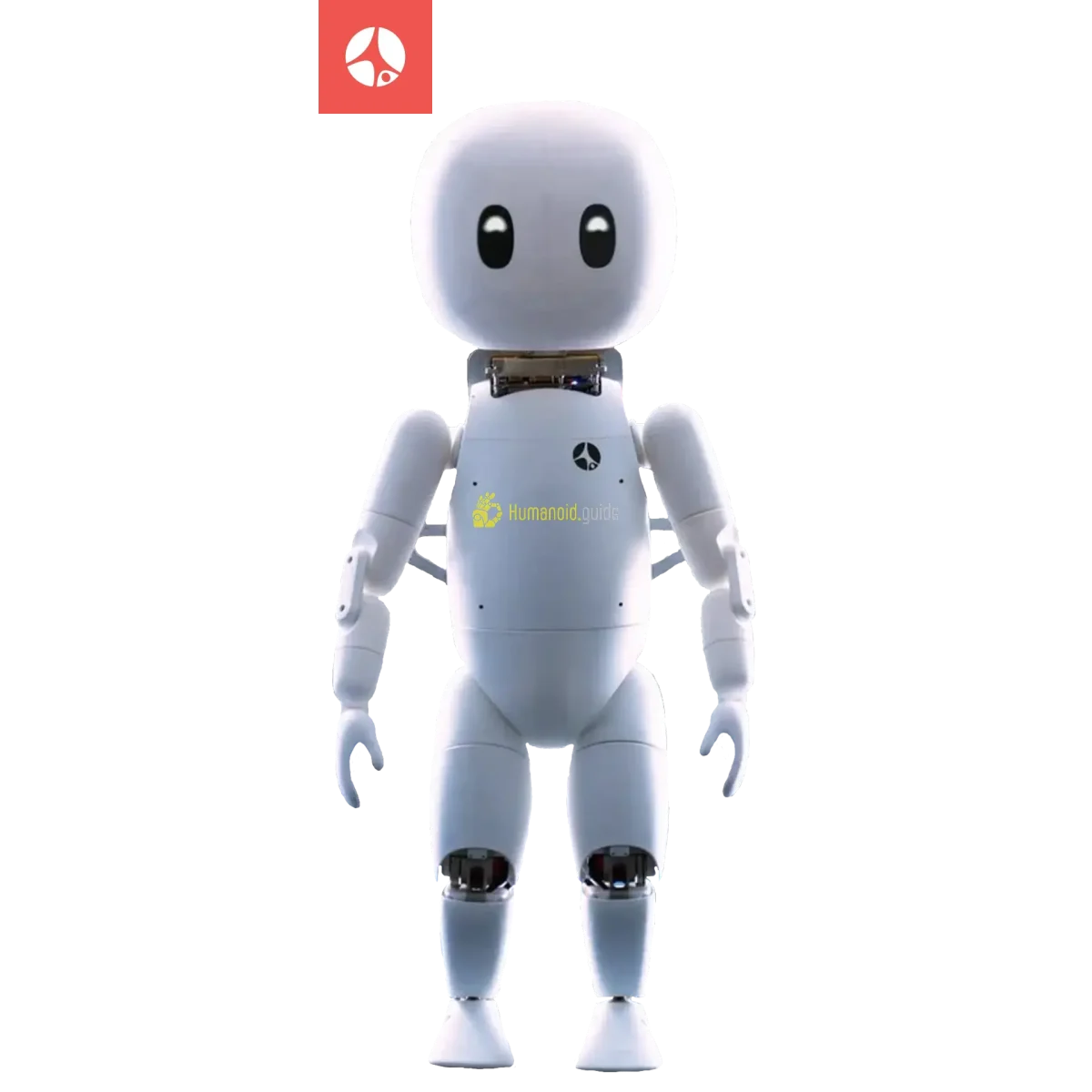
The Yogi by Cartwheel Robotics is a prototype humanoid robot engineered for dynamic whole-body motion, including acrobatic movements. Developed in the United States, it debuted in 2024 as a research platform exploring agile bipedal locomotion and full-body coordination. With 36 total degrees of freedom (10 in its dexterous hands), the Yogi can perform complex tasks requiring balance and manipulation. Its NVIDIA Jetson-class edge AI module and ROS2-based operating system enable low-latency control, while a 4K depth camera and stereo vision provide environmental perception. As of 2026, the Yogi remains in development, targeting workplace assistance and educational use cases.
Specifications
Here are the full technical specifications.
| Spec | Value |
|---|---|
| Height | 150 cm |
| Weight | 47 kg |
| Degrees of freedom | 36 |
| Battery life | 3 hours |
| Max speed | 6 km/h |
| Payload | 15 kg |
| Price (new) | Undisclosed (contact manufacturer) |
| Price (used range) | N/A (no commercial units) |
Price & Value
New MSRP: Undisclosed
Used range: N/A
Pricing for the Yogi has not been publicly announced. As a pre-commercial prototype, any cost is speculative; manufacturers in humanoid robotics often quote between $80,000 and $250,000 for similar research platforms. The Yogi’s niche focus on acrobatic motion may position it as a premium research tool, though Cartwheel Robotics has not disclosed a target price. Without a commercial release, there is no depreciation outlook or used market. Organizations should inquire directly for partnership or early-access pricing.
Who Is It For?
Best for: - Robotics research labs studying extreme dynamic motion and bipedal agility (36 DOF enables whole-body acrobatics) - Universities exploring whole-body AI control for humanoids in unstructured environments (ROS2 + edge AI ready)
Not for: - Industrial logistics or prolonged physical labor (battery only 3 hours, payload 15 kg, and unproven reliability) - Safety-critical human interaction (still a prototype with no certifications like ISO 13849)
Alternatives & Comparison
The Yogi competes in the emerging market of dynamic humanoid prototypes. Unlike general-purpose platforms, its sole focus is acrobatic agility.
| Model | Price | Available | Key Difference |
|---|---|---|---|
| Figure 02 | ~$150,000 (est.) | preorder | Dexterous manipulation for industrial tasks; no acrobatic capability |
| 1X Neo | Undisclosed | preorder | Lightweight and safe for human environments; limited dynamic motion |
| Unitree G1 | $70,000 | yes | Affordable and available now, but focused on walking, not acrobatics |
| Tesla Optimus | Undisclosed | preorder | General-purpose humanoid with broad AI ambitions; less athletic |
Verdict: For pure athleticism and dynamic locomotion research, the Yogi stands alone. If you need a practical humanoid for real-world tasks, the Unitree G1 offers proven walking and manipulation at a known price, while Figure 02 and Tesla Optimus provide more polished industrial potential. The Yogi remains a niche research tool, not yet ready for commercial deployments.
Use Cases & Capabilities
Acrobatic locomotion research
The Yogi is purpose-built to study extreme movements like jumping and backflips that push the limits of bipedal balance. Its 36 DOF and Harmonic Drive gears allow rapid, high-torque motions essential for sport-like agility. Researchers can test whole-body control algorithms that coordinate legs and arms during flight phases. This capability is unmatched by most humanoids, making it ideal for advancing the science of athletic robotics. Experimental data from Yogi could inform safer navigation in disaster zones or rugged terrain.
Dynamic manipulation experiments
Beyond walking, the Yogi’s 10-DOF hands and 15 kg payload enable dynamic object handling while in motion. Researchers can explore how an acrobatic humanoid catches or throws objects, or manipulates tools in mid-stride. The low-latency control (350 ms glass-to-action) ensures responsive feedback for delicate operations. Although not yet certified for heavy industrial use, it serves as a testbed for high-speed manipulation in unstructured settings. Current limitations include battery endurance, which restricts testing sessions to 3-hour windows.
Entertainment and performance
The Yogi’s natural showmanship makes it a candidate for live entertainment, theme parks, or promotional events. Its ability to perform backflips, jumps, and acrobatic choreography captivates audiences far beyond typical humanoid tricks. With a white polymer shell and compact 160×60×50 cm shipping size, it is easily transported for stage shows. Safety around humans is rated 'Yes' according to manufacturer claims, though commercial deployment would require rigorous risk assessments. As a prototype, it has not yet been used in professional entertainment circuits.
Education in motion control
University programs focusing on advanced kinematics and real-time AI can use the Yogi to teach whole-body motion planning. Its ROS2-based Linux environment and NVIDIA Jetson GPU provide a standard platform for curriculum development. Students can program sequences requiring split-second balance corrections, gaining hands-on experience with motor synchronization and vision integration. The 4K depth camera and stereo vision supply rich data for perception projects. However, the prototype’s unproven durability means educational institutions would need to budget for potential maintenance.
History & Background
Cartwheel Robotics, founded in the early 2020s by a team of robotics engineers in the United States, publicly revealed the Yogi humanoid prototype in 2024. The robot drew attention for its ability to perform backflips, jumps, and other acrobatic maneuvers, positioning it as a platform for researching dynamic balance and coordination. Unlike many humanoids that prioritize static stability, Yogi integrates brushless servo motors and Harmonic Drive gear technology to achieve rapid, powerful motions. The company has kept a low profile, with no known funding rounds or partnerships publicly disclosed. As of 2026, Yogi exists solely as a pre-commercial prototype, and Cartwheel Robotics has not announced a manufacturing timeline or subsequent generations.
Buying Used — What to Check
Verify system maturity As a prototype, unresolved hardware or software bugs could affect reliability.
Check battery health Lithium batteries degrade over time; a used unit may deliver less than the rated 3 hours.
Inspect motor and gear wear Acrobatic movements stress the Harmonic Drive gearboxes; early failure signs could indicate heavy use.