What is the Zerith Z1?
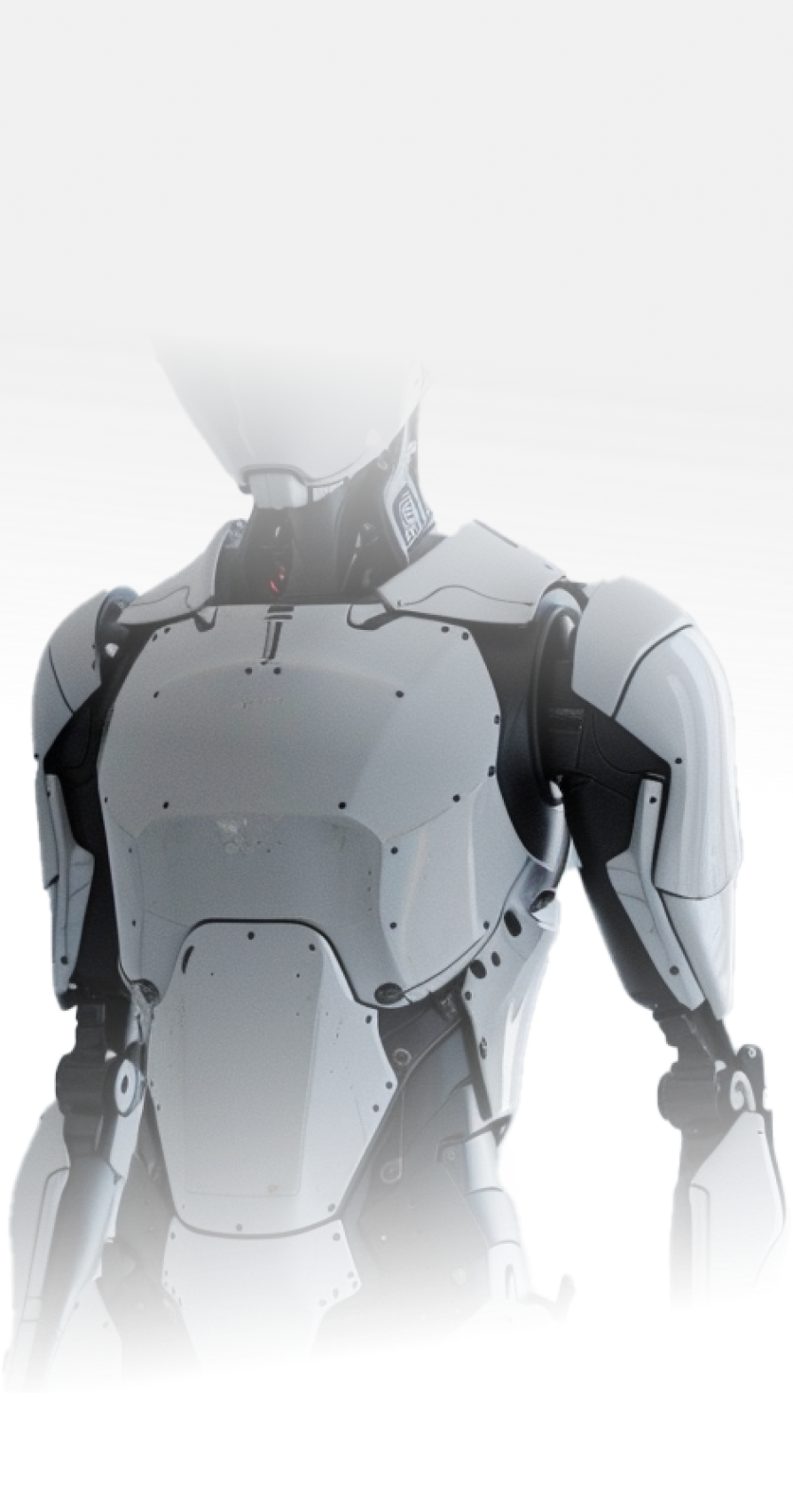
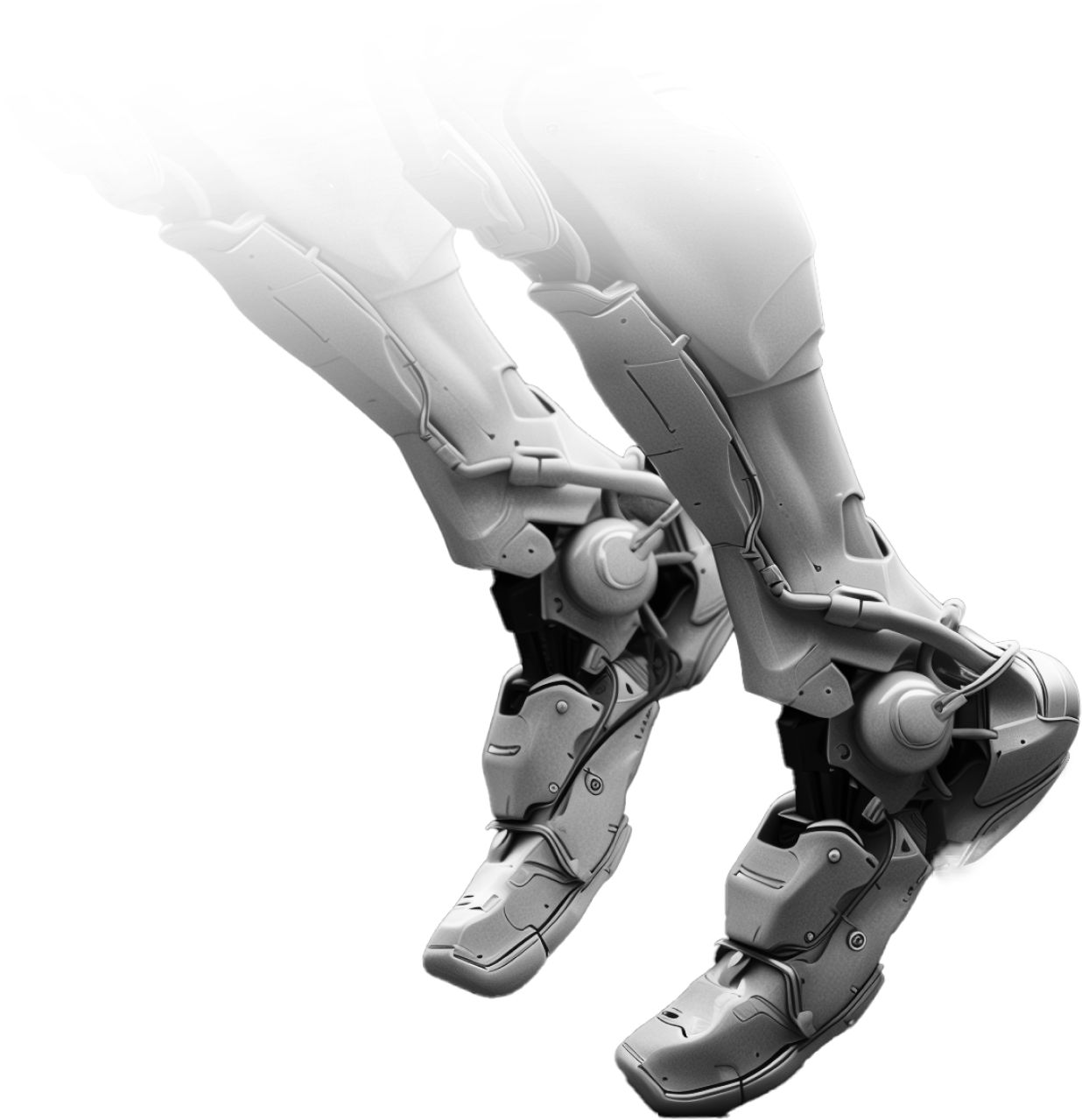
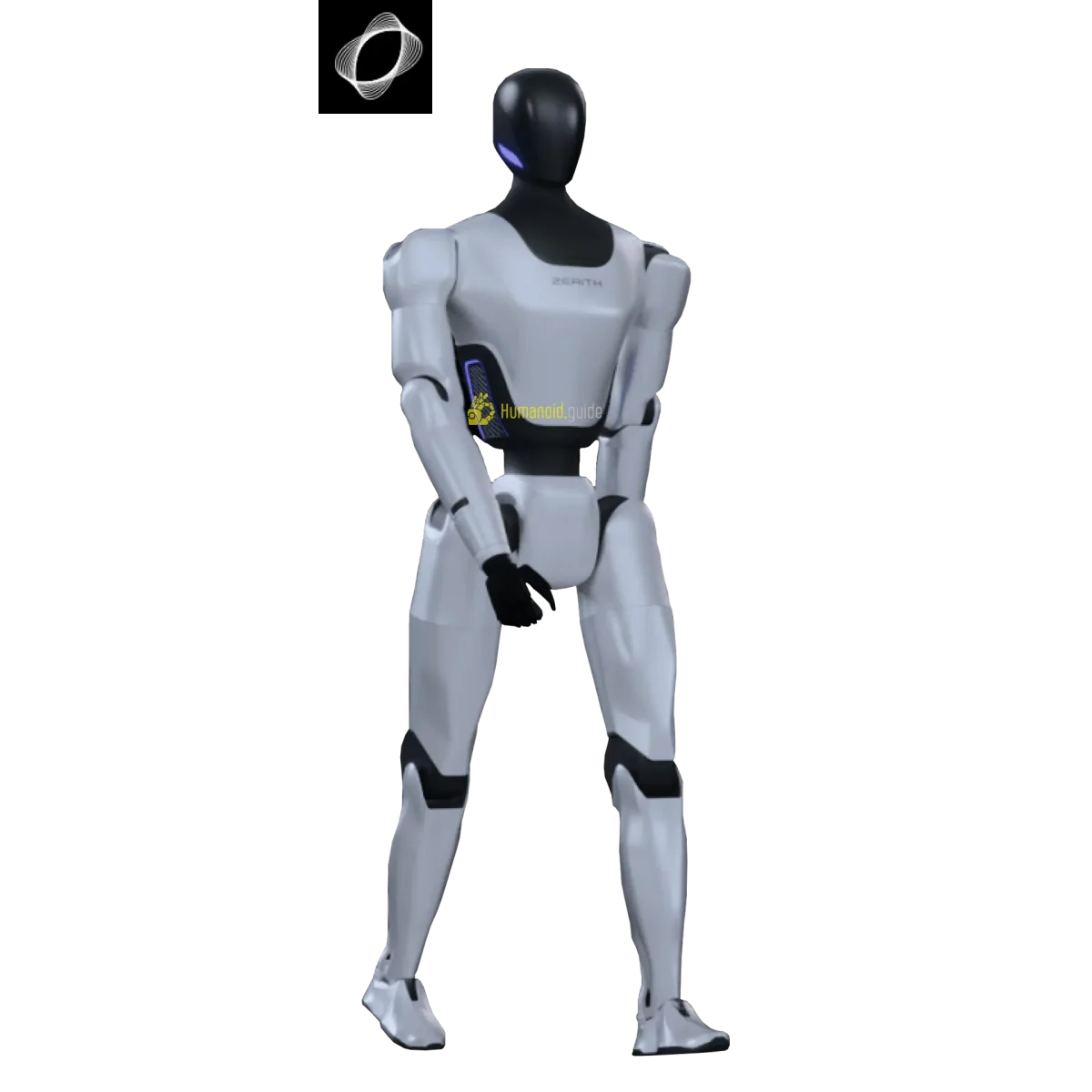
The Zerith Z1 is an entry-level humanoid robot designed for research and early industrial deployment. Manufactured by Zerith Robotics in China, the Z1 stands 145 cm tall and weighs 33 kg, featuring 34 degrees of freedom for whole-body motion. Equipped with an industrial-grade onboard compute and RGB-D perception suite including LiDAR, it runs for 2 hours on a charge and reaches walking speeds up to 4 km/h. The 8 kg payload capacity enables manipulation tasks in manufacturing inspection, light logistics, and service roles. Z1’s compact frame and ROS-compatible architecture make it an accessible testbed for humanoid robotics research.
Specifications
Here are the full technical specifications.
| Spec | Value |
|---|---|
| Height | 145 cm |
| Weight | 33 kg |
| Degrees of freedom | 34 |
| Battery life | 2 hours |
| Max speed | 4 km/h |
| Payload | 8 kg |
| Price (new) | $120,000 |
| Price (used range) | N/A (no used market yet) |
Price & Value
New MSRP: $120,000
Used range: N/A (no used market yet)
At $120,000, the Z1 sits in the mid-range for humanoid research platforms—more accessible than full-scale industrial humanoids like UBTECH’s Walker S, but pricier than bare-bones bipedal kits. For labs needing a self-contained ROS-ready system with 34 DOF and integrated perception, the Z1 offers solid value. As a pre-commercial device, pricing is direct from Zerith; no depreciation data exists yet, but used units may not appear until 2027 or later, potentially trading at 30–40% below MSRP. Buyers should budget for potential software license fees and ongoing maintenance, as Zerith’s support infrastructure is still maturing.
Who Is It For?
Best for: - University robotics labs requiring a pre-built 34-DOF humanoid for locomotion and manipulation research - Industrial automation integrators exploring bipedal inspection tasks in structured environments
Not for: - Heavy payload tasks (limited to 8 kg arm payload) - Outdoor or harsh environments (IP20–IP54 rated, not rugged)
Alternatives & Comparison
While several humanoid robots target the $80k–$150k research bracket, the Zerith Z1 differentiates with its compact 145 cm frame and 34 DOF at a competitive price.
| Model | Price | Available | Key Difference |
|---|---|---|---|
| Unitree H1 | ~$90,000 (est.) | yes | Faster bipedal locomotion (15 km/h) with lower dexterity (19 DOF) |
| Fourier GR-2 | ~$85,000 (est.) | preorder | Larger platform with 50+ DOF and higher payload, but heavier and less compact |
| UBTECH Walker S | ~$150,000 (est.) | yes | Proven service humanoid with full enterprise support, double the price |
Verdict: For researchers prioritizing a compact, 34-DOF platform at $120k, the Z1 hits a sweet spot. The Unitree H1 is a better choice if speed matters more than manipulation dexterity, while the Fourier GR-2 offers a more advanced motion system for a similar price—but may be harder to acquire. The UBTECH Walker S is overkill unless you need a polished out-of-the-box service robot. We recommend the Z1 for labs starting out in whole-body control and light manipulation.
Use Cases & Capabilities
Manufacturing Inspection
Z1 walks along assembly lines, capturing RGB-D and LiDAR data for defect detection. Its 34 DOF allow it to duck under conveyors or peer into tight spaces. The 2-hour runtime supports regular rounds on a single shift, but hot-swappable batteries are not confirmed. The integrated compute runs vision inspection models locally, reducing latency to under 100 ms. With ROS compatibility, it integrates into existing factory MES systems. However, the IP20–IP54 rating limits use to clean, indoor settings.
Logistics and Material Handling
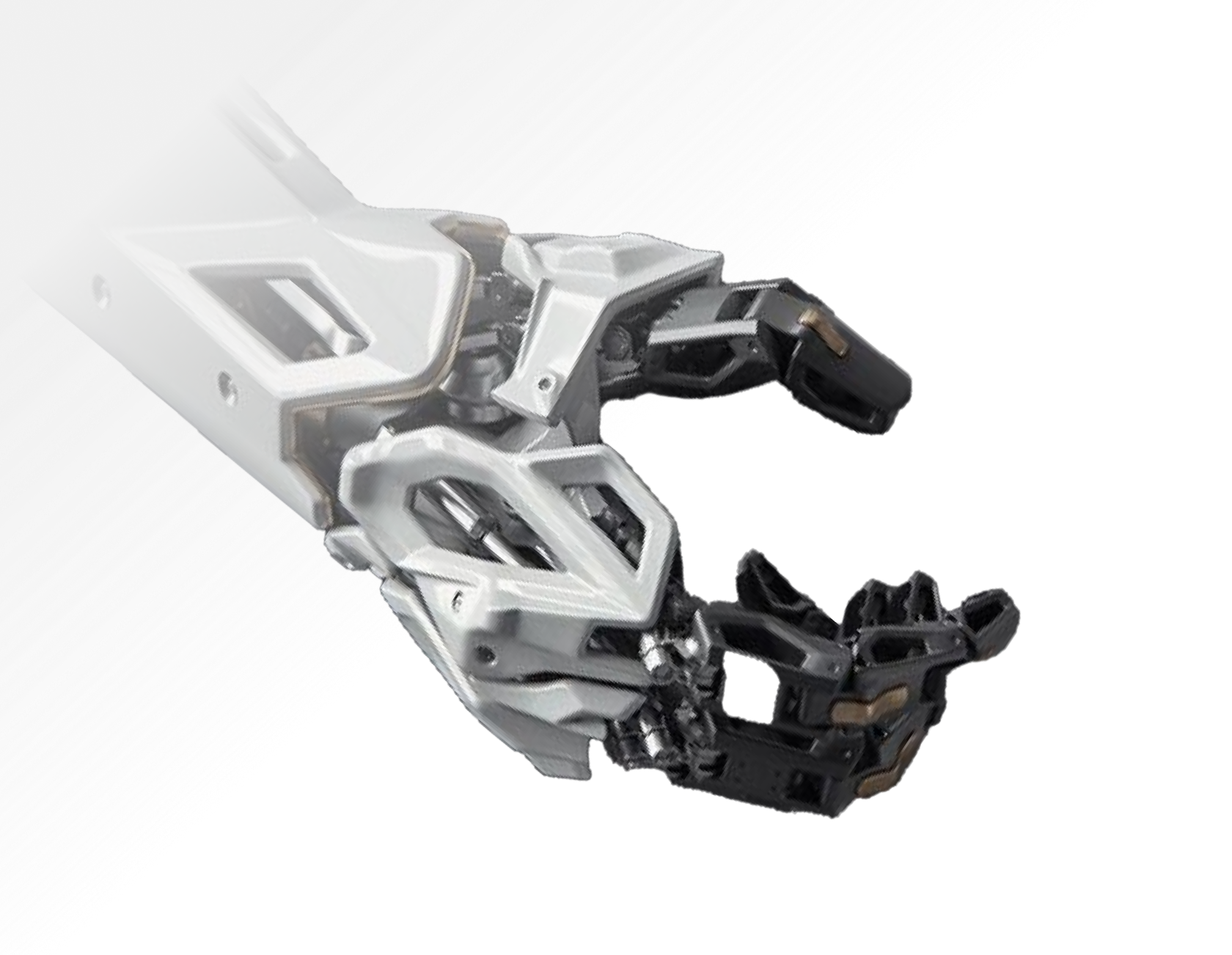
Equipped with five-fingered hands and 8 kg payload, Z1 can pick and place small parts in warehouses or fulfillment centers. It navigates at 4 km/h using onboard LiDAR and SLAM, avoiding obstacles autonomously. The compact 145 cm frame allows operation under low ceilings and in narrow aisles. Current battery endurance (2 hours) suits short bursts of order picking, but multiple charge cycles per shift would be needed for continuous operation.
Academic Research
Z1 provides a complete humanoid platform for locomotion, grasping, and HRI studies. Its 8 kg payload and dexterous five-fingered hands enable manipulation experiments. The Linux/ROS stack allows students to implement custom controllers, while onboard IMU and LiDAR feed SLAM and navigation projects. At 145 cm, it is smaller than many full-size humanoids, making it manageable for lab environments with limited space.
Service Robotics
Z1’s humanoid form and 34 DOF enable natural interactions in hospitality or concierge scenarios. It can carry trays up to 8 kg and navigate at 4 km/h through indoor spaces. Onboard microphones and speakers (not detailed) may support voice interaction. However, paint finish and anthropomorphic design are still basic; custom integration may be needed for customer-facing deployment.
History & Background
Zerith Robotics unveiled the Z1 in 2024 as its first commercial humanoid product, following internal development that began in 2023. The company, headquartered in China, focuses on general-purpose bipeds for industrial and service sectors. The Z1 was built on a compact 145 cm frame, emphasizing accessibility for research labs. In 2024, Zerith showcased the robot at trade fairs with a $120,000 price tag and 34 degrees of freedom. Early 2025 saw limited pilot deployments in manufacturing inspection and logistics, though full commercial rollout is still pending as of 2026. Current firmware updates have improved stamina and walking stability. No generational variants have been announced, and the platform remains the sole entry in Zerith’s portfolio.
Buying Used — What to Check
Verify battery health Battery capacity degrades over time; a 2-hour runtime may drop significantly on older cells.
Inspect joint actuators 34 high-precision gear reductions are wear items; check for backlash or calibration drift.
Confirm ROS compatibility version Software stack may be locked to a specific ROS distro; verify updates are available for your development environment.