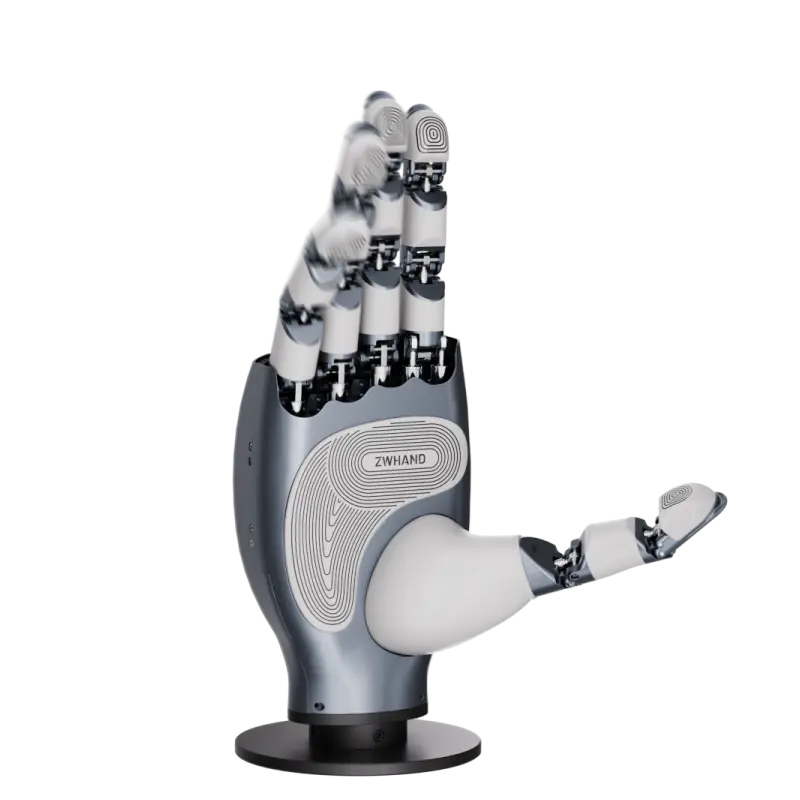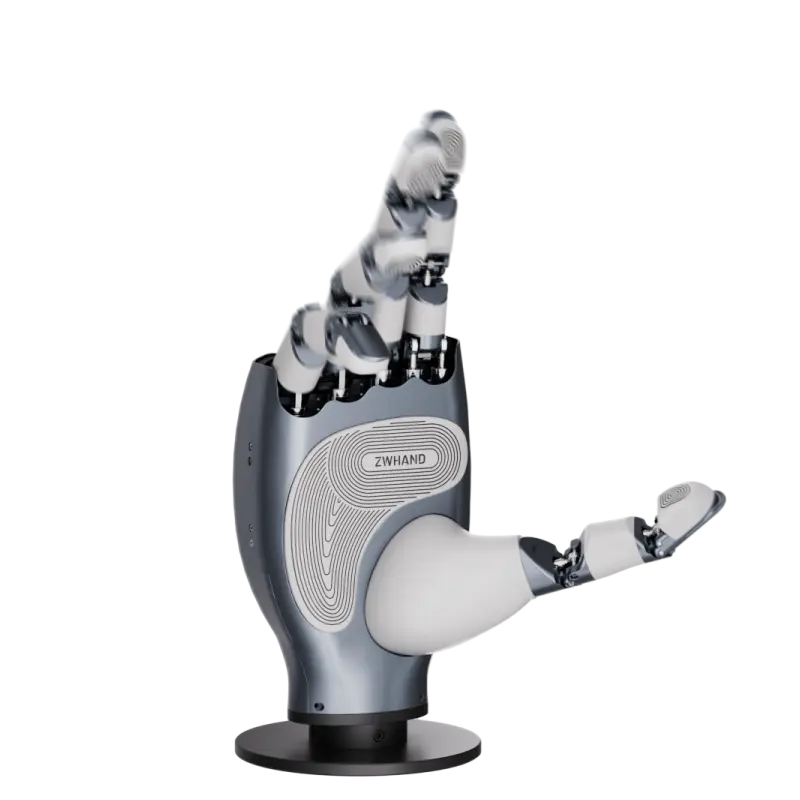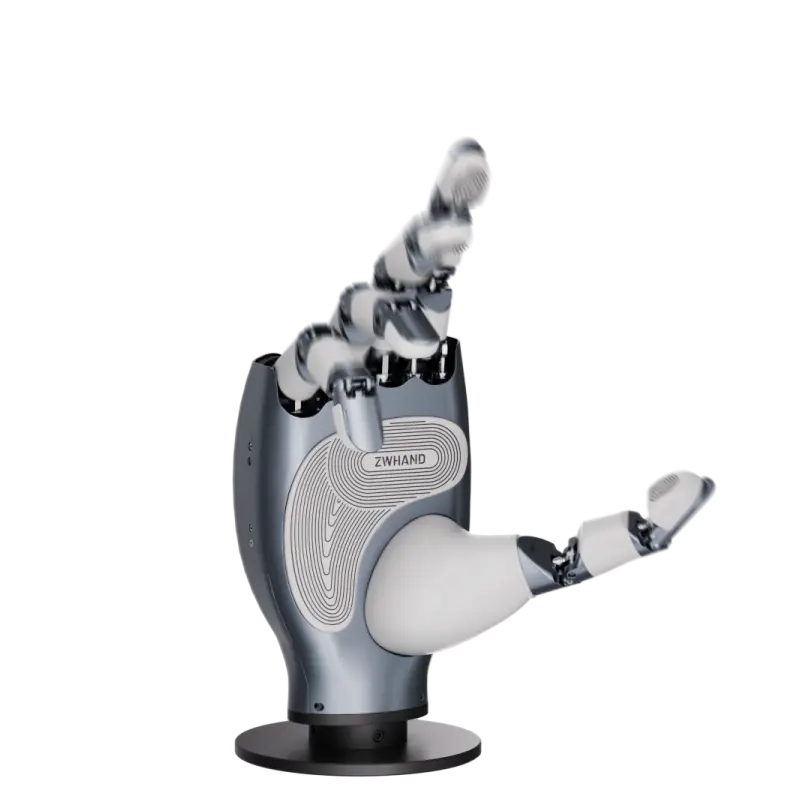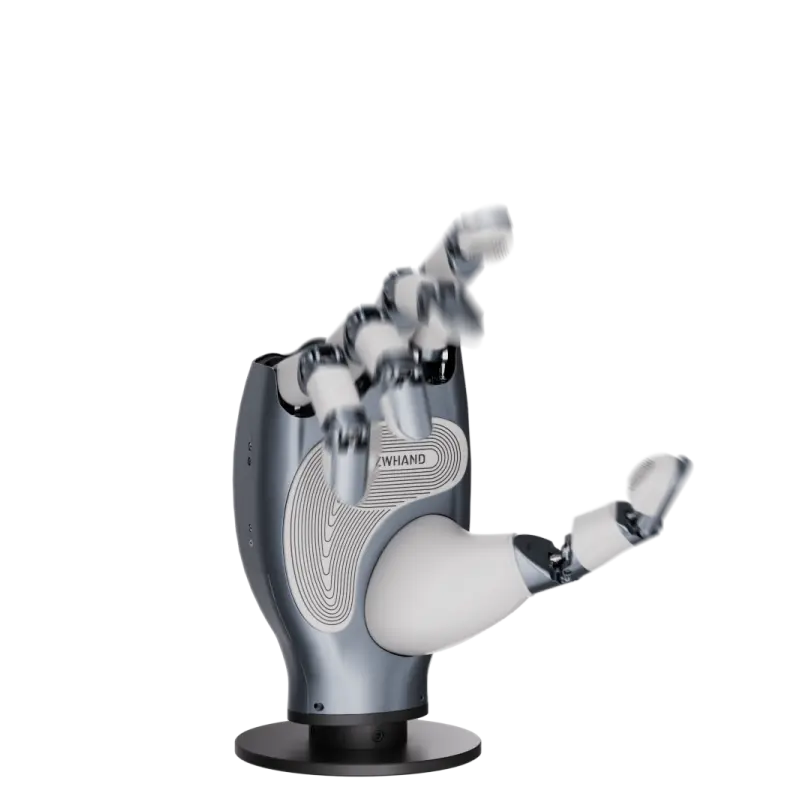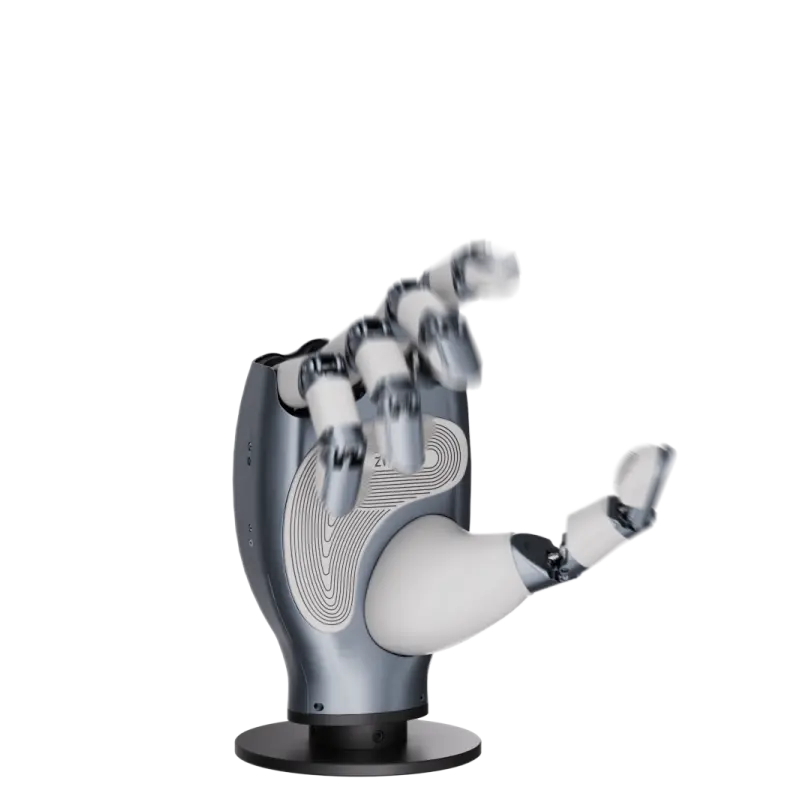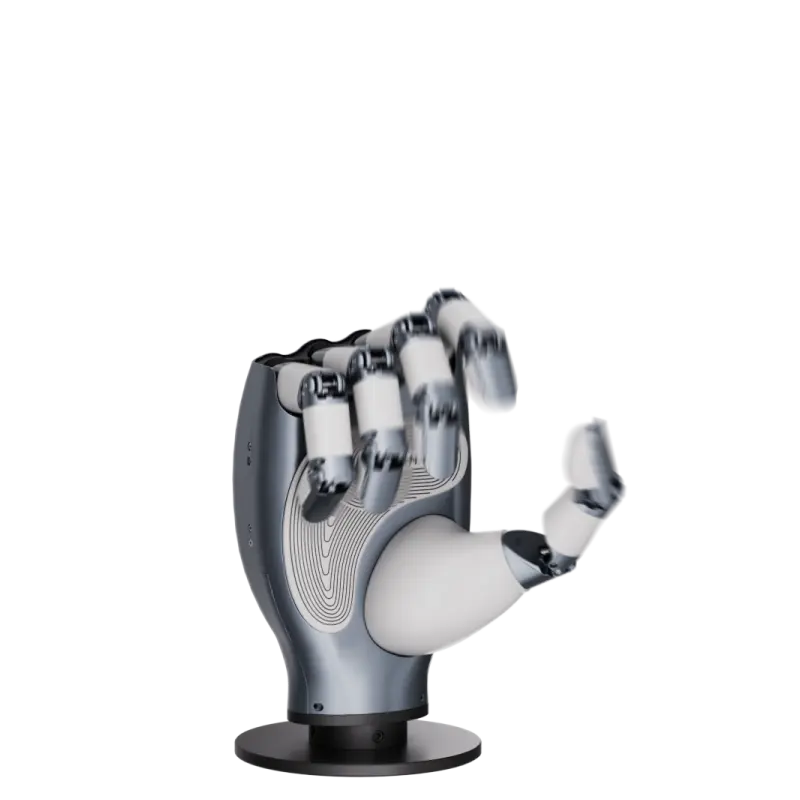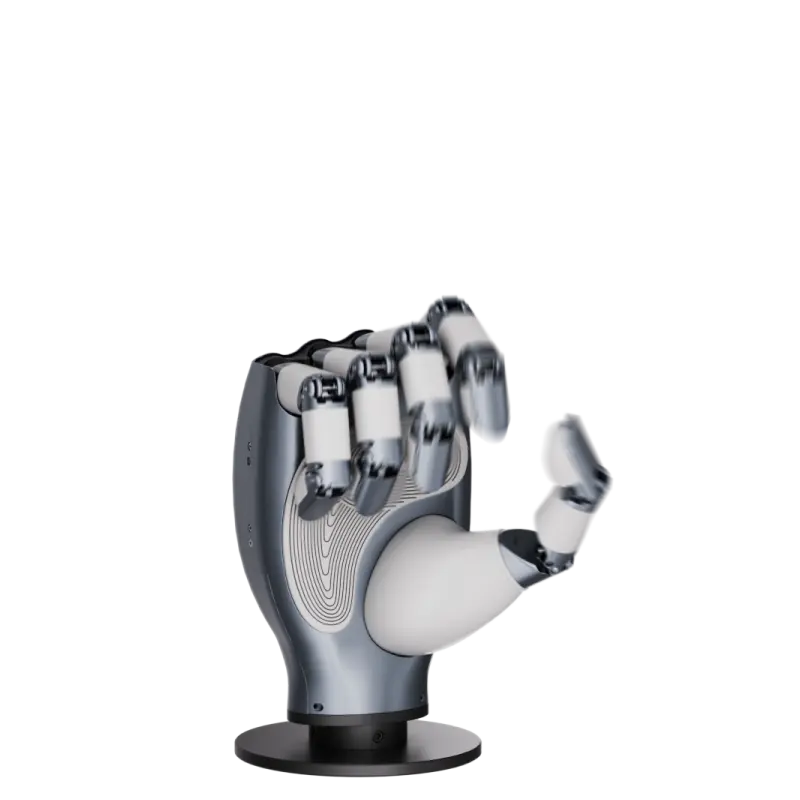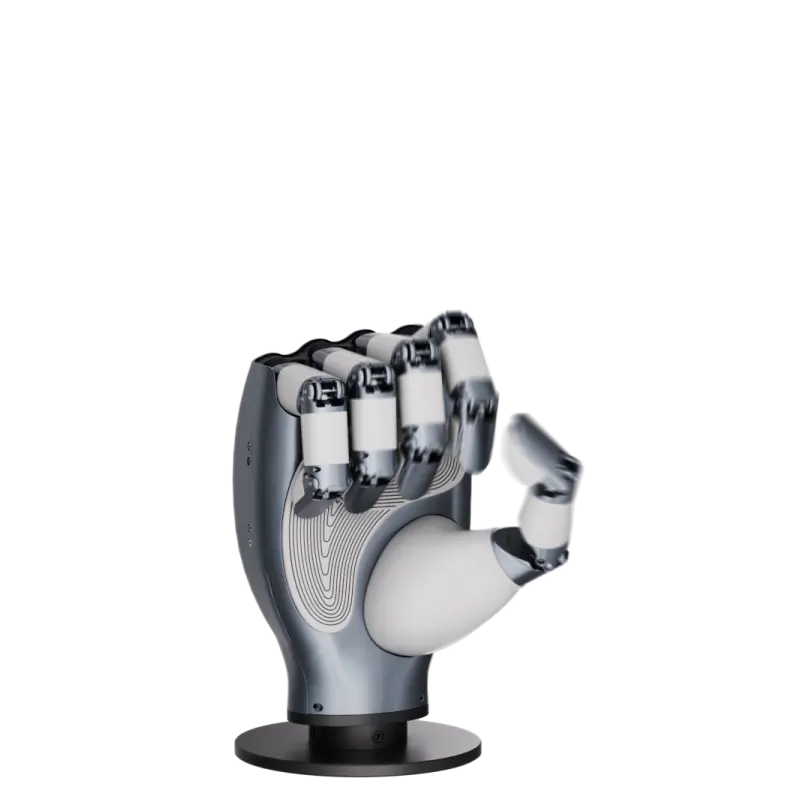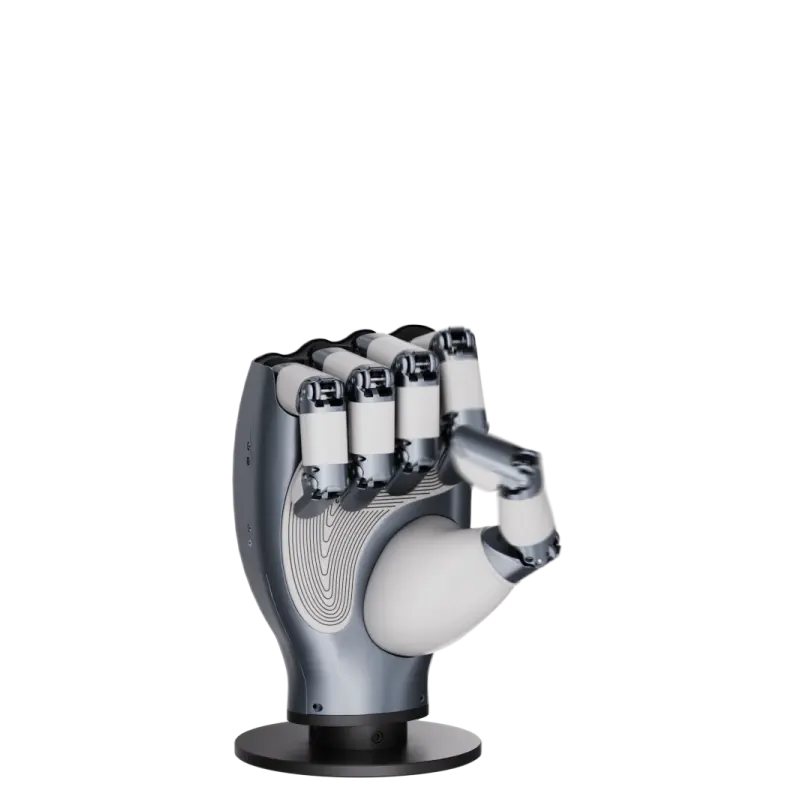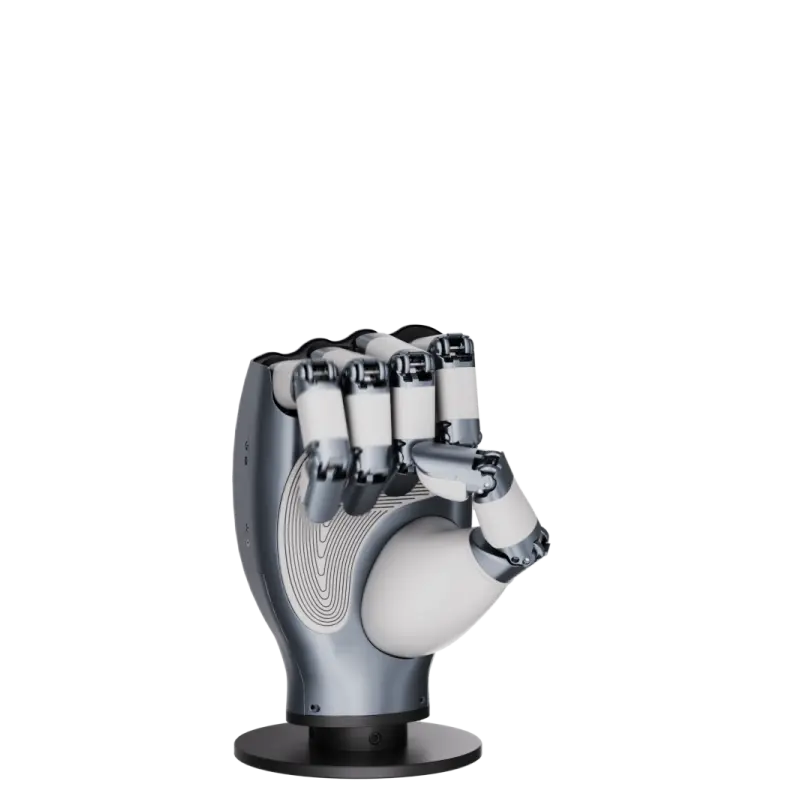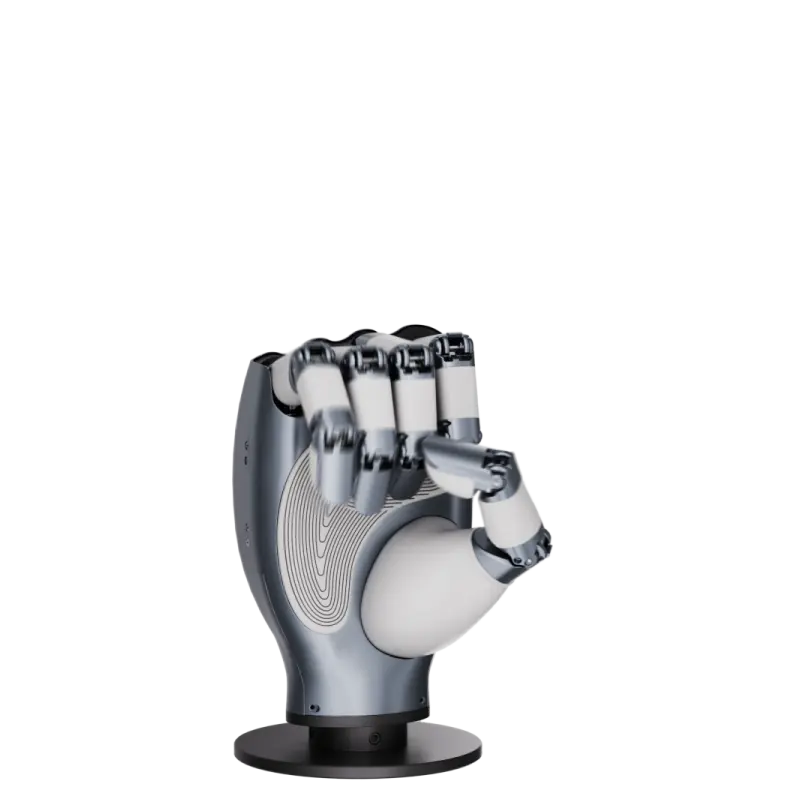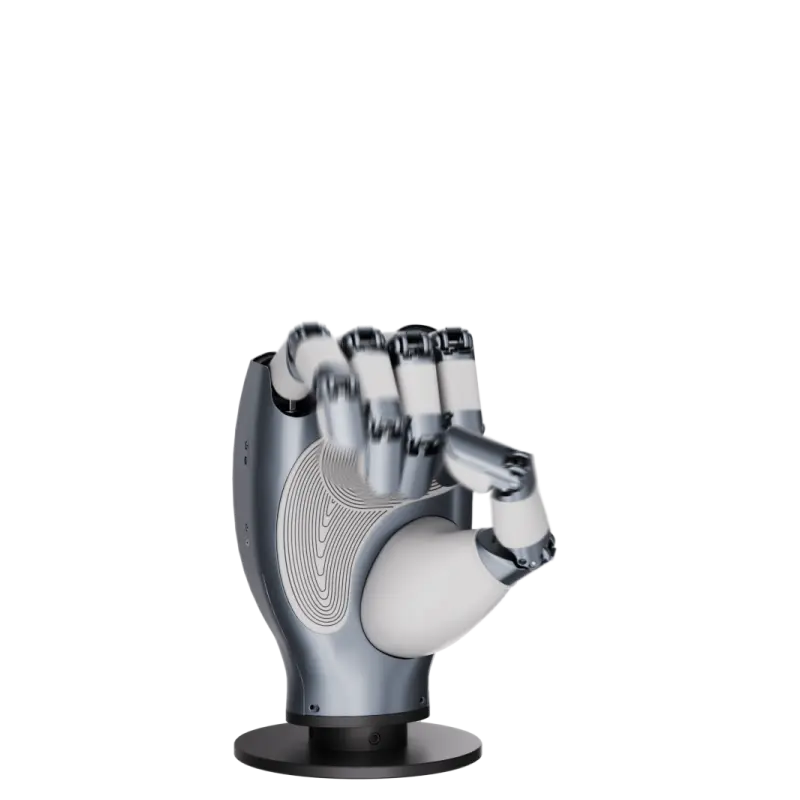
What is the Zwhand?
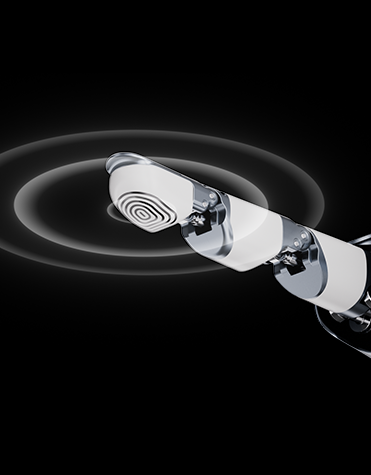
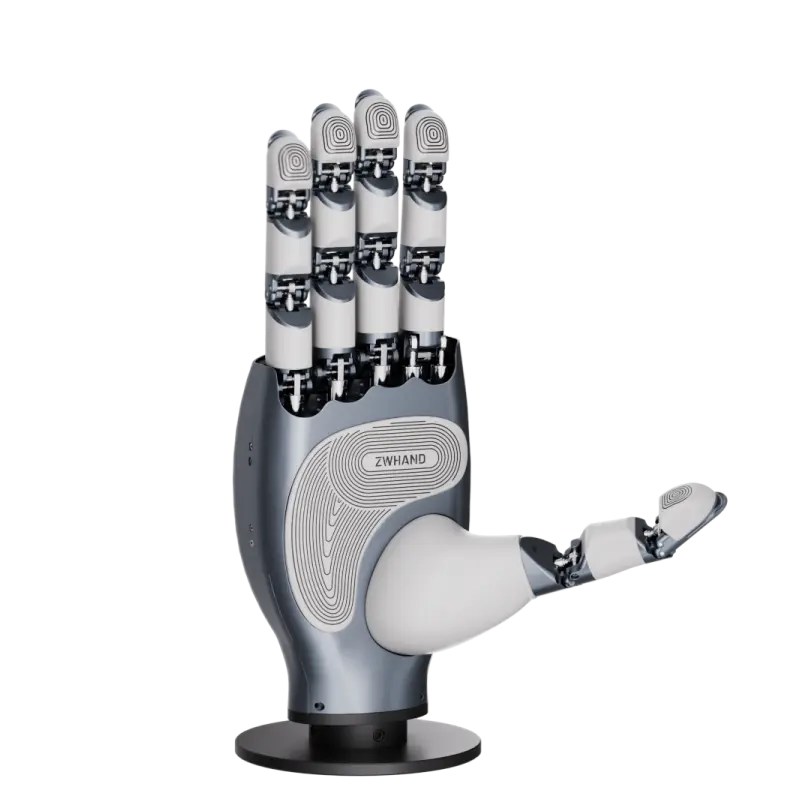
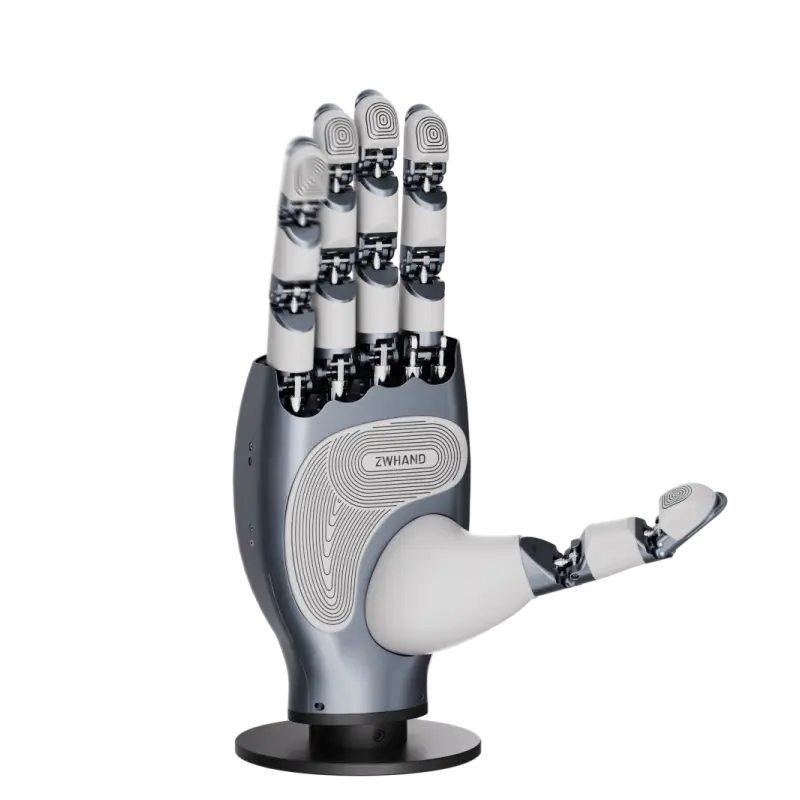
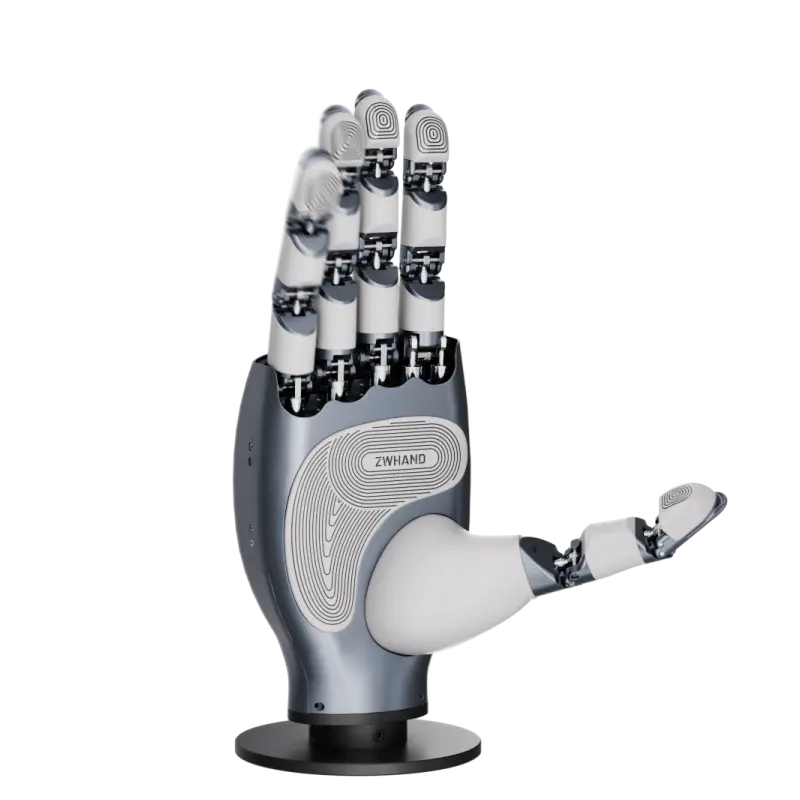
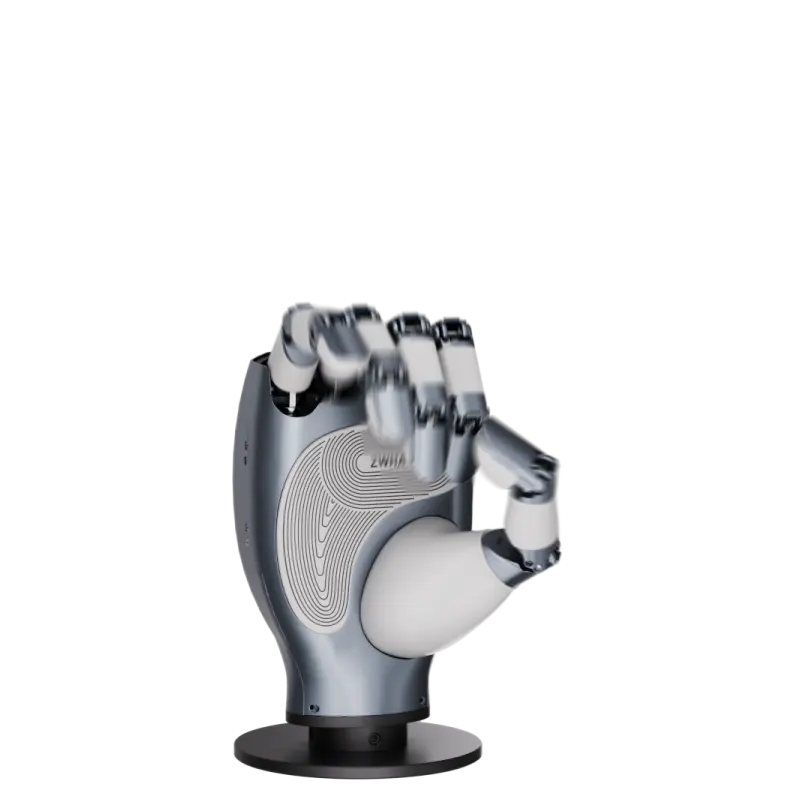
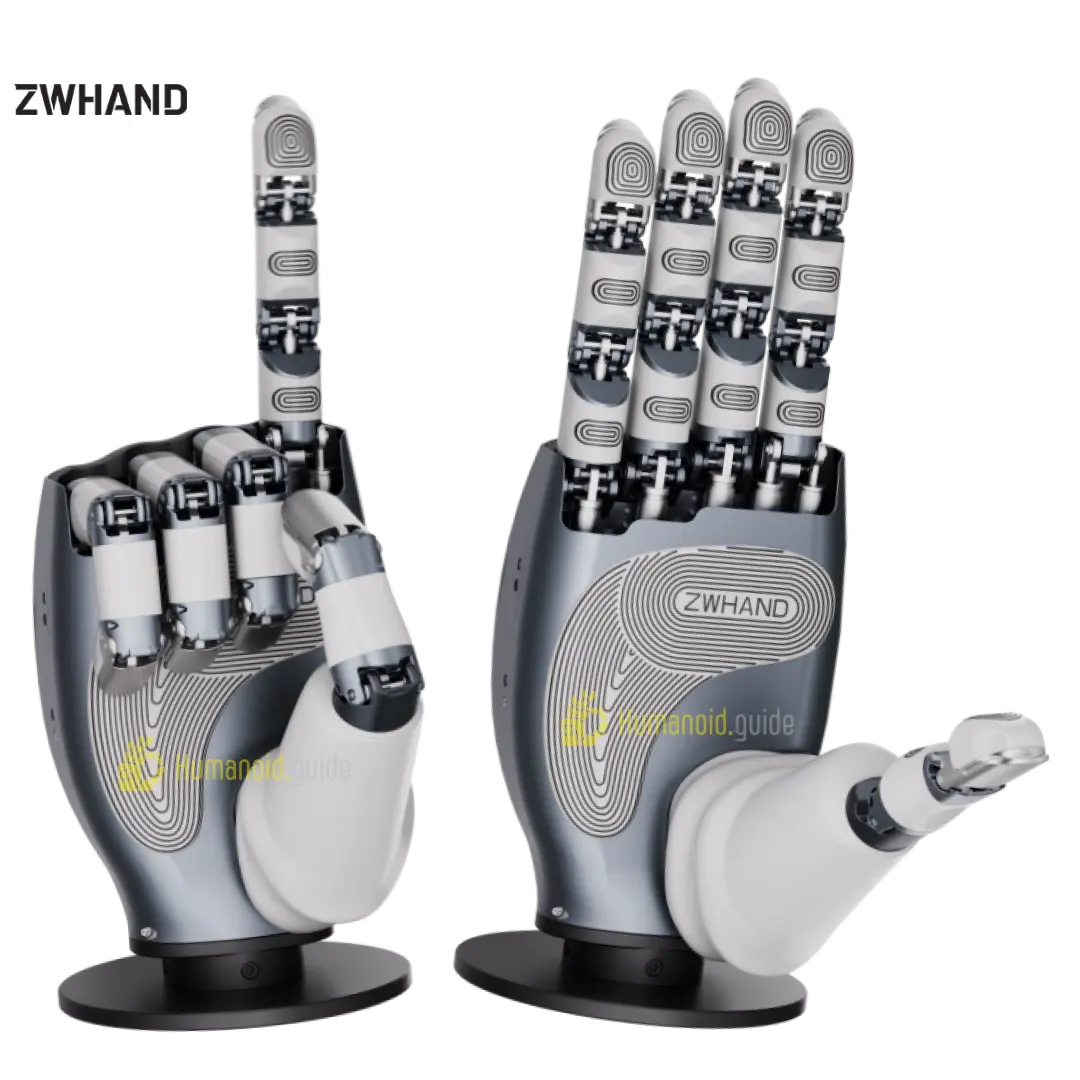
The ZWHAND is a humanoid-scale robotic hand end-effector manufactured by Shenzhen ZWHAND Technology Co., Ltd., a Chinese robotics firm based in Shenzhen. It integrates five articulated fingers, 18 degrees of freedom, and compact micro motor drives with gears and encoders directly within the hand structure. The hand is designed for research and precision industrial tasks, featuring a tactile e-skin overlay for force and touch feedback. Its unified control module and 6 kg payload make it a versatile gripper for humanoid robots and manipulation research platforms. Weighing roughly 850 grams and spanning 18–22 cm in length, it replicates human hand kinematics at a cost point of $12,500, positioning it as a mid-range alternative to far more expensive dexterous hands like the Shadow Dexterous Hand.
Specifications
Here are the full technical specifications.
| Spec | Value |
|---|---|
| Height | ~18–22 cm |
| Weight | 0.85 kg |
| Degrees of freedom | 18 |
| Battery life | N/A (host‑powered) |
| Max speed | N/A (end‑effector) |
| Payload | 6 kg |
| Price (new) | $12,500 |
| Price (used range) | ~$8,000–$12,000 (est.) |
Price & Value
New MSRP: $12,500
Used range: ~$8,000–$12,000 (est.)
At $12,500, the ZWHAND occupies a unique mid-tier niche between simple two-finger grippers and premium dexterous hands like the Shadow Dexterous Hand ($100,000). Its 18 DOF and integrated tactile sensing provide high dexterity for research labs on a budget comparable to the Allegro Hand ($35,000), undercutting it significantly. Depreciation is likely moderate; used units may trade at 60–70% of MSRP, making the hand accessible for smaller labs. Total cost of ownership is low since it draws power and control from the host robot, avoiding separate battery or compute costs. Additionally, the built-in e-skin eliminates the need for aftermarket tactile sensors, which can cost over $5,000. For a lab considering a custom-built hand, the ZWHAND offers a ready-to-use, standardized option that often proves cheaper than in-house development.
Who Is It For?
Best for: - Robotics research labs needing 5-finger dexterity with integrated tactile sensing without exceeding a $15,000 budget - Educational institutions that want a realistic human hand manipulator for teaching AI, control theory, and manipulation - Humanoid robot developers seeking a plug-and-play anthropomorphic hand for teleoperation and human-robot interaction studies
Not for: - Heavy industrial gripping (payload limited to 6 kg) or high-speed pick-and-place operations - Environments with extreme dust, moisture, or chemical exposure (no IP rating listed, hand is not sealed) - Users who require battery-powered standalone operation (hand must be wired to a host robot)
Alternatives & Comparison
The ZWHAND competes with other multi-fingered dexterous hands used in robotics research and light industrial tasks. It distinguishes itself by offering 18 DOF and tactile e-skin at a price point far below most rivals.
| Model | Price | Available | Key Difference |
|---|---|---|---|
| Shadow Dexterous Hand | $100,000 | yes | 20 DOF with air muscle actuation; superior dexterity but 8× more expensive |
| Allegro Hand | $35,000 | yes | 16 DOF, lower cost but lacks integrated tactile e-skin |
| Schunk SVH | $50,000 | yes | 9 DOF with industrial-grade robustness; simpler grasping, less dexterity |
Verdict: For research groups that prioritize dexterity-per-dollar and integrated tactile sensing, the ZWHAND is the clear winner at $12,500. The Shadow Hand offers higher performance but at 8× the cost, while the Allegro Hand provides a similar DOF count without e-skin, requiring additional sensor integration. Labs needing industrial rigor and faster cycle times may prefer the Schunk SVH, but for human-like research manipulation, the ZWHAND provides a compelling balance of capability and affordability. In terms of cost-effectiveness for academic budgets, no other 18-DOF hand with tactile feedback comes close.
Use Cases & Capabilities
Dexterous Manipulation Research
Academic and corporate labs around the globe integrate the ZWHAND into experimental setups to push the boundaries of robotic grasping and in-hand manipulation. Its 18 degrees of freedom, distributed across five articulated fingers, enable human-like finger motions and a rich set of grasps for machine learning algorithms. The built-in tactile e-skin delivers dense force feedback, allowing researchers to collect high-quality sensor data for training neural networks. With a payload rating of 6 kg, the hand can safely manipulate a wide variety of lab tools, consumer objects, and delicate items without fear of dropping or damage. Thanks to its low weight of 0.85 kg, it can be mounted on collaborative robots without compromising joint torque margins, and its open API simplifies integration with ROS and custom control frameworks.
Humanoid Robot Gripping
Humanoid robot developers choose the ZWHAND to give their bipeds lifelike hand functionality for realistic human-robot interaction. The hand's anthropomorphic proportions and five-digit configuration allow it to grasp everyday objects—cups, doorknobs, pens—just as a human would, enabling powerful learning from demonstration and teleoperation. Its compact, integrated design hides all motors, gearboxes, and sensor electronics inside the hand itself, leaving a clean forearm interface that matches humanoid aesthetics. A 6 kg payload capacity is sufficient for most service tasks, including handling groceries, opening doors, and passing tools to human coworkers. Researchers have used the ZWHAND on custom humanoid platforms and commercial models alike, appreciating its balance of capability, price, and plug-and-play connectivity.
Teleoperation and Haptic Feedback Training
The ZWHAND’s tactile e-skin and 18 DOF make it an ideal end-effector for teleoperation systems that require kinaesthetic feedback. Operators wearing haptic gloves can control the robot hand remotely, feeling the force of grasped objects in real time. This setup is invaluable for training AI policies in sim-to-real pipelines, where nuanced force data accelerates learning. The hand’s compact motor-in-hand design eliminates the need for external tendon routing, simplifying the integration into wearable or desktop teleoperation rigs. With a 6 kg payload, operators can safely manipulate a wide range of objects, from small pills to heavy power tools, making it a versatile tool for both research and vocational training.
Grasp Taxonomy and Learning from Demonstration
Roboticists studying grasping strategies employ the ZWHAND to generate a wide variety of precision, power, and intermediate grasps. Its 18 DOF allow researchers to program numerous fingertip configurations, mapping to standard grasp taxonomies. The integrated force sensors capture the contact forces during each grasp, providing ground truth data for supervised learning. Because the hand is lightweight and easy to integrate, multiple units can be set up in parallel to collect large datasets efficiently. This accelerates the development of robust, generalizable grasping algorithms for next-generation service robots.
Medical and Prosthetics Research
The ZWHAND’s anthropomorphic form and tactile feedback make it a valuable tool for prosthetics research, where understanding human-like grasping and sensory feedback is critical. Its compact size and weight are comparable to a natural hand, allowing it to be used in benchtop simulations of prosthetic control algorithms. The integrated e-skin provides a direct readout of contact forces, helping researchers develop closed-loop myoelectric control strategies. Its 18 DOF can be reduced to lower-dimensional movement patterns typical of prostheses, serving as a testbed for EMG-driven grasping. The hand’s open control architecture enables rapid prototyping of new control paradigms without the need for custom mechanical builds.
History & Background
Shenzhen ZWHAND Technology Co., Ltd. is a specialized Chinese robotics company focused on dexterous end-effectors, headquartered in Shenzhen. While the exact founding year is not publicly documented, the company emerged in the 2010s to address the high cost of Western dexterous hands. The ZWHAND was developed as a direct, affordable competitor to products like the Shadow Dexterous Hand and Allegro Hand, leveraging China’s advanced micro-motor and sensor manufacturing ecosystem. As of 2026, the hand remains a single-generation product with no announced successor, yet it has gained steady adoption in research labs across Asia, Europe, and North America. Its consistently low $12,500 price point and integrated tactile e-skin have made it a popular choice for academic robotics groups that previously had to build custom hands or spend five to ten times more on alternatives. The company continues to produce and sell the hand directly and through distributors, with no indication of discontinuation.
Buying Used — What to Check
Inspect tactile e-skin condition The e-skin overlay is essential for force feedback; tears or dead spots can significantly degrade research results.
Verify motor and encoder wear Integrated micro motors may degrade over time, causing backlash or loss of fine control — test finger motion smoothness.
Confirm mounting interface and cables Mounting hardware may be custom; ensure the hand’s connector and power/data harness match your robot arm to avoid compatibility issues.