

Alibaba's Qwen team has released a suite of three specialized AI foundation models — Qwen-RobotNav, Qwen-RobotManip, and Qwen-RobotWorld — designed to bridge language understanding with physical-world actions. The move positions Alibaba alongside major AI labs pushing models beyond text and images into environments that require movement and interaction.
- What Happened
- The Three Models Explained
- Why This Matters for the AI Industry
- Competitive Landscape
- What This Means for the Industry
- Frequently Asked Questions
- Conclusion
What Happened
On Tuesday, the Qwen team unveiled three foundation models that each handle a different type of physical task: navigation, manipulation, and world-state prediction. According to TechNode, these models are built on top of Alibaba's existing vision-language capabilities and are intended to unify how AI systems understand and act in the physical world.
The models are part of Alibaba's broader push to extend its large language model ecosystem beyond chat and code generation into areas where AI must interpret real-time sensor data and produce coordinated motion commands.

The Three Models Explained
Qwen-RobotNav extends vision-language understanding into mobile scenarios. It uses controllable observation encoding and tool-based interfaces to handle four tasks within a single framework: following instructions, navigating to a goal, tracking objects, and driving autonomously. Rather than building separate models for each task, Alibaba combined them into one system that reasons about movement using natural language commands.
Qwen-RobotManip focuses on precise physical interaction with objects. The model standardizes the state-action space and represents end-effector movements as incremental poses in the camera coordinate system. It was trained on more than 38,100 hours of fully open-source data. This large-scale training allows the model to support a wide range of manipulation tasks across different hardware configurations.
Qwen-RobotWorld acts as a general-purpose world model. It connects vision-language understanding with future-state prediction through a natural-language action interface. The model can forecast physically consistent outcomes across navigation, driving, and manipulation scenarios. Alibaba's key claim is that a single world model can generalize across many types of physical tasks, reducing the need for task-specific training.
Why This Matters for the AI Industry
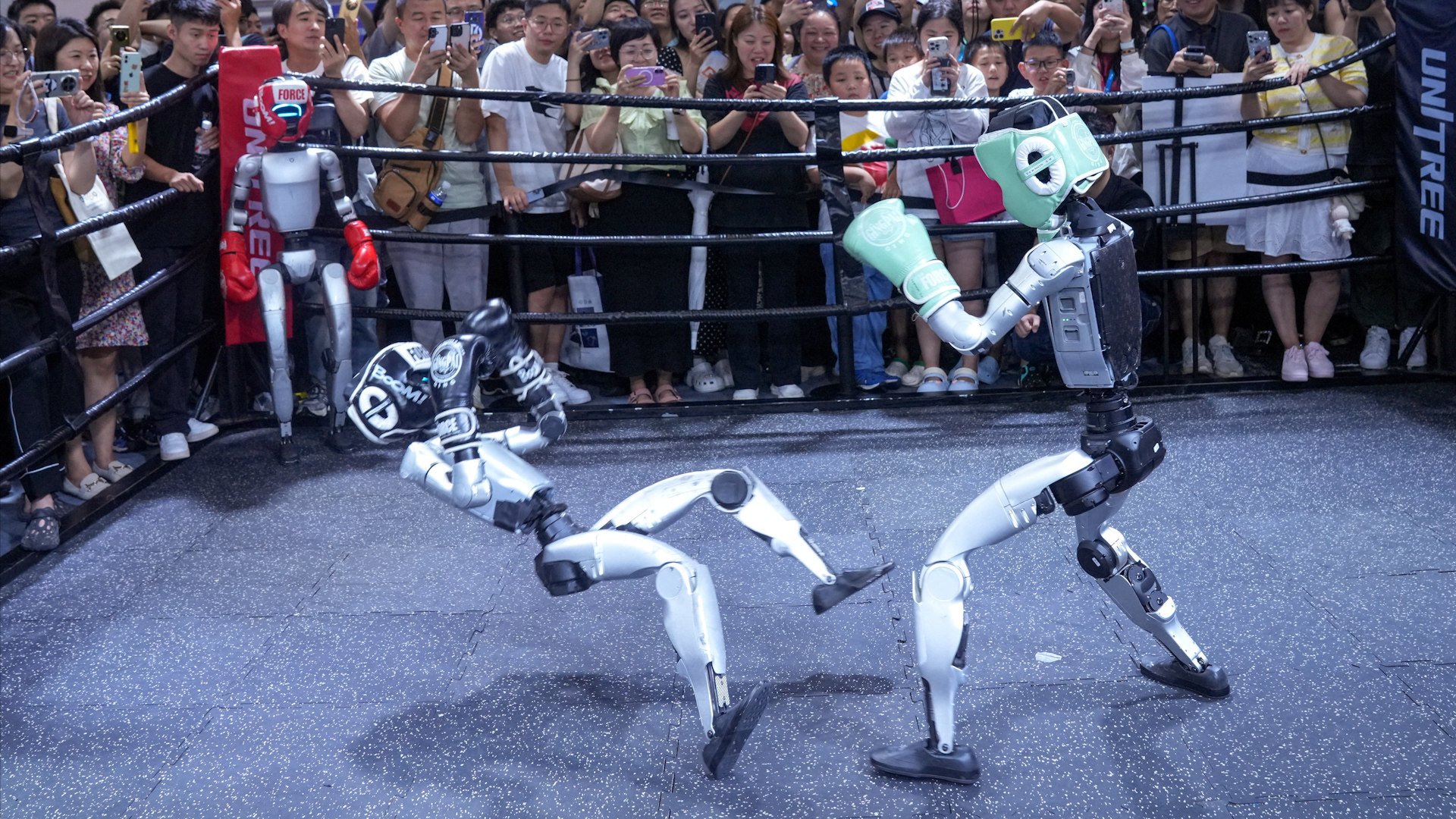
Most AI models today operate on text, images, and audio — data that already exists in digital form. The Qwen suite represents a shift toward models that must generate sequences of physical actions based on real-world sensor streams. This is significantly harder than language generation because it requires reasoning about physics, spatial relationships, and temporal consistency.
Alibaba's choice to release the training data as open source (38,100 hours for the manipulation model) is notable. It lowers the barrier for other researchers and companies to fine-tune or build upon the work, potentially accelerating the field of AI that acts in physical environments.
The unification of navigation, manipulation, and world prediction into separate but compatible models also suggests Alibaba is aiming for a modular architecture — developers can pick the model they need without running an entire stack.
Competitive Landscape
Alibaba is not alone in this space. Google's DeepMind has released models like RT-2 and Gemini Robotics that also combine vision-language understanding with action outputs. Chinese rival Baidu has its own embodied AI initiative, and startups such as Covariant and Physical Intelligence have raised significant funding for similar approaches.
However, Alibaba's use of open-source data and its aggressive scaling (38,100 hours of manipulation training) may give it an edge in adaptability. The company already operates large-scale cloud infrastructure through Alibaba Cloud, which could serve as a platform for deploying these models to enterprise customers.
The timing also matters: the Chinese government has identified embodied intelligence as a strategic priority, and Alibaba's state backing could accelerate adoption in sectors like manufacturing, logistics, and healthcare.
What This Means for the Industry
For investors, the launch signals that Alibaba is treating physical-world AI as a core R&D bet, not a side project. If these models gain traction in enterprise applications, they could open new revenue streams for Alibaba Cloud and create a moat against competitors in the AI infrastructure market.
For competitors, Alibaba's open-source data strategy is a double-edged sword. It helps the whole field move faster, but it also means Alibaba benefits from community improvements and research contributions. Companies that rely on proprietary data may need to rethink their approach.
For the broader tech industry, the availability of these models — especially the world model — could reduce the cost and complexity of building autonomous systems for tasks like warehouse sorting, autonomous driving, and service applications. However, real-world deployment still faces challenges in safety, reliability, and regulatory approval.
Frequently Asked Questions
What exactly did Alibaba release? Alibaba's Qwen team released three AI foundation models: one for navigation and tracking (Qwen-RobotNav), one for manipulating objects (Qwen-RobotManip), and one for predicting future physical states (Qwen-RobotWorld).
Are these models available for anyone to use? The training data for Qwen-RobotManip — more than 38,100 hours — is fully open-source. Alibaba has not yet announced full open-weight availability for all three models, but the data release suggests a commitment to openness.
How are these models different from standard large language models? Standard LLMs process language and generate text. These models take in language or vision inputs and output sequences of actions — movements, rotations, grasps — that work in the real world. They must account for physics and spatial consistency.
What kinds of hardware do these models run on? The models are designed to work across multiple hardware platforms. Qwen-RobotManip, for instance, supports different arm and gripper configurations. The navigation model can run on mobile platforms with cameras and sensors.
Will these models be integrated into Alibaba's cloud services? Alibaba has not made an official announcement, but given Alibaba Cloud's focus on AI-as-a-service, integration is likely. Enterprise customers could access the models via API for tasks like automated navigation or manipulation.
How does this compare to Google's RT-2? Both are vision-language-action models, but Alibaba's approach separates tasks into three specialized models rather than one monolithic system. The open-source training data and the world prediction model are differentiators.
Conclusion
Alibaba's Qwen suite marks a significant step for the company in moving AI from digital-only applications into environments where models must reason about and act upon the physical world. By releasing three specialized models and making a large portion of training data open source, Alibaba is betting that modularity and community collaboration will drive faster adoption. The real test will be how these models perform in messy, real-world conditions — and whether enterprise customers trust them enough to deploy at scale.











به بحث بپیوندید
Will open-source training data accelerate or commoditize AI for physical tasks?