

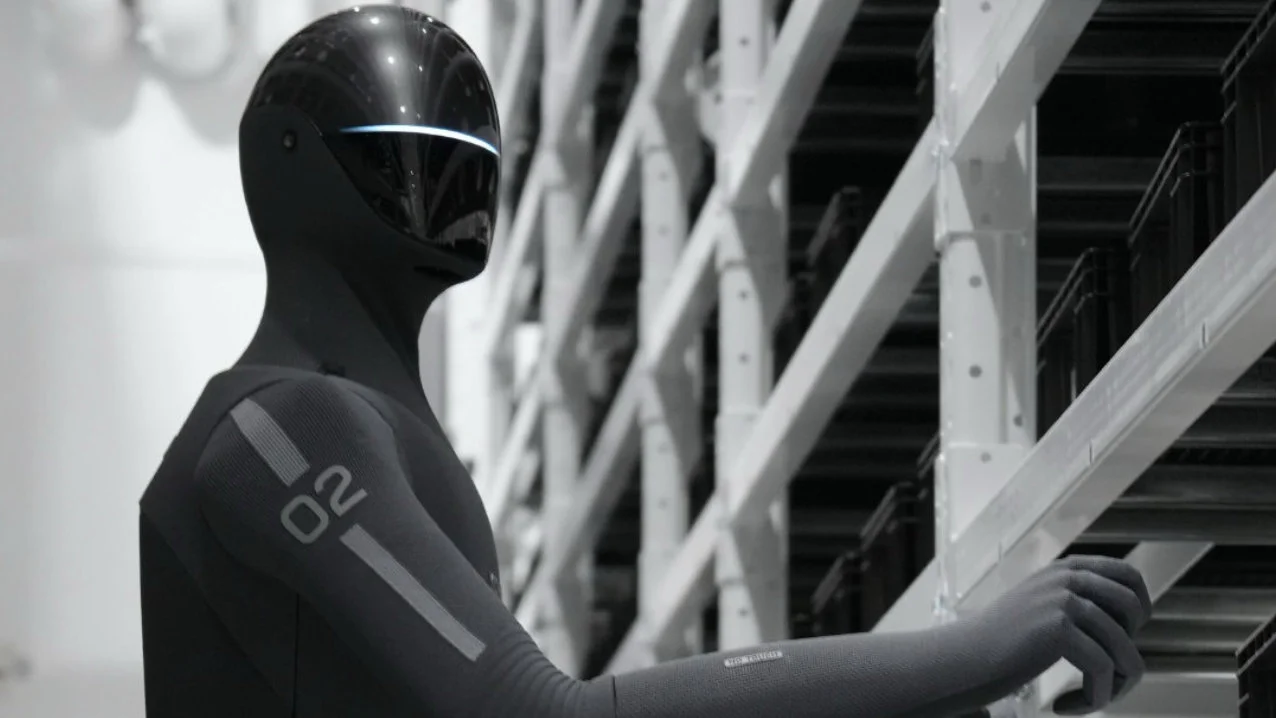
Xiaomi's humanoid robot can now perform one automotive assembly line task with 98% success — just one percentage point below human workers — signaling that humanoid robots are crossing a critical threshold for real factory deployment. The company's CyberOne robot has been working inside Xiaomi's electric vehicle plant for four months, and the latest results show it's becoming a viable complement to human labor in repetitive assembly work.
- How Did Xiaomi's Robot Reach 98% Success?
- What New Tasks Can the Humanoid Robot Perform?
- How Does Xiaomi's Robot Compare to Human Workers?
- What Does This Mean for Factory Automation?
- What Does This Mean for Buyers
How Did Xiaomi's Robot Reach 98% Success?
The CyberOne humanoid robot — a bipedal robot designed to walk and work like a human — was deployed at a self-tapping nut loading station inside Xiaomi's electric vehicle factory. Over four months of iteration, its success rate climbed from 90.2% to 98%, narrowing the gap with human workers' qualification rate to just one percentage point. The self-tapping nut loading task involves picking up small metal fasteners and inserting them into threaded holes — a repetitive but precision-critical operation that requires fine motor control and consistent placement.

The improvement came through a combination of software updates, better sensor integration, and refined gripper control algorithms. According to Xiaomi, the robot's learning system continuously adjusted its grip force, wrist angle, and insertion speed based on real-time feedback from its tactile sensors and cameras. The 7.8 percentage point gain in four months represents a meaningful acceleration in deployment readiness.
What New Tasks Can the Humanoid Robot Perform?
Xiaomi has added two entirely new tasks to the CyberOne's repertoire: center console side panel sorting and parts bin folding and recycling. Both have achieved 90% success rates. The center console side panel sorting station is particularly notable — it marks the first time a humanoid robot has performed long-duration continuous operations on flexible workpieces (parts that bend, warp, or change shape slightly during handling) in an automotive factory.
Sorting flexible parts is significantly harder than handling rigid components like metal nuts. The side panels must be picked, oriented, and placed without damage, requiring the robot to adapt its grip in real-time as the part's shape shifts. Achieving 90% on a first deployment of this type is a strong signal that humanoid robots can handle the unpredictable, soft-materials tasks that make up a large portion of automotive final assembly.
| Task | Success Rate | Human Rate | Key Challenge |
|---|---|---|---|
| Self-tapping nut loading | 98% | 99% | Precision insertion at speed |
| Center console panel sorting | 90% | 95%+ | Flexible workpiece handling |
| Parts bin folding and recycling | 90% | 95%+ | Variable bin geometry |
How Does Xiaomi's Robot Compare to Human Workers?
At 98% success rate, the CyberOne is effectively interchangeable with a human worker on the nut loading task for most practical purposes. The 1 percentage point gap means that out of 1,000 operations, a human would make 10 errors while the robot makes 20 — a difference that disappears when accounting for the robot's ability to run 24 hours without breaks.
However, humans still significantly outperform the robot on the newer tasks. The 90% success rate on panel sorting and bin folding means 1 in 10 attempts fails, which would require human intervention or a secondary quality check in a production environment. Xiaomi's human workers achieve an estimated 95%+ on these tasks, reflecting the gap in handling variable, soft, or oddly-shaped materials.
The key advantage for the robot isn't raw accuracy — it's consistency and uptime. The CyberOne doesn't get tired, doesn't need shift changes, and can work through the night. For a factory running three shifts, replacing one human per line per shift with one robot running continuously could yield significant labor cost savings, even at slightly lower per-operation accuracy.
What Does This Mean for Factory Automation?
Xiaomi's progress is part of a broader trend: humanoid robots are moving from lab demos to real production lines. Figure, Tesla, and Apptronik have all demonstrated factory deployments, but Xiaomi's published success rates provide one of the most detailed benchmarks yet for how quickly these robots improve once deployed.
The 90.2% → 98% trajectory over four months suggests a learning curve that could push humanoid reliability beyond human levels within 12-18 months of continuous deployment. That timeline matters for manufacturers evaluating whether to invest in humanoid robots now or wait for the next generation.
For context, warehouse automation systems (which use more mature technology like fixed robotic arms and conveyor belts) typically require 99.5%+ uptime and error rates below 1%. Humanoid robots aren't there yet for most tasks, but the gap is closing fast in specific, well-defined operations. The center console panel sorting task, at 90%, shows that even challenging "first of their kind" tasks can achieve practical reliability within months.
What Does This Mean for Buyers
If you're evaluating humanoid robots for factory deployment, Xiaomi's data offers a realistic benchmark for what to expect:
- Start with simple, repetitive precision tasks — nut loading, screw driving, small parts insertion. These are where humanoids can reach 95%+ success fastest.
- Plan for a 4-6 month ramp — Xiaomi needed four months to go from 90% to 98%. Budget for the same learning curve, including sensor calibration, software tuning, and task-specific gripper adjustments.
- Expect gaps on flexible materials — tasks involving soft, bendable, or variable-geometry parts will take longer to automate. Factor human oversight into your first-year deployment plan.
- Account for continuous operation benefits — a robot running 24/7 at 95% success may outperform a human working 8 hours at 99% success, especially on high-volume tasks where throughput matters more than per-cycle error rate.
Xiaomi's CyberOne is not yet available for third-party purchase, but the company's results are directly relevant to anyone evaluating humanoid robots for sale on BotMarket from platforms like Unitree, Fourier, or Agibot. The key takeaway: at 98% success on the right task, humanoid robots are no longer a speculative technology — they are a deployable tool with a quantified reliability curve.
Frequently Asked Questions
What success rate did Xiaomi's humanoid robot achieve in the factory? The CyberOne reached 98% success at a self-tapping nut loading station, up from 90.2% after four months of iteration. Human workers achieve 99% on the same task.
What tasks is Xiaomi's robot now performing? Three tasks: self-tapping nut loading (98% success), center console side panel sorting (90%), and parts bin folding and recycling (90%). The panel sorting task is a first for humanoid robots handling flexible workpieces in an automotive factory.
How does Xiaomi's robot compare to human workers? At 98% vs 99%, the robot is nearly equivalent on the nut loading task. Humans outperform it on newer, more variable tasks (95%+ vs 90%). The robot's advantage is 24/7 operation with no breaks.
What makes the center console panel sorting task significant? It's the first time a humanoid robot has performed long-duration continuous operations on flexible workpieces in an automotive factory. Flexible parts change shape during handling, requiring adaptive grip and real-time adjustment — a harder challenge than rigid parts.
How fast did the robot improve? From 90.2% to 98% over four months — a rate suggesting humanoids could exceed human reliability within 12-18 months of continuous deployment in well-defined tasks.
What does this mean for factory buyers? Start with simple, repetitive tasks; budget for a 4-6 month improvement ramp; expect gaps on flexible materials; and account for the throughput advantage of 24/7 operation when calculating ROI.
Conclusion
Xiaomi's CyberOne has demonstrated that humanoid robots can reach near-human reliability on specific factory tasks within months of deployment. The 98% success rate on nut loading and the introduction of flexible workpiece sorting mark genuine progress toward practical industrial use. For manufacturers evaluating humanoid robots, the gap between "lab demo" and "production tool" is narrowing fast — and it's now quantifiable.






نظرات